
How do you grow a gooseberry bush from seed? This isn't easy; getting a plant identical to the parent isn't always possible. Seeds lose their varietal characteristics due to cross-pollination. It's easier to buy a ready-made seedling and plant it in your garden in the fall. If finding your favorite gooseberry variety is difficult, you can try growing it from seed.
Description of cultivation principles
Gooseberries are commonly propagated by layering, cuttings, grafting, and division. With vegetative propagation, plants inherit all the best qualities of their parent. Gooseberries can also be propagated by seed. However, the new plant will not inherit many of the parent's varietal traits. This is especially true for hybrids.
Seedlings propagated from seed may develop new valuable traits, but sometimes the plant reverts to a semi-wild state. If the berries grow sour and small, the trunk can be used to graft a cutting from a larger-fruited variety.
Selecting seeds
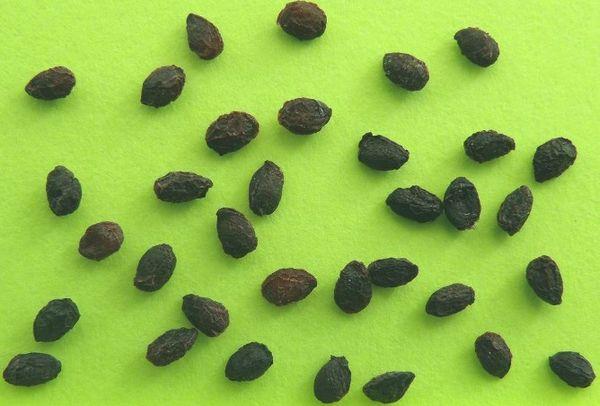
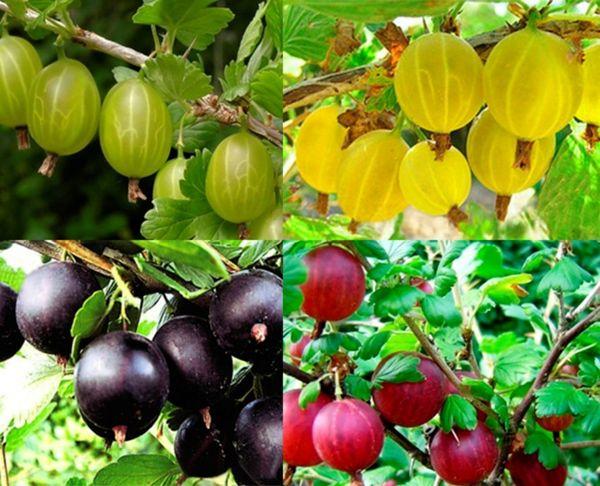
Best for The following varieties of gooseberries are suitable for propagation by seeds:Russian, Malachite, Finik. Seeds are purchased at flower shops. You can choose your favorite native gooseberry variety and extract the seeds from the berries. Rinse them thoroughly in warm water. Dry them on a cloth or paper. Remove the seeds using salt water. It's best to plant the seeds as early as possible, as they lose viability if stored for a long time.
Choosing a landing site
Gooseberries ripen in July and August. During this period, the seeds can be removed from the berries and dried before the onset of frost. In October, the seeds are mixed with damp coarse sand and placed in a box. The seeds must be stratified, or treated with cold.
First, the seed box is placed in a basement where the temperature is between 3 and 5 degrees Celsius. In winter, the container is taken outside and buried deep in the ground (0.5 meters). You can also pour damp sand with the seeds into a bag and store it in the refrigerator for the winter.
Seeds can be sown in the ground that same summer, as this will suit the gooseberry's biological characteristics. Ripe berries are crushed to release the seeds and sprinkled with clean river sand. This mixture is sown in the garden bed and covered with a thick layer of soil. However, seed germination will be low.
Sowing
In the spring, in March-April, the boxes are dug up, and the seeds and sand are sown in a container with fertile, moist soil. The soil mixture is prepared from garden soil, peat, and humus. The soil surface is leveled. The seeds are sown 5 centimeters apart, to a depth of 0.5-1 centimeter. The soil surface is covered with transparent film.
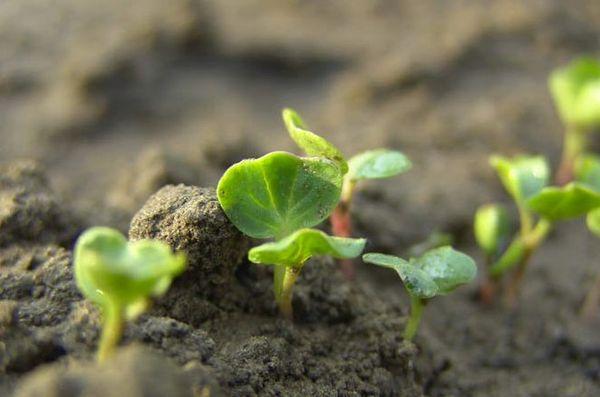
The film is lifted occasionally to allow the substrate to ventilate and water. The emerging seedlings are placed on a windowsill and watered regularly. In the spring, young seedlings with two true leaves are transplanted (removed from the soil and the main root pinched) into individual pots.
In early May, the grown plant is transferred to the garden, planted with its root ball in its permanent location, and placed in light shade. Once the seedling has established itself and begun to grow, it is uncovered and allowed to grow in the sun.
Bush care
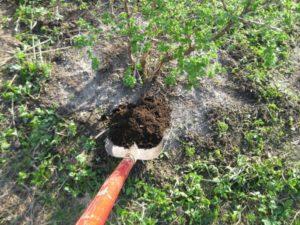
A young seedling is planted in fertile or fertile soil. The soil for spring planting is prepared in the fall. If the soil is poor, it is pre-mixed with humus and wood ash. Excessively clayey soil is diluted with peat and sand. Gooseberries thrive in neutral loam. After planting, the young plant is regularly tended.
Soil cultivation
The bush requires constant care throughout the summer: loosen the soil after watering and remove weeds from the area around the trunk. It's best to remove pulled weeds away from the bush, otherwise they will harbor insects and promote fungal growth.
It's important to remember that gooseberry roots grow close to the soil surface. Loosening the soil should be done carefully, being careful not to disturb the plant's roots.
Watering and fertilizing gooseberries
If the weather is rainy, the bush may not require watering. In hot and dry weather, water the gooseberry bush in the evening. Add 5 liters of water under the bush; a young bush will require 1-2 buckets. Water the plant 1-2 times a week using warm rainwater.
During the first year after planting, the bush is not fertilized. The plant should have sufficient nutrients from the soil. In the second year, the bush is fed with liquid fertilizer in early spring. For example, a saltpeter solution (7 grams per 5 liters of water) or fermented slurry (0.5 kilograms of mullein per 6 liters of liquid).
During the fruiting period, gooseberries are fed with superphosphate and potassium sulfate before flowering. Apply 50 grams of dry matter per 12 liters of water. In late autumn, before wintering, the base of the bush is mulched with rotted manure. In the spring, the fertilizer is incorporated into the soil.
Trimming
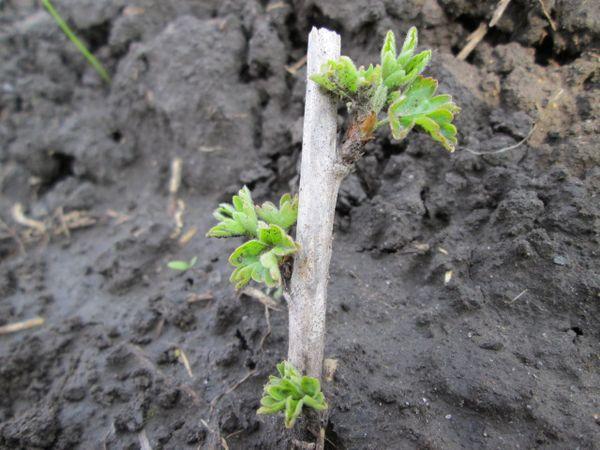
During the first year, the bush is allowed to grow and develop freely. In the second spring, pruning is performed. Three to four of the strongest shoots emerging from the ground are left. These are shortened until only three buds remain. Soil is added above the basal collar. The remaining basal shoots are completely removed. Over the summer, the plant will produce several new shoots.
The following year, 6-8 stems should be left, and the remaining basal shoots should be pruned. Branches that thicken the crown and those growing at the base of the bush should be regularly removed.
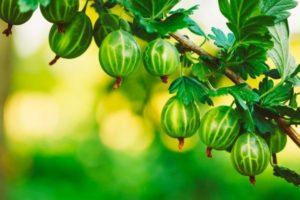
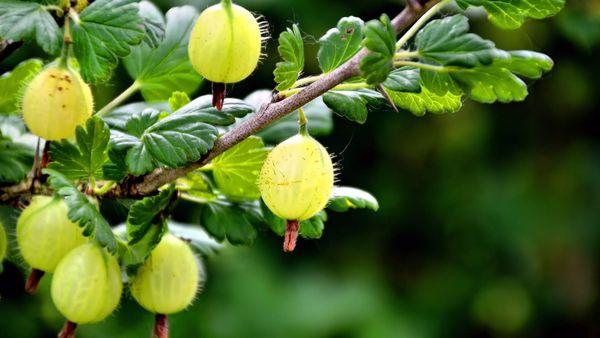
Gooseberry berries appear at the tips of two-year-old shoots. The peak yield occurs in the third year. After four to five years, the berries on these branches become smaller. Shoots older than five years should be removed annually, allowing young lateral branches or new root shoots to develop.
Pruning is done in early spring, before the buds open, or in late fall, after the leaves have fallen. During fall pruning, dry and broken branches are removed. Wounds are treated with a copper sulfate solution and sealed with garden pitch.
Pests
Insects that damage gooseberries hide in the soil around the trunk and in fallen leaves. To combat them, preventative measures are taken. Fallen leaves are immediately removed and burned. In late autumn, the soil around the trunk is dug to a depth of 7 centimeters and watered with a solution of copper sulfate or Nitrafen. In the spring, the shoots are whitewashed with Bordeaux mixture or lime.
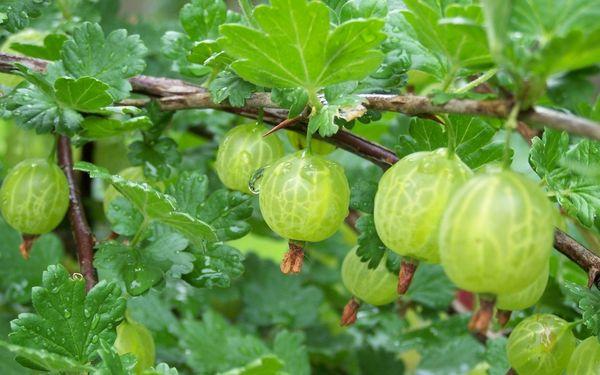
Spider mites cause significant damage to shrubs. The insects feed on leaf sap, causing them to turn yellow and fall off. Spraying with infusions of wormwood, tobacco, and garlic can help prevent spider mites. If the insect infestation is excessive, plants should be treated with chemicals (Fitoverm, Kleschevit) before flowering.
The gooseberry sawfly is a voracious caterpillar that can completely strip a bush of leaves in a week. If you spot this insect, place plastic wrap under the bush and shake off the caterpillars. You can spray the foliage with an infusion of wormwood, tobacco, or mustard, adding a little soap for adhesion. Before or after flowering, the foliage can be sprayed with a solution of Malathion.
Gooseberry moth caterpillars feed on berries. Spraying gooseberries with a solution of wood ash, mustard, or an insecticide helps get rid of the insects.
Aphid colonies, settling on the bush, feed on leaf sap, and their activity slows the growth of the gooseberry and causes the plant to wilt. Spraying with an infusion of garlic, onion peels, potato tops, burdock, or an insecticide solution (Fufanon, Iskra) can help control aphids.
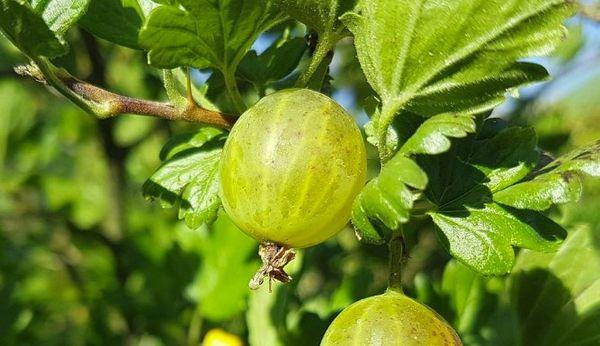
The currant gall midge is a mosquito-like insect that lays its eggs on leaves or buds. The emerging larvae feed on the plant's sap. The leaves and buds stop growing and dry out. Spraying with solutions of Malathion or Fufanon helps kill the insects. During the ripening period, the bushes are treated with an infusion of wormwood, ash, and mustard.
Taking care of your health
Gooseberries can grow on their own, even without special care. However, the yield will decrease each year. In cool and rainy weather, the bush, growing in poor soil, can become diseased. If the leaves on the bush begin to turn yellow and fall off, this problem can be difficult to correct. It's best to take care of the plant's health in advance.
In spring and fall, the bush should be fertilized with organic and mineral fertilizers. Be sure to trim excess branches. After the leaves fall, remove fallen leaves from the area around the trunk. Before wintering, water the soil with a copper sulfate solution.
In spring, whitewash the shoots and add 305 grams of wood ash to the tree trunk circle. Before flowering, the foliage can be treated with Fitosporin and Nitrafen as a preventative measure.
Protection from cold
The shrub tolerates harsh winters well. However, in late autumn, before the onset of frost, the area around the trunk can be mulched with peat and humus. In cold climates, the bush should be bent to the ground and covered with burlap or spruce branches. In winter, it's necessary to regularly add snow to the area around the shrub; this provides good frost protection.
Disease prevention
In case of improper care Gooseberries can get powdery mildew., anthracnose, white spot, mosaic, and cup rust. Prolonged rains and cold snaps can trigger the disease.
To prevent diseases, bushes are treated with Bordeaux mixture in early spring, and the soil is watered with a copper sulfate solution. Applying urea and manganese sulfate to the tree trunks will help increase plant resistance. Leaves can be sprayed with a boric acid solution. Preventative treatments with fungicides (Fitosporin, Topaz) help prevent diseases.
Collection and proper storage at home
Gooseberries are harvested when they are technically or fully ripe. The berries should have acquired the color typical for the variety, be firm to the touch, and have translucent skin. Ripe gooseberries lose their astringent flavor. Pick the berries wearing gloves and long sleeves. Harvest in July and August, during the day, when the dew has dried in the sun.
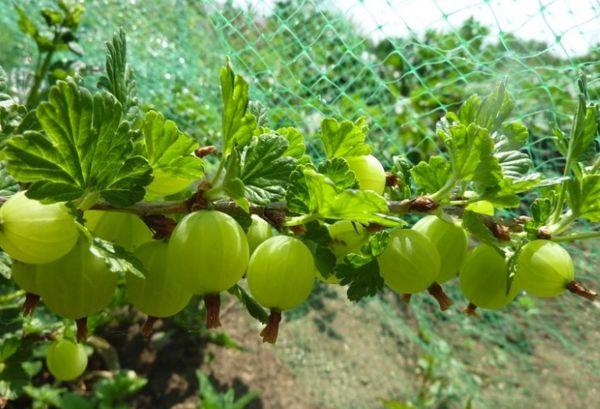 The berries are sorted, dried, and poured into plastic containers. Fresh gooseberries can be stored in the refrigerator for 1-2 weeks. If desired, the berries can be frozen. Gooseberries are used to make jams and compotes, while soft, overripe fruits are used to make juices and wines.
Tips from experienced gardeners
5 tips for growing gooseberries from experienced gardeners:
- To increase the yield, you can plant several different varieties of gooseberries in your plot.
- Pruning of branches is carried out during the dormant period.
- It is not advisable to plant gooseberries in lowlands where water collects after rain.
- During drought, bushes are watered at the roots, not by sprinkling.
- After harvesting, fruit buds are formed for the next season, so the plant needs to be fed again with superphosphate and potassium sulfate.
Related posts:
 Pests and diseases of gooseberries and their control using chemical and folk remedies
 Description of 36 of the best sweet and large varieties of gooseberries
 Description and characteristics of the gooseberry variety Commander, planting and care
 Description of 34 best gooseberry varieties for Siberia and the Urals, cultivation techniques
 TOP 20 ways to preserve fresh gooseberries for the winter
 22 Best Large-Fruited Gooseberry Varieties for the Moscow Region: Planting and Care
 Description of the Malachite gooseberry, varieties, planting and care
 Description of the English Yellow gooseberry variety, planting and care