
- Why is a transplant necessary?
- Recommendations for choosing deadlines
- Spring
- Autumn
- How to choose the right new location
- Crop rotation
- Illumination
- Requirements for neighbors
- Protection from winds
- Soils
- Ease
- Acidity
- Fertility
- Methods of replanting to another location
- With a lump
- seedling
- Aftercare
- Mulching
- Watering
- Top dressing
- Trimming
- Common mistakes
Gooseberries are undemanding and long-lived plants. Under favorable conditions, the bush produces a harvest of large, sweet berries every year for 20 years. Replanting is necessary for propagation or renewal of the bushes. To maintain a high yield in a new location, it's important to choose the best season to transplant gooseberries and the appropriate method—whether using bare-root seedlings or closed-root ones (like a root ball). To ensure rapid adaptation, it's important to avoid care errors.
Why is a transplant necessary?
Reasons for transplanting gooseberries:
- unsuitable conditions;
- overgrown bushes interfere with each other;
- redistribution of garden crops;
- poor yield, small berries.
The plot is limited, so it's necessary to alternate planting different varieties. If the gooseberries are small, it means the plant isn't getting enough light or the soil is too wet. In a new location, in lighter, more nutritious soil, the bush will regenerate and produce better fruit.
Bushes that are too large and encroach on the space of other plants should be thinned out and divided, and the seedlings obtained by dividing the bush should be planted in another part of the garden.
Transplantation helps improve the layout of the plot, the condition, and the yield of gooseberries.
Recommendations for choosing deadlines
Spring and fall are suitable for replanting gooseberries. However, spring replanting is rarely chosen because it's difficult to determine the exact time.
Spring
Gooseberries bud early, making it difficult to replant in the spring. The plant can be killed by sudden frosts in late March, insufficient warming, or excessive soil moisture after the snow melts.
When replanting after the growing season begins, in April, the plant needs time to adapt. This will drain the energy needed for growth and fruiting. If the roots are damaged during replanting, the plant will not receive enough nutrition for development and may die. If the fall replanting was missed due to early frosts, then the procedure is postponed until spring.
Autumn
The best time for replanting is September and October. After pruning, the bushes will retain strong shoots. Over the winter, the plants will strengthen their position and be ready for growth in the spring.
In autumn, plants adapt better to new conditions after transplantation, so this is a good time to transplant gooseberries for propagation by layering and dividing the bushA weakened plant will recover faster if it is replanted in the fall.

How to choose the right new location
Gooseberries grown in favorable conditions produce large, sweet berries. Therefore, to ensure the yield doesn't decline in a new location, it's important to properly prepare the site.
Crop rotation
According to the rules of alternating garden and vegetable crops, gooseberries are planted after potatoes, legumes and vegetable crops that do not deplete the soil much - radishes, beans, zucchini, corn.
Unfavorable predecessors include raspberries, blackcurrants, and cherries. These plants harbor parasites that attack gooseberries. Before replanting gooseberry bushes, enrich the soil with green manure crops such as clover and lupine.
Illumination
To prevent excess moisture from accumulating in gooseberry beds, choose a well-lit, elevated site. Outbuildings and nearby trees should not cast dense shadows on the gooseberry bushes. Therefore, plant the bushes at a distance from these shadows.
Requirements for neighbors
Tomatoes are beneficial neighbors for gooseberries, as they repel harmful insects. Red currants also make a favorable companion. Mint, lemon balm, dill, and garlic will protect gooseberries from aphids.
Trees located near the gooseberry will retain snow in winter, protecting the soil from freezing.
Protection from winds
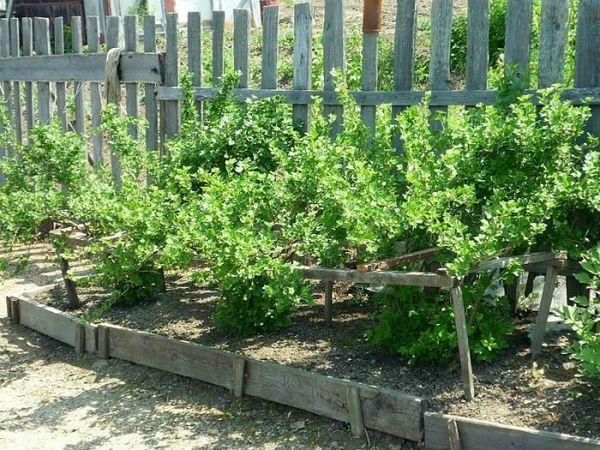
In summer, leafy neighbors will prevent strong gusts of wind that accelerate moisture evaporation from the soil surface. The optimal distance between them and gooseberry bushes is 2 meters. Gooseberries will be protected from drafts if they are placed 1.5 meters from the fence.
Soils
For gooseberries to take root in a new location, the soil must be permeable to moisture and air, warmed by the sun, and easy to cultivate.
Ease
Light loam and sandy loam are favorable for plant growth. Sandy soil should be supplemented with clay to improve moisture retention. Heavy clay soil will lead to waterlogging, and the bushes may be susceptible to fungal attack. Adding sand will improve the warmth and aeration of clay soil.
Acidity
Gooseberries thrive in low pH conditions – 6.5. Soils with a high pH should be tilled with lime, chalk, and wood ash, which will provide an additional source of calcium, phosphorus, and potassium. With a pH below 6, gooseberries produce small, tart berries.
Fertility
Gooseberries prefer potassium-rich soil. Before replanting, clear the soil of plant debris and weeds, loosen it, and till it with organic fertilizer. Apply 2-4 kilograms per square meter of soil.
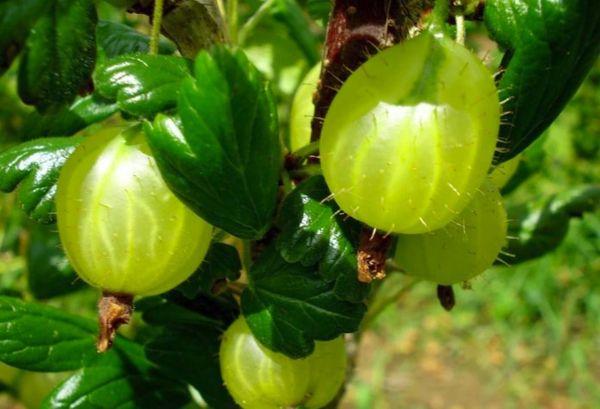
For poor soil, add 30 grams of urea, 50 grams of superphosphate and 20 grams of potassium chloride.
Methods of replanting to another location
Gooseberry bushes are replanted in two ways: with a root ball or with bare-root seedlings. The planting technique is the same, but the seedlings take root less easily.
With a lump
How to transplant a whole bush:
- the day before planting, dig a hole 50 centimeters deep;
- water it generously, pouring out 4 buckets of water;
- Before planting, place drainage material at the bottom of the hole - pebbles, broken brick, crushed stone in a layer of 5-10 centimeters;
- the top layer of excavated soil is mixed with compost, 200 grams of superphosphate and 300 grams of wood ash are added and the mixture is poured into the hole;
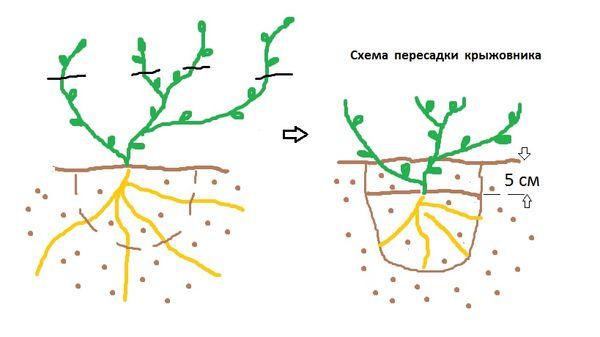
- cut off dry, damaged branches from the bush, shorten young shoots by a third;
- dig around the bush at a distance of 30 centimeters from the base;
- If the roots have spread further, they need to be cut off;
- take it out with a shovel together with a lump of earth on the roots;
- transfer the bush to the prepared hole;
- the plant is covered with the remaining soil and compost and compacted;
- pour a tree trunk ridge slightly wider than the crown and 10-15 centimeters high.

The transplantation process is completed with watering and mulching: gradually pour out 3 buckets of water, 10 liters each, and sprinkle dry soil and peat chips onto the root area.
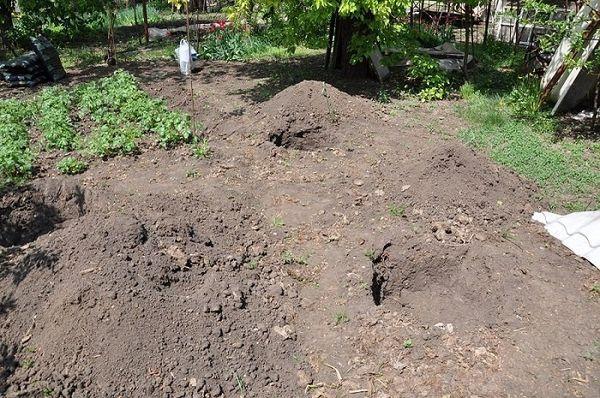
The bush should be positioned so that the roots begin 5 centimeters below ground level. To preserve the loose soil ball, tie burlap or agrofibre around the base of the plant, then pry it up from underneath with a shovel.
Preliminary pruning balances the crown and roots and promotes renewal. The bush becomes smaller and easier to transport. The root ball protects the roots from damage. They quickly extract nutrients from the soil, allowing the bush to grow and produce new shoots.
seedling
Gooseberry propagation is achieved by dividing the bush. Seedlings with exposed roots cannot be stored for long. Plants freed from their original root ball have a harder time establishing themselves in a new location. Therefore, replanting seedlings is done only in the fall.
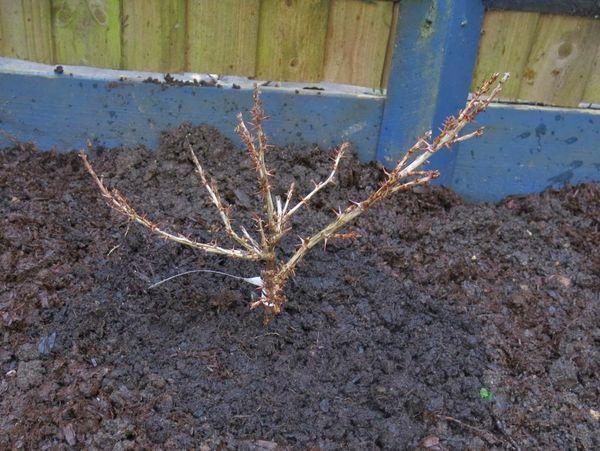
For better rooting, soak the plant in a rooting solution. Before placing it in the planting hole, spread the roots to avoid damage from the soil being added. Shaking the seedling gently will distribute the soil evenly between the roots. After adding soil, you can lightly water the plant, and then add more soil. This will compact the soil evenly; there's no need to pack it down too hard.
Aftercare
For growth and fruiting, established bushes require nutrition, moisture and pruning.
Mulching
Mulch will retain moisture and protect against weeds and pests. A layer 10-15 centimeters thick allows water to pass through but blocks light. Under these conditions, weeds rarely bother the gooseberries. Without mulch, dandelions and couch grass will grow, weakening the plant.
For coating use:
- dry peat crumbs;
- crushed humus;
- sawdust;
- bark;
- chips.
Coniferous sawdust increases soil acidity, so gooseberries are mulched with deciduous sawdust. In winter, the tree trunk area is covered with dried grass, hay, and leaves.
Watering
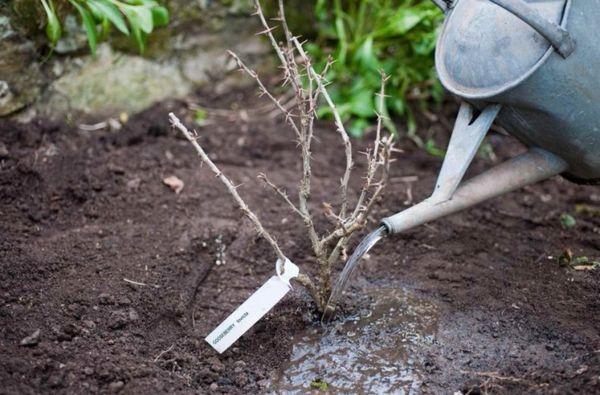
Gooseberries have a well-developed root system. Excess moisture can cause the plant to become ill. Transplanted in spring, in June, a gooseberry bush only needs moderate watering twice a week if there's no rain. In July, water once every two weeks. In hot weather, sprinkler irrigation is used, which involves spraying the leaves with water. Watering should be done in the morning or evening.
In autumn, the final watering is carried out when the temperature reaches 8°C (46°F). Add 50 liters of water under the bush. This generous watering will protect the soil from freezing.
Top dressing
Gooseberries take 20-30 days to establish themselves in spring. Two weeks after the buds open on the transplanted bush, nitrogen fertilizer is applied. This promotes crown growth. Chicken manure is an organic source of nitrogen. Pour 10 liters of this infusion under the bush. Remove any mulch beforehand.
Liquid organic and inorganic fertilizers are absorbed more quickly. Before applying fertilizer, gooseberries should be watered, then the nutrient substrate or infusion should be evenly distributed around the trunk. Fertilizers with microflora can also be used. However, they are not compatible with mineral substrates, as minerals destroy microorganisms.
At the end of June, you can feed gooseberries with potassium. This substance retains moisture, and the plants will better tolerate the heat.
In the fall, compost and organic matter are added. Phosphorus-potassium fertilizers strengthen the roots. After autumn replanting, the first spring fertilizers are applied when the buds open. The bushes are fed with urea, after loosening the soil underneath.
Trimming
Branches damaged during transportation should be trimmed after planting. Broken shoots will not grow back together.
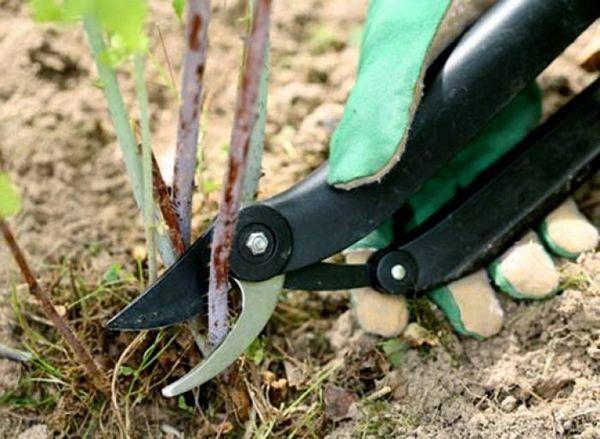
If an old bush is replanted for rejuvenation, it needs to be pruned annually. Before wintering, remove old branches, leaving 6-8 young shoots.
Common mistakes
Common violations of gooseberry transplantation techniques:
- freeing the roots from the soil;
- watering with cold water;
- lack of organic matter in the soil;
- close location of groundwater;
- lack of drainage.
In the fall, a bare-root bush will take root if it receives adequate nutrition and warm weather. In the spring, gooseberries can only be replanted with a root ball.
In any season, watering should be done with water at a temperature between 15 and 25 degrees Celsius. Cold water from a well cools the plant and then warms up in the sun. The temperature fluctuations can kill the bush. Gooseberries also deteriorate due to high soil moisture caused by groundwater. Therefore, to avoid waterlogging, drainage should be provided when planting.
Don't neglect to till the soil with organic fertilizer before replanting. Even if the beds previously contained beans, mature gooseberry bushes may lack nutrients and will bear fruit less effectively in the new location.
Related posts:
 Description of 36 of the best sweet and large varieties of gooseberries
 Pests and diseases of gooseberries and their control using chemical and folk remedies
 Description of 34 best gooseberry varieties for Siberia and the Urals, cultivation techniques
 Description and characteristics of the gooseberry variety Commander, planting and care
 22 Best Large-Fruited Gooseberry Varieties for the Moscow Region: Planting and Care
 TOP 20 ways to preserve fresh gooseberries for the winter
 Description of the Malachite gooseberry, varieties, planting and care
 When and how to properly pick gooseberries with your own hands to avoid getting pricked