
- Description and characteristics of the variety
- Drought resistance, frost resistance
- Productivity and fruiting
- Resistance to diseases and pests
- Advantages and disadvantages
- Landing rules
- Recommended timeframes
- Choosing a suitable location
- How to select and prepare planting material
- Planting diagram
- Aftercare
- Watering
- Top dressing
- Crown formation
- Hilling
- Diseases and pests
- Harvesting and storage
- Application areas
Since 2000, the Ural Emerald gooseberry variety has been registered in the State Register of Breeding Achievements of the Russian Federation. The hybrid is approved for cultivation in Western and Eastern Siberia. It is characterized by frost resistance, undemanding cultivation, and high yields.
Description and characteristics of the variety
The Ural Emerald gooseberry is the fruit of scientific research by Chelyabinsk breeders. The variety was developed by crossing the frost-resistant Pervenets Minusinsk and the thornless, high-yielding Samorodok variety. The hybrid inherited the best properties from its parent crops.
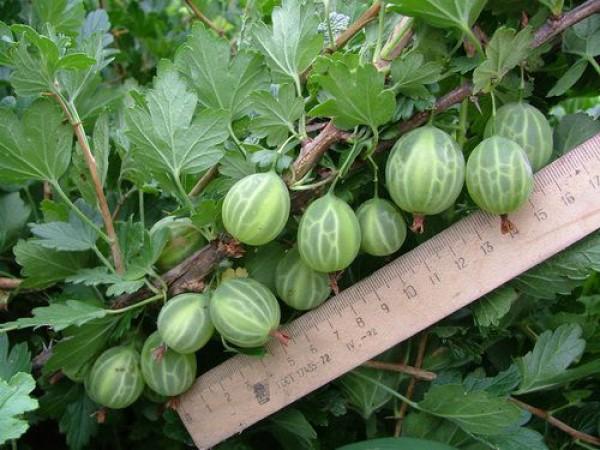
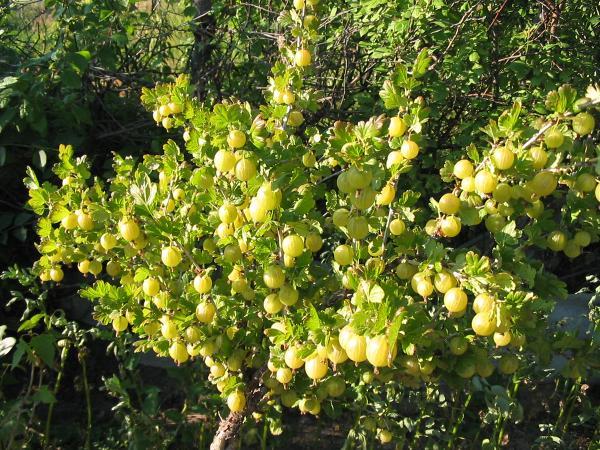
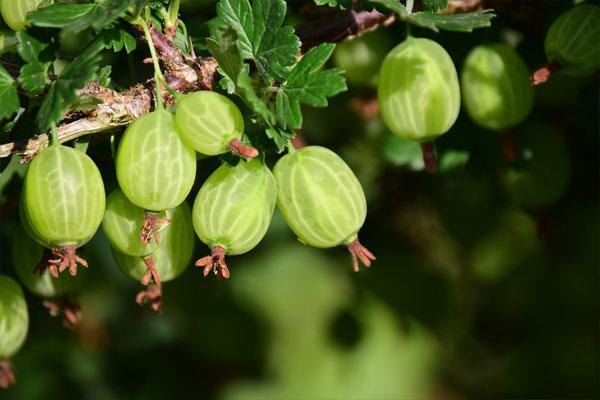
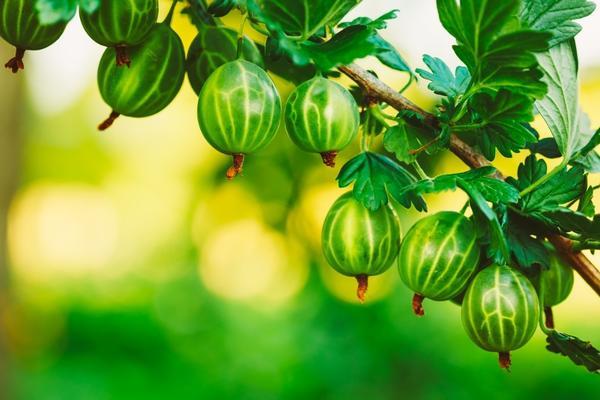
Gooseberry bushes are medium-sized (up to 1.2 m), compact, and densely foliated. A medium number of thorns grow on green young shoots. The dark green leaf blades are wrinkled, serrated at the edges, not uniform, and five-lobed. Pink bisexual flowers bloom in May. This variety is self-pollinating.
Drought resistance, frost resistance
Without cover, the Ural Emerald gooseberry can withstand temperatures down to -35°C. During snowless and harsher winters, the plant should be insulated.
This variety is not drought-resistant. Yield depends on irrigation.
Productivity and fruiting
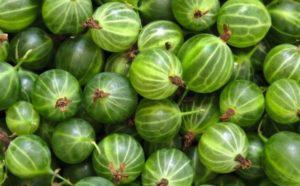
The green, large, uniform fruits of the Ural Emerald gooseberry ripen in the last ten days of June or early July. Each berry weighs 6.5–7.5 g. The tasting committee awarded the Ural Emerald the highest rating for its balance of natural sugars and organic acids. The ascorbic acid content per 100 g of fruit is 20.5 mg, which contributes to its health benefits.
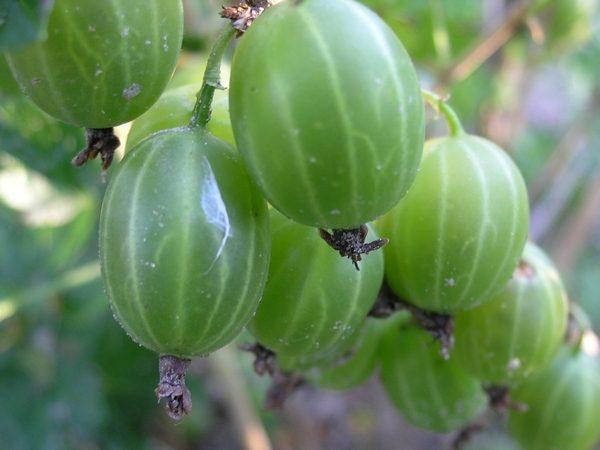
Yields depend on care and plant height. Average yields are 3–6 kg per plant or 12 tons per hectare. Fruiting begins 3–4 years after planting and continues for 15 years.
Resistance to diseases and pests
With proper cultivation practices, the Ural Emerald gooseberry is resistant to fungal diseases and pests. High humidity, high summer temperatures, and excess or deficiency of micronutrients create favorable conditions for pathogens such as anthracnose, white spot, and powdery mildew. The crop requires preventative treatments.
Advantages and disadvantages
The Emerald or Ural Emerald gooseberry has the following positive characteristics:
- high yield - up to 6 kg per bush;
- immunity to pine sawfly, moth;
- winter hardiness (up to -35°C), adaptation to the climatic conditions of Western and Eastern Siberia;
- preservation of shape and taste of fruits during transportation;
- annual fruiting regardless of weather conditions;
- ease of care;
- large-fruited;
- sweet and sour taste of berries with a tasting score of 5 points.
Gardeners consider the dense crown and the presence of thorns to be the disadvantages of gooseberries.
Landing rules
Planting is an important agricultural measure on which the development and health of the Ural Emerald gooseberry depends.
Recommended timeframes
You can plant gooseberries in the spring before the buds open, but the plant will take root better if planted in the fall, in late September or early October, a month before frost.
Choosing a suitable location
Gooseberries prefer fertile medium and light loams and do not tolerate flooding, heavy clay soils, or waterlogged soils. Choose an elevated, well-lit site for the plant. If the groundwater level is less than 1 meter below the surface, construct an artificial mound 0.5 meters high.
Places where raspberries and currants grew in previous years are not suitable for planting, as they are affected by the same diseases and pests as gooseberries.
The best predecessors of the crop are root crops and legumes.
How to select and prepare planting material
Signs of a Ural Emerald gooseberry seedling suitable for planting:
- root system consisting of 2–3 woody roots and a network of elastic feeding roots;
- 3–4 pruned shoots up to 30 cm long;
- absence of spotting of leaves, bark, dried buds;
- flexibility of green shoots.
Before planting, gooseberry roots are first soaked in Kornevin or Zircon, then dipped in a clay slurry to retain moisture.
Planting diagram
Gooseberry Ural Emerald is planted in a sparse pattern, where the distance between bushes is 1.5 m, between rows - 2 m.
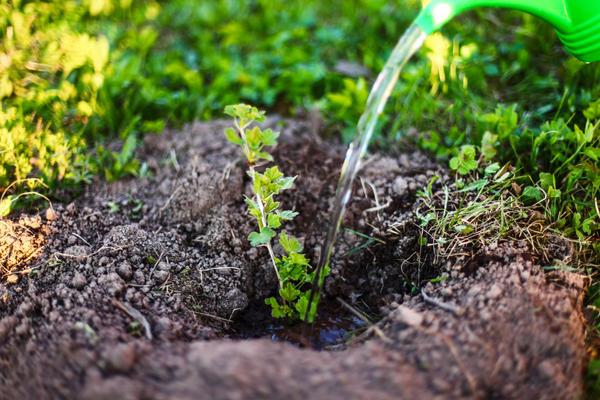
Preparing the plot for the crop begins with removing weeds and digging the soil. Two to three weeks in advance, prepare planting holes half a meter in diameter and 0.4 meters deep. Mix the fertile soil layer with a bucket of compost and 400 grams of wood ash.
If the seedling was purchased with a closed root system, it is planted with the root ball. The exposed roots are spread out, and the soil mixture is added in sections, compacting it to prevent air pockets. The plant is watered with 10 liters of water and mulched with a 10-centimeter layer of peat and sawdust.
The root collar is deepened by 5–6 cm.
Aftercare
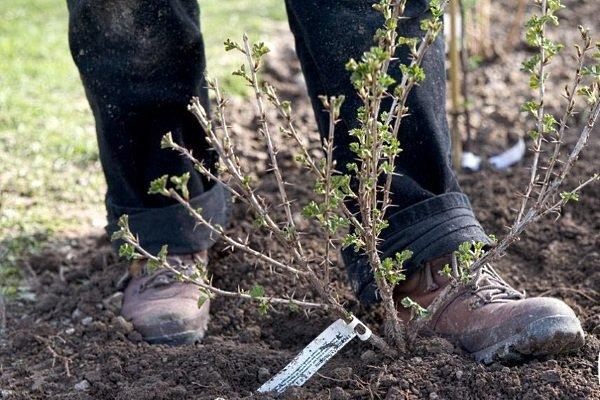
After planting, care for the Ural Emerald involves moistening the soil, pruning for formative and sanitary purposes, loosening the soil, and hilling. Proper and timely fertilizing and preventative measures to prevent diseases and insect pests also increase yield.
Watering
During the first year after planting, gooseberries are watered regularly, once a week, preventing the soil from drying out. Mature bushes are watered for the first time during the active growth phase of the shoots in late May or early June. Each bush requires 30 liters of water. The second watering occurs when the ovaries are forming. When the fruit is ripening, three weeks before maturity, the plant is watered a third time. The final watering is a moisture-recharging irrigation. If there is sufficient rainfall, the plant is not watered.
Take a look Also
Top dressing
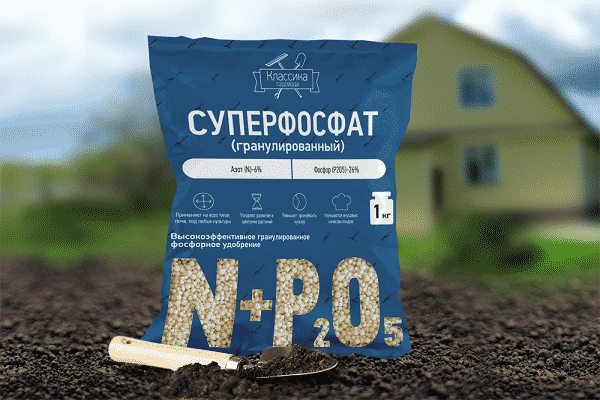
Gooseberries are fertilized four times a year. The first time, in early spring, 70 grams of ammonium sulfate is scattered under the bush or the bushes are mulched with a 7-9 centimeter layer of rotted manure or humus. The second time, gooseberries are fertilized during flowering. The plant is watered with an infusion of mullein and nettle. During fruit formation, the bushes require potassium and phosphorus. Superphosphate is suitable, applied at a rate of 70 grams per square meter.
In the fall after pruning to increase the winter hardiness of gooseberries 400 g of potassium nitrate, 1 kg of wood ash or 80 g of potassium sulfate are added to the soil.
Crown formation
The following year after planting the gooseberry, three shoots from the current year are added to the three shoots from the previous year, selecting the strongest. The rest are removed. This procedure is repeated every year. By the time fruiting begins, the crown skeleton consists of 12 to 15 branches of varying ages. Branches six years and older are removed, as younger shoots bear fruit.
When pruning, weak branches, those damaged by diseases and pests, those lying on the ground, and those growing inside the crown are also cut out.
Hilling
After rain and watering, when a crust forms on the surface, the soil under the gooseberry bushes is loosened. In the fall, in preparation for winter, the bushes are hilled and covered with straw and fallen forest leaves.
Diseases and pests
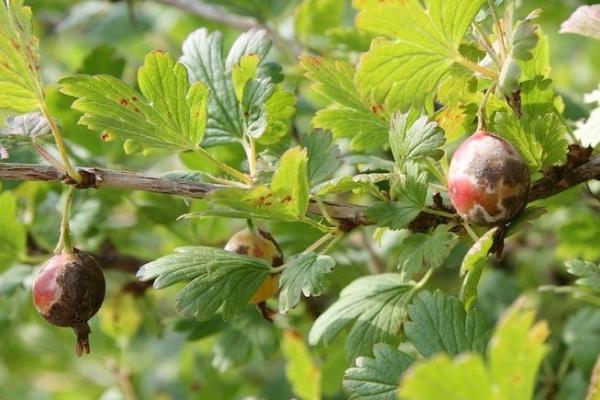
Failure to comply with irrigation and fertilizing standards, dense crowns, insufficient lighting, and proximity to groundwater lead to the occurrence of the following diseases:
- Septoria leaf spot. Small brown spots, later turning light, form on leaves and fruit, where fungal spores develop. As the disease spreads, gooseberries drop their leaves prematurely. To prevent or treat white spot before bud break, treat the bushes and the soil beneath with Bordeaux mixture and copper sulfate.
- Anthracnose. Brown spots on leaf blades enlarge and merge over time. Leaves fall off, shoot growth is inhibited, and yields decrease. Effective products for preventing and treating copperhead include Previkur, Fundazol, and Skor. Two to three treatments are required, spaced weekly.
- Powdery mildew. A white coating, resembling scattered flour, appears on the leaves. By summer, the coating turns brown. The leaves become deformed, the ovaries fall off, and the fruits dry out. Treatment includes the fungicide Topaz (2 mg of dry matter per bucket of water), a copper sulfate solution, and the fungicide Hom. When spraying three times, alternate the products weekly. Prevention involves treating with an infusion of onion peels, ash, and garlic.
Take a look Also
The most common insect pests of the Ural Emerald gooseberry are shoot aphids, spider mites, and the narrow-bodied borer. To prevent insect attacks, spray the bushes with an infusion of wormwood, tobacco, and potato tops. If folk remedies fail, chemical treatments are used. Iskra and Aktara are effective against aphids. Fufanon and Antikleshch are effective against spider mites. If the plant is infested with the borer, treat the bushes with an aqueous solution of Actellic.
Harvesting and storage
Ural Emerald gooseberries are hand-picked in dry weather from late June to mid-July. To prevent injury to hands from the thorns, wear long sleeves and gloves. Berries are picked one at a time, stem attached.
When growing the crop on an industrial scale, a vibrating device or comb is used to harvest the fruit. Mechanized and semi-mechanized methods speed up harvesting but reduce shelf life due to mechanical damage.
For culinary processing, berries are harvested at the technical ripeness stage. If the fruits are grown for fresh consumption, they are allowed to ripen further, which is characterized by increased sugar content and less dense pulp.
If you miss the consumer ripeness phase, the fruits will fall to the ground.
Green, unwashed berries can be stored in a cool place for up to 5 days, and unripe berries for up to 10 days, if the container volume does not exceed 5 kg. To extend the shelf life to 6 months and preserve the vitamins, berries are frozen. Oven-dried berries remain edible for up to two years.
Application areas
Ural Emerald gooseberry juice has analgesic, diuretic, and laxative properties. To preserve the berries' vitamin and mineral content, it's recommended to consume them fresh.
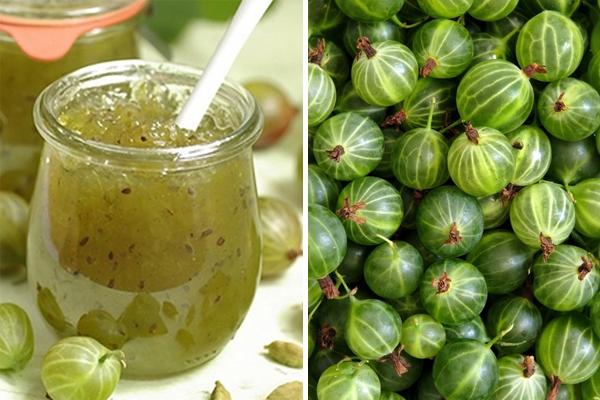 The sweet and sour taste of the fruit goes well with fish and meat, so the berries are added to sauces, giving the product a sophisticated flavor.Since gooseberries contain no more than 43 kcal, they are used for weight loss. The berries are used to make jam, preserves, marmalade, and homemade liqueurs.
Related posts:
 Description of 36 of the best sweet and large varieties of gooseberries
 Description of 34 best gooseberry varieties for Siberia and the Urals, cultivation techniques
 Pests and diseases of gooseberries and their control using chemical and folk remedies
 Description and characteristics of the gooseberry variety Commander, planting and care
 22 Best Large-Fruited Gooseberry Varieties for the Moscow Region: Planting and Care
 Description of the English Yellow gooseberry variety, planting and care
 Description of the Malachite gooseberry, varieties, planting and care
 Description and characteristics of the Consul gooseberry variety, planting and care