
- Why is vaccination necessary?
- Standard plants
- Landscape design
- Saving space
- Advantages and disadvantages of growing on a standard tree
- What are they vaccinating for?
- Fruit trees and bushes
- Compatible gooseberry varieties
- Necessary conditions
- In winter
- In the spring
- Recommendations for choosing deadlines
- How to graft
- Preparing the scion
- How to prepare rootstock
- Step-by-step instructions
- How to grow and care for standard gooseberries
- Bush formation
- Tips and recommendations
- Result
Grafting is a necessary procedure for gooseberries, not only improving their flavor but also increasing yield. It also saves space in the garden. Proper grafting quickly produces the desired results without requiring complex care.
Why is vaccination necessary?
Gooseberry grafting is a process that depends on the gardener's personal preference. However, the process has the following advantages that should be considered when performing the procedure.
Standard plants
This type of grafting is performed on golden currants. This method produces a standard plant.
Gooseberry cuttings are grafted onto a currant bush, and the side shoots are removed. This allows the gardener to shape the crown.
The advantage of this type of grafting is its resistance to drought and frost. Standard plants produce large harvests and require little maintenance.
Landscape design
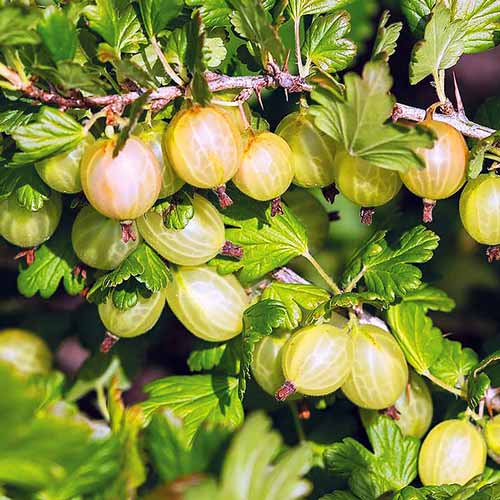
Grafted gooseberries have an attractive appearance and can become a beautiful addition to any garden. Gardeners shape the bush's crown, creating a unique garden decoration. They are used alongside other plants, complementing each other.
Saving space
The bushes can be grown in a small area without affecting the quality of the fruit or the yield. The crown is elevated, taking up minimal space in the garden.
Advantages and disadvantages of growing on a standard tree
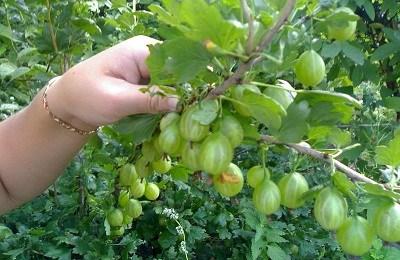
Growing gooseberries by grafting has the following advantages:
- berry flavor;
- the berries are large in size;
- the bushes are resistant to diseases and frost;
- it is easier to cultivate the soil around the bushes;
- the berries ripen faster and more evenly, since the trunk receives more sun;
- the culture is ventilated, so rot and mold very rarely form;
- The harvesting procedure is not complicated.
The disadvantages of a standard bush include the following factors:
- It is necessary to regularly prune and remove root suckers;
- grafted shoots may die;
- It is necessary to select varieties.
Some varieties of gooseberry are incompatible and do not produce fruit after grafting.
What are they vaccinating for?
When deciding to make a standard crop, it is necessary to determine the type of plant onto which the grafting will be carried out.
Fruit trees and bushes
Grafting onto fruit trees is possible. Cherry and rowan are most commonly used. A branch with gooseberries can be grown on the tree. However, such cuttings graft poorly and often produce fruit with a mixed flavor. This method is suitable when you want to grow berries with unusual flavor characteristics. Grafting is most often done onto currants or jostaberry bushes. These combinations produce a harvest and large berries.
Compatible gooseberry varieties
Selecting compatible varieties increases the survival rate. These varieties can complement each other and contribute to a harvest with excellent flavor. The following varieties stand out:
- Oregonian;
- gooseberry;
- Gooseberry Malachite.
Gardeners often experiment and combine varieties of large-fruited crops to obtain a harvest.
Important: When choosing a variety, it is necessary to give preference to crops that are resistant to low temperatures..

Necessary conditions
Depending on the time of day the grafting is performed, proper care must be followed. The final result depends on the conditions under which the procedure is performed.
In winter
To grow stamped gooseberries, cuttings must be prepared before winter. The grafting is done on currant or gooseberry bushes up to two years old. The cuttings are taken from young shoots up to one year old. The shoots should be dormant and stored in a cool place.
In the spring
Spring grafting is done before the buds open. Cuttings are prepared in winter and stored in the snow or in a cool place. The bushes should be pre-treated with pesticides.
Recommendations for choosing deadlines
The period of formation of a standard plant depends on the following characteristics:
- If the cutting was harvested in the summer, the grafting can be done in early September. A lateral cut is used for this.
- In mid-September, grafting is carried out using the oblique wedge method.
- It is recommended to carry out grafting in mid-summer using buds, no later than mid-July.
- In winter, grafting is carried out at the beginning of March.
The duration of the procedure is determined depending on personal preferences.
How to graft
To carry out the procedure, it is important to follow all the rules of grafting, on which the final result depends.
Preparing the scion
For grafting, it is necessary to observe the following features of preparing planting material:
- Cuttings must be harvested before temperatures drop. This usually occurs in mid-September.
- The thorns are removed.
- The cuttings must be placed in boxes with peat and stored for 2 weeks at a temperature of at least 20 degrees.
- After this period, the cuttings are placed in a cool place. This could be a basement or the bottom of a refrigerator.
- The material is stored in a cool place until planting.
Buds should not open prematurely. Cuttings should be regularly inspected for damage and rot.

How to prepare rootstock
Properly prepared rootstocks are essential. Rootstocks up to two years old are used. The plant is dug out of the ground and stored in a cool place.
To avoid damaging the rootstock, it should be placed in a mixture of peat and sand. The bushes are dug up at the end of September.
Step-by-step instructions
The grafting procedure has the following features:
- Select the grafting method (a split, a side cut, or a T-cut can be used);
- Winter grafting is done in February. The plant is dug up and stored in a basement. After grafting, the bush is moved to a room with a temperature no higher than 18 degrees Celsius.
- The summer procedure is carried out in late June to mid-August. The cutting is grafted onto the mother plant.
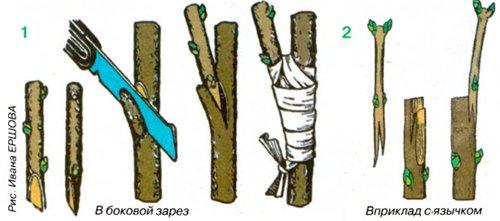
To carry out the procedure, you must follow the following algorithm of actions:
- leave a strong shoot on the rootstock, the rest are removed;
- using a sharp knife, which has been previously disinfected with alcohol, make an oblique cut;
- the cutting is cut at an angle;
- using the drug "Heteroauxin", moisten the cutting and rootstock;
- insert the cutting into the cut with the rootstock;
- fix the area with a special tape; a strip of polyethylene can also be used, but after the implant has taken root, such material must be removed;
- Using a garden solution, lubricate the cut area.
To prevent damage to the bush, it must be secured to a support. This will help maintain the integrity of the mother bush and the scion. The plant cannot maintain its balance on its own, so support is essential.
 Important: If a wooden support is used, care must be taken immediately to prevent damage or deterioration to the wooden stake driven into the ground. To ensure this, the stake is rolled and painted.
Standard gooseberries, grown without grafting, are also found in gardens. To do this, follow these steps:
- choose a strong bush without diseases or damage;
- in autumn, remove all shoots, leaving one;
- tie it to a support;
- the following year, remove all shoots that form, leaving 3-4 healthy sprouts;
- remove all buds from the shoots, leaving 2-3;
- After 2 years, form a crown of the required size.
This technique allows you to get large berries.
How to grow and care for standard gooseberries
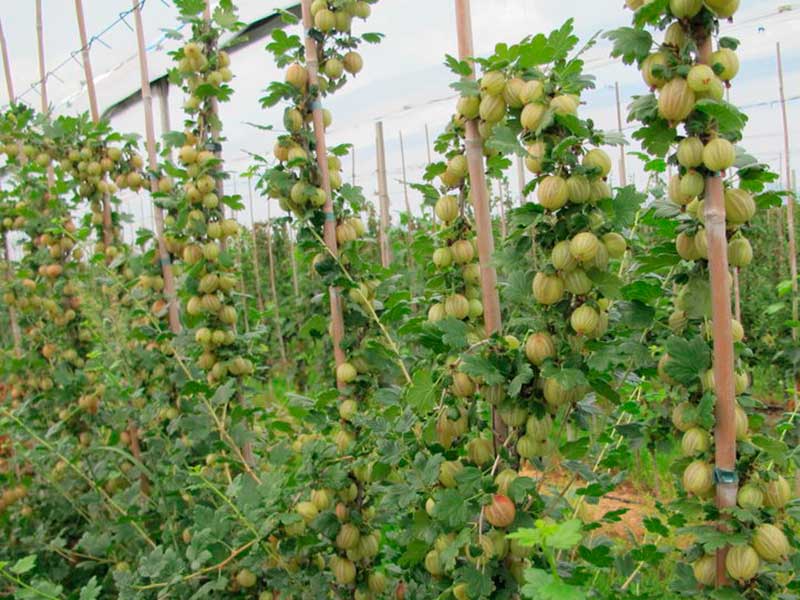
Proper care is essential for growing a standard plant. To grow a standard, it's necessary to regularly remove side shoots and tie up the bush during the first year after grafting. The main shoot, which will later form the crown, should be pinched at the desired height. The gardener determines the height themselves. However, a standard height of at least 80 cm is most commonly used.
Three to four buds are left at the cut site; the rest should be removed regularly. Shoots will emerge from the buds; these are shortened but not removed. These shoots will later form the crown.
The plant needs to be watered regularly, every 4-5 days, during the summer. Fertilize and monitor for pests to ensure the graft takes root. At the end of the first year, perform sanitary pruning, removing damaged shoots.
Proper winter cover is also important during the first year after planting outdoors. For this purpose, a wooden shelter is constructed. Special burlap bags can also be used.
 Important: To avoid complications with growing standard trees, it's most common to use the plant's own bushes. These plants establish themselves more quickly and require less maintenance.
Bush formation
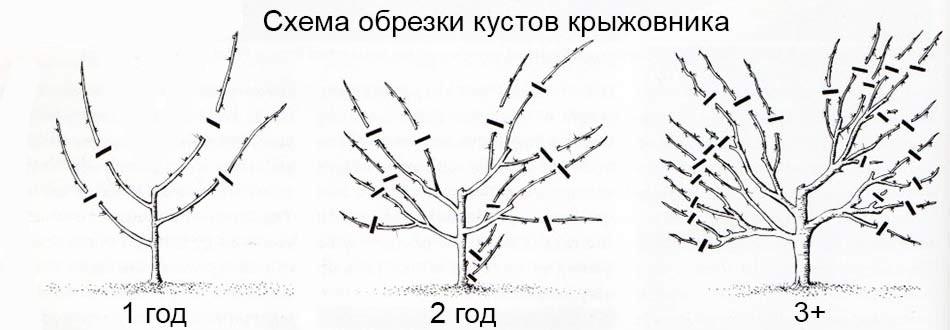
Pruning the bush occurs after the grafted cuttings have taken root and grown. Thorns are removed from the cuttings. Shoots emerging from the remaining buds are also pruned, and the gardener gradually shapes the crown. Regular pruning is necessary during the plant's growth. Root suckers that appear throughout the year are also removed. The gardener can shape the bush according to their preferences.
Tips and recommendations
To ensure successful planting of a bush, it is necessary to follow some advice from experienced gardeners:
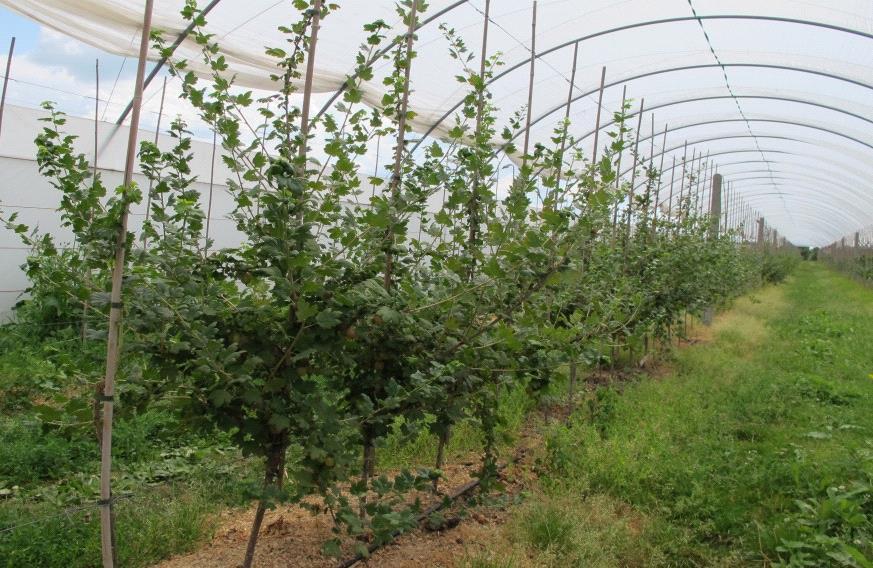
- When planting a crop, it's important to simultaneously create support. If many seedlings are being planted in one area, trellises can be used.
- Once the crown has formed, it's necessary to strengthen the garter, creating separate supports for the crown and the trunk.
- If the plant is grown indoors, it is necessary to regularly moisten the soil.
- The distance between bushes should be at least 40 cm, otherwise the crowns may become tangled.
- In order to make a standard, it is necessary to disinfect all items used; this will reduce the risk of infection at the grafting site.
To obtain a harvest from a standard tree, it is necessary to properly care for the bush for at least 3-5 years. Otherwise, all grafted shoots will die.
Result
Growing standard gooseberries is gaining popularity among gardeners. Growing standard gooseberries improves their yields. These plants produce larger harvests. The berries also vary in size and flavor. Another advantage of this method is the ease of care and harvesting. The bushes can be used decoratively and beautify the garden.
Related posts:
 How to plant grapes step by step, with a description of the process and care
 5 easy ways to propagate currants with cuttings in summer
 How to propagate grapes in summer using green cuttings at home
 How to propagate and grow peas, cultivation technology, and care in open ground
 How to properly plant peas in a greenhouse and open ground
 Step-by-step instructions and timing for replanting currants
 Planting and caring for garden lingonberries in a garden plot, propagation
 Growing and caring for almonds, planting and pruning rules at home