
- Main reasons
- Youth
- Old age
- Incorrect pruning
- Landing errors
- Impact of pests and diseases
- Influence of weather conditions
- Violations of the irrigation regime
- How does age affect
- Relationship between variety and fruiting
- Why does weather affect
- How to properly protect against diseases and pests
- Rules for applying fertilizers and top dressing
- Result
To ensure a good harvest, it's important to understand why gooseberry bushes aren't bearing fruit. To preserve the plant, it's important to follow proper care and perform timely rejuvenation procedures.
Main reasons
The following are the reasons why a plant fails to bear fruit. It's important to highlight the most common ones.
Youth
Gooseberries begin to bear fruit only in the fourth or fifth year after planting. Before that, it's rare for a bush to bear fruit. With proper care, the bush will begin to yield.
Old age
Bushes over 15 years old often begin to bear fruit poorly. To ensure a harvest, rejuvenation is necessary. This involves removing some of the woody shoots.
Incorrect pruning
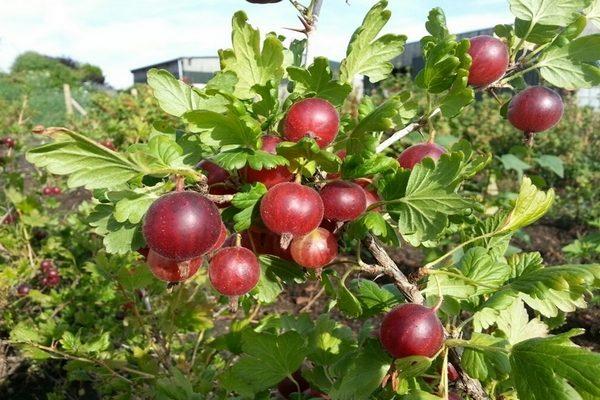
Gooseberries require regular pruning in the fall. Incorrect pruning or lack of pruning often results in smaller berries or even the complete absence of any.
The shoots tend to actively bear fruit for 3-4 years, so after this period, new shoots are left and the old ones should be removed.
Branches that have grown too much must be thinned out and damaged ones removed.
Landing errors
Incorrect planting can also affect berry yield. Common mistakes include:
- the area where gooseberries are planted is poorly lit;
- the bush is planted under trees or buildings;
- the soil was not fertilized during planting of the seedling;
- The seedling was planted incorrectly.
Another reason for the lack of berries may be the care provided after planting the seedling in open ground.

Impact of pests and diseases
To ensure a good harvest, it's important to treat the crop for diseases and pests promptly. Pests attack buds and leaves, which negatively impacts yield. When infected, the plant fails to bear fruit and often dies.
Influence of weather conditions
Unfavorable weather conditions often lead to problems and crop failure. The following weather conditions can affect gooseberries:
- rains - can contribute to the development of diseases;
- dry weather - reduces the number of buds, resulting in no harvest;
- late frosts - when exposed to low temperatures, which can occur in late April - mid-May, the crop does not bear fruit.

Bad weather also negatively affects the growth of the bush, which also negatively affects the harvest.

Violations of the irrigation regime
Proper watering is important for gooseberry development. The plant doesn't like moisture and can tolerate dry temperatures. However, to ensure a good harvest, the bushes need to be watered every 6-7 days.
How does age affect
After planting a seedling in open ground, it needs to be properly cared for. However, gooseberries begin to bear fruit fully 5-6 years after planting. Fruiting on the bush may begin earlier, but this depends on the variety. For a bush to produce fruit, it's crucial that the shoots are well-branched. If the bush is middle-aged but receives all the necessary nutrients, it will produce fruit annually, regardless of weather conditions.
Gooseberries can bear fruit for up to 20 years, producing abundant, large berries. However, the plant gets all the energy it needs to produce fruit from the soil.
Over time, the soil becomes depleted, so without proper fertilization, the plant stops bearing fruit. In such cases, replanting the mature plant to a new location is the solution.
Relationship between variety and fruiting
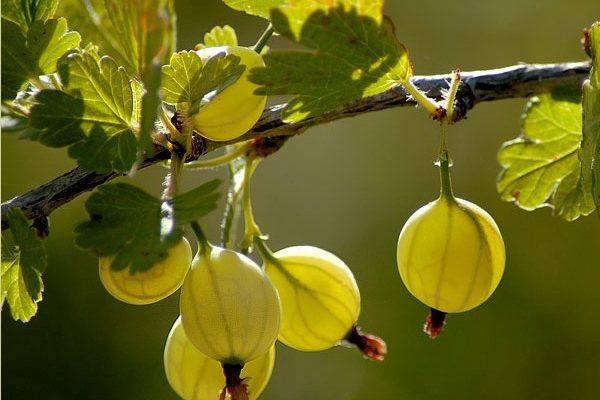
Some varieties of gooseberries have characteristics that must be taken into account when planting them:
- The Plum variety produces fruit regardless of weather conditions. A gardener can harvest fruit from a 4-year-old bush.
- The Pink variety—a distinctive feature of this variety is that it can only produce fruit on shoots 2-3 years old. Other shoots bear fruit poorly. Therefore, proper pruning is essential.
- The Malachite variety - if neglected and over-branched, the crop will not produce fruit.
Some gooseberry varieties produce a bountiful harvest every other year, regardless of weather conditions.
Why does weather affect
Gooseberries are an early-blooming crop, blooming early. Frost can cause the blossoms to drop. Rain can cause the buds to wilt, resulting in no fruit.
How to properly protect against diseases and pests
Gooseberries are susceptible to pests and diseases. Proper management is essential to preserving the crop.
| Problem | Solution |
| Bush diseases | |
| Powdery mildew | Symptoms appear immediately after flowering. A coating appears on the leaves, which gradually darkens. To prevent this problem, take the following measures: · choose varieties that are resistant to disease; · carry out pruning of shoots; · damaged areas must be removed; · In spring, before the buds open, spray with pesticides. It is also necessary to regularly remove weeds around the bushes and loosen the soil. |
| Anthracnose | The disease manifests itself as spots on leaves and young shoots. The spots are brown in color.
To prevent the disease it is necessary: · place seedlings at a distance of at least 1 meter from each other; · Before planting, treat the soil and seedlings with a solution of manganese; · Loosen the soil before watering; · Spray the bushes with 2% Nitrofen before the buds open. Spray with pesticides for prevention throughout the season |
| Septoria | The disease appears in early summer, affecting berries and leaves. It appears as a light-colored coating. The following methods are used for control:
· timely removal of fallen leaves; · pruning in autumn; · application of nitrogen and potassium fertilizers in spring; · carefully dig up the soil under the bushes. The fungus can overwinter in the soil, so after harvesting, the area is dug up and treated with a solution of potassium permanganate. |
| Columnar rust | The disease slows the development of young shoots, resulting in poor bush growth. The following methods can be used to prevent the problem:
· remove sedge in areas where gooseberries grow; · timely removal of fallen leaves; · soil loosening; · treatment with copper sulfate in early spring. You can also treat the bushes with 1% Bordeaux mixture |
| Pests | |
| Gooseberry moth | These are small insects that lay eggs in flowers. After the caterpillars hatch, the flower buds become unusable. The following methods are used to control this pest:
· hilling the bush in autumn; · removal of damaged inflorescences; · treatment of bushes with "Bitoxibacillin", "Karbofos". Carefully dig up the soil in the fall to remove the pest pupae. |
| Currant glasshouse | Caterpillars damage berries and cause them to fall. To combat the problem, spray the bushes with special preparations in early spring.
|
| Shoot aphid | Small insects appear on young shoots and feed on plant sap. Control measures include:
· spraying with soapy water; · dusting with ash. Using chemicals to control aphids. Treatments are carried out in the fall and early spring. |
To prevent pests, special treatments can be used in the fall. These products eliminate not only adult pests but also larvae.

Rules for applying fertilizers and top dressing
Proper nutrient application is crucial for a successful harvest. The gooseberry feeding schedule is as follows:
- In spring, fertilization should be done in two stages. The first stage involves applying organic fertilizer before bud break. The second stage involves applying mineral fertilizer after inflorescence formation.
- In summer, phosphorus and potassium fertilizers are applied.
- Autumn fertilization is carried out after the leaves have fallen. Humus or compost is used as fertilizer.
If necessary, complex fertilizers can be used, which are most often applied in the summer.
Important: Autumn fertilization is essential because the plant absorbs nutrients and sets buds for the future harvest.
Result
To obtain a productive gooseberry harvest, proper care and timely nutrient application are essential. It's also important to select the right variety based on the gardener's location.
Related posts:
 How to properly plant peas in a greenhouse and open ground
 How to propagate and grow peas, cultivation technology, and care in open ground
 The best eggplant varieties for growing in a polycarbonate greenhouse: planting and care
 How to plant grapes step by step, with a description of the process and care
 Causes of phylloxera in grapes, control measures with drugs and folk remedies
 How to control onion flies using natural and chemical methods
 Description of varieties of sowing peas and cultivation, to which family they belong
 Descriptions of the 20 best cherry varieties for the Moscow region, their planting and care