
- Description and Features
- Popular varieties
- Captivity
- Louisiana of Kyiv
- Vesnyanka
- Rosenmund
- Louiseania Crimson
- Chinese
- Tanyusha
- Ruslana
- How to plant correctly
- Requirements for location and lighting
- How to prepare a site
- Recommendations for choosing deadlines
- Planting diagram
- Care instructions
- Watering
- Top dressing
- Preparing for winter
- Trimming
- Sanitary
- Formative
- Diseases and pests
- Moniliosis
- Leaf roller
- Aphid
- Milky shine
- Gray rot
- Methods of reproduction
- Root shoots
- Layering
- Green cuttings
- Graft
- With bones
- Regional cultivation features
- Application in landscape design
Three-lobed almond is a popular crop that graces many gardens. To achieve successful cultivation, proper planting and comprehensive care are recommended. This should include timely soil moisture, formative and sanitary pruning, and fertilization. Adequate disease and pest control are also crucial.
Description and Features
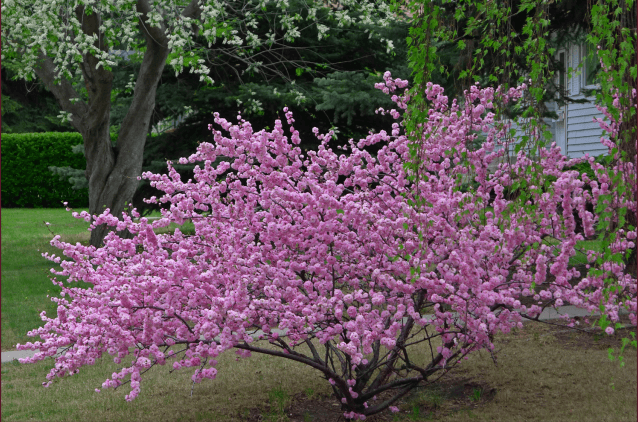
The three-lobed almond is also known as luiseania or prunus triloba. It belongs to the Rosaceae family and was first discovered in northern China in the 19th century. It grows as a tall shrub or small tree, 2-3 meters tall. The branches are covered with tan bark. Annual shoots have a slight down.
The plant produces elongated, light-green fruits. They are present throughout the growing season. Flowering begins in May, even before the foliage appears.
This plant is characterized by double flowers 3-5 centimeters in diameter. They are paired and densely cover the previous year's shoots.
Initially, the inflorescences are dark pink, but gradually lighten. The flowers remain on the shoots for quite a long time—up to 15 days. Then, spherical fruits appear, with a dry, velvety pericarp.
Popular varieties
Today, many varieties of this almond are known, each with its own distinctive characteristics.
Captivity
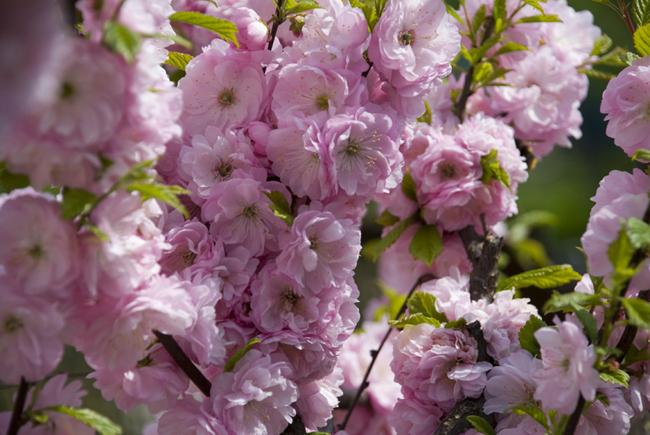
This is the most well-known ornamental form of the plant, distinguished by its large, double inflorescences, reaching 4 centimeters in diameter. Flowering begins when the foliage emerges, resulting in a lush bush reaching 2 meters in height. The fruit falls off before ripening, making it considered sterile.
Louisiana of Kyiv
This is a fairly old variety, representing the genetic basis of many plant varieties. Flowering begins quite early. The plant is characterized by fairly large, richly colored flowers.
Vesnyanka
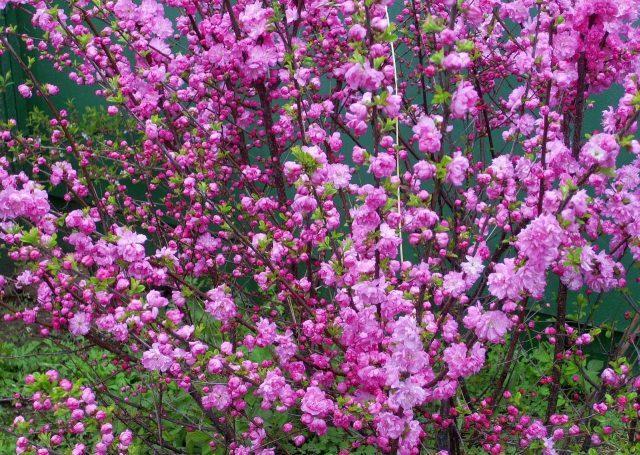
This standard variety has excellent ornamental qualities. It is resistant to many diseases. Its resistance to monilial blight, which causes damage to the bush, is considered particularly valuable.
Rosenmund
For this almond varieties Characterized by a long flowering period, lasting over three weeks, the plant is compact and features large, double, pink flowers.
Louiseania Crimson
This plant is characterized by its unusual coloring. During flowering, the shoots of this compact bush are covered with crimson flowers.
Chinese
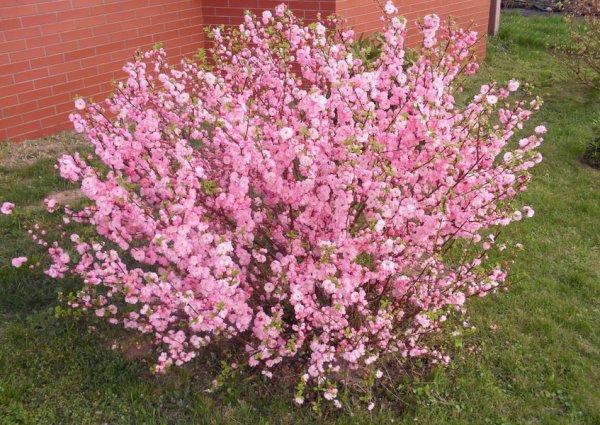
This hybrid resembles a sakura in appearance. This is not surprising, since it was obtained by performing grafting on felt cherryThis variety has more modest flowers compared to double varieties. However, it is characterized by longer and more abundant flowering.
Tanyusha
This variety blooms quite early and is a beautiful ornamental plant. The flowers are large, double corollas with numerous curled, pink petals.
Ruslana
This variety is characterized by double, flesh-colored flowers that turn white toward the end of flowering.
How to plant correctly
To achieve success in growing crops, it is important to choose the right planting location and strictly adhere to agricultural recommendations.
Requirements for location and lighting
Almonds should not be planted in low-lying areas. It's important to avoid areas prone to spring flooding or high groundwater levels.
The area should be well lit by the sun and protected from the wind.
The plant thrives best in light, loamy soil, which should be slightly alkaline. Almonds do poorly in heavy clay soil.

How to prepare a site
To plant the plant, it's recommended to dig a hole half a meter deep. To ensure good drainage, add a 15-centimeter layer of crushed stone or coarse gravel to the bottom. It's also recommended to add 200 grams of lime.
Recommendations for choosing deadlines
It is recommended to plant the plant in spring or fall. In the former case, wait until stable warm weather sets in, with no risk of frost. In fall, planting is carried out after the leaves have fallen. Fall planting is considered preferable. If you plan to plant several bushes, it is recommended to leave a 3-meter gap between them.
Planting diagram
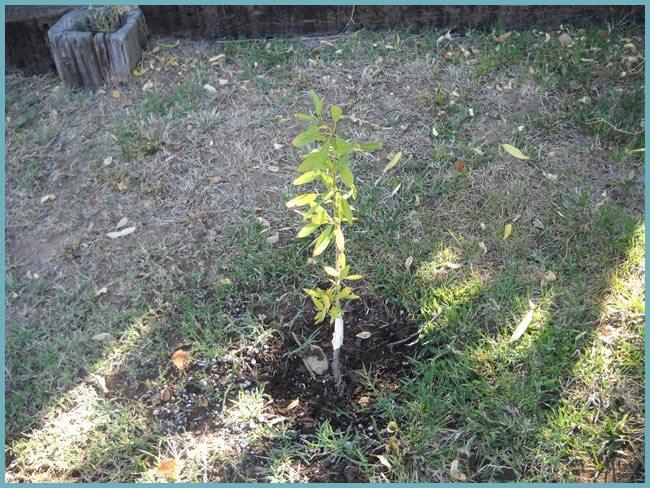
The seedling should be placed in a hole and covered with a special soil mixture. It is recommended to combine leaf mold, humus, and sand in a ratio of 3:2:1. The soil around the tree should be lightly compacted and watered thoroughly.
Care instructions
The plant is fairly easy to care for. Regularly following the necessary cultivation practices is recommended.
Watering
Almonds are drought-resistant. However, adequate soil moisture is essential for optimal development. If the plant is planted in sandy soil, it is recommended to water it slightly more frequently.
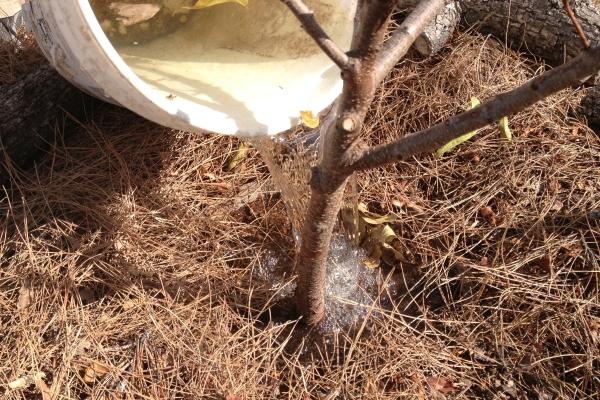
It's recommended to moisten the soil when the top 1-1.5 centimeters of soil dries out. In this case, pour a bucket of water into the area around the tree trunk. Overwatering the soil can cause root rot. Seedlings should be watered more frequently—it's recommended to do this every 10-15 days.
Top dressing
Regular fertilization will help ensure spectacular flowering. In spring, feed the plant with a solution of 10 liters of water, 1 kilogram of manure, and 20 grams of ammonium nitrate.
In autumn, potassium sulfate combined with double superphosphate is applied to the roots of the plant.
20 grams of the substance is required per square meter. Also, in the fall, it's worth pruning one-year-old shoots that haven't yet had time to harden.
Preparing for winter
Preparatory work begins in the summer. To stimulate the lignification of almond shoots, pinching the tops is recommended. This helps protect them from freezing.
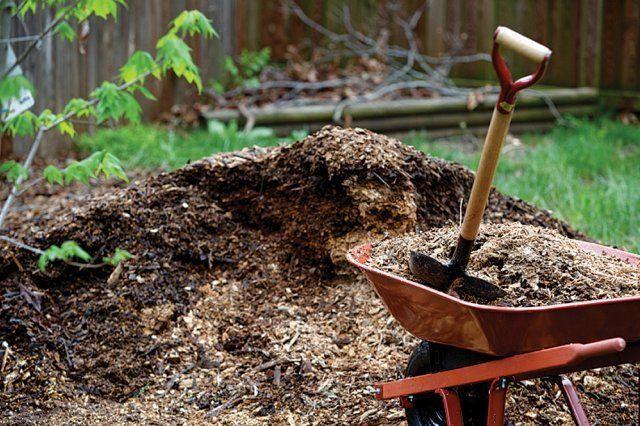
It is recommended to mulch young bushes with soil. The layer should be 15 centimeters thick.
Dry leaves or straw can also be used for this purpose. It's important to ensure that the root collar doesn't become sour or rot under a layer of snow.
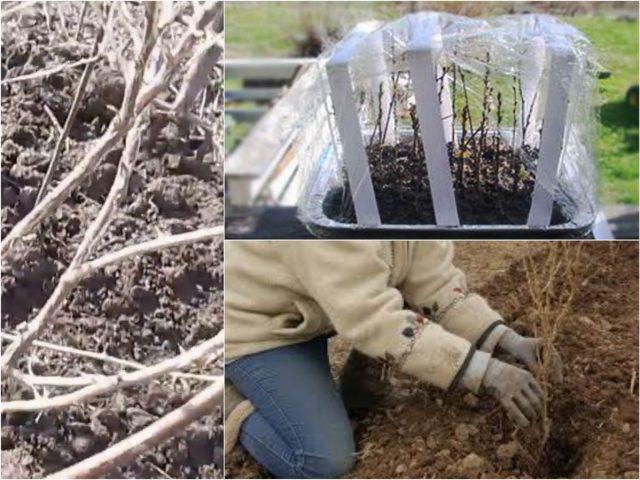
When growing standard almond trees, the branches should be carefully gathered into a bundle and wrapped in non-woven material. It is recommended to secure them with rope at the top.
Trimming
Almonds tolerate pruning well. This can be either sanitary or formative. Each procedure has its own specific considerations.
Sanitary
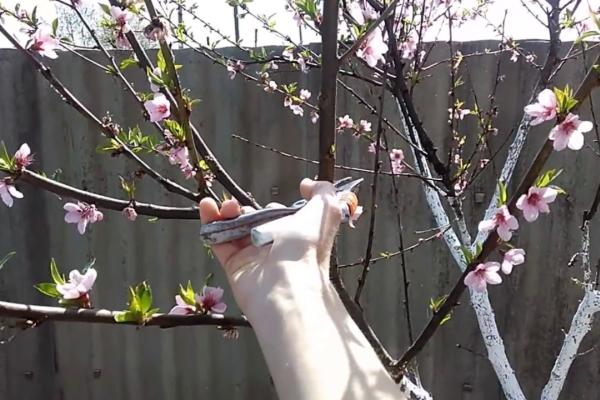
This type of pruning is aimed at removing broken and deformed branches. It is also essential to remove shoots infested with pests or showing signs of dangerous diseases.
Formative
This procedure is performed after the flowering period has ended. It's essential to prune shoots that are one year old. Diseased branches should also be removed.
Diseases and pests
Almost all varieties of three-lobed almonds are resistant to diseasesHowever, violations of care rules can cause undesirable consequences.
Moniliosis
This is a fungal disease that attacks the plant's flowers. When the spores penetrate the branches, they rapidly develop, causing damage to the wood. Gradually, the shoots take on a dark color, giving the tree a charred appearance.
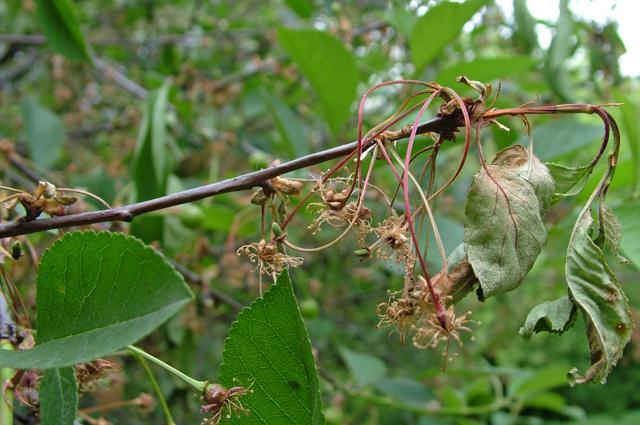
To prevent infection, flowers should be treated with antifungal agents. If the disease does appear, it is recommended to prune off the affected shoots.
Leaf roller
These pests rarely attack almonds. If they do, the leaves begin to curl and fall off. In this case, treating the plant with insecticides is recommended.
Aphid
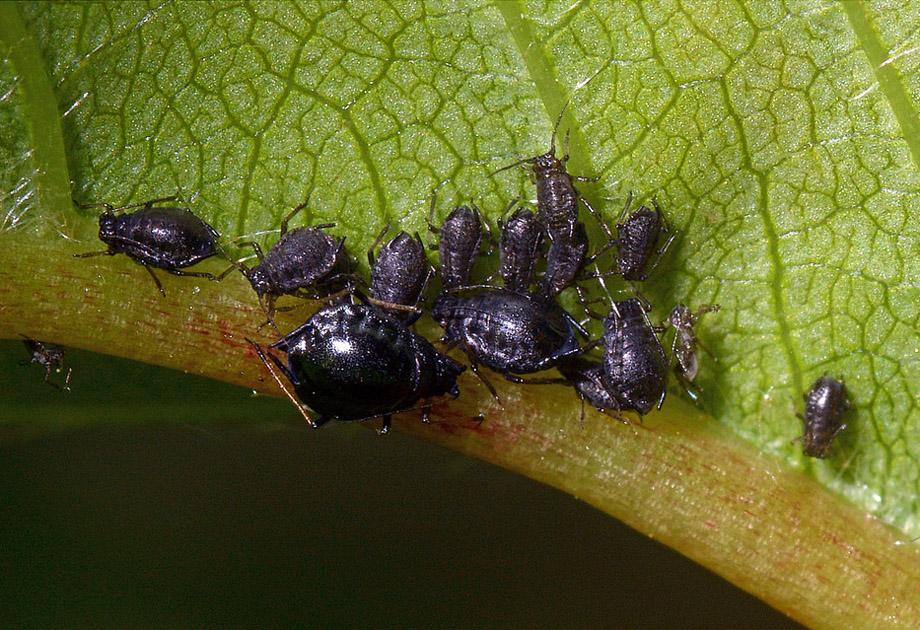
These tiny insects absorb plant juices, causing damage. In this case, insecticide treatment will be necessary.
Milky shine
This is a dangerous disease caused by bacterial microorganisms. It often develops in southern regions. To prevent the spread of infection, it is important to regularly inspect the bush and prune it promptly.
Gray rot
This disease occurs in cold and damp weather. It can also result from overwatering and planting the bushes too densely. Damaged branches are removed immediately.
Methods of reproduction
Almonds can be propagated in a variety of ways, allowing every gardener to choose the best option.
Root shoots
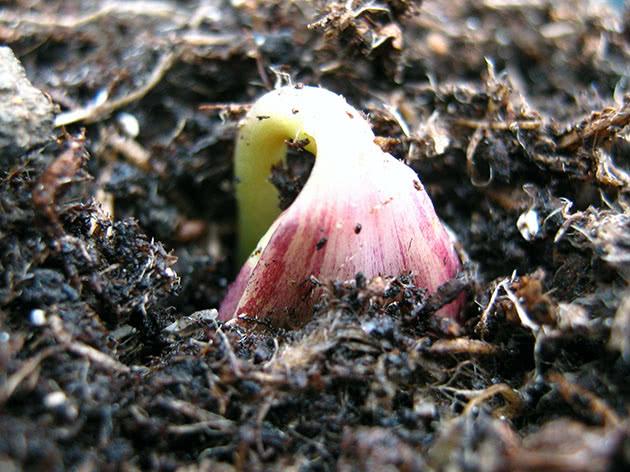
The bush produces a lot of new shoots after a thorough pruning. A strong seedling will be obtained in the second year. It is recommended to grow it in the same location for another year. During this time, make a cut at the base of the shoot and cover it with soil. This will stimulate root growth. Flowering can be expected in the third year.
Layering
In this case, the shoots should be pressed down to the ground and earthed up. Once roots have formed, the seedling can be transplanted to its permanent location. This process continues for two years.
Green cuttings
It is recommended to cut the planting material in July. The plant should be rooted in special containers. Each cutting should have at least three nodes. When planting, two nodes are buried deep in the soil. The container should be filled with a mixture of sand and peat.
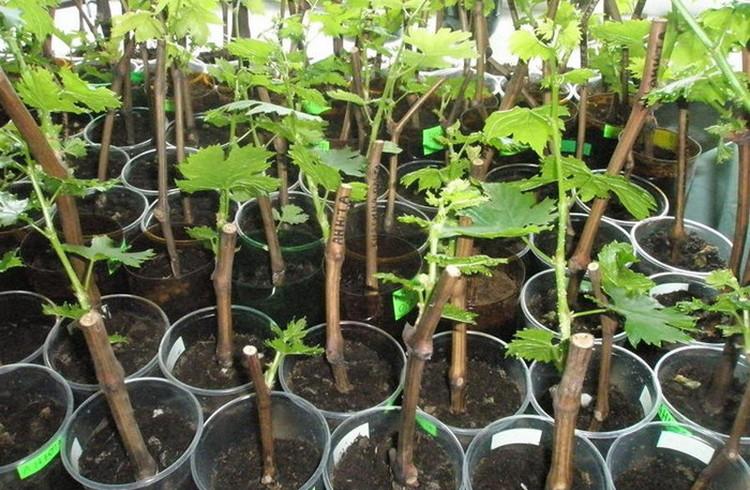
After rooting, it's recommended to plant the seedlings in a nursery and grow them for one year. For the winter, they should be covered with leaves, straw, or lutrasil.
Graft
This method is used to propagate the double-flowered three-lobed almond. The grafting is done in the second half of August onto a yellow plum rootstock. It's best to use a 1.5-meter-long trunk.
With bones
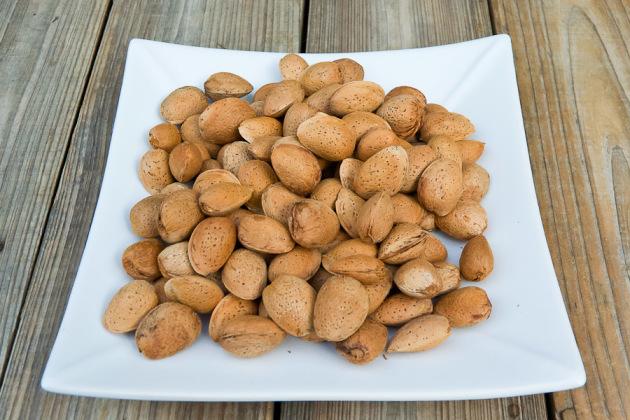
Before planting in the ground, it's recommended to soak them for a couple of months at temperatures between -2 and +7°C in a container filled with sand. Then, plant the seeds in 10-15-centimeter holes. A maximum of 80 nuts can be planted per square meter.
Regional cultivation features
Although the plant is considered a heat-loving plant, it tolerates frost and snowy winters well. Therefore, it is permitted for cultivation in the Moscow region.
This type of almond can withstand temperatures down to -30 degrees.
Temperature fluctuations, with frosts followed by damp thaws, can be a problem. In such cases, the crop should be covered. For growing in Siberia or the Urals, it's recommended to select the right variety.
Application in landscape design
This type of almond is widely used to decorate parks, garden plots, and boulevards. The plant combines well with other crops, often paired with conifers or shrubs. Almonds are also often planted in lawns, raised beds, or near rocks.
The three-lobed almond is a popular plant with excellent ornamental qualities. To achieve successful cultivation, it requires high-quality and comprehensive care.
Related posts:
 Description and characteristics of the 22 best almond varieties, planting and care
 Growing and caring for almonds, planting and pruning rules at home
 Methods for planting and propagating cherries at home
 Growing and caring for hazelnuts in open ground, rules for planting hazelnuts
 Conditions for growing mandarin at home and rules for caring for the tree
 The best grape varieties for growing in the Urals, planting and care rules in summer
 Description and rules for growing Solaris grapes
 The best methods for growing grapes from seeds at home