
- The history of the Nedzvetsky apple tree breeding
- Description of the culture
- Dimensions of a mature tree
- Branching of the root system
- Annual growth
- Flowering and pollinating varieties
- Fruiting
- Harvesting and its further sale
- Resistance to low temperatures and drought
- Susceptibility to diseases and pests
- Lifespan of a tree
- Pros and cons: is it worth planting in your garden?
- Application in landscape design
- Can the fruits be eaten?
- Necessary conditions for growing
- Climate conditions
- Soil composition
- Illumination of the area
- Favorable and unfavorable neighbors
- Landing
- Deadlines
- Site layout plans
- Preparing the site and planting hole
- Algorithm for planting apple tree seedlings
- How to care for an ornamental apple tree
- Irrigation
- Weeding and loosening the tree trunk circle
- Top dressing
- Crown pruning
- Prevention and control of pests and diseases
- Methods of reproduction
- Planting and agricultural practices in different regions
- In Siberia and the Urals
- In the Moscow region
- In the Leningrad region
The Nedzvetsky apple tree is rightfully considered one of the most remarkable ornamental trees. Easily shaped, it is a stunning addition to garden plantings and flowerbeds. This perennial is frost-resistant and retains its attractiveness year-round. If you decide to plant this apple tree in your garden, you need to understand the nuances of growing, caring for, and propagating it.
The history of the Nedzvetsky apple tree breeding
At the turn of the twentieth century, the renowned Russian biologist and explorer Vladimir Efimovich Nedzvetsky traveled to China. In Xinjiang Province, he spotted an unusual apple tree. The tall tree was beautiful, with smooth bark and decorative leaves. He took samples of the apple tree with him for subsequent reproduction in his homeland. He also sent them to the German scientist Georg Dieck, who began cultivating the tree in Germany.
This variety became known as Malus niedzwetzkyana Dieck, or Nedzwiecki's apple. The new cultivar soon spread throughout Russia, as well as Europe and North America. According to the French horticulturist L. Tillier, the ornamental qualities of this variety are unrivaled in all of Europe.
Description of the culture
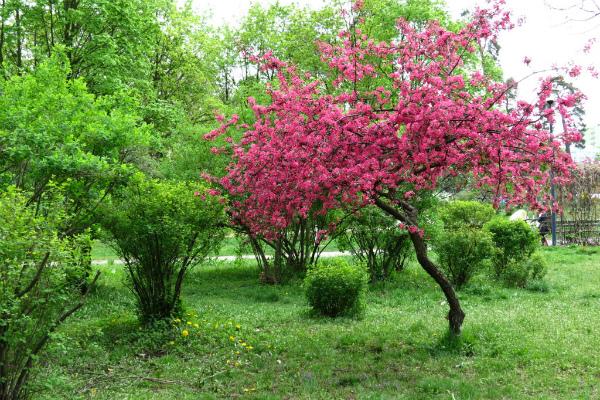
The tree has a sturdy trunk with a smooth surface. The grayish-brown bark is prone to small cracks. The tree's crown can be either spreading or upturned, round or tent-shaped.
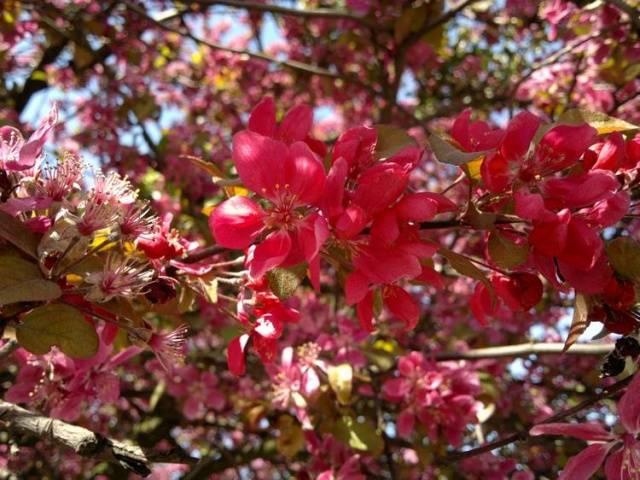
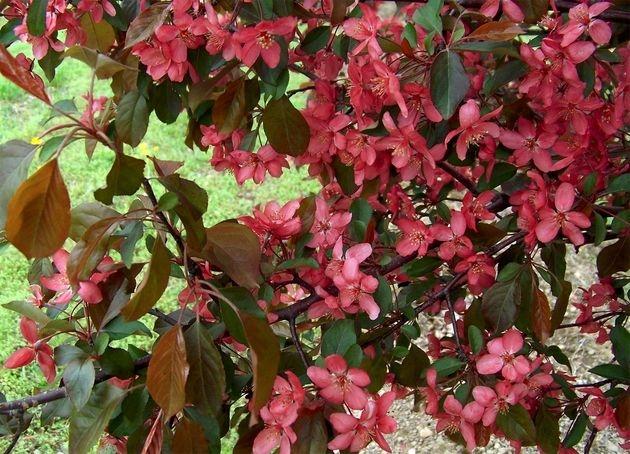
The tree's young branches are red-leaved, making it particularly decorative. As the leaves unfurl, their color changes, with only the petioles remaining purple. The leaves are ovoid with serrated edges and pointed tips. The outer surface is dark emerald, while the inner surface is reddish. The undersides of the leaves are densely covered with down.
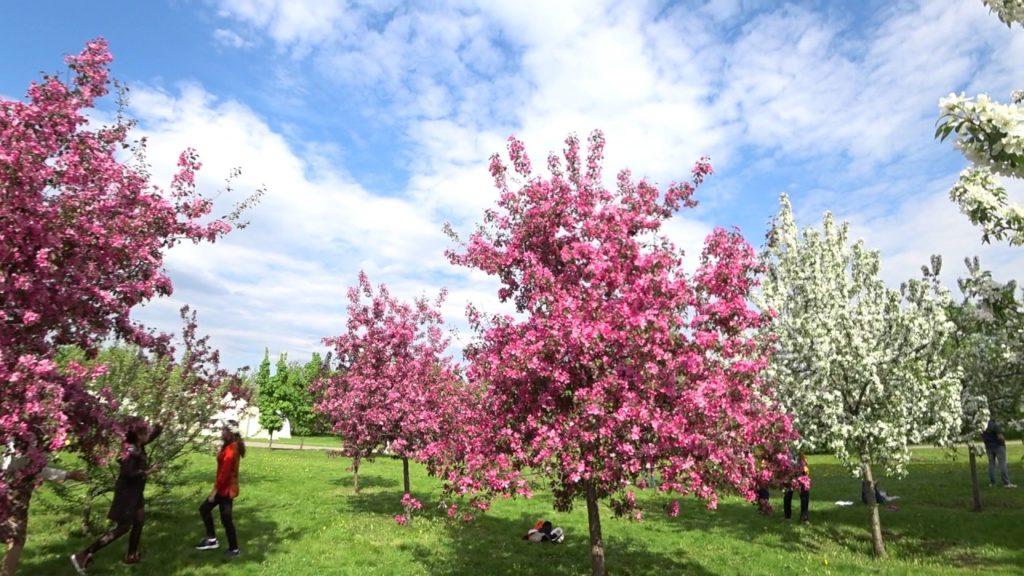
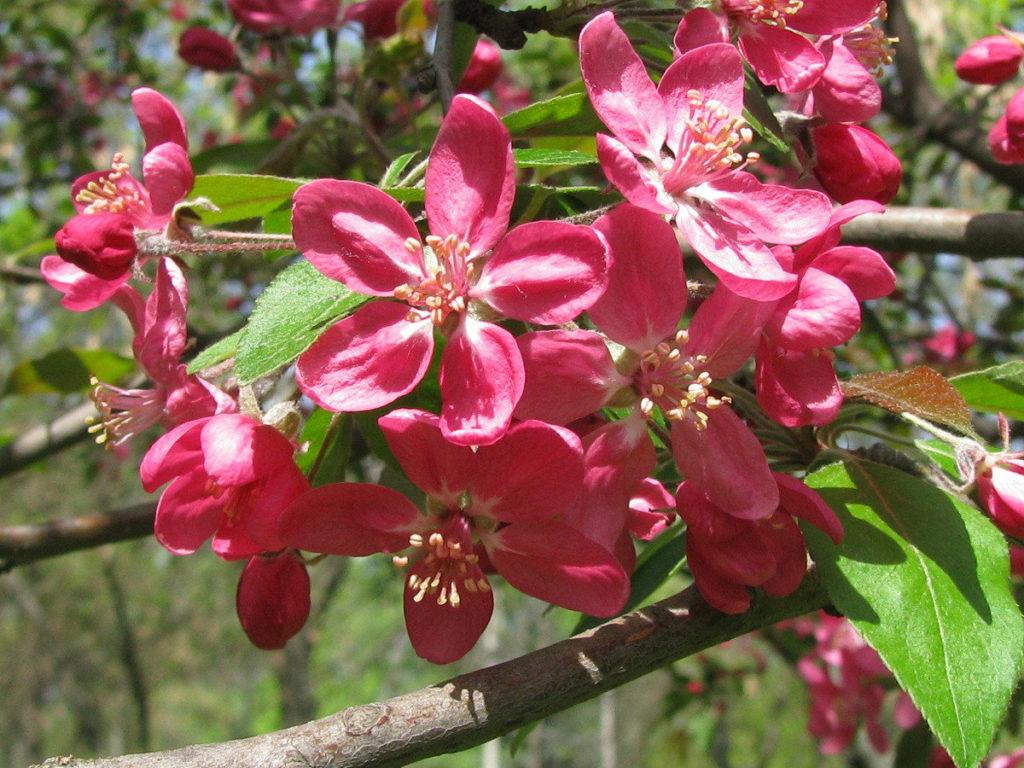
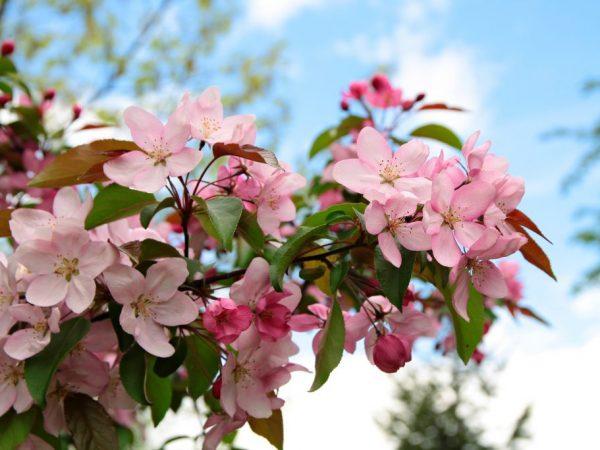
The Nedzvetsky apple tree's buds are a deep and rich pinkish-purple. Fully open, the flowers reach five centimeters in diameter and are purple or bright pink in color.
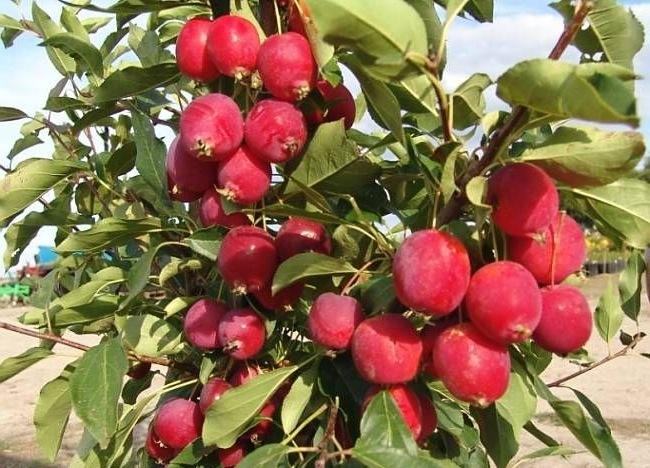
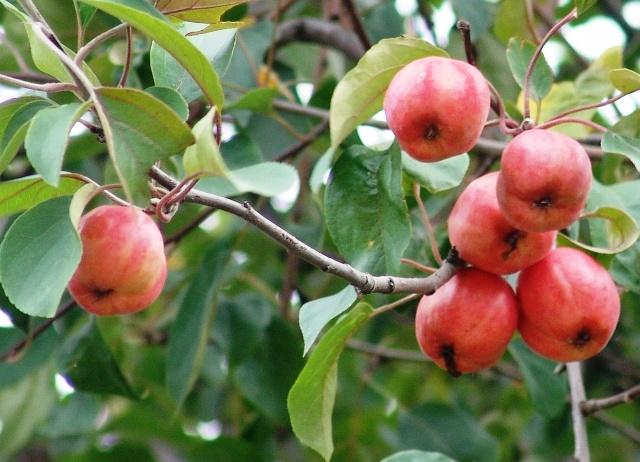
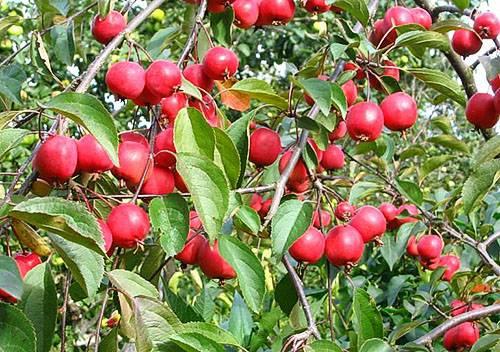
The fruits are miniature, no more than 2-3 centimeters in diameter. They are characterized by a classic spherical or slightly elongated shape. They are very juicy and have a pleasant, slightly tart flavor. The surface of the fruits has a distinct waxy coating. They are dark in color—red, burgundy, or purple-violet. The pink flesh can contain up to nine seeds. The fruits are primarily used to make compotes or jam.
Dimensions of a mature tree
A mature Nedzvetsky apple tree is characterized by tall growth. In orchards, it reaches 6-8 meters in height, and in the wild, 12 meters. The tree's crown can spread widely, reaching 10 meters in diameter. In young trees, the crown is pyramidal in shape, but over time, under the weight of the branches, it becomes spherical.
Branching of the root system
This variety is characterized by a deeply branched root system—up to 1 meter. If the tree is grown in sandy soil, it can reach up to 1.5 meters. However, it does not act aggressively towards the roots of other plant crops growing nearby..
Annual growth
The Nedzvetsky apple tree grows at a moderate rate. Its branches increase in length by 45-60 centimeters per year.
Flowering and pollinating varieties
The Nedzvetsky apple tree's flowering period begins in late May, immediately after the leaves emerge, and lasts from ten days to two weeks. The duration of flowering is influenced by various factors, including the growing region, the apple tree's location relative to the terrain and neighboring buildings, and the quality and composition of the soil.
Since the Nedzvetsky apple tree is monoecious, it requires a pollinator to produce fruit. Any variety of apple tree growing nearby in the garden is suitable for this purpose.
Fruiting
Despite its ornamental nature, the Nedzvetsky apple tree is characterized by abundant fruiting. Fruit buds begin to form after flowering. Ripe fruits are dark red or violet-purple in color. Their diameter does not exceed three centimeters.
Harvesting and its further sale
The Nedzvetsky apple tree harvest begins in the first days of autumn.
The miniature fruits with a sour and tart taste are then used in the following ways:
- harvesting dried fruits (this allows you to fully preserve valuable microelements and vitamin compounds);
- preparation of jam, kvass, compote, pastila, cider, as well as other sweets and drinks;
- use in traditional medicine recipes.
Resistance to low temperatures and drought
The Nedzvetsky ornamental apple tree is resistant to temperature fluctuations. It easily tolerates drought and frosts down to -30 degrees Celsius.
Susceptibility to diseases and pests
As a wild apple tree, the Nedzvetsky apple tree is minimally susceptible to common diseases and garden pests. However, certain problems may occasionally plague the tree. Among the most likely are:
- aphid colonies;
- weevil;
- scale insect;
- pliers;
- glass case.
As a preventative measure, apply a lime solution and remove any undergrowth around the trees. In the spring, treat the apple tree branches and the soil around the trunk with insecticidal solutions.
Lifespan of a tree
The average lifespan of this wild apple tree is 50-60 years. In a garden, with proper care, this lifespan can be extended.
Pros and cons: is it worth planting in your garden?
The beautiful ornamental Nedzvetsky apple tree will be a welcome addition to any garden. It looks stunning in landscape design, and its ripe fruit finds worthy use.
Application in landscape design
One of the important advantages of the Nedzvetsky ornamental apple tree is its resistance to highly polluted and dusty air, which is why it is often planted in city alleys, squares, and parks. Often such trees serve as hedges along highways in large cities.
The bright and expressive color of the tree attracts attention everywhere, regardless of whether it grows on its own or as part of a combined plant composition.
Can the fruits be eaten?
Ripe Nedzvetsky apples are edible, tart, and slightly tart. It's worth noting that the apples' flavor improves after the first frost, when the bitterness fades. Containing ascorbic acid, they are often used for drying, as well as making jam, kvass, and cider.
Necessary conditions for growing
Before planting a tree, it is worth finding out its agricultural requirements.
Climate conditions
The Nedzvetsky ornamental apple tree is attractive to gardeners because it easily adapts to any climate. The tree tolerates neither drought nor frost.
Soil composition
The tree prefers loose and fertile soils of medium weight. It can thrive in any location, but rocky, overly dry, or, conversely, waterlogged or marshy soils should be avoided. The optimal soil composition is garden soil, river sand, and humus in equal proportions.
Illumination of the area
To ensure a young ornamental apple tree takes root quickly and easily, choose an open area with plenty of natural sunlight. It should also be protected from drafts and strong gusts of wind.
Favorable and unfavorable neighbors
The Nedzvetsky ornamental apple tree thrives alongside apricots, cherries, plums, and other fruit trees with white blossoms. It's not recommended to plant shrubs under the apple tree, as its extensive root system will hinder their growth.
 Landing
It is also worth studying the recommended timing for planting young trees.
Deadlines
You can plant the Nedzvetsky apple tree in the ground in a permanent location at the following times:
- in early spring, before the buds open;
- in the fall, when crops enter a dormant period.
The optimal timing depends on your region. In cold climates, where rapid soil freezing makes rooting difficult, planting should be done in the spring.
Site layout plans
Since the Nedzvetsky apple tree is a vigorous tree, the row spacing should be at least 5-6 meters. The optimal distance between trees is 4-6 meters.
Preparing the site and planting hole
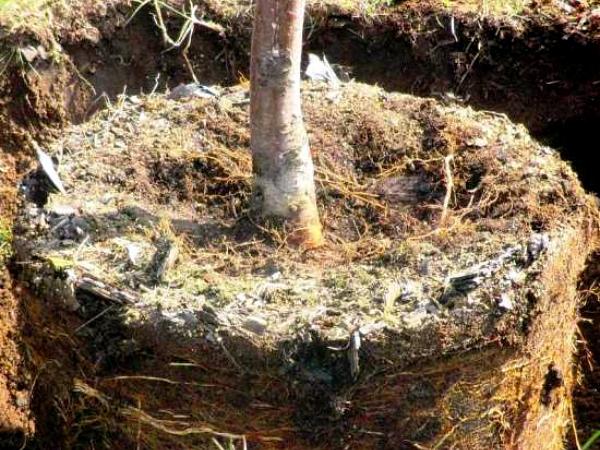
Before planting an apple tree, check the soil for groundwater levels. If the water table is less than three meters below the surface, the risk of root rot increases.
The standard dimensions of planting holes for trees are 70 x 70 x 80 centimeters.
Algorithm for planting apple tree seedlings
The planting process requires:
- Carefully inspect the roots of the young tree. Prune away any damaged, rotten, or dry shoots. If they are too long, trim them back.
- Wipe the trunk of the seedling with a piece of soft, damp cloth.
- Immediately before planting, soak the plant roots in a solution of growth stimulator, Kornevin, for one hour.
- Place a drainage layer of expanded clay or pebbles at the bottom of the planting hole.
- Fill the hole with fertile, loose soil mixed with compost.
- Place the seedling in the hole so that its root collar is 1 cm above the soil level.
- To support the seedling, drive a wooden stake next to the trunk.
- Spread the rhizome evenly and cover with soil.
- Sprinkle the soil around the trunk with a layer of mulch (peat or sawdust) and water generously.
How to care for an ornamental apple tree
Proper care will ensure the Nedzvetsky ornamental apple tree's longevity, health, and beautiful appearance.
Irrigation
During one season, it is necessary to water the ornamental apple tree four times:
- before the growing season;
- three weeks after flowering;
- a month before harvest;
- after the leaves begin to fall.
During hot summer months, watering should be increased. The crown should also be sprayed with a hose, preferably in the evening.

During prolonged rainy weather, the tree does not need watering or irrigation.
Weeding and loosening the tree trunk circle
To get rid of weeds and increase the nutritional value of the soil, weed and loosen the area around the apple tree trunk 4-5 times during the season:
- in early spring, after the snow melts and the ground warms up;
- in the middle of summer;
- as the soil becomes compacted and becomes infested with weeds;
- a week before the onset of stable frosts.
Top dressing
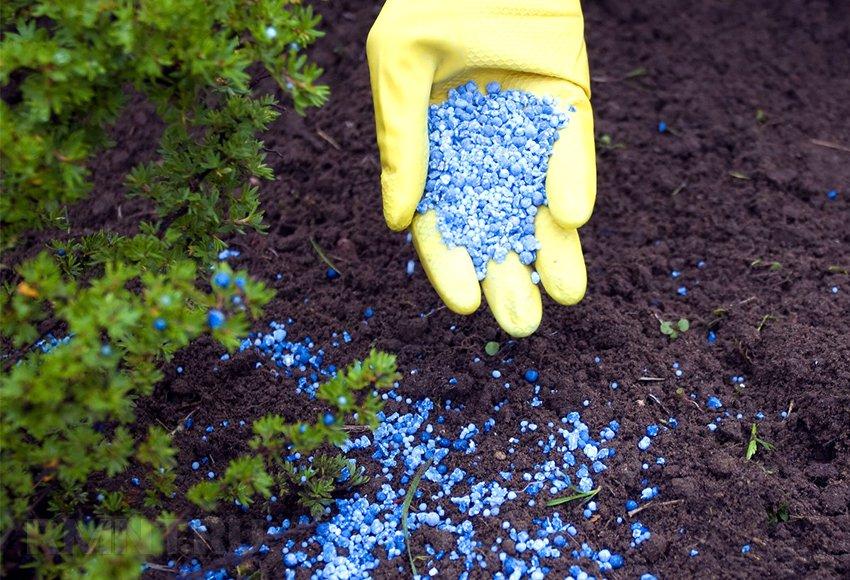
Nedzvetsky apple trees should be fed three times a year:
- in the spring after the disappearance of frosts and the onset of stable warming;
- in summer during fruit formation;
- in the fall after harvesting ripe fruits, in preparation for winter.
Mineral or organic fertilizers diluted in warm water are applied when watering trees.
Crown pruning
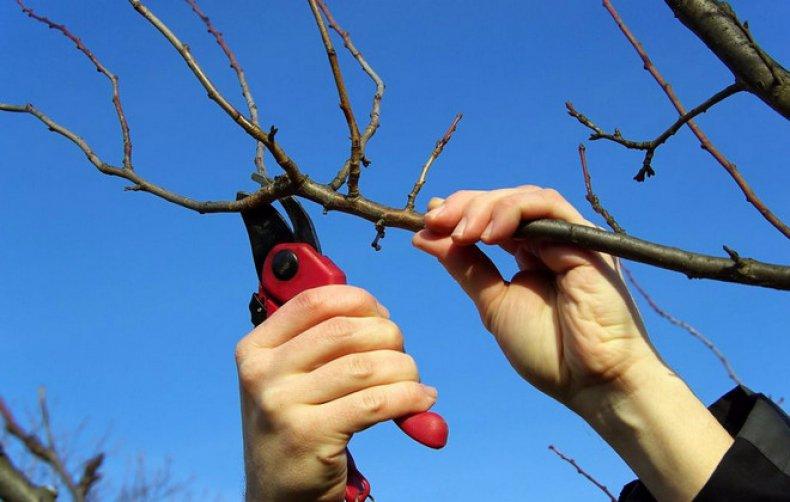
To create a beautiful apple tree crown, timely pruning is essential. The optimal time is March and April, before the buds begin to swell.
The advantages of crown pruning are:
- sunlight saturation;
- uniform distribution of water and minerals throughout all branches of the tree;
- prevention of diseases and pest activity;
- improving fruit properties;
- increase in the fruiting period.
When pruning, remove broken, dried, or misdirected branches. Trim only the tips of remaining branches.
Prevention and control of pests and diseases
To protect against scale insects, aphids and weevils, trees are treated with universal insecticides.
Methods of reproduction
The tree reproduces by seeds and cuttings.
The seeds are planted in open ground to a depth of 2-3 centimeters.
For cuttings, use small branches with up to five buds. The cut is made just below the very last bud. The lower part of the cutting should be cleared of soil. To reduce evaporation, trim half the top foliage. The prepared cuttings can be planted in the ground or used for grafting.
Planting and agricultural practices in different regions
Each region has its own climate, which must also be taken into account when growing apple trees.
In Siberia and the Urals
In these regions, characterized by cold climates, it is recommended to grow the tree on the Siberian Berry apple rootstock. This variety can withstand temperatures down to -50°C.
In the Moscow region
This ornamental plant adapts well to the climate of the Moscow region and central Russia. It easily withstands temperatures down to -30 degrees Celsius.
However, complications may arise if cold weather returns during the bud formation period. In such cases, it is recommended to delay the flowering period using a special technique.
When preparing the planting hole, bury 2-3 large stones near the rhizome. This will slow down the tree's awakening slightly, and flowering will begin a week later.
In the Leningrad region
Northwestern Russia, including the Leningrad Region, is characterized by unstable weather. Therefore, plants may experience discomfort in winter. The main dangers are alternating low temperatures with prolonged thaws, as well as strong gusty winds that bring recurrent cold spells.
In this region, choose the sunniest locations for planting. To improve frost resistance, it is recommended to graft the Nedzvetsky apple tree onto a Siberian apple rootstock.
Related posts:
 Description of the Chudnoe apple variety, planting and caring for a dwarf tree
 Description and rules for growing the Bratchud apple tree variety
 Description and characteristics of the Royalty apple tree variety, planting and care
 Description and subtleties of growing the Sverdlovsk Beauty apple tree variety
 Description and subspecies of the Sakharny Arkad apple tree variety, cultivation technology
 Signs and treatment of apple tree cancer, varieties resistant to the disease
 Description of the Borovinka apple tree variety, cultivation and care
 Description and planting of the Dream apple tree variety, care and propagation