
- The history of the selection of the Dream apple tree
- Pros and cons: is it worth planting in your garden?
- Description of the variety and characteristics of the crop
- Tree dimensions
- Crown width
- Height and root system
- Pollinators
- Flowering and harvest ripening times
- Tasting evaluation and scope of application of apples
- Fruiting periodicity
- Winter hardiness
- Disease resistance
- Varieties of rootstocks
- Dwarf
- Semi-dwarf
- How to plant an apple tree in open ground
- Selecting a location, preparing a hole
- Timing and technology of planting seedlings
- Caring for the crop
- Rules for watering and fertilizing
- Loosening and caring for the tree trunk circle
- Trimming
- Prevention and protection from diseases and pests
- Shelter for the winter
- Apple tree propagation
- The first of these methods
- The second method
"...So fresh and so fragrant, so rosy-golden, as if filled with honey! You can see the seeds right through..." What kind of Dream Apple tree could produce such fabulous apples?
But! In the early 17th century, the Swede Peter Petreius and the German Adam Olearius wrote, among other things, about Muscovy apples. The former: "There is one wonderful variety of apple—transparent, with a thin skin, so you can see the seeds." The latter: "If you hold this apple up to the sun, you can see the seeds inside."
The history of the selection of the Dream apple tree
It seems they were talking about the now-lost "naliv" variety. Olearius noted that, due to their extreme tenderness and juiciness, these apples don't keep for long. And if our White Naliv and the European Papirovka are related, it could be said that the Mechta apple tree inherited the best of the old variety. Because this apple tree is the result of combining the characteristics of the Papirovka and the saffron Pepin, known since 1907.
The Papirovka and Bely Naliv apple trees differ so little that even I.V. Michurin doubted they were the same variety. The Mechta inherited its tenderness, juiciness, thin skin, and short shelf life from them. It also inherited its frost resistance and low maintenance requirements.
The apple variety Mechta was included in the State Register of the Republic of Belarus in 2005.
Pros and cons: is it worth planting in your garden?
The Dream apple tree is called a “dream” because it has incomparably more advantages than disadvantages:
- Significant yields: up to 150 kg with high levels of agricultural technology.
- The first summer apples since the beginning of autumn.
- The first fruits are in the 2nd or 3rd year on rootstocks 62-396 and 5-25-3.
- Low demands on agricultural technology.
- Excellent taste and appearance of fruits.
- Winter-hardy.
- Moderately resistant to scab.
The so-called downsides deserve a separate discussion. For example, the following drawbacks:
- cracking of apples due to excess moisture or shriveling and falling off due to drought;
- the need for pruning (otherwise, due to dense growth, the yield and quality of the fruit will decrease).
This is a natural reaction of the plant to the lack of normal care.
Short shelf life? The good thing about the first apples of the season is that they're the first ones: they're eaten quickly while still fresh. And then the longer-storing varieties will be ready.
Description of the variety and characteristics of the crop
Tree dimensions
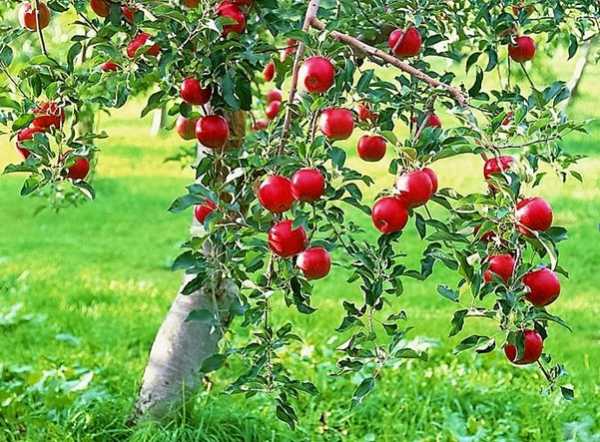
The Dream is a medium-sized apple tree. It averages about 2.5 meters in height, reaching a maximum of 4 meters. The trunk is neat and straight, with reddish-gray bark that shades to green on young shoots.

Crown width
The crown of the Dream tree is a rounded, pyramidal, branched formation about a meter in diameter. As it grows, its shape is lost, and the dense growth begins to affect fruit size and overall yield. Therefore, crown pruning is inevitable.
Height and root system
Despite its relatively small stature, the Mechta apple tree's root system provides stability and nutrition. However, in particularly fruitful years, this variety requires additional, sturdy support.
Low-growing forms of apple trees grow on dwarf rootstocks with a superficial root system.
Fibrous, fine roots absorb mineral salts dissolved in water and, conversely, release waste products into the soil. This ensures the tree's life cycle.
The root system of this type of apple tree is small, but fruiting is abundant. This must be taken into account when planning adequate fertilizing.
Pollinators
The Dream apple tree is not self-pollinating. Therefore, pollinator apple trees of the same flowering season are planted at a distance of up to 40 meters. Preferred varieties include Cinnamon Striped, Melba, and Borovinka.
Flowering and harvest ripening times
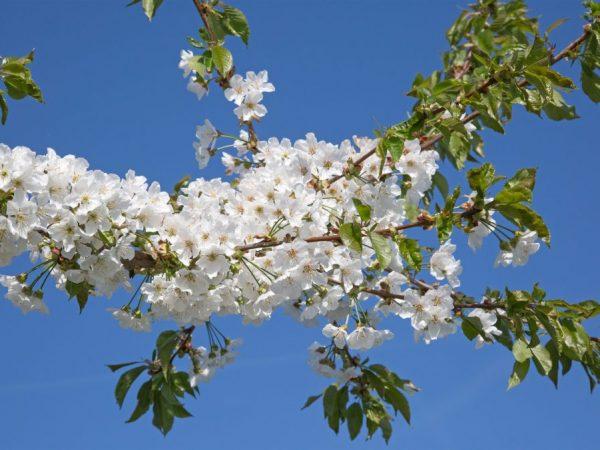
The Dream apple tree blooms for about half a month in April or May. More precisely, this depends on the growing region and climate. Harvesting begins in late July or early August. Ripening is somewhat delayed, but this doesn't affect business: the quality of this apple tree's fruit is so good that they sell almost immediately.
Tasting evaluation and scope of application of apples
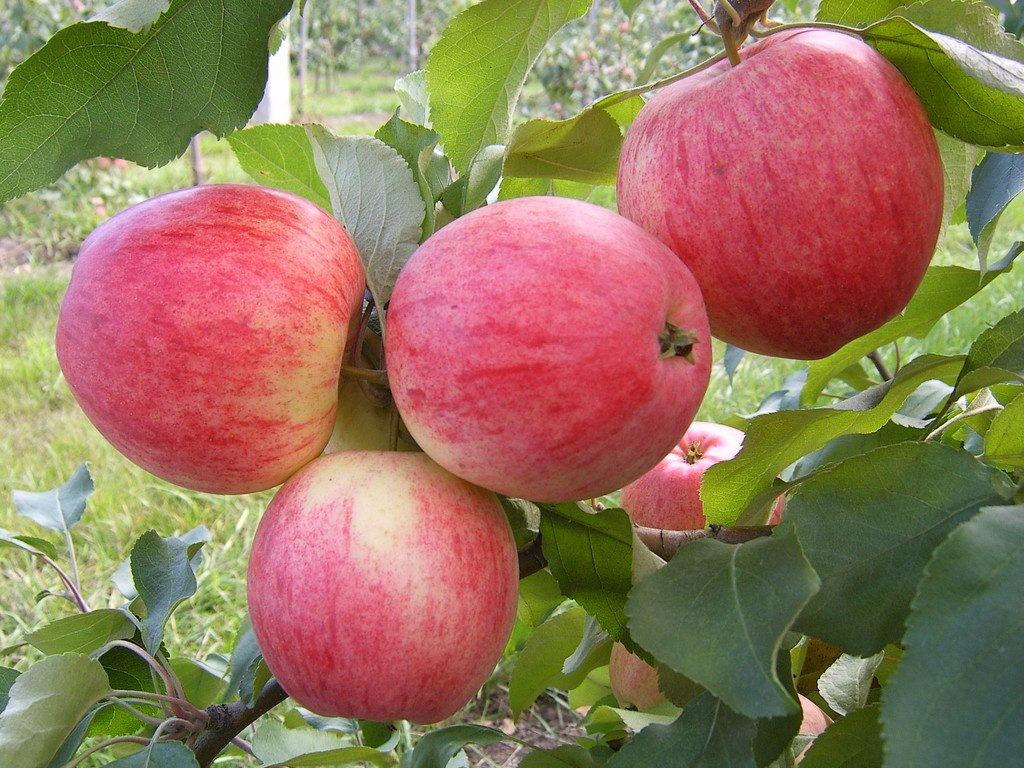
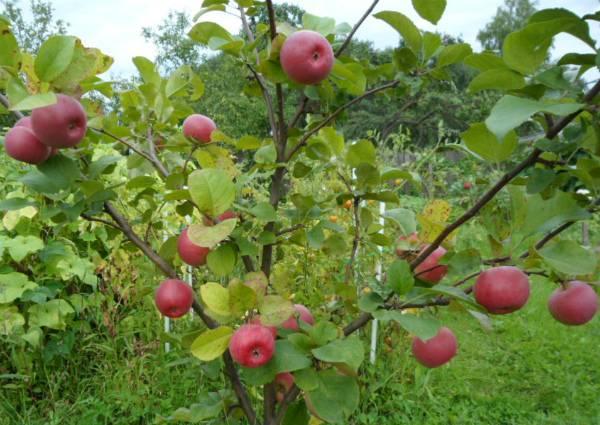
Taste testers rate the Mechta apple tree 4.5 stars. Gardeners note a "pleasant sweet and sour taste." The color of this variety's apples depends on whether they are grown in full sun. Sun-bronzed, they can even be red, while in partial shade or densely packed areas, they turn light beige or pink-flanked. The fruit's flesh is white with pink flecks, slightly loose, and juicy.
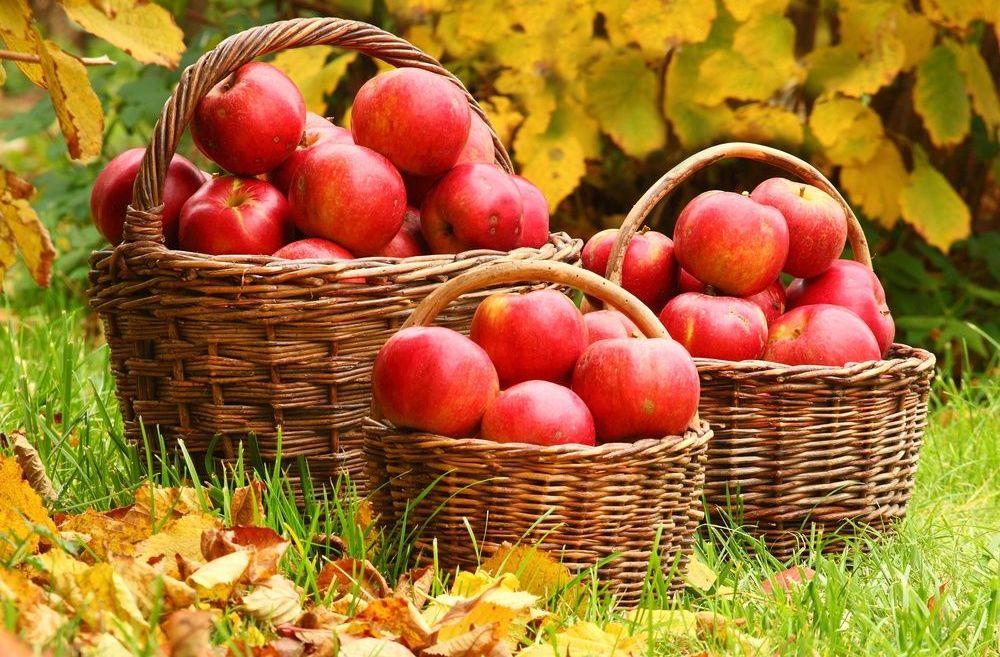
Apples are consumed fresh. Store the fruit in a cool place for up to six weeks. Fruit desserts, salads, and simple and complex baked goods are also prepared with them.
Winter preserves include juice, various types of jam, compotes, and dried fruit mixes. Entrepreneurs are organizing the production and distribution of marshmallows, pastilles, jams, and other types of canned apple products.
Fruiting periodicity
The Dream apple tree bears fruit annually. Yields are sometimes reduced due to drought in the previous year or an extremely harsh winter. Critically poor soil can also affect yield.
Winter hardiness
The Mechta apple tree inherited its strong frost resistance from Papirovka. This means it can be successfully grown and yield decent harvests not only in central Russia and Belarus, but also in the northern regions closer to the Urals. This apple tree tolerates sudden temperature changes without any problems.
Disease resistance
One of the most important characteristics of the Dream apple tree is that it is almost immune to scab. The variety also resists other fungal diseases well. In some areas, it is plagued by fruit mites and codling moth.
Varieties of rootstocks
The rootstock onto which a variety is grafted determines the characteristics of the future tree. To produce a compact apple tree with early fruiting and the preservation of varietal characteristics, a clonal rootstock, that is, one obtained vegetatively, is usually used. Such rootstocks can be dwarf or semi-dwarf.
Take a look Also

For private and small farm gardening, clonal rootstocks are the best option.
Dwarf
The dwarf red-leaved rootstock 62-396 is recommended for the Mechta apple tree. Developed by staff at the I.V. Michurin Fruit and Vegetable Institute, it rooted well and is frost-resistant: roots can withstand temperatures as low as -16°C at a depth of 0.2 m. The tree grows to a height of 2.1-2.4 m. The first fruits ripen in the second or third year after planting. It does not produce suckers. A drawback is the average strength of the wood.
Supports are recommended in case of high crop load.
Semi-dwarf
Of the semi-dwarf rootstocks, the medium-sized 5-25-3 is suitable for the Mechta apple tree. It was also bred by the Michurin Institute. The tree does not branch much. The winter hardiness of its above-ground parts and roots is quite good: with roots declared to be hardy down to -14˚C, it actually survives harsh winters without loss. Fruiting begins in the fourth year.
How to plant an apple tree in open ground
Selecting a location, preparing a hole
The Dream apple tree planting site should be sunny. This will ensure the apples are especially attractive and sweet rather than sour. The groundwater table shouldn't be high. Choose a lighter soil: loam, sandy loam, or sod. If the soil becomes acidic, add lime or dolomite to the planting hole.
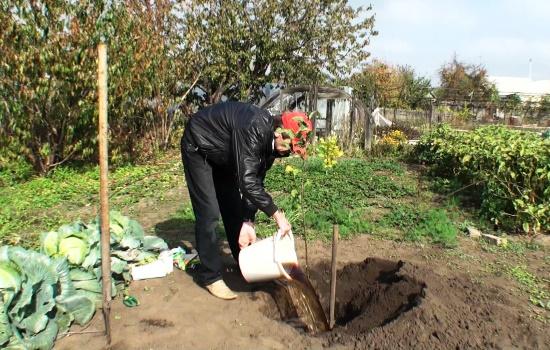
The hole itself, regardless of planting time, is prepared in the fall. It should be approximately 1 meter in diameter and depth. The bottom is filled with a mixture of excavated soil, superphosphate, wood ash, and manure or compost humus.
Timing and technology of planting seedlings
The time for planting apple trees in the ground varies by region and depends on the local climate. This can be either spring or fall. In spring, seedlings are planted just before bud break, as soon as the soil is ready. In fall, after leaf fall. It takes about 25 days for the apple tree to root.
- Pour water into a hole prepared in advance (in autumn – 10 days in advance) and let it soak in.
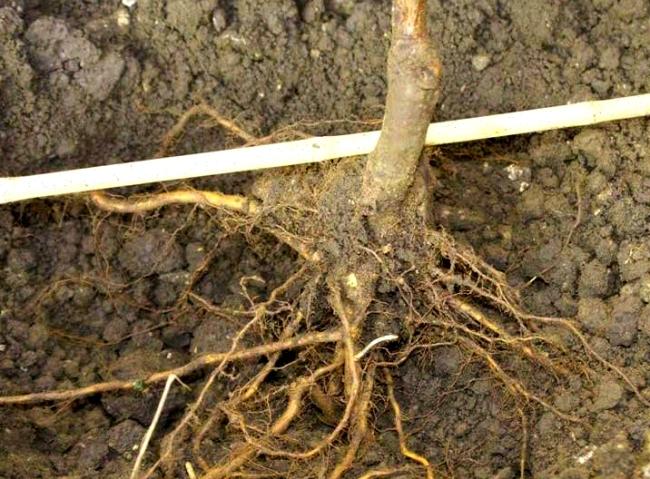
- Place the seedling, straighten the roots and add layers of soil, compacting each layer.
- Control the position of the root collar at 5 cm above the ground.
- On the north side of the seedling, fix a stake in the ground and tie it up in the most gentle way.
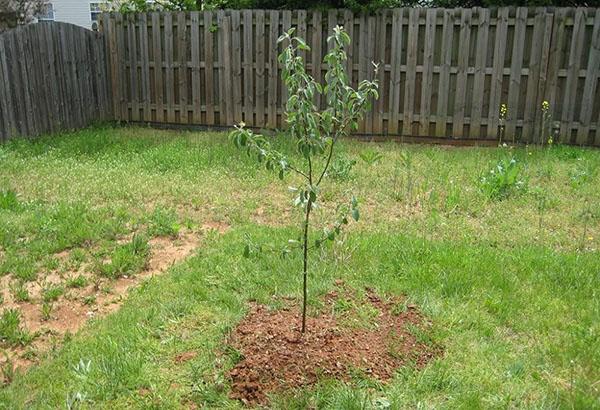
- Form a hole in the tree trunk circle and water it with two or three buckets of water.
- Mulch with rotted compost or humus.
Caring for the crop
Rules for watering and fertilizing
Young apple trees are watered once a week with two buckets of water. In subsequent years, water less frequently, but with three buckets. Be especially careful during hot and dry periods. Apple trees require watering during flowering and fruiting. During the ripening period, uneven watering can cause the apples to crack or fall off. After the harvest, watering is stopped, preparing the tree for winter.
Dream should be fed every two weeks. With spring feedings of organic matter and complex fertilizer, repeated foliar feedings are necessary throughout the season.
That is, comprehensive treatment of the foliage with a nutrient solution early in the morning or late in the evening in dry, windless weather.
Loosening and caring for the tree trunk circle
Rootstocks have multiple roots located close to the surface. To ensure they receive sufficient moisture and nutrition, it is necessary:
- along the contour of the crown, draw a shallow groove around the trunk for effective watering and the introduction of liquid fertilizer;
- the entire area within the perimeter must be regularly and thoroughly weeded;
- loosen the formed crust after each deep irrigation.
Trimming
Timely and competent pruning of apple trees:
- limits the height of the tree;
- forms a compact crown;
- normalizes ventilation and lighting;
- clears away broken and diseased branches.
As a result, favorable conditions are created for:
- apple tree care;
- full ripening of fruits;
- disease prevention.
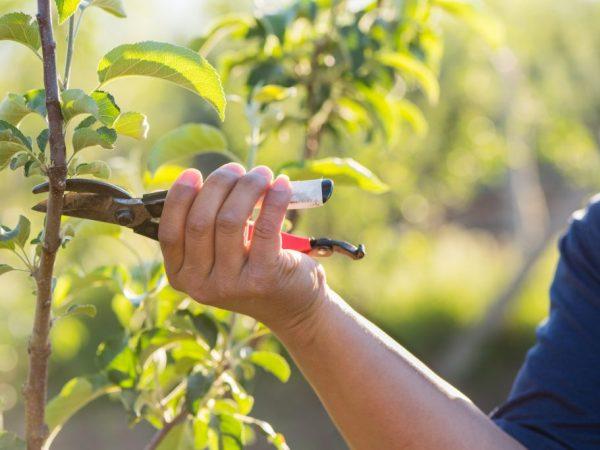
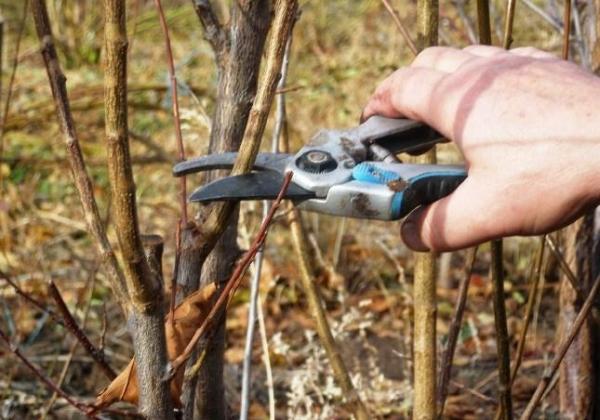
Apple trees are pruned both in winter and fall. In spring, before the sap begins to flow, this allows the cuts to dry faster. Cuts larger than 1 cm in diameter must be treated with garden pitch or a special paste.
Prevention and protection from diseases and pests
The Dream apple tree is almost immune to scab. However, it is necessary to monitor the protective process. To do this:
- they prune the apple trees and clear the garden of diseased branches, weeds, fallen leaves and fruits;
- the crown and trunk circle are treated with copper sulfate as a preventative measure;
- coat the pruning marks and wounds with garden pitch;
- dig up tree trunk circles for the winter.
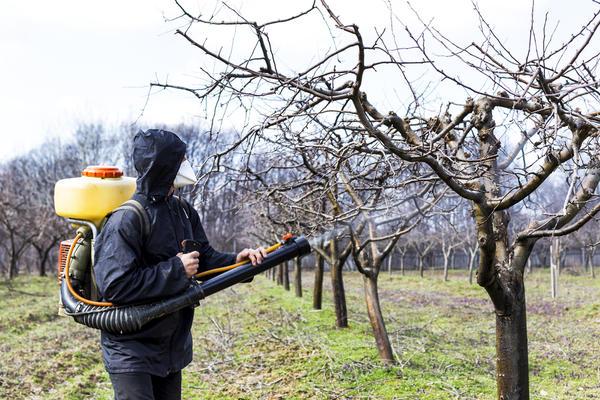
To prevent pests in the spring before bud formation and in the fall after harvesting, the apple tree crown and soil are treated with appropriate insecticides and fungicides.
Shelter for the winter
The Dream apple tree is frost-resistant. However, the soil around the tree trunk should be covered with humus or compost.
Apple tree trunks are whitewashed to protect them from sunburn and rodent infestations. To do this:
- wrap the trunk and low-lying skeletal branches with old cloth, plastic bottle blanks, and spruce branches;
- tie fluttering scraps of black plastic bags;
- They spread rags soaked in kerosene around the apple tree.
Apple tree propagation
While there are several methods for propagating apple trees, experts recommend two simple yet effective methods for private and farming operations:
- green cuttings with preliminary rooting;
- green cuttings without roots.
The first of these methods
In the spring, without cutting the apple tree, make a groove in the bark of the lower branch, pin it to the ground with a metal staple, and cover it with soil, leaving the tip exposed. Water occasionally until rooting occurs.
If the branch can't be bent, a similar operation can be performed while hanging. Tie a bag of moistened soil to the area where the bark was removed.
Make holes in the bag for ventilation. In the fall, transplant the cutting with roots into the ground.
Experts guarantee 100% survival of the apple tree and the repetition of the properties of the parent apple tree.
The second method
But this method isn't 100% guaranteed. Cut the branch into pieces, leaving a couple of leaves at one end. Plant the other end 2 cm deep in a shady spot. Three or four of the ten will root and can be replanted in the fall.
Related posts:
 Description and rules for growing the Bratchud apple tree variety
 Description of the Chudnoe apple variety, planting and caring for a dwarf tree
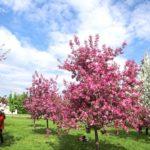 Description of the ornamental Nedzvetsky apple tree, cultivation technology
 Description of the Borovinka apple tree variety, cultivation and care
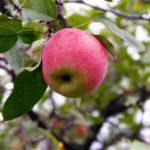 Description and subtleties of growing the Sverdlovsk Beauty apple tree variety
 Description and subspecies of the Sakharny Arkad apple tree variety, cultivation technology
 Description and rules for growing creeping apple trees, planting and care
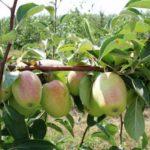 Description and varieties of the Sinap apple tree, planting and care rules