
- Selection of the Auxis apple tree and cultivation regions
- Advantages and disadvantages of fruit crops
- General description and characteristics
- Size and annual growth of the tree
- Lifespan
- All about fruiting
- Flowering and pollinators
- Ripening time and harvesting of fruits
- Yield and taste of apples
- Scope of harvest application
- Immunity to diseases and pests
- Frost and drought resistance
- Features of planting operations
- Site selection and preparation
- Permissible groundwater level
- How to choose a healthy and strong seedling
- Timing and rules for planting a tree
- Care instructions for the capricious Auxis variety
- Watering
- Fertilizer
- Graft
- Trimming
- Treatment against pests and infections
- Protection from cold and rodents
- The need for a transplant
- Methods of reproduction
- Gardeners' reviews of the Auxis apple tree
By choosing the Auxis apple variety, you can acquire not just another tree adorned with ripe fruit, but a true gem of any garden. Unpretentious, productive, and distinguished by its exquisite flavor, it captivates you once you've experienced it. But naturally, any romanticism of farming is based on a fair share of prose—that is, on the rules and nuances of growing certain crops, which we'll discuss below.
Selection of the Auxis apple tree and cultivation regions
Auxis was created by Lithuanian breeders who crossed the Grafstein Red and Mackintosh apple varieties, each inheriting its best characteristics. Its undemanding nature allows it to be grown in regions with a temperate continental climate, including areas with cool summers and northern winds (e.g., Norway).
Advantages and disadvantages of fruit crops
Some of the most notable advantages of this variety include:
- high productivity;
- long-term storage of apples;
- rapid onset of fruiting.
The Auxis apple tree has almost no disadvantages, with the possible exception of high crop shedding.
General description and characteristics
The Auxis apple tree grows into a graceful tree with a dense crown. It bears fruit that isn't the most beautiful in the world, but it certainly has some of the best flavor. Auxis apple trees can easily be the "heart" of an entire fruit and berry garden.
Size and annual growth of the tree
The Auxis apple tree is a medium-sized variety, reaching a height of 4.5-5 meters. Its annual growth is virtually identical to that of other apple trees—around 10 cm per year—which can be slightly increased by stimulating pruning.
Lifespan
Theoretically, a tree can live for over forty years, but after 30, this variety begins to show signs of decline, primarily manifested by a decline in immunity and the smaller size of the fruit, as well as delayed formation of ovaries, which prevents them from ripening normally.
All about fruiting
The beginning of fruiting is influenced by the method of growing Auxis:
- an apple tree that grew from a seed produces its first harvest in its fifth year of life;
- A tree grown from a seedling is decorated with ripe fruits in its third year of life.
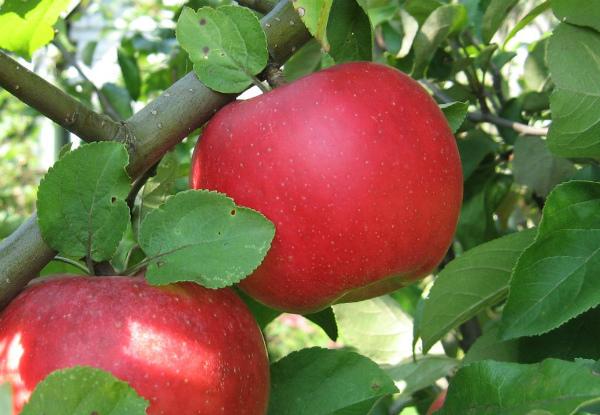
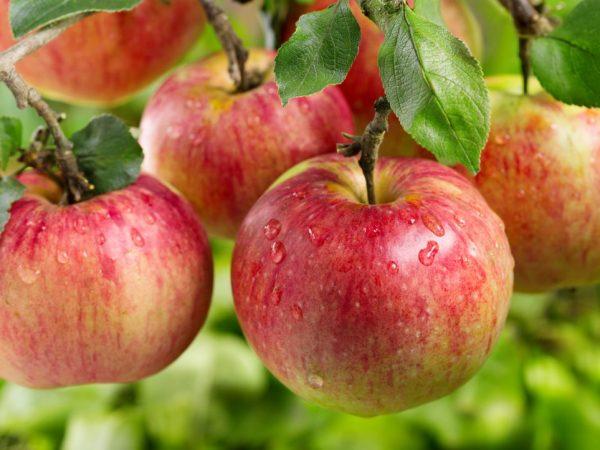
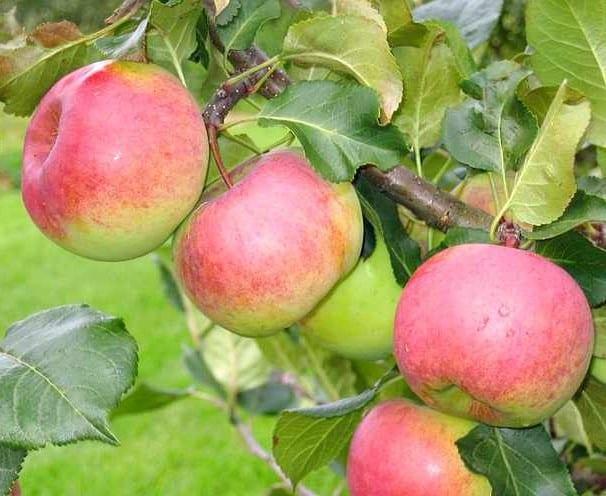
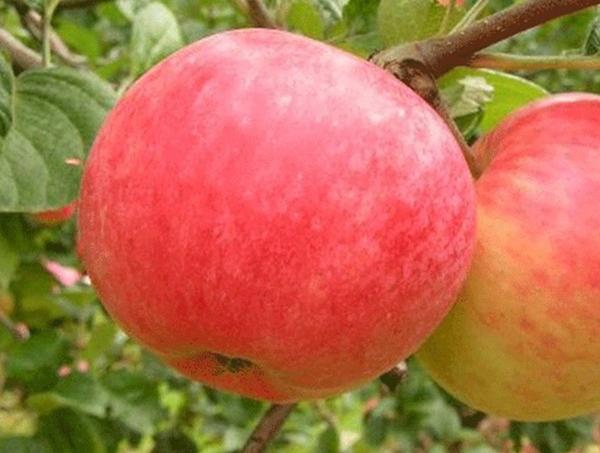
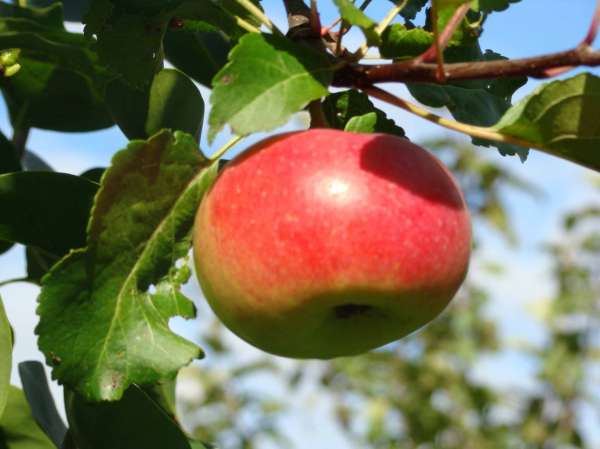
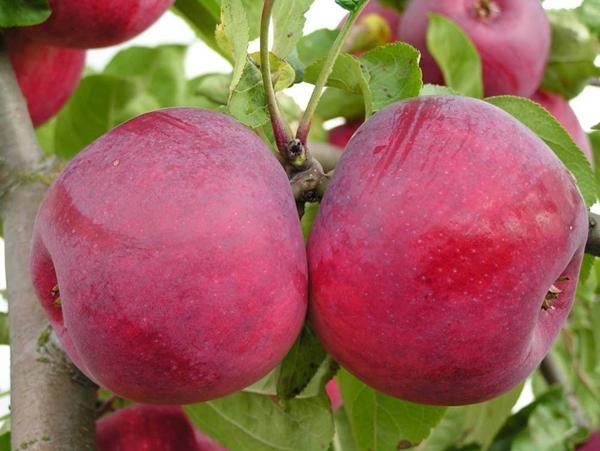
The variety bears fruit regularly, meaning a magnificent harvest can be harvested annually. Apples form on almost all shoots. Each apple weighs 90-140 g, with large apples weighing up to 170 g. They are spherical, slightly flattened at the apex. The smooth, medium-thick skin has a light waxy coating. The color is predominantly yellow-red, with the latter color appearing not only as a background color but also in vertical stripes. Slight greening may appear on the top and bottom of the fruit.
Take a look Also
Flowering and pollinators
In late spring, starting around May 20th, the apple tree branches are covered in a foam of fragrant white-pink flowers. Since the variety is not self-pollinating, Auxis requires the presence of pollinators, which can be any apple variety with a similar, mid-winter ripening pattern. These varieties include:
- Renet Simirenko.
- Antonovka.
- Scarlet anise.
- Knight.
- Antaeus.
For best results, it is recommended to plant 3-4 varieties nearby.
Ripening time and harvesting of fruits
The first apples can be picked starting around September 20th. The harvest can last almost a month, provided October is fine and free of dampness and cloudy days. It's important to monitor the harvest closely—the aforementioned apple drop can ruin a significant portion of it through mechanical damage, so apples are picked frequently and in small batches.
Yield and taste of apples
Each Auxis tree can produce approximately 20-35 kg of fruit annually. After nine years, the yield steadily begins to decline, without losing quality. The apple flesh is juicy, fragrant, moderately firm, and fine-grained.
The taste of the fruit is dessert-like, refined, with a refreshing sourness layered on top of the sweetness with the tenderness of a smoky mist.
Scope of harvest application
These apples are delicious fresh and can also be processed into jam, marmalade, and marmalade. When dried, they lose their flavor and become unpleasantly hard. They are not suitable for making alcoholic beverages. It is not recommended to juice Auxis apples—without sweetener, the flavor will be bland. They are excellent in baked goods such as charlotte and puff pastries, where it is recommended to combine them with nuts (walnuts, pecans) and spices (vanilla, cinnamon). If you store the apples in boxes, layer them with sawdust or straw, and store them in a cool place (a basement is better than a refrigerator), they can be stored until March.
Immunity to diseases and pests
The Auxis apple tree is highly resistant to various diseases, as well as the most common pests. However, the variety is susceptible to powdery mildew and scab, as well as hawthorn moths, codling moths, and apple mites.
Frost and drought resistance
In the temperate climate, the Auxis apple variety demonstrates good frost resistance; even temperatures as low as -35°C (-35°F) don't harm it. Drought is unacceptable if you want to harvest a good crop, and insufficient moisture in the first half of summer slows the tree's growth the following year.
Features of planting operations
Auxis can be planted in the garden among any other crops. This variety has a high survival rate for seedlings. The main thing is to never place the apple tree in a position where one side cannot develop, such as directly against a house wall.
Site selection and preparation
This variety thrives in fertile, light, neutral soil, either sandy or loamy. The Auxis apple tree requires a sunny location, as it draws its energy from ultraviolet light to produce sweet fruit.
It is essential to check the groundwater, as well as assess the likelihood of waterlogging in the area and, if necessary, arrange drainage.
Permissible groundwater level
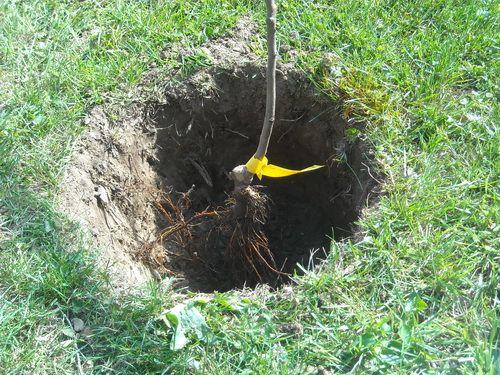
The Auxis tree's root system is sensitive to moisture and tends to rot when overwatered, so groundwater level is a key factor when choosing a planting site. Groundwater should be 2.5-3 meters below the soil surface.
How to choose a healthy and strong seedling
If you're eager to enjoy apples sooner, choose two-year-old seedlings. Unlike one-year-olds, they take root better in a new location, meaning they'll begin devoting energy to fruit production sooner. The roots and stems of an Auxis apple tree should be undamaged; a healthy plant will have a bright green stem beneath the bark.
Bare-rooted seedlings should be moist and covered with a cloth. Containerized seedlings should have a dense soil mixture that doesn't crumble when removed from the container. A strong apple tree seedling shouldn't look limp; it's a complete lie if the seller assures you that once you plant it, it will "come alive and grow stronger."
Timing and rules for planting a tree
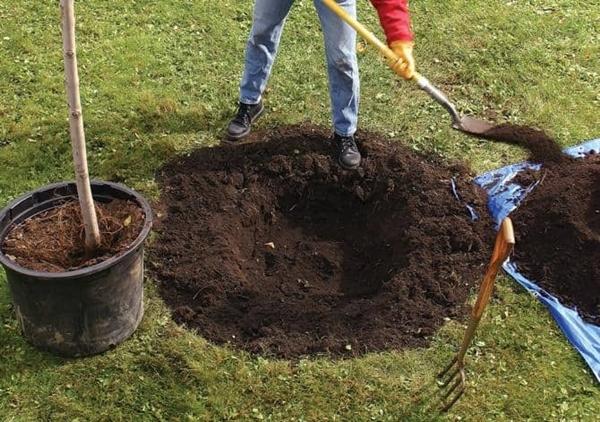
The Auxis apple tree can be planted in the garden in April, once the risk of frost has passed, or in the fall, in September or early October, allowing enough time for the tree to establish itself before frost. For a 1-2-year-old seedling, dig a hole 1 meter across and 70-80 cm deep. It should be separated from neighboring trees by 3-4 meters. The seedling must be supported with a stake. When backfilling the hole, it's best to mix the topsoil with humus.
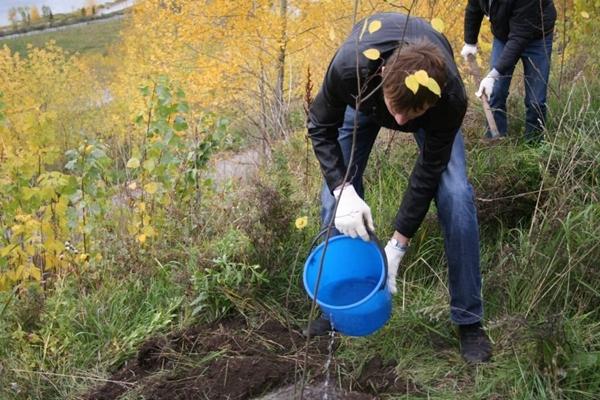
After planting the tree, abundant watering is required.
Care instructions for the capricious Auxis variety
The cultivar develops rapidly, and its existence is unspoiled by surprises, given favorable weather conditions and minimal care from the grower. Auxis is one of those apple trees highly prized by breeders and those simply seeking a good harvest of delicious fruit each year.
Watering
Each tree requires watering at a rate of 1 liter per year of the apple tree's life. Watering frequency depends on weather conditions, but on average, Auxis is watered weekly.
Fertilizer
Before winter, the Auxis apple tree is supported with organic fertilizers, and in the spring, it's time for mineral fertilizers. When the ground just begins to thaw, nitrogen-containing fertilizers are applied, and once budding begins, phosphorus-potassium fertilizers are applied every 3-4 weeks until ripening.
Graft
It is recommended to carry out this procedure for the Auxis apple tree in the spring, in order to:
- increasing the yield or diversifying it with another variety;
- restoration of a severely damaged tree (for example, by rodents).
Also The Auxis apple tree tolerates summer grafting well. (if the spring ones didn’t take root).
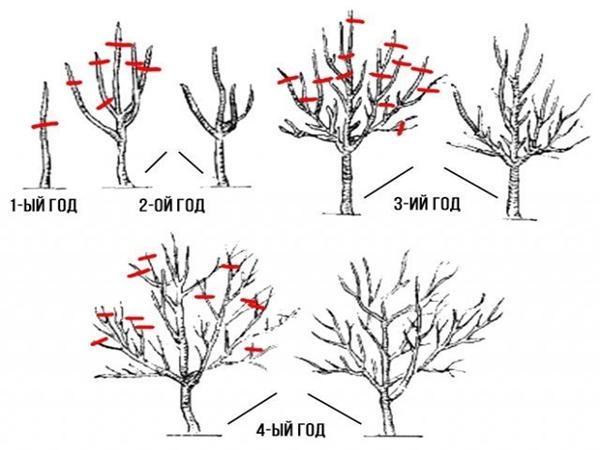
Trimming
It is held twice a season:
- in autumn - weakened and damaged shoots are cut off, which can become a source of disease over the winter;
- In the spring, a healthy crown is formed by removing branches growing inside the bark and old lifeless ones, as well as shoots damaged by snowdrifts in the winter.
Spring pruning is carried out only for apple trees aged 3-4 years.
Treatment against pests and infections
As a preventative measure against pests, apple trees should be sprayed with a urea solution or Bordeaux mixture in the spring. For powdery mildew, after removing the damaged parts, spray with a lime-sulfur solution. For leaf-eating insects, folk remedies such as tomato tops, dandelion, and sour milk can be used.
Protection from cold and rodents
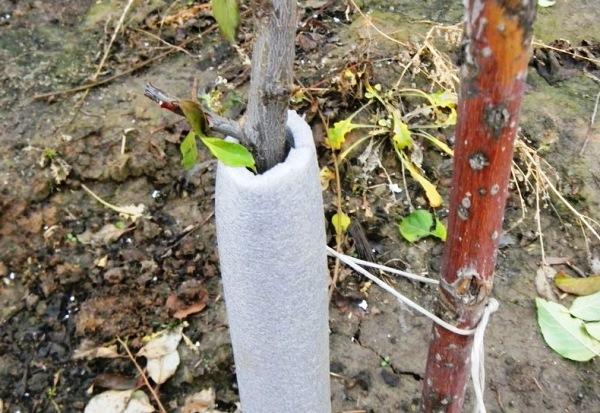
To ensure the Auxis apple tree survives a snowless winter (which may lead to bark cracking), its trunk is covered with a suitable material (spunbond, burlap, or paper). This same wrapping will protect the trunk from damage by rodents. And for each winter, the area around the tree is mulched with peat (15-25 cm thick).
The need for a transplant
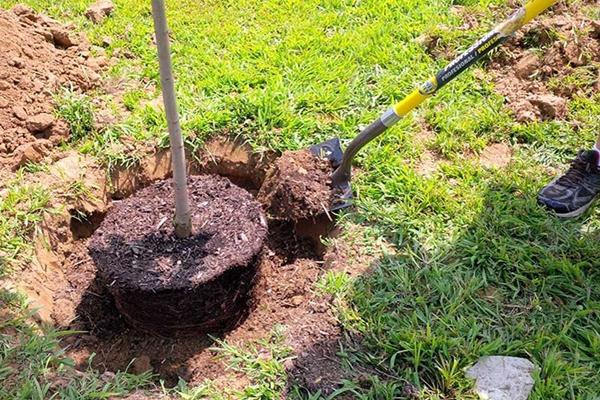
If this occurs, a young apple tree—2-3 years old, or at most no older than 15—will tolerate it well. Experienced gardeners say the best time for this complex procedure is autumn. However, if this season has been dry and cold, or the soil in the garden is not black earth, replanting should be done in the spring. Replanting is necessary in cases where:
- the distance between the trees was not initially large enough;
- the space occupied by the apple tree is definitely needed for something else;
- I want to quickly acquire a fruitful garden using mature plants.
Methods of reproduction
There are only two options for the Auxis apple tree variety:
- Layering: In the spring, the lower branches of the apple tree are secured to the trunk, lowered to the ground, where they are covered with soil and hilled up. In the fall, when they have matured, they can be separated for transplanting to a separate location.
- Cuttings are taken in early spring, before the tree begins to actively flow. The cuttings are cut 20 cm long and embedded in sand, then stored in a cool, dark place. They can then be used for grafting.
Gardeners' reviews of the Auxis apple tree
It's often noted that while the fruits aren't particularly luxurious in appearance, their taste is unmatched. Gardeners appreciate that Auxis is resilient throughout the season, and that by following simple tree care guidelines, a bountiful harvest is guaranteed.
Related posts:
 Description of the Chudnoe apple variety, planting and caring for a dwarf tree
 Description and varieties of the Sinap apple tree, planting and care rules
 Signs and treatment of apple tree cancer, varieties resistant to the disease
 Description and characteristics of the Orlovim apple variety, cultivation nuances
 Description and planting of the Dream apple tree variety, care and propagation
 Description of the Arkadik apple tree variety, planting and care instructions
 Description of the Red Early apple tree variety, agricultural technology and specific care
 Description and varieties of Gala apple trees, planting and care in open ground