
- History of the Arkadik apple tree breeding
- Cultivation regions
- Moscow region
- Middle zone
- Siberia
- Subspecies
- Pink
- Sugar
- Summer yellow
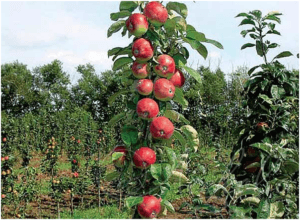
- Columnar
- Dwarf
- Main advantages and disadvantages
- Characteristics and description of the variety
- Tree size and annual growth
- Lifespan
- All about fruiting
- Flowering and pollinators
- Ripening time and yield
- Tasting qualities of apples
- Storage and transportability of the harvest
- Sustainability
- To diseases and pests
- Unfavorable climatic conditions
- Specifics of planting fruit crops
- Deadlines
- Site selection and preparation
- Preparing seedlings
- Technological process of landing
- What can be planted nearby?
- Further care
- Watering and fertilizing
- Trimming
- Caring for the tree trunk circle
- Preventive treatments
- Winter protection
- Methods of propagation of the Arkadik variety
- Gardeners' reviews
The Arkadik apple tree has gained popularity thanks to its excellent taste and ability to quickly adapt to new conditions. This variety is considered versatile and is widely cultivated both commercially and in home gardens. The tree is resilient and fruitful, but to obtain a bountiful harvest, it's important to know basic cultivation techniques.
History of the Arkadik apple tree breeding
The Arkadik apple tree variety has appeared on the market quite recently; it was developed in 2002 in Moscow at the All-Russian Selection and Technological Institute of Horticulture and Nursery.
The creator of this promising plant was Professor Viktor Valerianovich Kichina, Doctor of Biological Sciences. Hardy and high-yielding varieties such as Arkad Yellow and SR 0523 were selected for the study. The result was a variety with sweet fruits and increased resistance to adverse environmental factors and major diseases.
Cultivation regions
Thanks to its sufficient degree of endurance, the Arkadik apple tree can be grown almost anywhere.
Moscow region
In the Moscow region, the Arkadik apple tree grows and develops quite well. The key here is to properly prepare the soil for planting. If you have acidic podzolic soil, you'll need to neutralize it with lime.
Middle zone
The Arkadik variety thrives in temperate climates. Successful cultivation here depends directly on proper agricultural practices. Regular preventative measures are sufficient to protect the apple tree from various diseases and parasitic infestations.

Siberia
Despite the harsh climate of this region, the Arkadik apple tree is resilient to low temperatures. The key to growing in cold regions is proper planting and care. The optimal choice for these conditions is the Arkadik on a dwarf rootstock.
When planting seedlings, the main thing is to prevent them from actively growing, so work should be carried out in late autumn.
Subspecies
There are several varieties of the Arkadik variety; when choosing the best option, you should first familiarize yourself with them and their characteristics.
Pink
This Arkadik subspecies is distinguished by its small fruits, weighing no more than 80 g. Unlike the classic variety, the apples are flat and pink in color. Despite their low growth, the trees are capable of producing fruit well.
Sugar
This Arkadik apple variety has earned the acclaim of gardeners for its high yield, with a single tree yielding up to 200 kg. The fruits are distinguished by their presentable appearance, excellent shelf life, and decent flavor. The Sakharny variety requires no special care; all techniques are standard.
Summer yellow
A distinctive feature of this Arkadik subspecies is the small size of the fruits, but this does not detract from their taste. The only drawback of the Summer Yellow subspecies is its weak resistance to scab.

Columnar
This subspecies is characterized by its compact size and small crown. The same cultivation practices apply here as for the Arkadik variety. However, when planting seedlings, it's important to select a site with fertile soil and a neutral climate.
Dwarf
This subspecies of Arkadika grows to a height of no more than 2.5 m. Its advantages include high frost resistance, compact size, and excellent taste and marketability.
Main advantages and disadvantages
The Arkadik apple tree is popular among gardening enthusiasts due to the following positive characteristics:
- high productivity rates;
- rapid survival of seedlings;
- ability to grow even in regions with cold climates;
- ease of care;
- increased immunity to major diseases;
- sufficient frost resistance;
- stable fruiting.
But, despite the many advantages of the Arkadik apple tree, there are also some weaknesses:
- tendency of fruits to fall off quickly;
- need for additional pollination;
- low shelf life of the crop.
Important! The tasting score for the Arkadik variety is 4.2 out of 5.
Characteristics and description of the variety
To reap the maximum possible harvest, it is recommended to become more familiar with the main qualities of the Arkadik apple tree.

Tree size and annual growth
The Arkadiya apple tree is considered a vigorous, hardy tree, reaching a height of up to 4 meters. This resilient plant has a wide, conical crown, composed of robust, rounded, reddish-hued shoots. Yields depend on the number of rings; the more rings, the higher the yield. Arkadiya's leaves are ovoid, pointed at the tip, and have a matte, vibrant green surface. Annual growth is 10 cm.
Lifespan
Since the Arkadik apple tree has a high degree of resistance to adverse environmental factors, its lifespan is quite long, over 30 years.
The main thing is to provide the apple tree with comfortable growing conditions and regularly perform rejuvenating pruning.
All about fruiting
The Arkadik variety has proven itself to be exceptionally positive; it is capable of producing fruit reliably and abundantly.
Flowering and pollinators
The Arkadik apple tree is partially self-fertile; if a neighboring pollinator is present in the garden, all flowers will produce fruit. These trees should be planted approximately 50 meters apart. It's best to use fall-ripening pollinators.

Tip! To increase yield, you can spray the tree with honey water, prepared at a rate of 3 tablespoons of the natural product per liter of water.
Thanks to this simple technique, beneficial insects can be attracted to the Arkadik apple tree.
Ripening time and yield
The Arkadik apple tree is an early-ripening variety. The first fruits are harvested as early as the third year after planting. The harvest reaches technical maturity by mid-August.
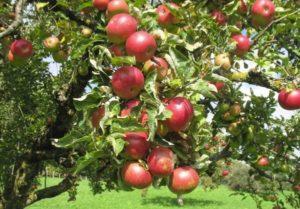
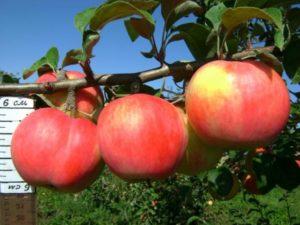
Arkadik apples are large, weighing 210 g, but with proper care can reach 350 g. Average yield is 300 c/ha. The fruit has thin skin and a whitish-green color, which develops into dark red stripes when fully ripe.
Tasting qualities of apples
The Arkadik variety has a sweet, slightly tart flavor, a hint of tartness, and a distinct aroma. They have few seeds. Because they are dessert apples, they are eaten fresh. They are also a good source for various culinary delights and winter preserves.

Storage and transportability of the harvest
The Arkadiya variety's fruits are prone to rapid shedding and should be picked as soon as they begin to fall. They have a relatively short shelf life. Refrigerated, they last for three days, and in a basement, for 1.5 months. Arkadiya apples are not very transportable.
Sustainability
The Arkadik apple variety occupies a leading position among early-ripening plants. This is due not only to its high productivity but also to its sufficient viability and ability to withstand adverse weather and disease.
To diseases and pests
Tall apple trees have increased resistance to major diseases and pests. However, this requires timely and effective preventative treatment. Regular and severe violations during planting and care can lead to stress, which weakens the tree's resistance to infections and pests. The Arkadik variety has been shown to have increased resistance to scab and other fungal diseases.
Unfavorable climatic conditions
The tree tolerates prolonged drought quite well, but to ensure a bountiful harvest, watering must be timely and generous. It is also not affected by low temperatures. The apple tree can withstand temperatures as low as -35°C without losing its characteristics.

Specifics of planting fruit crops
Planting of seedlings should be carried out taking into account the basic requirements for this manipulation.
Only a competent approach will allow the apple tree to quickly take root and adapt to new conditions.
Deadlines
Planting work can be carried out equally effectively:
- in autumn (starting from the end of September and ending in mid-October);
- in spring (from the third ten days of April).
When choosing when to plant an apple tree, spring is best. Young trees will have time to establish roots and prepare for winter before the cold weather sets in.
Site selection and preparation
For normal growth and development of the Arkadik apple tree, preference should be given to sufficiently sunlit meadows where there are no northern winds.
Advice! Since the tree's root system is powerful and deep, the planting site should not be near a water table (at least three meters). To slow its growth, place a sheet of slate in the pit during planting to encourage the roots to spread outward.

Regarding soil composition, apple trees thrive in virtually any soil, with the exception of marshy or rocky areas. The ideal soil type is a site with loose, loamy or sandy loam soil that hasn't had any vegetation for two to three years.
The apple tree plot should be prepared a month before planting. Clear the area of debris, dig a pit at least 50 cm deep and 90 cm wide, and fill it with a nutrient-rich mixture: compost (4 buckets), potassium sulfate (1 cup), wood ash (3 cups), and superphosphate (2 cups).
Preparing seedlings
One-year-old seedlings 120-130 cm tall are suitable for planting; if two-year-olds are used, their height should be 150 cm. Young apple trees should be inspected for signs of disease, damage, or rot when purchased. Before planting, trees should be soaked in a container of water for two to three hours.
Technological process of landing
Once the pit for the apple tree is ready and enriched with nutrients, you can begin planting.
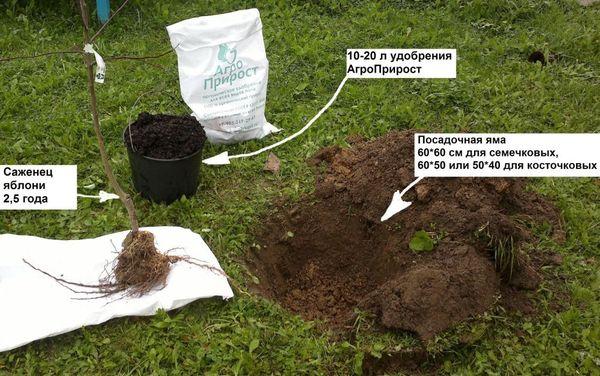
The algorithm for planting seedlings involves the following steps:
- Place the tree in the hole on a mound of earth.
- Straighten the root system and sprinkle with fertile soil.
- Moisten if soil is dry.
- Gently compact the soil without covering the root collar.
- Create a depression around the plant for watering. The recommended water consumption per tree is 2 buckets.
- Mulch the soil with peat or humus.
Once all work is completed, the apple tree needs to be tied to a support.
What can be planted nearby?
When choosing neighbors for the Arkadik apple tree, it's recommended to choose berry bushes that grow in partial shade, such as black currants and raspberries. Due to the difference in the size of their underground parts, these plants won't compete. The only thing to consider is the distance between them, which should be at least one and a half meters.

Further care
The Arkadik apple tree is cared for according to a standard scheme: irrigation measures, weed control, loosening the soil, and application of fertilizers.
Watering and fertilizing
In the first year after planting, apple trees are watered twice per season. During the hot season, mature trees need to be watered every 3-4 weeks, using 3 buckets of water per tree. If the soil is light, watering should be done twice a month. To retain moisture, apply mulch around the tree trunk, applying a 10 cm layer. Water three times: during bud break, three weeks after flowering, and three weeks before the expected harvest.
If you notice that your Arkadik apple tree has slowed in growth (in the first three years), or its foliage has turned yellow, or fruit is not forming, you should fertilize the soil. Apply organic fertilizer once a year in the spring, using manure or compost.

Mineral supplements must be applied strictly according to the recommended dosage, otherwise, instead of benefiting the plants, they will cause harm. In the spring, ammonium nitrate is used for feeding, and in the fall, phosphorus and potassium compounds are used. Mineral fertilizers are also best applied before the onset of cold weather, after harvesting.
Trimming
Formative pruning should be performed as early as the second year after planting the seedling in its permanent location. This procedure is performed in February or March, before the sap begins to flow. The air temperature on this day should be no lower than -10-12°C. Branches that interfere with each other or grow toward the trunk should be removed. The central conductor is also shortened.
Sanitary pruning is performed in the fall. The tree is cleared of any weak or diseased branches. Afterward, tools are disinfected, and plant waste is burned.

Caring for the tree trunk circle
To achieve the desired results, the soil around the tree trunk must be regularly cleared of weeds and loosened. Avoid compacting the soil, as this will deprive the tree's roots of oxygen. Mulch should be added periodically as needed.
Preventive treatments
To avoid negative consequences when growing the Arkadik apple tree, it is necessary to spray it with appropriate preparations to prevent diseases and pests:
- Copper sulfate is used three times: before the bud formation phase, before the flowers appear, and after they fall.
- A preparation containing phosphorus and potassium is used before the onset of cold weather.
- To protect against rodents, the tree is fenced with spruce branches and reeds.

Winter protection
Given the variety's sufficient winter hardiness, additional shelter is not necessary. Simply perform sanitary pruning, remove fallen leaves, and loosen the soil around the tree trunk, as well as apply a nutrient solution and moisten the soil. The trunk of a young apple tree is treated with a chalk solution, while that of a mature tree is treated with a lime solution.
Methods of propagation of the Arkadik variety
There are several ways to get a new plant:
- by grafting;
- by cuttings;
- air layering.
To ensure successful apple tree propagation, it is recommended to adhere to technology and use only disinfected tools.
Gardeners' reviews
Anna, 56, Moscow: "I hesitated to buy an Arcadia apple tree for a long time, doubting its frost resistance. But I finally bought it, and I wasn't disappointed. The tree has taken root well and is surviving the winter well. I'm delighted!"
Sergey, 45, Belgorod: "The Arkadia variety never ceases to delight me. The tree produces fruit reliably, is disease-free, and requires no special care. I've found no flaws with the apple tree."
Yulia, 34, Ivanovo: "I've had my eye on the Arkadiya variety for a while, but only planted it this year. The seedling quickly took root and started growing. The only disappointing thing is the poor shelf life of the harvest, but otherwise I'm happy with the variety."
Related posts:
 Description and rules for growing the Bratchud apple tree variety
 Description of the Chudnoe apple variety, planting and caring for a dwarf tree
 Description of the Borovinka apple tree variety, cultivation and care
 Description of the ornamental Nedzvetsky apple tree, cultivation technology
 Description and subtleties of growing the Sverdlovsk Beauty apple tree variety
 Description and planting of the Dream apple tree variety, care and propagation
 Description and rules for growing creeping apple trees, planting and care
 Description and subspecies of the Sakharny Arkad apple tree variety, cultivation technology