
- What is a creeping apple tree?
- Tree shape and size
- All about fruiting
- Advantages and varieties
- In which regions is it grown?
- How to plant an unusual apple tree
- Selecting a location and preparing the site
- Timing of planting dwarf slate
- How to properly plant
- Specifics of care
- Features of watering
- Top dressing
- Whitewash
- Weed control
- Seasonal crown formation
- Errors that occur when trimming
- Protection from rodents
- Reproduction
- Rootstocks for creeping trees
- Main difficulties and ways to overcome them
- Saving a frozen apple tree
- Causes of infertility in creeping apple trees
- The best varieties of creeping apple trees for Siberia and other regions
- Reviews and recommendations from gardeners
Tall apple varieties are more common in gardens. However, they have one drawback: they can't be bent to the ground to protect them from severe frosts. Therefore, gardeners have developed a special type of apple tree for growing in cold regions—a creeping apple tree. Its crown reaches no more than 50 centimeters in height, making it easy to cover for the winter. Below is information on growing creeping apple trees in gardens.
What is a creeping apple tree?
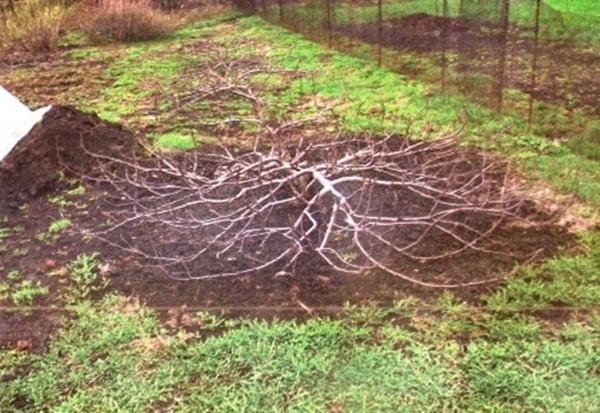
A tree trained so that its branches are horizontal to the ground is called a slate or creeping apple tree. Breeders have developed varieties whose crowns already have this type of shape and require no shaping. Examples of these include Borovinka and Melba. Any apple tree variety can be trained as a creeping apple tree on a plot.

Tree shape and size
A creeping apple tree grows no more than 45-50 centimeters tall. To achieve this height, upward-growing shoots must be trained to a prostrate position in a timely manner. Since the branches are arranged horizontally rather than vertically, the distance between trees should be at least 4-6 meters. The most common shape of a creeping apple tree is a flat saucer.
Important! Regardless of how the tree is trained, in cold climates it must be covered for the winter.
All about fruiting
Fruit yield depends on proper crown formation, tree care, and weather conditions. Fruit ripening in trailing apple trees depends on the variety. Because the branches of these trees are squat, the weight of the fruit can cause them to fall to the ground during the fruiting season. Therefore, when the apples begin to ripen en masse, supports are placed under the shoots.

Advantages and varieties
Their low stature allows for winter shelter, which is essential for trees growing in northern regions. This increases the apple tree's survival rate and overall yield. The best varieties for growing in Siberia and the Urals include Severny Sinap, Souvenir Altaya, Zheblovskoye, Borovinka, and Melba.
In which regions is it grown?
Creeping apple trees can be planted in any region. Residents of Siberia and the Urals especially often experiment with the creeping form. Low-growing trees are easier to cover for the winter and survive harsh frosts better. However, as soon as the sun warms in the spring, the cover should be removed immediately.
With proper agricultural technology, a creeping apple tree grows and bears fruit for 40-50 years.

How to plant an unusual apple tree
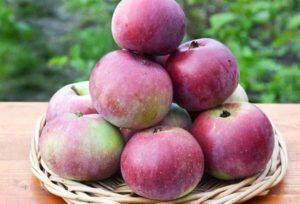
Any apple tree variety can be chosen for planting, but those with large, tasty fruits are preferable. Furthermore, in colder regions, it's best to choose varieties bred for northern climates; otherwise, even as dwarf trees, they may not survive the harsh winter. Seedlings should be purchased from garden nurseries.
Selecting a location and preparing the site
The planting site should be well-drained and protected from cold winds. The plant does not tolerate high humidity, so groundwater should not be allowed to reach the soil surface. Two weeks before planting, clear the area of weeds and debris. Then dig a hole and fill it two-thirds full with a mixture of fertile soil, humus, and turf.

Timing of planting dwarf slate
The best time to plant seedlings is early spring. Choose a seedling that hasn't yet budded. Trees can also be planted in the fall, in September or October. As soon as frost sets in, the trunks are bent over and secured to the ground with hooks. Horizontally positioned shoots can easily be covered with a special material.
How to properly plant
For planting, select a one-year-old sapling: it will adapt to the new conditions most quickly. Plant at a 40° angle or traditionally vertically. Plant the apple tree as follows:
- place the seedling in the middle of the prepared hole;
- straighten the roots;
- fill with soil, lightly compact;
- watered generously.
After planting, the soil around the seedling is sprinkled with humus, straw, and peat. Mulch will protect the soil from drying out and the roots from overheating in the summer and freezing in the winter.

Specifics of care
Apple trees require care: watering, fertilizing, weeding, and mulching. They also need whitewashing and protection from rodents. Crown shaping is a necessary part of growing. Whether the branches grow horizontally depends on the skill of the gardener.
Features of watering
During the season, the trees are watered, applying at least two buckets of water to the root zone. The frequency of watering depends on rainfall: the topsoil should have time to dry out. From late summer, irrigation is reduced. A key aspect of watering a creeping apple tree is that it's important to support the branches beforehand, otherwise the fruit may rot due to moisture exposure.

Top dressing
In the spring, the seedlings are fed with a fertilizer containing primarily nitrogen. A complex fertilizer is applied several times during the summer. In the fall, to ensure the apple tree survives the winter better, the root zone is watered with a potassium-phosphorus mixture. Additionally, in the spring and early summer, foliar feeding with urea is possible.
Whitewash
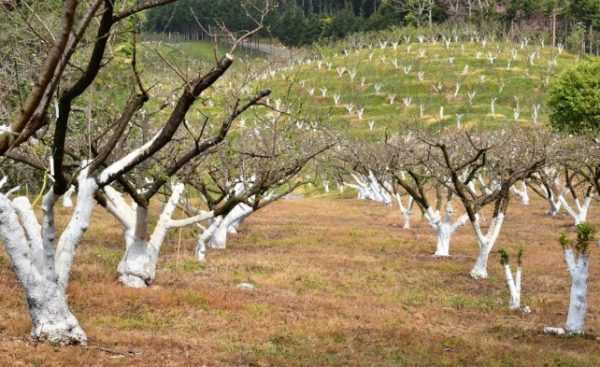
The procedure is carried out in the fall, after the harvest and leaf fall. In addition to lime, clay and paste are added to the solution. The mixture is applied to the main trunk and side branches. This protects the tree from the scorching rays of the spring sun, as well as from the pupae and eggs of harmful insects that like to overwinter in the bark.
Weed control
Throughout the season, weeds should be removed and the soil around the tree trunk should be loosened shallowly. Horizontal shoots are close to the ground, and weeds will block the sunlight needed for fruit development. Furthermore, weeds can carry diseases and pests. For these reasons, they should be prevented from spreading and removed promptly, either manually or with tools.

Seasonal crown formation
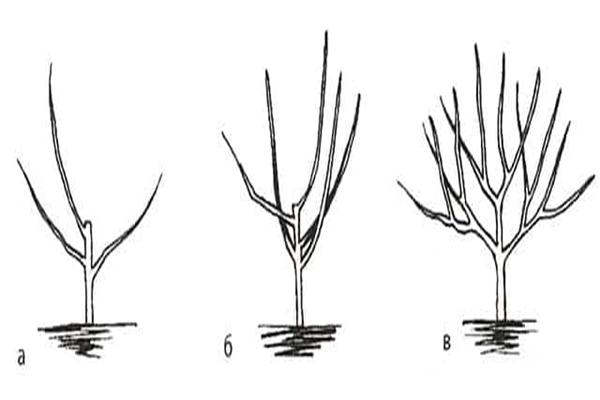
The spreading crown of apple trees develops over the course of 4-6 years. When planted in the fall, the care regimen is as follows: in the spring, the trees are cleared of their covering material and left untreated until June. Then, the stems are bent to the ground, maintaining a 5-centimeter gap. To slow growth, the tops are pinched in August.
When planting a sapling at an angle in the spring, crown formation also begins in June. If the apple tree is planted upright, the shoots are pruned in the spring to the fourth or fifth bud. Once the young branches have grown, they are straightened horizontally and secured to the ground. Before the onset of sustained frost, the trunk is earthed up to a height of 8-10 centimeters. In the spring, the covering is removed to prevent the growth of suckers.
Errors that occur when trimming
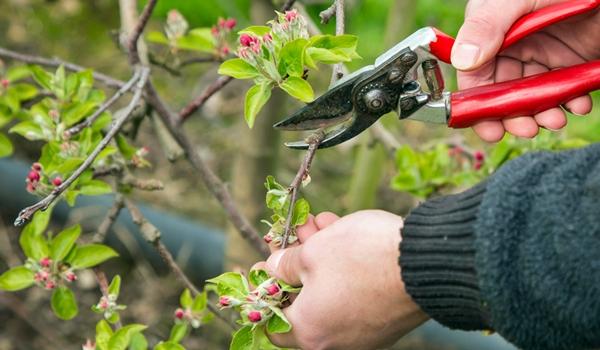
If an apple tree is improperly trained, the crown may grow higher than desired. Correcting this requires adjustments, which involve re-trimming the shoots and pinning them to the ground.
Protection from rodents
Gardeners have devised many ways to protect apple trees from rodents. For example, you can dig posts near the trees and wrap black, rustling bags around them. Another option is to wrap the trunks with chain-link fencing. Rodents dislike pungent odors, so you can sow coriander in the spring and spread dry grass around the trees in late fall. Additionally, the apple tree is tightly covered with spruce branches for the winter.
Please note! When warmer weather arrives, remove the covering, otherwise the trees may rot.
Reproduction
The easiest way to propagate creeping apple trees is by lateral layering. To do this, make a small cut in the bottom of a branch, bend it to the ground, and secure it with hooks. The shoot is then covered with substrate and watered as it dries. When roots and shoots form where the branch meets the ground, it can be separated from the mother plant and planted separately.
Another possible method for apple tree propagation is grafting. To do this, take a one-year-old scion in the fall and store it until spring. It should have at least four buds. In the spring, before the sap begins to flow, the rootstock and scion are joined. The grafted area is wrapped in plastic and sealed with garden pitch.
Rootstocks for creeping trees
Unpretentious, frost-hardy apple varieties that can grow in a variety of climates are chosen as rootstocks. Suitable varieties include Borovinka, Antonovka Obyknovennaya, Grushovka Moskovskaya, Anis, and Kitayka. The fruit of these apple trees is unpopular due to its unattractive appearance, but these hardy trees make good rootstocks for creeping apples.
Main difficulties and ways to overcome them
Growing a creeping apple tree can present some challenges. For example, if the tree isn't properly covered, it might freeze, or it might take a long time to bear fruit.

Saving a frozen apple tree
If the tree appears weakened in the spring, with small, whitish leaves, it has been frost-damaged. Additional pruning is required to save it. After this, the apple tree needs fertilizing. New shoots will soon appear, and the tree will resume its growth. Cuts should be treated with garden pitch to prevent infection.
Causes of infertility in creeping apple trees
Early apple varieties begin bearing fruit 3-4 years after planting, while late varieties begin bearing fruit 8 years after planting. However, sometimes the tree fails to produce fruit after this time. There may be several possible causes, the main ones being:
- the tree is planted incorrectly;
- the crown is not formed properly;
- when planting in the northern regions, varieties intended for the south were selected;
- Proper care was not observed.
Take a look Also

To avoid infertility, seedlings should be purchased from specialized farms. By selecting the appropriate varieties and following proper agricultural practices, gardeners are sure to enjoy a harvest from their trailing apple trees.

The best varieties of creeping apple trees for Siberia and other regions
Breeders have developed apple trees with a natural, spreading crown. The best varieties are:
- Melba. Fruits reach 100 grams in weight and ripen in August. They are white with red stripes. This variety has a medium yield, beginning to bear fruit 3-4 years after planting. The fruit has a shelf life of one month.
- Borovinka. Each apple weighs up to 200 grams and ripens in September. The color is light yellow or green. The fruits can be stored for two months.
- Saffron Pepin. This variety doesn't have a naturally creeping crown, but it's easy to shape. The fruits are oval-conical, weighing 70-80 grams. They are yellow with a slight blush. The apples ripen in late September and store well until spring.
Any variety is suitable for forming a creeping apple tree, the main thing is that they should be unpretentious and frost-resistant.
Important! To avoid disappointment, purchase seedlings from reputable producers or trusted retailers.

Reviews and recommendations from gardeners
According to gardeners, training apple trees as creeping trees is the only way to preserve them and grow a harvest in cold regions. A creeping form isn't natural for trees, and they tend to grow upward, producing suckers. These suckers need to be removed, as they are sterile and drain the plant's energy. Gardeners recommend covering apple trees for the winter and following proper agricultural practices, and then the tree is sure to yield a bountiful harvest.
Tatyana Petrovna, Siberia: "After shaping my apple tree into a creeping tree, I finally harvested fruit. Although the tree takes up a lot of space, it's still worth growing it this way. I hill up the trunk for the winter, then cover the tree completely; there haven't been any frostbite cases yet."
Ivan Sergeevich, Chita: "As an experiment, I shaped the apple tree branches horizontally. My plot is large, so this wasn't a problem. I enjoyed the experiment; the only drawback is that I have to bend over to pick the fruit and also have to support it during fruiting."
Related posts:
 Signs and treatment of apple tree cancer, varieties resistant to the disease
 Description of the Chudnoe apple variety, planting and caring for a dwarf tree
 When and how to prune an apple tree, and is it possible to shape the crown in summer?
 Description of the 10 best columnar apple tree varieties for the Moscow region, planting and cultivation
 Description and subtleties of growing the Sverdlovsk Beauty apple tree variety
 Description of the Red Early apple tree variety, agricultural technology and specific care
 Description and characteristics of the Orlovim apple variety, cultivation nuances
 How to properly plant apple trees with seedlings in spring and autumn, care instructions