
- Which apple trees are recommended for planting in the Moscow region?
- Climate characteristics of the region
- Variety selection criteria
- Varieties
- Winter
- Arbat
- Currency
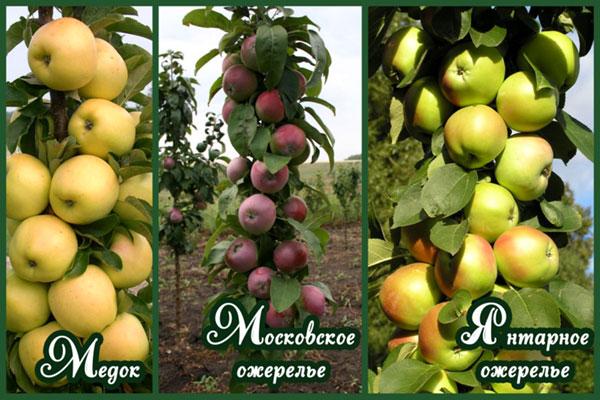
- Moscow Necklace
- Bolero
- Amber necklace
- Autumn
- Vasyugan
- Titania
- Gin
- Ostankino
- Summer varieties
- Dwarf
- Sweet
- New hybrids
- Planting and growing in the Moscow region
- Deadlines
- Preparing the site and seedlings
- Algorithm and landing scheme
- Watering and fertilizing
- Caring for the tree trunk circle
- Formative pruning
- Seasonal treatments against pests and diseases
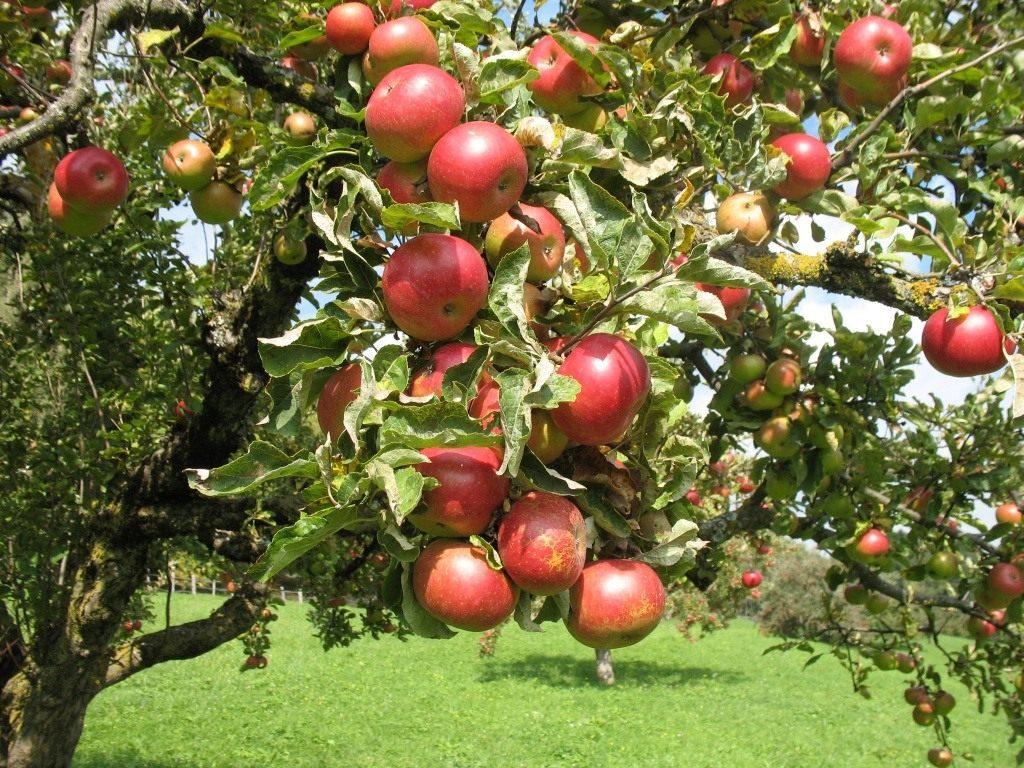
Apples are the most common fruit grown in the Moscow region of Russia. Compact columnar apple trees are popular in small gardens, with varieties suitable for the Moscow region varying in ripening time. Each has its own growing requirements, advantages, and disadvantages, which helps determine the right trees for your garden.
Which apple trees are recommended for planting in the Moscow region?
Apple tree varieties suitable for cultivation in the Moscow region must meet the following requirements:
- high resistance to harsh winters;
- tolerance to summer heat;
- resistance to diseases of garden crops common in the middle zone.
In the southeastern part of the Moscow region, it is necessary to plant apple tree varieties that are particularly resistant to high and low temperatures.
Climate characteristics of the region
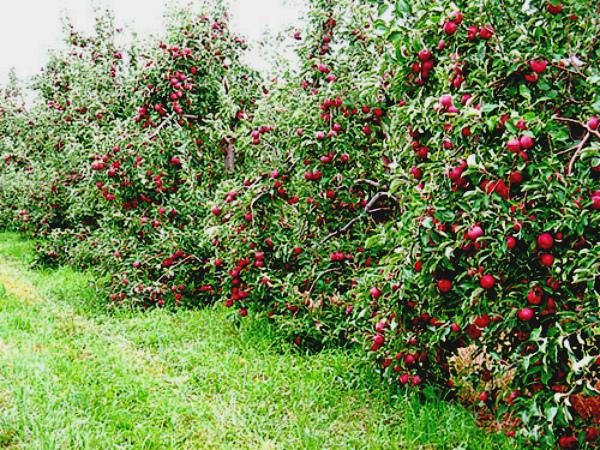
The Moscow region is located in central Russia, with a moderately continental climate. Key weather characteristics:
- the length of daylight hours in summer is about 16 hours;
- the period of active vegetation of plants is no more than 140 days;
- harsh winters with strong winds;
- spring and autumn frosts;
- hot summer with high cloud cover;
- prolonged rains.
The climate characteristics of the Moscow region begin to vary with distance from the capital. In areas close to neighboring regions, averages should not be relied upon..
Variety selection criteria
When choosing an apple tree variety suitable for the Moscow region, it is necessary to pay attention to the following criteria:
- tolerance to local climate;
- resistance to fungal diseases and pests;
- good yield;
- early fruit bearing;
- annual fruiting, without any pronounced periodicity.
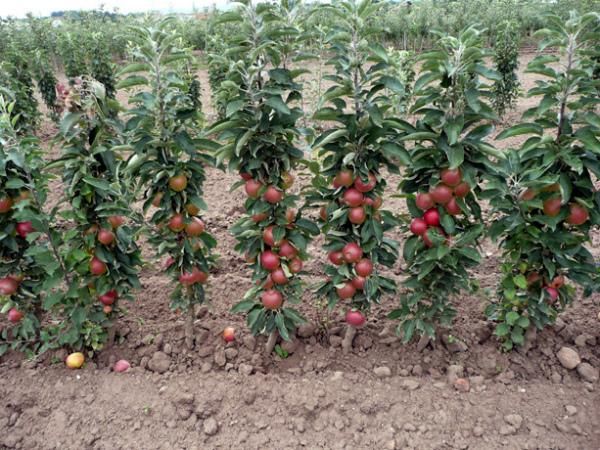
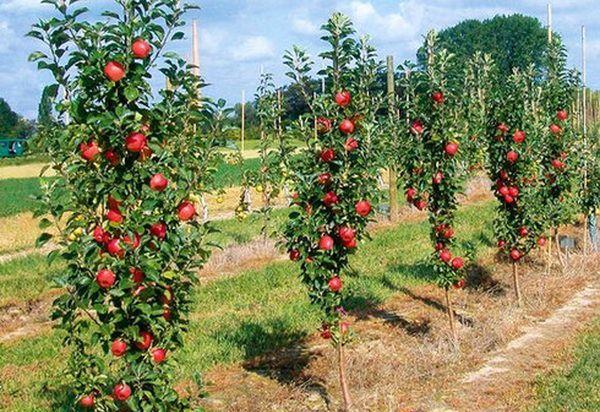
Columnar apple trees, thanks to their unique shape, are well suited to the Moscow region's conditions. The low foliage density helps the apples absorb sugars.
Varieties
Breeding of horticultural crops annually increases the number of apple varieties suitable for cultivation in the Moscow region. Modern columnar apple trees are classified by harvest time into:
- winter;
- autumn;
- summer.
In addition, columnar apple trees differ in growth strength:
- dwarf - up to 2 m;
- semi-dwarf - 2-3 m;
- vigorous - more than 3 m.
Winter
Late-ripening columnar apple trees produce the best fruit for long-term storage. The main advantages of winter varieties are:
- high resistance to fungal diseases;
- dessert taste of apples;
- good shelf life of fruits;
- frost resistance is above average.
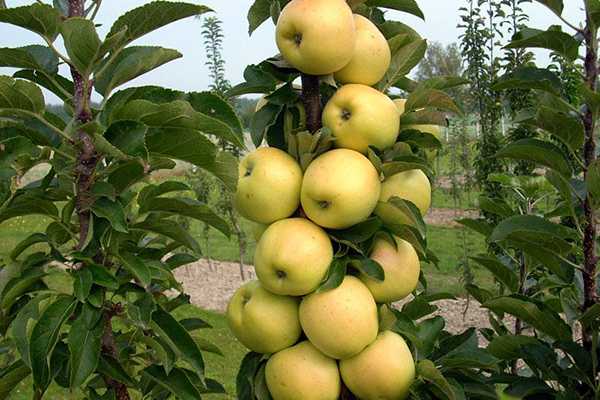
The difficulty in growing lies in the need to regulate the fruits during the formation process, which will avoid overloading the trees.
Arbat
Compact apple trees with dense crowns produce an average yield of about 10 kg of apples. The fruits are characterized by:
- red surface;
- weight 65-120 g;
- poor transportability;
- low shelf life;
- versatility of application.
Currency
This late variety ripens in mid-October, with apples appearing within the first year of cultivation. The trees have high scab resistance and average winter hardiness, surviving temperatures down to -25°C. Varietal characteristics of the apples:
- weight 100-250 g;
- dessert taste;
- rich aroma;
- presence of sourness.
Moscow Necklace
Dwarf apple trees can withstand temperatures down to -42°C and are not susceptible to scab, but are prone to overloading with fruit. Apples, weighing 5-6 kg, ripen in late September or early October. Fruit qualities of this variety include:
- weight 150-170 g;
- dessert taste;
- there is a sour taste;
- the aroma is subtle.
Bolero
The variety was bred in America, but is suitable for growing in the Moscow region. The trees don't exceed 2 meters in height and begin bearing fruit quite late—after 4-5 years. Each tree yields approximately 12 kg of apples, which vary in:
- weighing up to 0.2 kg;
- juicy pulp with a bright aroma;
- green surface.
Amber necklace
The semi-dwarf variety produces about 6 kg of medium-sized apples with the following characteristics:
- weight 140-170 g;
- sweet and sour taste;
- bright aroma.
The Amber Necklace has a particularly high immunity and is not susceptible to scab. The tree is frost-resistant down to -35°C. Harvesting can begin in mid- to late September. A disadvantage of this variety is self-sterility and the need for pollinators.
Autumn
Characteristic features of autumn columnar apple tree varieties:
- high yield;
- juiciness of fruits;
- the sugar content in apples is above average;
- good resistance to fungi and pests;
- average frost resistance.
Vasyugan
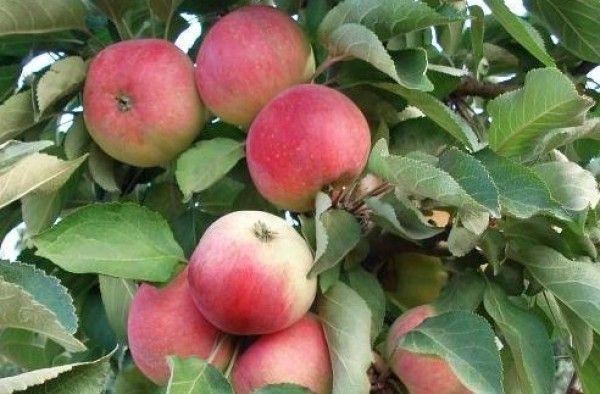
This semi-dwarf variety can withstand temperatures down to -40°C and is resistant to diseases and pests. Fruits weigh 140-200g and have a total volume of 5-6kg and ripen in early to mid-September. These apples are characterized by:
- sweet and sour dessert taste;
- aroma;
- high tasting score.
Titania
This columnar apple variety is not widely grown. Trees begin bearing fruit in their second year and stop by the 15th. The average yield of Titania apples ranges from 8 to 12 kg. The variety exhibits high resistance to diseases and pests. Characteristics of the apples:
- rich red peel color;
- juicy, aromatic white flesh;
- weight up to 110 g.
Gin
These low-growing apple trees, about 2 meters tall, begin bearing fruit 1-2 years after planting. The variety produces a high yield, reaching 12 kg by the fifth year. Characteristics of the apples include:
- ball shape;
- bright red skin;
- sweet and sour taste;
- short shelf life.
Ostankino
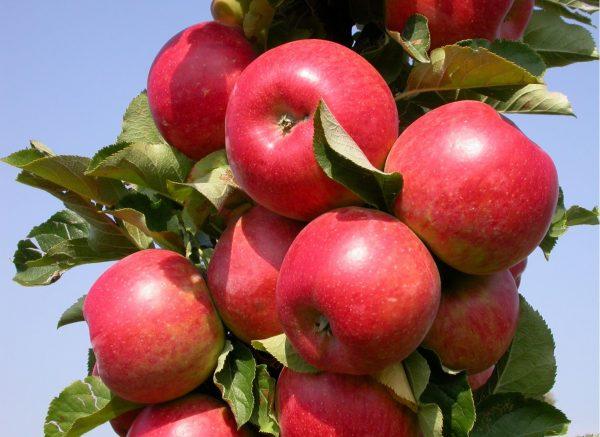
Apples of this variety ripen in mid-September. The tree is resistant to frosts down to -32°C, fungal diseases, and pests. Pollen fertility of this variety increases in cold weather. This semi-dwarf apple tree produces approximately 7 kg. The apples are characterized by:
- weighing 0.1-0.3 kg each;
- sweet taste;
- "McIntosh type" aroma.
Summer varieties
The main features of summer columnar apple trees:
- frost resistance;
- high frost resistance;
- immunity to fungal infections;
- good taste qualities of apples;
- poor shelf life of fruits.
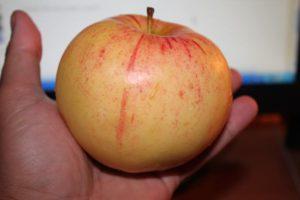
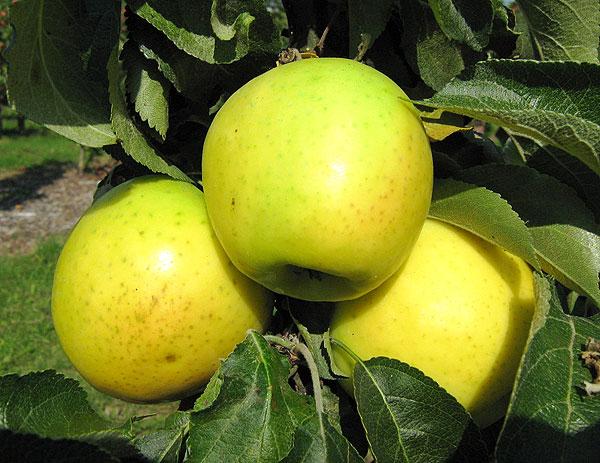
Popular Summer varieties of columnar apple trees for growing in the Moscow region:
- Medok, the apples of which are characterized by a honey flavor and aroma, and the harvest is periodic.
- Malukha is a variety bred in Canada, characterized by large apples and high care requirements.
Dwarf
Dwarf columnar apple varieties are the shortest, reaching no more than 2 meters. These trees grow slowly, with little annual increment. The apples develop evenly across the trunk, allowing for good yields. However, they are characterized by fragility; unlike taller apple trees, dwarf varieties break easily, especially during the seedling stage. Varieties of this type include:
- Arbat;
- Currency;
- Moscow necklace.
Sweet
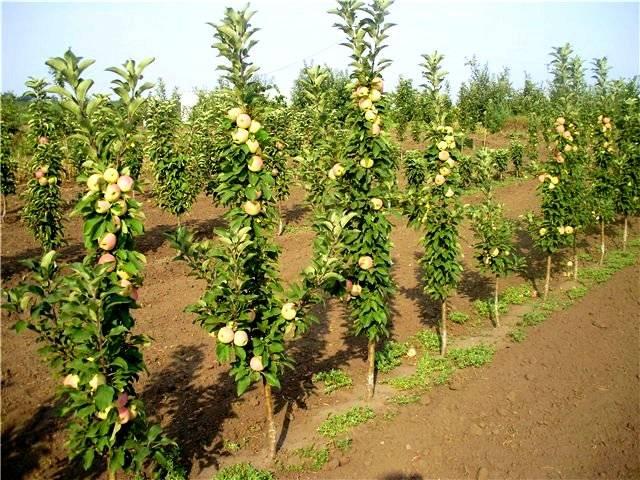
Sweet varieties are especially popular among columnar apples in the Moscow region, earning the highest tasting scores. These varieties include:
- Nectar;
- Moscow necklace;
- President;
- Titania;
- Amber necklace.
New hybrids
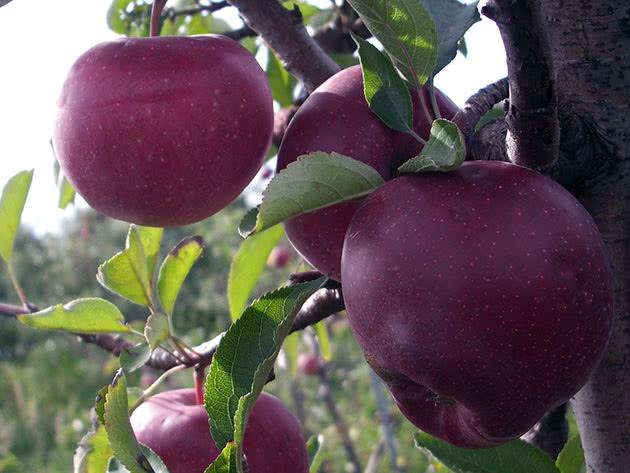
Scientists continue to breed new ring-shaped apple tree varieties and localize seedlings for the Moscow region's climate. Promising new hybrids include:
- Bratchud. This late-harvest variety begins bearing fruit in the fourth year of growth.
- Dialogue. Small, early-ripening apples weigh about 100 g and have a shelf life of no more than 30 days.
- KV-17. This early-ripening hybrid produces a high apple yield, reaching 15 kg. The fruits are distinguished by their bright red surface, large size, and a flavor reminiscent of Melba.
- Konfetnoe. This new dessert variety produces sweet, juicy apples with a shelf life of no more than 21 days.
- Down-to-earth. Large apples of this variety ripen in autumn and are characterized by high sugar content.
Planting and growing in the Moscow region
Growing even a zoned columnar apple tree variety in the Moscow region isn't easy. It's important to consider the appropriate planting time and prepare for the process in advance. The harsh climate necessitates particularly careful care for the plants during the first two months after planting.
A special condition for planting columnar apple trees is that groundwater should not be located close to the surface of the earth.
Deadlines
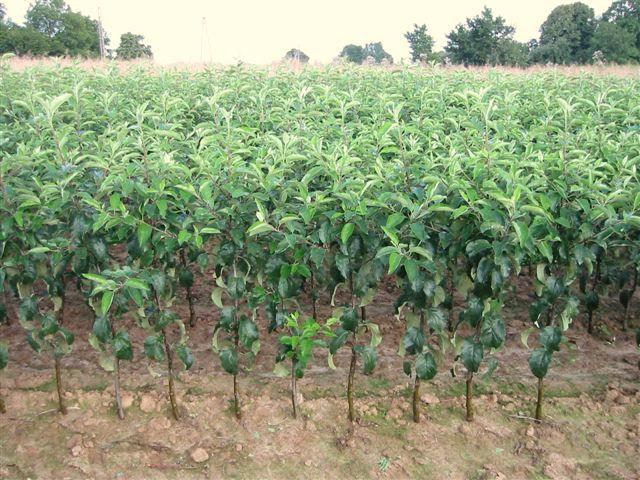
Columnar apple trees of any variety in the Moscow region are best planted in the spring. This will allow the seedlings to root well and survive the subsequent winter more easily. Trees are planted in early spring, waiting until the following conditions are met:
- the soil has thawed;
- the melt waters have receded;
- the soil is well warmed up;
- sap flow has not started;
- the buds have not started growing.
Preparing the site and seedlings
Prepare the soil for planting in the fall by digging and removing weeds. The soil should be mixed with fertilizer; for each square meter, you can add:
- 50-100 g superphosphates;
- 25-30 g of potassium fertilizers;
- 10-20 kg of organic matter.
It is recommended to purchase seedlings from a nursery located in the same climate as the planting site. Inspect the plants for damage and signs of infestation. If long-term storage is planned before planting, it is recommended to place the roots of the seedlings in soil. Soak the roots in a water-based growth stimulant solution 12 hours before planting to stimulate vigorous growth.
Algorithm and landing scheme
The planting process consists of several stages:
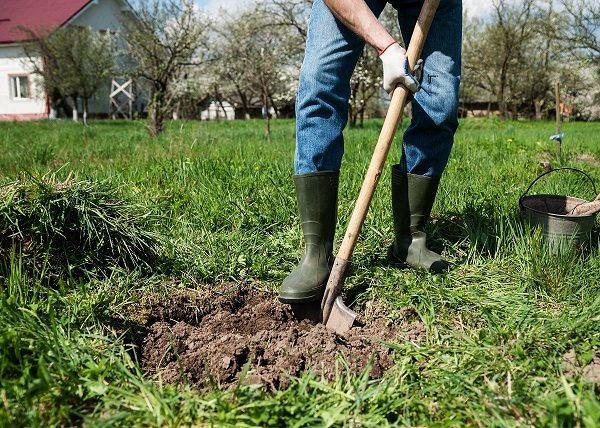
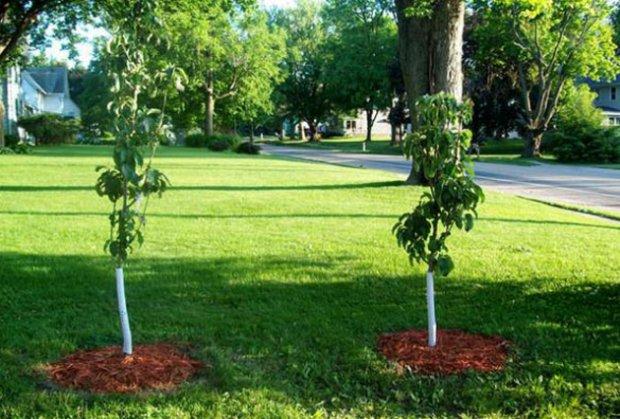
- Preparation of planting holes about 1 m wide and 0.6-0.7 m deep.
- Organic and mineral fertilizers are added to each hole.
- A stake needs to be placed in the hole for support.
- The tree should be placed in the hole, spreading the roots over the surface of the earth.
- The soil is poured in such a way that the grafting site remains above the surface.
- Abundant watering.
- Mulching the tree trunk circle.
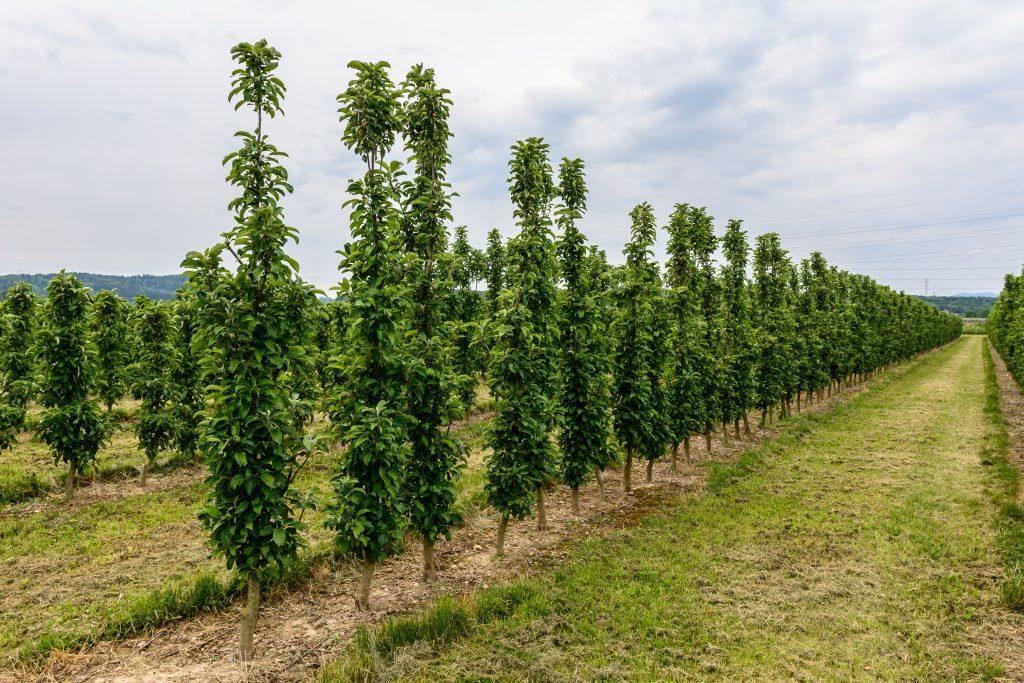
The planting scheme requires maintaining a distance of 40-50 cm between plants, with at least 1-2 m of free space between rows. Apple trees can also be planted in the center of 1-meter squares.
Watering and fertilizing
Columnar apple trees need to be insulated at least 4 times during the growing season:
- Before flowering begins.
- During the formation of ovaries.
- During the period when apples are filling with juice.
- Preparing trees for winter.
During the first year, additional nitrogen fertilizers should be applied before flowering and during fruit set. Apples that are maturing require additional phosphorus and potassium. Fertilization can be combined with irrigation.
Caring for the tree trunk circle
During the first years of life, columnar apple trees require more careful care. During the winter, the area around the tree trunks should be insulated to prevent the root system from freezing. A layer of mulch or crushed peat should be 10-15 cm thick.
Formative pruning
Formation of columnar apple trees The method is vertical, which differentiates it from traditional methods. In the first year, all lateral shoots must be pruned back to two growth buds. The following year, horizontal shoots are left on the branches to form fruit, while vertical shoots are shortened back to two buds. In the third year, the remaining shoots are pruned back to the ring.
An important condition for formative pruning of columnar apple trees is preserving the upper bud; if there is branching, then the strongest shoot should be left.
Seasonal treatments against pests and diseases
Columnar apple trees are highly resistant to fungal infections and insect attacks. These plants do not require regular preventative treatment. During unfavorable weather conditions and when the tree's health is compromised, appropriate fungicides can be applied. If pests such as aphids, sawflies, codling moths, and weevils are common in the orchard, general-purpose insecticides can be used. Treatment schedule:
- Spraying the bare trunk before the buds open.
- Treatment of young ovaries with a weak solution.
Related posts:
 Description and characteristics of the 22 best apple tree varieties for the Moscow region, to plant in your dacha
 Description and varieties of Gala apple trees, planting and care in open ground
 Description and varieties of the Sinap apple tree, planting and care rules
 Description and characteristics of the Orlovim apple variety, cultivation nuances
 Description and varieties of the Ranetki apple variety, what they look like and when they ripen
 Description and subspecies of the Antonovka apple tree variety, planting and care rules
 Description of the Chudnoe apple variety, planting and caring for a dwarf tree
 Description and characteristics of Semerenko apples, planting and care instructions