
- The history of the Bolotovskoye apple tree breeding
- Distribution areas
- Main advantages and disadvantages
- Characteristics and description of the variety
- Tree size and annual growth
- Life expectancy
- Fruiting
- Early maturity and productivity
- Flowering and pollinators
- Ripening time and harvesting of fruits
- Tasting qualities of apples
- Fruit collection and use
- Sustainability
- To diseases and pests
- Unfavorable climatic conditions
- Specifics of planting fruit crops
- Deadlines
- Site selection and preparation
- Preparing seedlings
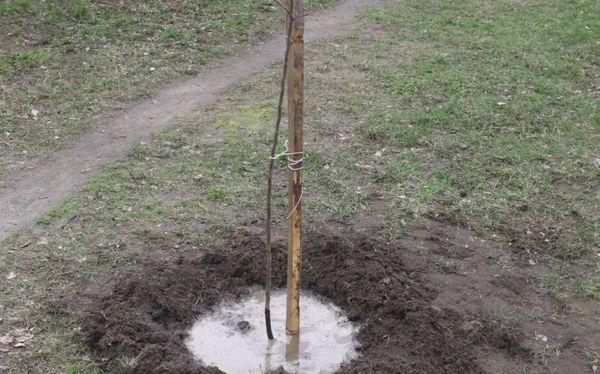
- Technological process of landing
- What can be planted nearby?
- Further care of the Bolotovskoye apple tree
- Regularity of watering and fertilizing
- Trimming
- Caring for the tree trunk circle
- Preventive treatments
- Winter protection
- Methods of propagation of the Bolotovskoye variety
- Gardeners' reviews
The Bolotovskoye apple variety was developed in the late 20th century, but remains popular in Russia to this day. This cultivar is characterized by its increased resistance to certain diseases and parasites that affect other apple trees. It also boasts a high yield, excellent flavor, and low maintenance requirements.
The history of the Bolotovskoye apple tree breeding
The Bolotovskoye apple variety was developed in 1977 by Russian breeders. The team developing this cultivar was led by Evgeny Nikolaevich Sedov. The cultivar was created by crossing the Skryzhapel and Obilnotsvetushaya (1924) varieties. After extensive testing lasting nearly 10 years, the cultivar was added to the Unified State Register of Apples of the Russian Federation.
Distribution areas
The variety is recommended for cultivation in the Central and Southern regions, as the crop has an average tolerance to cold climatic conditions.
Main advantages and disadvantages
Among the characteristic advantages of the Bolotovskoye apple variety, the following can be highlighted:
- immunity to scab and increased susceptibility to other diseases;
- attractive appearance;
- taste qualities;
- possibility of long-distance transportation;
- long shelf life of fruits;
- high yield per tree per season;
- resistance to some parasites.
This culture has its disadvantages:
- plant height;
- difficulty in carrying out some care procedures;
- early fall of ripe apples;
- average resistance to frosty climatic conditions;
- long period of time before the first fruiting occurs.
Characteristics and description of the variety
The Bolotovskoye apple tree is a tall tree that, given the right conditions, can reach over 10 meters in height. The tree is characterized by vigorous branch growth, requiring more frequent sanitary and formative pruning. The tree's crown is spherical, and the trunk is smooth.
Tree size and annual growth
A tree on a seedling rootstock, given the necessary conditions and regular care, can grow up to 10 meters in height. If the plant is on a dwarf rootstock, the maximum height is approximately 4-5 meters. The tree grows 50-60 centimeters annually, but this figure may decrease if the plant is not grown in suitable conditions.
Life expectancy
The lifespan of a tall apple tree is approximately 50-70 years, but there are examples in the world of specimens that are more than 100 years old.
It should be noted that fruiting lasts from 6-7 to 50-60 years, after which it stops completely.
The lifespan of the Bolotovskoye apple tree on a dwarf rootstock is 30-40 years.
Fruiting
The first fruiting of the crop occurs late: 6-7 years after planting the tree.
Early maturity and productivity
The yield per tree is high, and in a single season, a tall tree can yield up to 150 kilograms. However, this yield directly depends on climate and weather conditions, as well as the thoroughness and frequency of plant care.
Flowering and pollinators
This variety does not self-pollinate, and to carry out the procedure, there must be apple trees on the site with a similar or identical flowering period, otherwise nothing will work.
The following apple tree varieties are suitable for pollination:
- Welsey;
- Strefling;
- Pepin Saffron.
Flowering begins in early or mid-May, during which time inflorescences appear on the tree branches, each of which contains 3-6 white flowers with a slight pink tint.
Ripening time and harvesting of fruits
Fruit formation begins in mid- to late June, and full ripening occurs in September or August. Harvesting should begin immediately after full ripening, otherwise they will quickly fall off and spoil.
Tasting qualities of apples
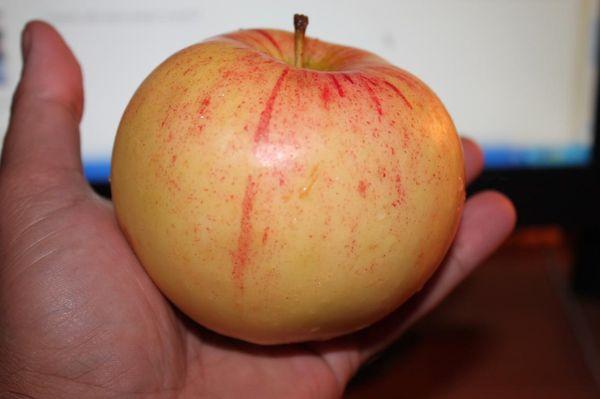
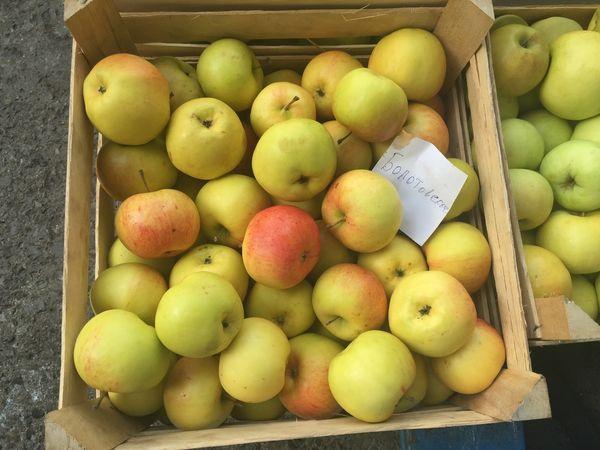
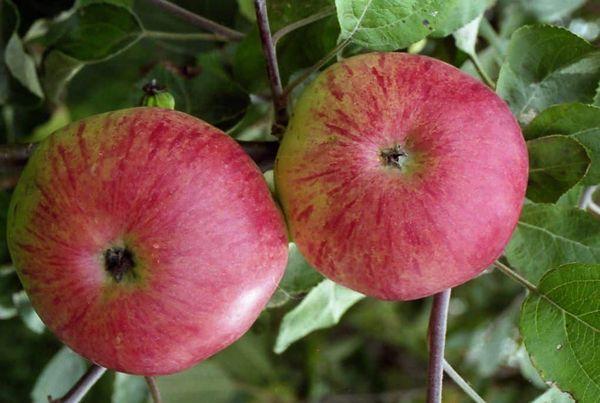
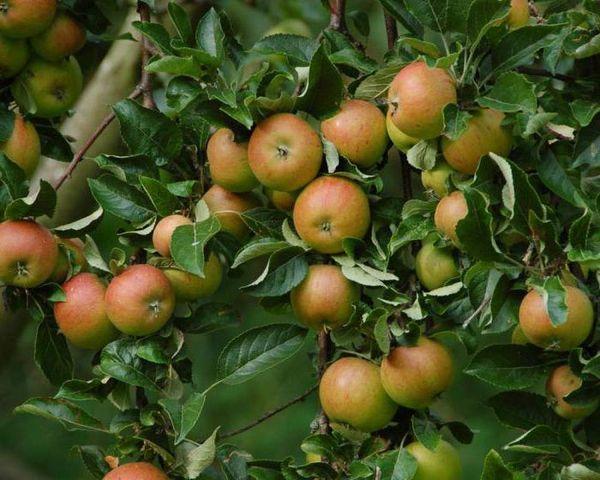
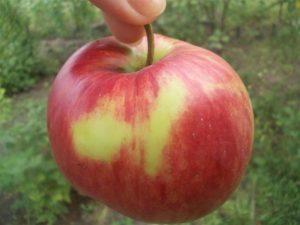
Tasters rate this apple variety 4.3 out of 5. The fruits have a juicy yet firm texture, green with slight reddening. They have a moderately sweet flavor with a characteristic tart finish.
Fruit collection and use
Apples of this variety grow unevenly and can weigh from 100 to 200 grams, with the average being 150 grams. Each fruit contains the following nutrients:
- 15 grams of sugars;
- 1 gram of acid;
- 25 grams of pectin;
- 15 milligrams of ascorbic acid;
- 1 gram of P-active elements;
- 107 grams of other substances.
Bolotovskoye apples are used for sale, raw consumption, and also for the production of juices and various confectionery products.
Sustainability
This variety has an average resistance to cold temperatures and drought, but is immune to some diseases and pests that affect other apple trees.
To diseases and pests
The plant has complete immunity to scab, but can be affected by the following diseases:
- black crayfish;
- powdery mildew;
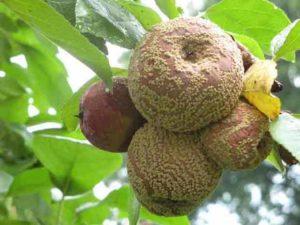
- fruit rot;
- milky shine.
Pest resistance is average, but the tree is rarely attacked by parasites.
Unfavorable climatic conditions
The Bolotovskoye variety has average tolerance to frosty climatic conditions and can withstand temperatures down to -30-40°C without prior preparation.
Apple trees tolerate drought well, but if there is a lack of moisture, they can become diseased, and the harvest develops unevenly and becomes smaller.
Specifics of planting fruit crops
To carry out a proper planting, you must first determine the timing of the procedure, select and prepare a plot of land, and purchase a healthy cutting.
Deadlines
The seedling should be planted in the fall, but in case of an excessively frosty winter, the crop should be insulated.
Site selection and preparation
A level site with adequate sunlight is ideal for planting, but some shade may be present, which will obscure the plant for a few hours a day. The groundwater level should be 2-3 meters, depending on the rootstock.
Before planting, dig holes (60 centimeters deep and wide) and then fill them with a solution of bird droppings. The top layer of soil, which is the most fertile, should be set aside – you'll need it later.
Preparing seedlings
When purchasing seedlings, you should carefully consider your selection and assess the overall condition of the plants, as they should not show signs of:
- darkening;
- spots;
- damage to the cuttings or roots;
- growths;
- rotting;
- raid.
Technological process of landing
For proper landing you need to follow the algorithm:
- Soak the plant roots in a special growth stimulator for 1-2 hours.
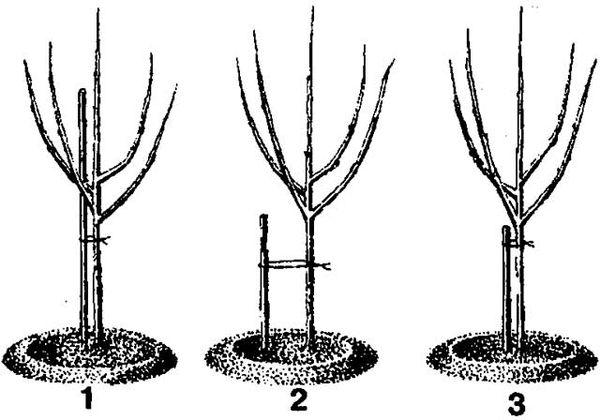
- Dig a stick into the hole to provide support for the plant.
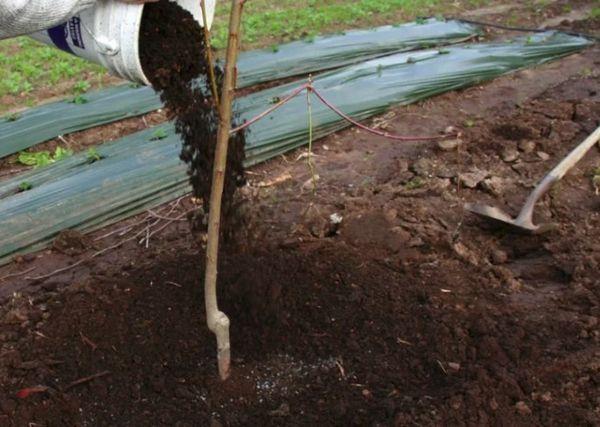
- At the bottom of the hole, form a mound of fertile soil mixed with fertilizers.
- Place the seedling in the hole, straightening the roots, and set it on the soil.
- Fill the hole with the remaining fertile soil.
- Compact the surface and tie the cutting to the support.
- Water the plant with 10-15 liters of slightly warm water.
What can be planted nearby?
Various plants can be planted nearby, but the distance between them and the apple tree should be 3-4 meters so that they do not interfere with the tree's development.
Further care of the Bolotovskoye apple tree
Further care of the crop is very important and should include:
- watering;
- crown formation;
- soil fertilization;
- preventive treatments;
- cleaning the area;
- preparation for frost.
Regularity of watering and fertilizing
Watering should be done three times a month, using 10-20 liters of water. The frequency of watering should be determined by the soil condition. Overwatering can cause root rot.
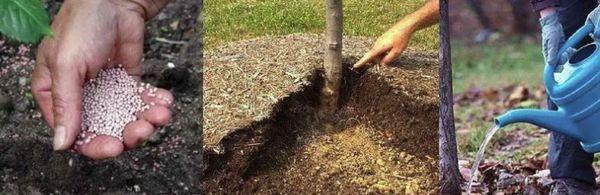
Fertilizing should be done 4 times a year:
- before flowering – nitrogen-containing substances;
- before fruit formation – superphosphate solution;
- during fruiting – phosphate, nitrogen and potassium fertilizers;
- Before winter – nitrogen fertilization.
Trimming
Pruning should be done annually. During pruning, remove diseased and dried branches, as well as shoots that hinder growth.
Caring for the tree trunk circle
As other plants emerge, weeding should be done around the apple tree. After each watering, loosen the soil to oxygenate the soil and allow moisture to reach the roots more quickly. After watering, mulch the area around the tree trunk. You can do this using:
- straw;
- fallen leaves;
- wood sawdust.
Preventive treatments
To prevent most diseases, treatment with Bordeaux mixture or Hom should be performed. All diseased areas on the tree should be removed to prevent further infection.
To prevent and eliminate parasites, you should use the following substances:
- Nitrofen solution;
- Dicofol;
- Karbofos;
- tobacco tincture;
- Chlorophos solution.
Winter protection
For the winter, if the temperature exceeds -40 °C, the tree trunk must be covered using:
- straw;
- burlap;
- insulation.
Methods of propagation of the Bolotovskoye variety
Apple tree propagation is often accomplished by cuttings. In this method, one to three healthy branches with at least four leaves and two internodes are pruned from the tree in the spring. The cuttings are then stored in suitable conditions until roots begin to form. Once the roots are fully formed in the fall, the plant is transplanted into the ground.
Gardeners' reviews
Natalia, 41 years old, Sochi.
"We have a Bolotovskoye apple tree at our dacha. It's easy to care for, but if severe frosts hit, it's best to protect yourself and wrap the tree's trunk."
Alexander, 29 years old, Krasnodar.
"The Bolotovskoye variety is a challenging crop that requires little maintenance, but it takes some effort to produce a large harvest."
Related posts:
 Description of the Chudnoe apple variety, planting and caring for a dwarf tree
 Signs and treatment of apple tree cancer, varieties resistant to the disease
 Description and varieties of the Sinap apple tree, planting and care rules
 Description of the Red Early apple tree variety, agricultural technology and specific care
 Description of the Uralets apple tree variety and the rules for growing standard trees
 Description of the ornamental Nedzvetsky apple tree, cultivation technology
 Characteristics and description of the columnar apple tree variety Ostankino, planting and care
 Description and planting of the Dream apple tree variety, care and propagation