
- Selection of columnar apple trees Ostankino
- Growing regions
- Advantages and disadvantages
- Description of the variety
- Tree size and annual growth
- Fruiting
- Flowering and pollinators
- Ripening time and harvesting of fruits
- Yield and tasting qualities
- Transportation and storage of apples
- Resistance to diseases and pests
- Milky shine
- Fire blight
- Scab
- Resistance to low temperatures and drought
- Landing specifics
- Timing and placement of seedlings
- Technology of planting young apple trees
- Agricultural technology and care
- Watering and fertilizing
- Trimmings
- Whitewash
- Preventive treatments
- Preparing for winter
- Reproduction
- Gardeners' reviews
The columnar apple tree variety Ostankino is a semi-dwarf tree developed from a random mutation of the Mackintosh variety. After grafting branches, it became the Vazhak variety, which became the progenitor of most columnar apple trees. The tree appears as a single vertical branch bearing fruit. Because of its unusual appearance, gardeners sometimes use this variety as a fence.
Selection of columnar apple trees Ostankino
The columnar apple tree Ostankino was bred using the Vazhak and Obilnoye varieties in 1974. After 1980, it was included in the State Register.
Growing regions
Due to the variety's ability to tolerate low temperatures, it can be grown in any region with black soil.
Advantages and disadvantages
The advantages of the apple tree include:
- unusual type of trees;
- increased productivity;
- cold resistance;
- no need for pollinator varieties;
- early fruiting – you can try the first fruits in a year;
- attractive appearance of fruits;
- high resistance to diseases;
- shelf life of fruits.
The disadvantages include:
- increased cost of trees;
- short lifespan (only 15 years).
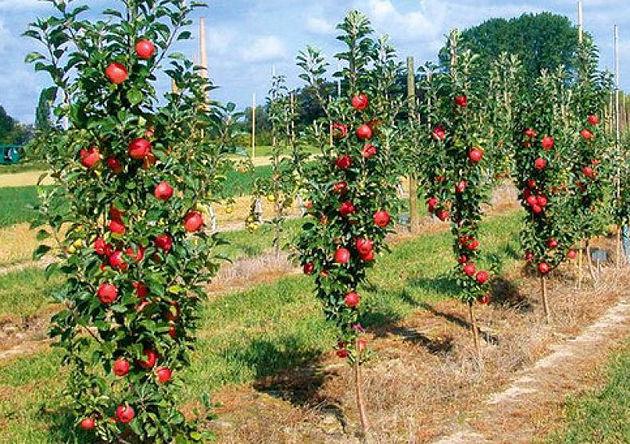
Description of the variety
This variety is characterized by:
- small trees with one vertical thick branch;
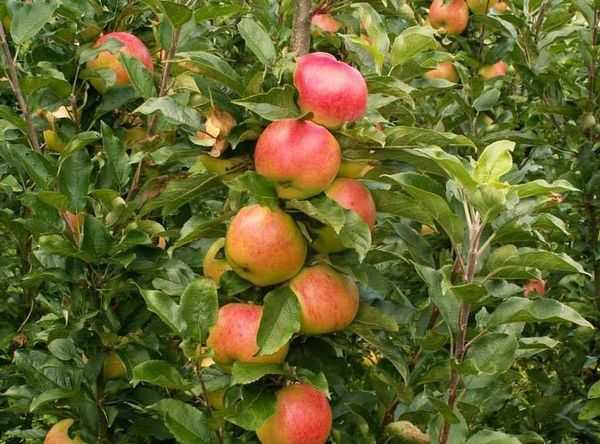
- apples growing close to the trunk;
- dark green leaves that are obovate in shape;
- Hard and strong wood. This characteristic allows the apple tree to withstand the weight of the fruit and gusts of wind.
Tree size and annual growth
The columnar Ostankino is a semi-dwarf variety. One-year-old trees reach up to 1 meter in height. Two-year-old apple trees reach 2.5 meters. The tree's small crown resembles a column during flowering and fruit growth. Trunk growth ranges from 6 to 11 centimeters.
Fruiting
This variety begins to produce its first harvest in its second year of growth. The tree can bear fruit for up to 15 years.
Flowering and pollinators
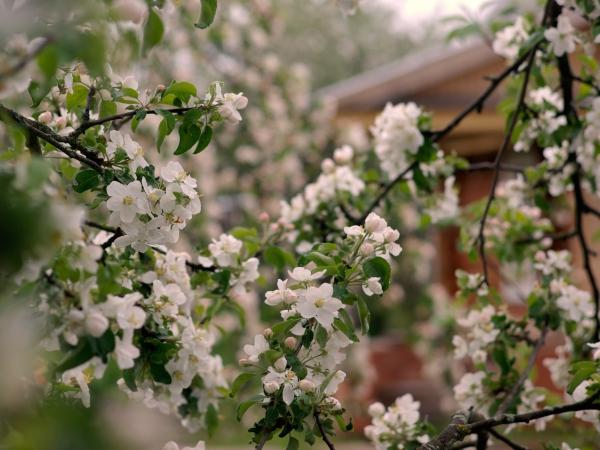
The Ostankino apple tree doesn't require pollinators. Bees can be attracted to pollination using a sugar water solution. Spraying the tree with this solution will improve pollination.
Ripening time and harvesting of fruits
The apple tree is an autumn variety. Depending on the region, the fruit is harvested from early to mid-September.
Yield and tasting qualities
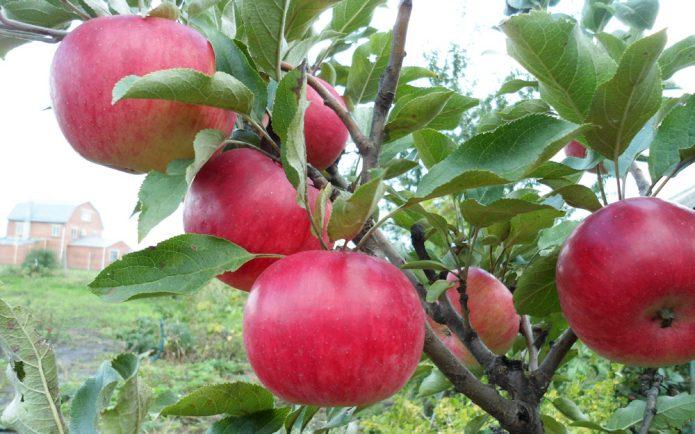
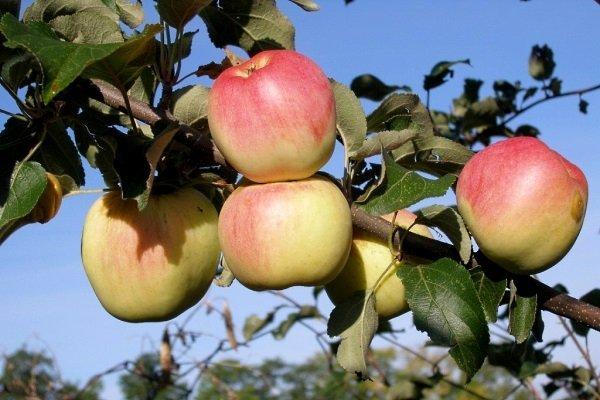
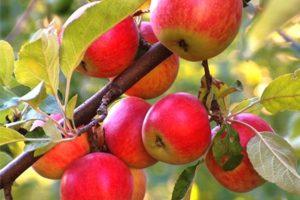
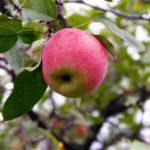
A single tree can yield up to 17 kilograms of fruit. With 20,000 apple trees planted per hectare, the yield can reach 120 tons. Each fruit weighs up to 210 grams. The apples' skin is a rich red. The flesh is white, tender, and juicy. Its flavor is sweet with a slight tartness, similar to the Melbu variety.
Take a look Also
Transportation and storage of apples
Apples should be picked in dry weather. Remove any bruised, damaged, or misshapen fruits. If stored properly, the fruit can be stored for up to 5 months.
The room temperature should be kept close to 0 °C and the air humidity should not exceed 80%.
When transporting apples, pack them tightly and carefully into boxes. You can place a layer of honeycomb cardboard between the apples or wrap them in a layer of paper.
Resistance to diseases and pests
This variety is highly resistant to scab and many other diseases, but it is not completely immune. Apple trees can be attacked by codling moths and other insects. Therefore, it's important to carefully monitor the trees and spray them with insecticides regularly. Birds or ladybugs can also be attracted to your garden to help control insects.
Milky shine
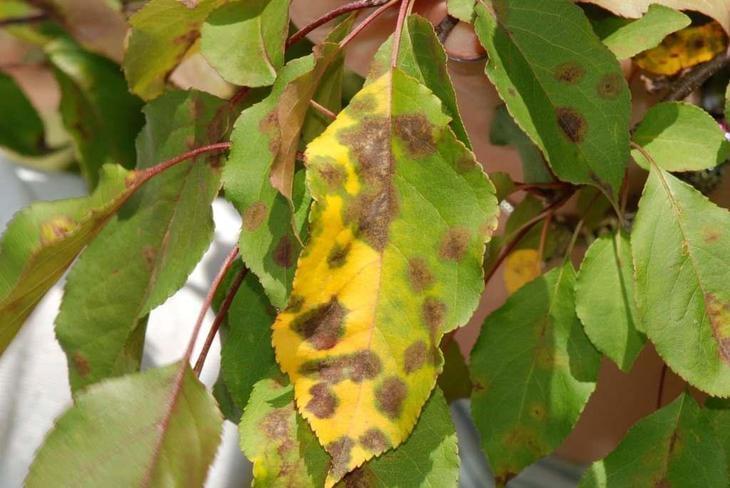
Milky sheen can completely destroy a tree if treatment is not started promptly. The disease manifests itself when temperatures drop too low. It appears as air pockets and dead tissue. Treatment includes:
- remove damaged areas;
- spray the tree with a disinfectant;
- whitewash the base of the trunk;
- burn the sections removed from the tree.
Fire blight
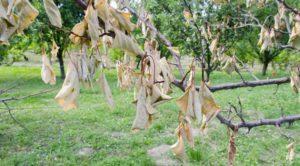
This disease manifests itself as blackening and drying of leaves. It is transmitted through new seedlings. Treatment includes:
- remove and burn all diseased leaves;
- disinfect all tools used in the garden;
- Treat the soil with a fungicide, such as Hom, at a rate of 80 grams per 10 liters of water.
Scab
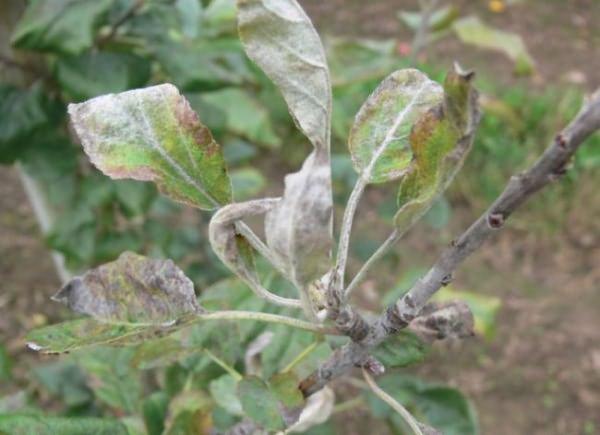
Ostankino is fairly resistant to scab, but not completely immune. The disease manifests as brown or olive-colored spots on the fruit and tree. Scab is a fungal disease, so fungicides should be used against it. Before the leaves emerge, the trunk and branches should be treated with copper sulfate. The apple tree should be sprayed with Bordeaux mixture:
- before flowering. A 3% composition is used;
- After flowering. Treat with a 1% solution.
Resistance to low temperatures and drought
The apple tree is cold-resistant, but it requires winter protection. It also requires frequent and regular watering.
Landing specifics
This apple variety doesn't require much space between trees during planting, as its crown doesn't spread. Ostankino is suitable for growing in more than just soil. It can be grown in containers or very large pots. Suitable seedlings for planting include:
- height up to 75 centimeters;
- with a straight barrel;
- aged 1 year and older;
- without leaves and lateral branches;
- free from damage, deformation, rot and fungus;
- with bright and fresh bark;
- with developed fibrous roots;
- with a clean and healthy root collar;
- 2 year old seedlings with 3-5 branches extending from the trunk.
Timing and placement of seedlings
It's recommended to plant apple trees in the spring, in early or mid-April. When planting in the fall, choose a time between August 25 and October 10.
Find a wind-free location for the seedlings. Strong winds can cause the apple tree to break. Plant trees no more than 30 meters apart and no less than 40 centimeters apart.
Technology of planting young apple trees
To plant an apple tree in the spring, prepare the site in the fall. To do this, you need:
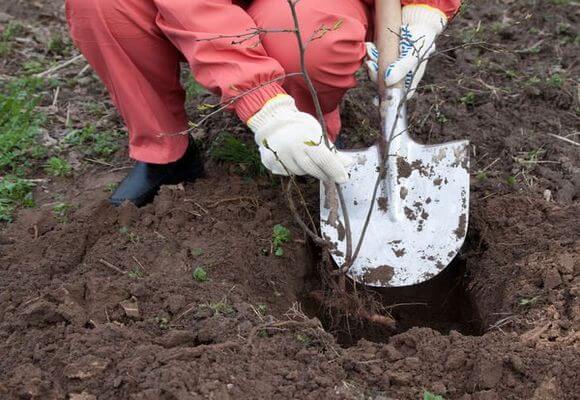
- Dig a hole larger in diameter than the seedling's roots. The hole should be approximately 40 centimeters wide and 50 centimeters deep.
- A drainage layer of crushed stone or expanded clay up to 20 centimeters thick should be placed at the bottom of the pit.
- The soil obtained during excavation should be mixed with humus. Add 90 grams of superphosphate and potassium fertilizer to this mixture.
- Place the entire mixture on the drainage surface.
- Before planting, soak the tree roots in water for 2-3 hours.
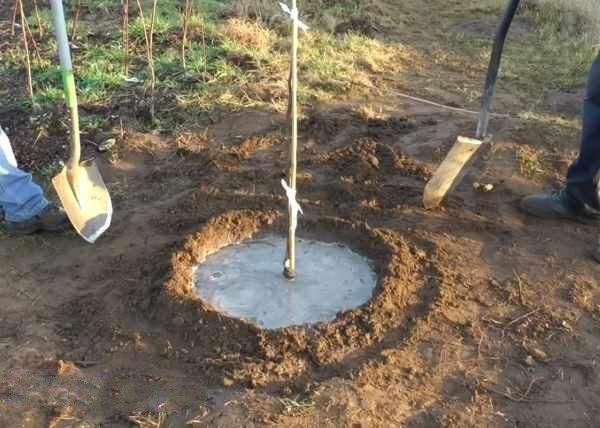
- Place the seedling in the center of the hole and fill it with soil starting from the edges.
- Make sure that the root collar is at ground level and the graft is 6-9 centimeters higher.
- compact the soil a little and make a hole near the tree trunk;
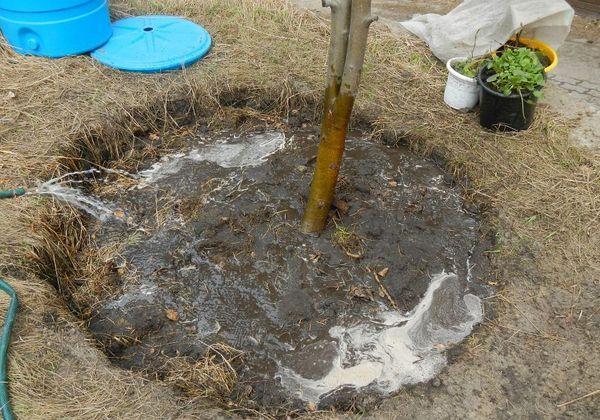
- water the tree with 2 buckets of water.
Agricultural technology and care
This variety requires constant and careful care. Regular inspection for insects and diseases is essential, as is watering and fertilizing.
Watering and fertilizing
The columnar Ostankino variety should be watered every 2-3 days. One tree requires 2-3 buckets of water. If the soil loses moisture too quickly, mulch with straw or sawdust.
It is necessary to monitor excess moisture in the soil.
If there's sufficient rainfall, watering isn't necessary. Once the tree begins to actively bear fruit, it requires increased nutrition. Fertilize the apple tree every two weeks with nitrogen-containing supplements. This should be done after the leaves emerge. Suitable fertilizers include:
- rotted manure diluted with water in a ratio of 1:10. Fresh manure should not be used, as it will burn the roots;
- chicken manure diluted with water in a ratio of 1:20;
- Nettle infusion. Pour water over the plant and leave it in the sun. After fermentation, dilute the liquid with water in a ratio of 1:5;
- urea or ammonium nitrate 50-70 grams per 10 liters of water;
- Potassium-phosphorus fertilizers. Apply 100 grams per tree in the summer.
Trimmings
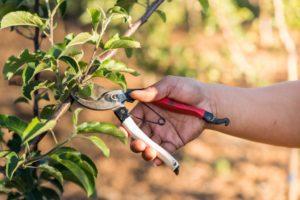
When the apple tree blooms in the first year, all buds should be cut off.
If the tree begins bearing fruit too early, it will become depleted. This will reduce the apple tree's yield. Pruning is only necessary in the case of a genetic defect. This defect causes lateral shoots to grow from the trunk. These should be removed.
Whitewash
Whitewashing is necessary to protect the trunk from temperature fluctuations in winter and from pests during the growing season. Sudden cold snaps can cause the tree's bark to crack. This slows growth and increases susceptibility to diseases and pests.
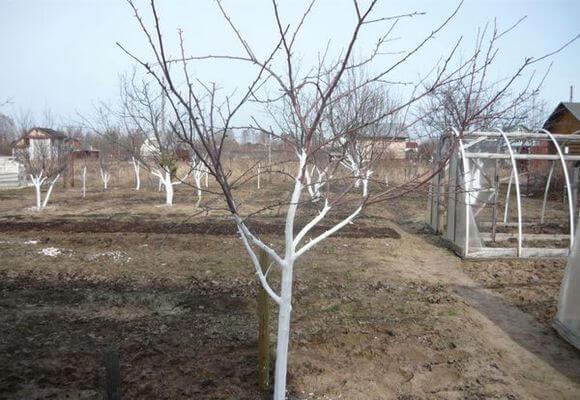
Whitewashing should be done 2-3 times a year. Lime is used for this treatment. It is applied up to 50 centimeters along the trunk. Whitewashing is mandatory in the fall.
Preventive treatments
To improve the tree's health, it's necessary to cover it with grass. Cereals should be planted around the trunk. Their shoots should be mown down as they grow. Covering the grass with grass protects the tree's naturally weak roots. Copper sulfate should also be applied before the leaves emerge.
Preparing for winter
To prepare an apple tree for winter you should:
- remove old mulch, if any;
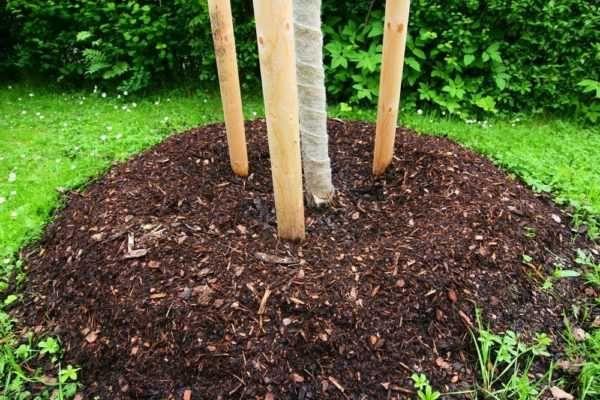
- cover the area around the trunk with spruce branches and tie it around its base;
- wrap the tree with burlap and cover the ground around it with newspaper or other breathable material;
- rake snow towards the apple tree, covering it up to the top;
- remove all the windings in the spring and let the ground warm up;
- put down fresh mulch.
Reproduction
Propagation is done using seedlings. These can be purchased or grown yourself.
Gardeners' reviews
Kirill, Moscow region.
I bought the seedlings three years ago. They started bearing fruit last year. The fruit is delicious, and the apple tree looks quite beautiful during flowering.
Roman, Ryazan.
There are six apple trees growing in the garden. They require frequent care. A lot of time is spent preparing them for winter, as the seedlings may not survive. The harvest is stable, and the tree produces a large number of apples. They can be planted as an ornamental in the garden or near the house.
Related posts:
 Signs and treatment of apple tree cancer, varieties resistant to the disease
 Description of the Chudnoe apple variety, planting and caring for a dwarf tree
 Description of the Red Early apple tree variety, agricultural technology and specific care
 Description of the ornamental Nedzvetsky apple tree, cultivation technology
 Description and characteristics of the columnar apple tree President, planting and care
 Description and varieties of the Sinap apple tree, planting and care rules
 Description and subtleties of growing the Sverdlovsk Beauty apple tree variety
 Description of the Uralets apple tree variety and the rules for growing standard trees