
- History of the Uralets apple tree breeding
- Subspecies and variants
- Ural Bulk
- Assistant of the Uralsk
- Handsome Uralsk
- Standard
- What regions is the Uralets variety suitable for?
- Main advantages and disadvantages
- Botanical description
- Tree size and annual growth
- Lifespan
- All about fruiting
- Flowering and pollinators
- Ripening time and yield
- Tasting qualities of apples
- Fruit collection and use
- Sustainability
- To diseases and pests
- Unfavorable climatic conditions
- Specifics of planting fruit crops
- Deadlines
- Site selection and preparation
- Preparing seedlings
- Technological process of landing
- What can be planted nearby?
- Further care
- Watering and fertilizing
- Pruning and specific shaping of a neglected apple tree
- Caring for the tree trunk circle
- Preventive treatments
- Winter protection
- Methods of propagation of the Uralets apple tree
- Gardeners' reviews
The Uralets apple tree was developed in the mid-19th century using cross-pollination. It was intended for cultivation in cold regions with strong winds. For this reason, the variety has increased resistance to frost. This tree bears fruit late, and fully ripens in the first half of autumn.
History of the Uralets apple tree breeding
The Uralets apple tree was developed by breeders from Sverdlovsk in the 1850s, using cross-pollination of the following crops:
- Ukrainian;
- Chinese Wax;
- Anise.
After extensive research, the variety was included in the General State Register of the Russian Federation.
This crop is recommended for cultivation in the Ural and Siberian regions. The plant is highly tolerant of frost and adapts to the environment of these regions.
Subspecies and variants
The Uralets apple tree has varieties that differ in their characteristics and external features.
Ural Bulk
The Uralskoye Nalivnoye apple tree has a medium-sized crown with drooping branches, making it easy to maintain and harvest. This variety produces a relatively high yield, with a plant capable of yielding approximately 60 kilograms of apples in a single season. The fruits have a moderately sweet flavor, juicy and soft flesh, and turn yellow when fully ripe.
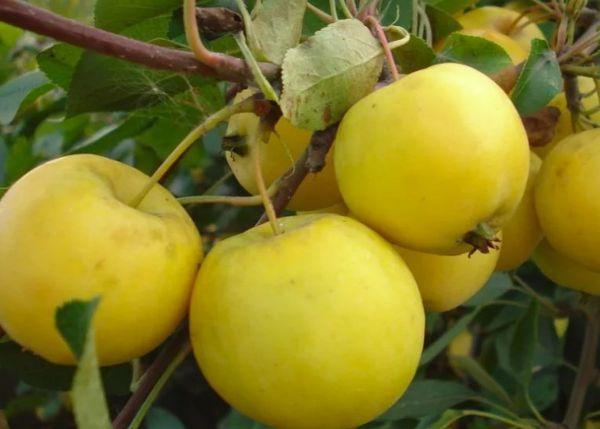
The Uralskoye Nalivnoye apple tree has the following advantages:
- quantity of harvest;
- taste qualities of fruits;
- small crown size;
- ease of maintenance;
- increased tolerance to cold climate conditions.
Among the disadvantages we can note:
- fruit ripening period;
- drought intolerance;
- poor long-distance transportation and long-term storage;
- fruit shedding during ripening.
Assistant of the Uralsk
This apple tree variety is distinguished by its large, dense crown, which has a pyramidal shape. It is resistant to scab and tolerates cold temperatures. The apples are round, moderate in flavor, and have a characteristic tart aftertaste. This variety produces a large harvest each season. Among its advantages are:
- resistance to frost and strong winds;
- taste qualities of fruits;
- immunity to scab;
- shelf life of apples and the possibility of their transportation;
- amount of harvest per season.

The Ural's Helper apple tree has the following disadvantages:
- long period of tree development until the first fruiting;
- large plant size;
- susceptibility to various pests.
Handsome Uralsk
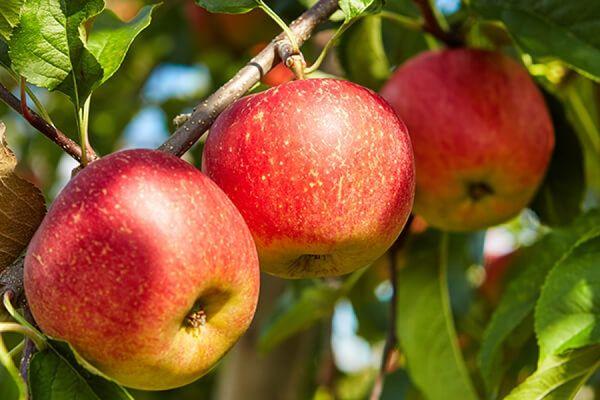
This cultivar is distinguished by its high fruit yield, which can reach up to 100 kilograms of apples in a single season. The tree has a tall, expansive, pyramidal crown. It tolerates frost well and is highly disease-resistant. The fruits are round, have a sweet and sour flavor, and can reach 140 grams in size, but only if the plant is grown in the right conditions and properly cared for. Among the cultivar's advantages are:
- large amount of harvest;
- frost resistance;
- tolerance to various diseases and pests that affect apple trees;
- taste qualities of apples.
The disadvantages of wood include:
- long period of onset of first fruiting;
- large sizes;
- poor ability of fruits to undergo long-term transportation and storage;
- uneven development of apples with dense arrangement of shoots.

Standard
The standard apple tree differs from other varieties in its tree position and size. It has a straight trunk and a small, spherical crown. Despite its small size, reaching 3-4 meters in height, it has increased resistance to cold climates. It also produces a large harvest and has excellent flavor. Among the advantages of the standard apple tree are:
- plant compactness;
- ease of maintenance;
- frost tolerance;
- average number of fruits;
- good taste with a characteristic sourness;
- resistance to some diseases.
Among the plant's disadvantages, the following should be highlighted:
- poor stability of the trunk, which can break under the influence of strong wind;
- need for systematic care (watering, fertilizing, pruning);
If the shoots are too dense, the fruits develop unevenly and reduce the amount of harvest.
What regions is the Uralets variety suitable for?
This apple tree is suitable for growing in frosty regions with harsh winters, particularly the Urals and Siberia. The variety tolerates cold climates and can survive without prior preparation at temperatures no higher than 40-50°C.
Main advantages and disadvantages
This culture has characteristic features, among which the following advantages can be highlighted:
- winter hardiness, which allows the tree to more easily endure the cold period without preliminary preparation;
- relatively small crown size;
- immunity to some seasonal diseases;
- earlier onset of fruiting and full ripening of fruits;
- high taste qualities of fruits.
The culture also has the following disadvantages:
- small size of apples;
- soft pulp of fruits;
- poor tolerance to long-term transportation and storage;
- average fruiting rates.
Botanical description
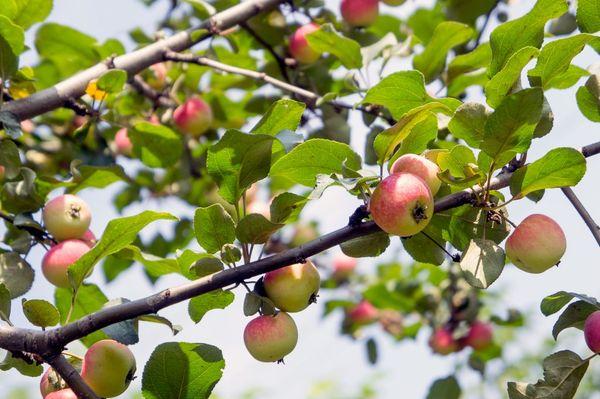
The Uralets apple tree is a vigorous tree with a pyramidal crown and numerous branches. The plant has a distinctive feature: curved branches that are perpendicular to the trunk.
Despite the fact that the crop is vigorous, the first fruiting begins early and produces a sufficient amount of harvest.
Tree size and annual growth
The Uralets is a tall tree that, with proper temperature control and regular care, can grow to 7-8 meters. However, its growth can be slowed by systematic crown pruning. In this case, the tree can reach 4-5 meters. The plant grows 50-60 centimeters annually, depending on climate conditions and the frequency of care.
Lifespan
Because the Uralets apple tree is a vigorous plant, its lifespan is also long, averaging 60-70 years. However, there are also cases of apple trees living for over 100 years.
All about fruiting
Fruiting occurs relatively early, beginning 4-5 years after planting. Fruiting rates may vary depending on the growing conditions.
Flowering and pollinators
The Uralets variety is not self-pollinating and requires the addition of other crops with similar flowering times. Otherwise, fruiting will not be successful.

The following apple tree varieties can be suitable as pollinators:
- Ural bulk;
- Gorno-Altaisk.
Apple trees begin to bloom in early May. During this period, inflorescences form on the shoots, each bearing three to six pinkish-white flowers.
Ripening time and yield
Apples ripen fully throughout most of the summer. Harvesting begins in August or September. The yield is high, reaching up to 70 kilograms on young trees and up to 120 kilograms during peak seasons (from 7 to 10 years). The fruits are medium-sized and weigh approximately 40-60 grams—this figure can vary depending on care. If the shoots are too dense, the apples develop unevenly and become smaller.
Tasting qualities of apples
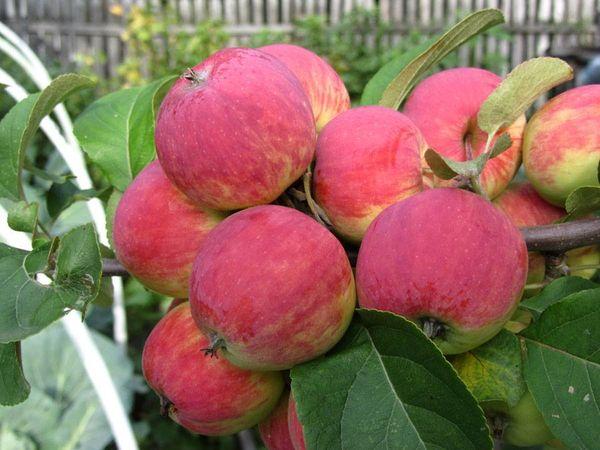
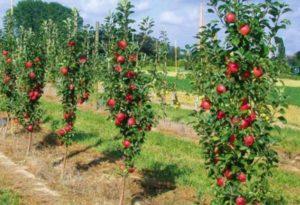
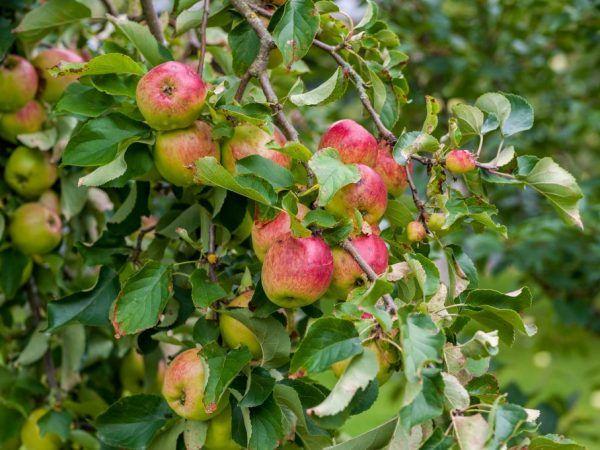
Tasters rate the Uralets apple variety 4.2 out of 5. They note its attractive appearance, juicy and soft flesh, moderate sweetness, and a distinctive tart finish. The apples are round, creamy in color, and feature distinct striped redness on the skin. Among the drawbacks, tasters highlight a loose texture, small fruit size, and poor handling during long-distance transportation and storage.
Fruit collection and use
The fruits are best picked immediately after ripening in August or September. This must be done promptly, otherwise the apples begin to fall off and spoil. Fruits of this variety are widely used commercially: for making liqueurs, confectionery, natural juices, and they can also be eaten raw.
Sustainability
The main characteristic feature of the Uralets variety is its increased tolerance to frost, as this crop was bred specifically for further cultivation in cold regions.
To diseases and pests
The Ural tree is immune to scab. It is not particularly resistant to other diseases and pests and can be affected. Scab can also occur on these trees, but only if there are other infected crops nearby.
Unfavorable climatic conditions
The apple tree tolerates frosty climates and can survive temperatures down to -40°C without prior cold weather preparation. Furthermore, the tree is resistant to strong gusts of wind, but does not tolerate drought.
If there is insufficient moisture in the soil, the plant begins to get sick, and fruiting may decrease or disappear altogether.

Specifics of planting fruit crops
When planting an apple tree, it's important to follow certain rules—only then will the tree bear fruit consistently and produce a large harvest. First, select a healthy cutting, find a suitable planting site, and prepare it.
Deadlines
The Uralets tree should be planted in the fall or spring. The latter option is suitable in cases of severe frosts and winds during the winter. This method will help the plant develop better and prepare for the onset of frost. If planting in the fall, the procedure should be carried out 1-1.5 months before the onset of winter.
Site selection and preparation
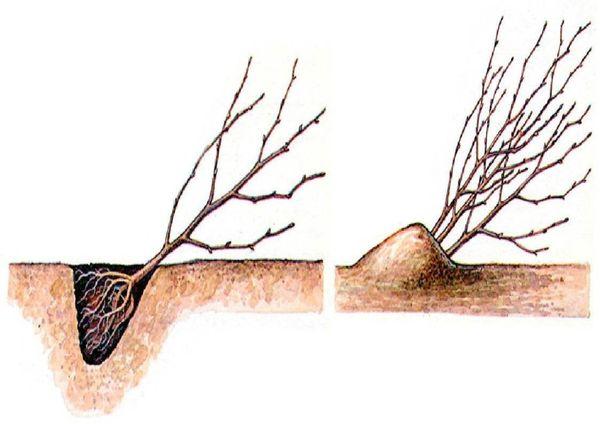
A level site with a deep groundwater table (2-4 meters) is ideal for planting apple trees. The site should be sunny and preferably shade-free. One to two weeks before planting, prepare the soil. To do this, dig holes for the cuttings. The holes should be 50 centimeters deep and wide. Afterwards, water them with a solution of water and bird or cow manure. The top layer of fertile soil should be set aside while preparing the holes.
Preparing seedlings
First of all, you need to buy healthy seedlings. They should not have:
- darkening;
- spots of different colors;
- decay processes;
- visible damage to the base or roots;
- growths on the roots.
1-2 hours before planting, soak the root system of the cutting in a solution to stimulate root growth; this product can be purchased at a gardening store.
Technological process of landing
When landing, you should follow this sequence of actions:
- Dig a wooden stake into the middle of the hole so that it protrudes 50-60 centimeters above the surface.
- Pour a mound of light soil into the bottom of the hole.
- Remove the cutting from the root development solution and place it in the hole.
- You need to straighten the roots and place the seedling on a mound of soil.
- Fill the hole with fertile soil and compact the surface.
- Water the plant generously with 10 liters of slightly warm water.
What can be planted nearby?
Various crops can be grown nearby, but they should be located at a distance of 6-7 meters from the apple tree so as not to interfere with its development due to the absorption of nutrients from the soil.
Further care
Proper further care of the tree will ensure rapid growth and annual fruiting.
Watering and fertilizing
Watering should be adjusted depending on the soil conditions beneath the tree. If the soil is dry and rainfall is low per month, three waterings of 20 liters each will be sufficient. In a dry climate, the soil should be watered four to five times per month.
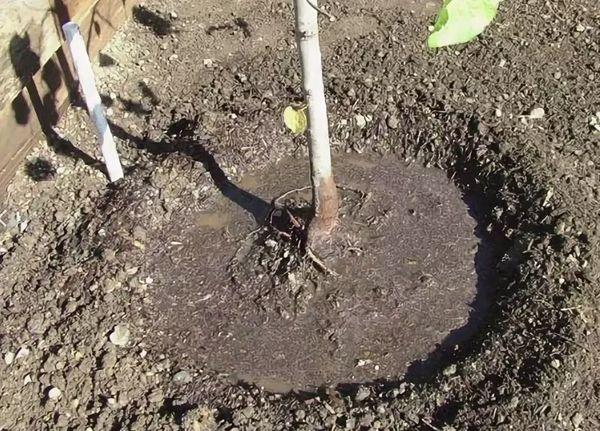
Apple trees need to be fertilized 3 times a year:
- before flowering;
- after flowering;
- before the onset of winter.
For this purpose, you should use mineral complex fertilizers or organic ones:
- humus;
- solution of bird or cow droppings;
- horse manure.
Pruning and specific shaping of a neglected apple tree
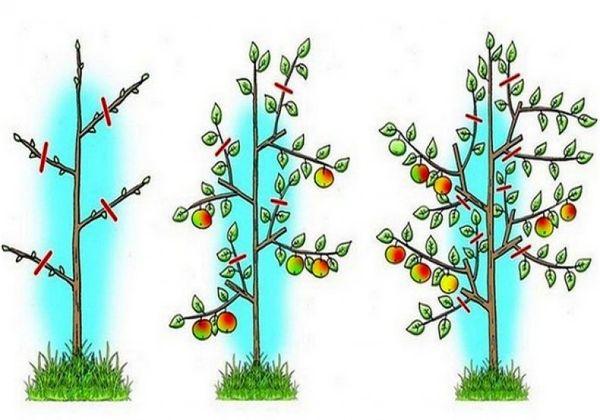
To ensure the growth of the apple tree and uniform development of the fruit, the following types of pruning must be carried out every year:
- Formative - this type is aimed at removing incorrectly growing or interfering branches, eliminating shoots that are directed towards the tree trunk and growing at an acute angle.
- Sanitary pruning removes all diseased or dried shoots from the plant.
If the apple tree is in a neglected state, sanitary and formative pruning is performed. This leaves 5-7 healthy skeletal branches and a conductor on the tree.
Caring for the tree trunk circle
After each watering, loosen the soil to oxygenate it and allow moisture to be absorbed quickly. If there's a tree growing next to it, weeding is also necessary.
Preventive treatments
To prevent diseases and pests, treat with insecticides up to three times a year. This variety is rarely attacked by pests, but it is often affected by fruit stalks. To prevent this insect from appearing, promptly remove all fallen fruit and leaves.
Winter protection
If the tree is still young, it's best to wrap the trunk, but only before the onset of severe frost. For this, you can use:
- straw;
- burlap;
- insulation;
- other inorganic material.
 There is no need to insulate the branches; they can withstand severe cold snaps on their own.
Methods of propagation of the Uralets apple tree
The Uralets apple tree can be propagated using the following methods:
- Seeds. Using seeds, plants should be planted to create seedlings for spring transplantation. This method takes longer for the first fruiting of the grown plant.
- Cuttings. A healthy shoot is cut, transplanted into a prepared container, and cared for until the root system begins to develop. After this, the cutting is transplanted into open ground.
- Layering. This method is suitable for growing several crops from a single seedling. To do this, plant the plant at an angle, pin it to the ground in spring, and maintain it until the following season.
Gardeners' reviews
Mikhail, 39 years old, Uralsk.
"The Uralets variety is suitable for growing in cold regions and doesn't require constant care. The plant is tall, and for comfortable care and fruit harvesting, annual formative pruning is recommended."
Vladislav, 40 years old, Siberia.
"The apple tree produces a large harvest; the apples are small but tasty. The tree grows large and requires a lot of space, so this needs to be planned for in advance."
Related posts:
 Description of the Red Early apple tree variety, agricultural technology and specific care
 Description of the Chudnoe apple variety, planting and caring for a dwarf tree
 Signs and treatment of apple tree cancer, varieties resistant to the disease
 Description of the Modi apple tree variety, planting and care features
 Description and subtleties of growing the Sverdlovsk Beauty apple tree variety
 How to plant walnuts, care for them, and grow them at home
 Description and varieties of the Sinap apple tree, planting and care rules
 Description of the ornamental Nedzvetsky apple tree, cultivation technology