
- Selection and cultivation area of the Blagovest apple tree
- Advantages and disadvantages
- Botanical description
- Size and annual growth
- Crown and branches
- Foliage and buds
- Rootstock for the variety
- Fruiting of the tree
- Flowering and pollinators
- Ripening time and yield per tree
- Harvesting and storage
- Tasting evaluation of the fruit and the scope of application of apples
- Winter hardiness and drought resistance
- Susceptibility to diseases and pests
- How to plant a tree on a plot
- Required soil composition
- Selecting and preparing a landing site
- Dimensions and depth of the planting hole
- Timing and step-by-step algorithm for planting an apple tree
- Caring for the Good News variety
- Watering mode
- We apply fertilizers
- We trim and shape the crown
- Loosening and mulching the tree trunk circle
- Prevention and protection of wood
- Covering a fruit tree for the winter
- Varieties
- Standard apple tree "Good News"
- Blagovest
- Methods of reproduction
- Gardeners' reviews of the variety
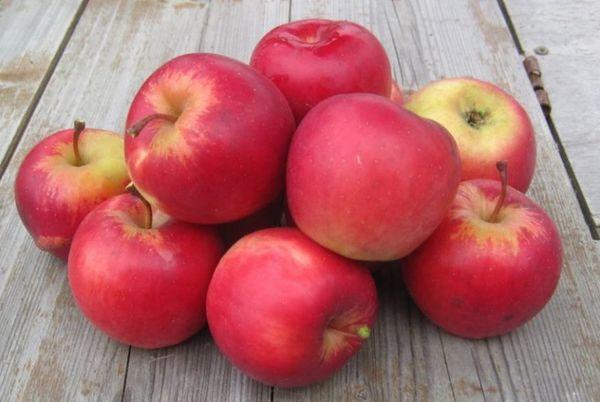
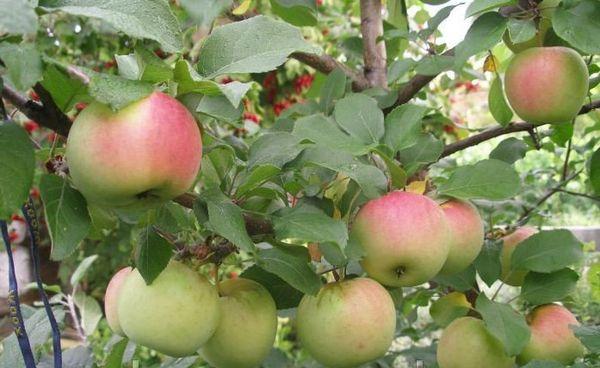
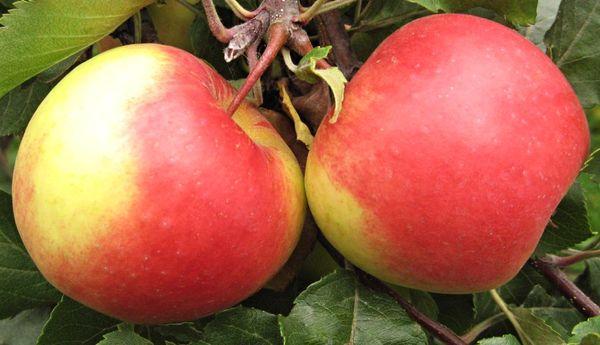
The Blagaia Vesti apple tree produces beautiful, fine-looking apples. All of them are nearly uniform in size. This variety is considered a commercial apple tree and sells well and quickly. The fruits are yellow with a pleasant pink blush. They also have a pleasant, sweet flavor. Blagaia Vesti is a late-ripening variety with a medium yield.
Selection and cultivation area of the Blagovest apple tree
In 2004, an application was submitted to list the "Blagaya Vest" variety in the State Register of Russia. It was approved that same year. Scientist L. A. Kotov worked on its development at the Ural Research Institute of the Russian Academy of Sciences. The apple tree Krasa Sverdlova was crossed with the immune variety X-2034. The new variety inherited the best qualities of its parent trees.
Important! The Blagaia Vest and Blagovest apple trees are separate, independent varieties.
Advantages and disadvantages
The variety has its advantages and disadvantages. Among the positive aspects are:
- the fruits have a pleasant commercial appearance;
- keep well;
- transportable;
- suitable for processing and fresh consumption;
- crop stability;
- disease resistance;
- winter hardiness;
- a low tree.
The following shortcomings were noted:
- in harsh winter conditions requires insulation;
- average yield;
- weakness of aroma;
- average fruit size.
Botanical description
To decide whether to grow the Good News on your own plot, it is recommended to study its detailed description.
Size and annual growth
As a stand-alone tree, it reaches a height of 2.5 m, or 1.5 m when grown on rootstock. This facilitates harvesting. Annual growth is 60-70 cm.
Crown and branches
The crown is spherical and requires shaping from the first year of planting. The branches are dark brown and slightly pubescent.
Foliage and buds
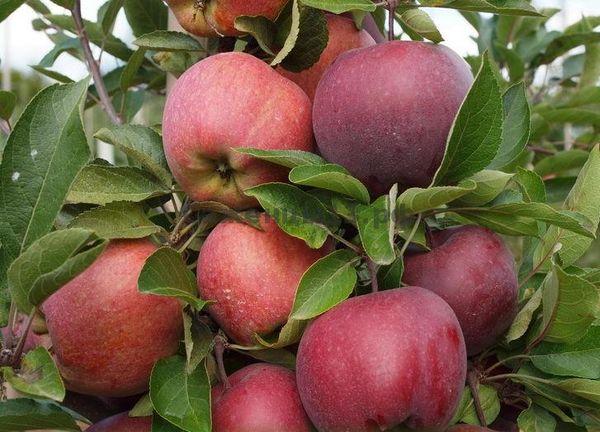
Buds form in early May and begin to open by the end of the month. The leaves are dark green, elongated, small, and smooth. They fall at the end of the season.
Rootstock for the variety
Winter-hardy apple varieties suitable for growing in Siberia and the Urals are suitable for grafting. Strong cuttings with a diameter of 0.5 cm are selected for this purpose. The rootstock takes root well and produces fruit in its third year.
Fruiting of the tree
The fruiting period includes flowering and pollinators, ripening time and yield.
Flowering and pollinators
The Blagaia Vesti variety is self-fertile and does not require a pollinator. However, with additional pollination, the tree has been noted to produce more and larger apples.
Flowering occurs in mid-June, producing white flowers of both sexes. They are arranged at the same level and self-pollinate.
For additional pollination, apple trees with the same flowering period, located at a distance of 2-3 meters, are suitable.
Ripening time and yield per tree
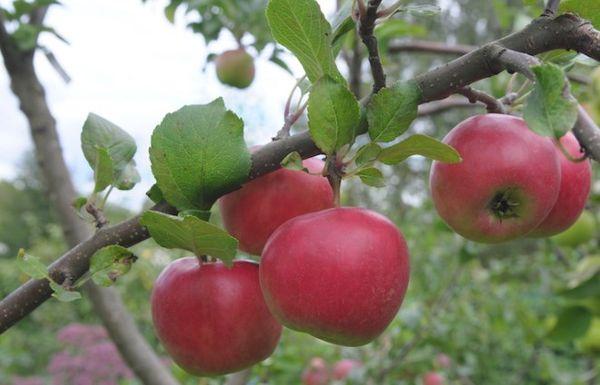
Apples ripen in mid- to late September. They develop a bright pink blush. They are picked from the tree at the same time. Fruiting begins in the third or fourth year of growth. Up to 20 kg of fruit can be harvested from a tree by the age of seven, and after that, the yield increases to 50 kg per plant.
Harvesting and storage
The harvest is carried out using a ladder and special equipment. Each apple is carefully placed in a crate to prevent bruising or damage. They are stored in a cool, dark place for 3-4 months after harvest.
Tasting evaluation of the fruit and the scope of application of apples
The variety received a tasting score of 4.8 out of 5. The apples are characterized by a pleasant sweet flavor. They are juicy and crisp, with beige flesh. Blazhnaya Vestia is widely grown commercially. Its marketable appearance and good shelf life make it suitable for both commercial and processing purposes.
Winter hardiness and drought resistance
The tree tolerates temperatures down to -35°C. In regions where winter temperatures are lower, covering the plant is recommended.
The root system is well developed. During prolonged drought, the apple tree receives nutrition from groundwater. However, it's better to increase watering during hot weather to ensure juicier fruit.
Susceptibility to diseases and pests
It has strong immunity to 5 types of scab. It has moderate resistance to other infections. It is also susceptible to attack by harmful insects:
- aphids;
- thrips;
- peduncles;
- leaf rollers.
How to plant a tree on a plot
The planting procedure has its own peculiarities and nuances. It's necessary to study the procedure, soil composition, and recommended location.
Required soil composition
Apple trees prefer loamy or sandy soils. The soil should be neutral or slightly acidic.
It is desirable that the soil be fertile.
Selecting and preparing a landing site
The site should be well-lit, protected from strong gusts of wind, and not shaded. Groundwater should be no deeper than 1.5 meters.
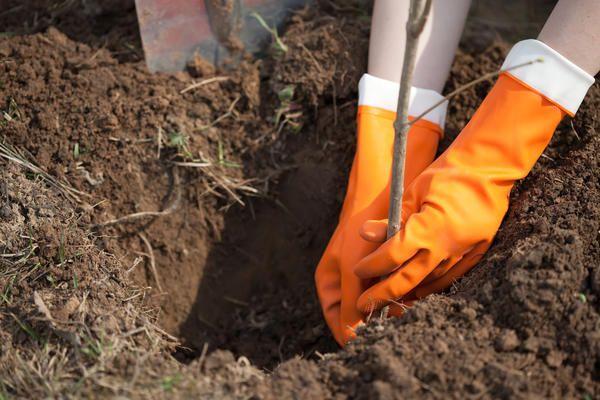
Preparation of the planting hole begins in advance. It is dug, then the soil from the hole is mixed with:
- 10 kg of humus;
- 300 g superphosphate;
- 200 g of potassium salt.
Half of the mixture is poured back and left for 14 days.
Important! Prepare the planting site in advance, from spring to fall or from fall to spring, but no later than 2 weeks before planting.
Dimensions and depth of the planting hole
The "Blagaya Ves't" apple tree is medium-sized. A hole 70-80 cm deep and 70 cm in diameter is prepared for it. The hole is either circular or square.
Timing and step-by-step algorithm for planting an apple tree
Planting is carried out in the spring, when the soil warms up to 10°C. The procedure is carried out according to a specific algorithm:
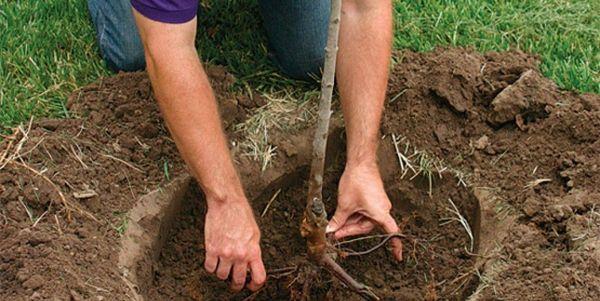
- The roots of the seedling are dipped in water with a weak solution of manganese for 24 hours.
- Then the plant is lowered to the bottom of the hole.
- They straighten the roots with their hands.
- The plant is gradually covered with soil.
- Compact the soil with your hands after each layer.
- Form a tree trunk circle 10 cm deep.
- Water with 4-6 buckets of water.
To protect the apple tree from strong wind or rain, before planting, drive in a wooden stake and tie the plant to it.
Caring for the Good News variety
To get a decent harvest and maintain the health of the tree, you need to follow the rules of agricultural technology.
Watering mode
Apple trees are watered three times per season. The recommended irrigation times are:
- after winter;
- during the flowering period;
- during fruiting.
Add 6-8 buckets of water under each tree. It's best to let the water settle and warm it in the sun beforehand. Cold water can damage the roots.
We apply fertilizers
If fertilizer was applied during planting, there's no need to fertilize the apple tree for the first three years. After that, the procedure is combined with watering. For this, use:
- mineral complexes for garden crops;
- humus;
- chicken manure;
- manure;
- wood ash.
At the end of the season, additional fertilizing is applied after harvest. Proper fertilization improves the tree's health.
We trim and shape the crown
Crown shaping begins in the first year of the tree's life. The following year, the main stem is selected, cut back to 30 cm, and the remaining branches are completely removed. By the following season, the tree will have formed two more strong shoots, branching off from the central one. These are left in place, and the rest are pruned. This process is repeated until the tree reaches four years of age, until there are eight main shoots.
Loosening and mulching the tree trunk circle
The tree's trunk is the heart of the tree. It's where the apple tree receives its nutrition. To ensure proper nutrient absorption, the soil is constantly loosened. This provides additional aeration for the roots.
To prevent weed growth and retain minerals, the tree is mulched. The following are used for this:
- straw;
- moss;
- chopped grass;
- humus.
Important! Using straw can increase the risk of mice infestation.
Prevention and protection of wood
To prevent the tree from becoming diseased, it should be treated with chemicals after bud break. Insecticides are used against harmful insects, and fungicides are used against fungal diseases. Take precautions when spraying. Treatments are repeated several times per season. Once the tree begins to bear fruit, the treatment is stopped. Propagation is carried out according to the instructions.
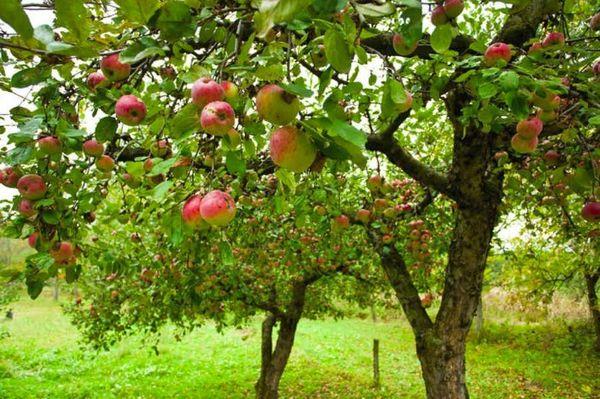
Covering a fruit tree for the winter
If the tree is grown in conditions with harsh winters, it needs to be prepared for winter, especially if the apple tree is young. Its winter hardiness becomes stronger in the fifth year of growth. To do this, follow these steps:
- carry out pre-winter watering and fertilizing;
- do sanitary pruning;
- mulch the tree trunk circle;
- paint the trunk whitewash;
- cover the crown with spunbond or agrofibre.
It's important to insulate the lower part of the tree: the roots and trunk. Upper branches, even if they freeze, are cut back in the spring. New shoots will grow in their place.
Varieties
The main variety, "Blagaya Vest," has two subvarieties: standard and "Blagovest." These have similar descriptions to the main variety.
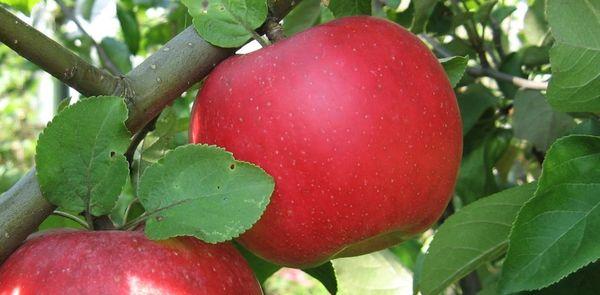
Standard apple tree "Good News"
It's practically identical to the main variety. It's classified as a creeping shrub. The tree is compact, reaching 2 meters in height. The apples are medium-sized, with a sweet and sour taste. The color is yellow with a pink blush.
Blagovest
This variety is best suited for cultivation in the Central and Central Black Earth regions. The tree is compact, with a rounded crown. The apples are medium-sized and sweet. It is not resistant to scab, but winter hardiness is maintained. It is a moisture-loving crop.
Methods of reproduction
The Good News apple tree can be propagated using several methods:
- by cuttings;
- shoots;
- graft.
Gardeners' reviews of the variety
Alena, 65, from Vladivostok: "I've been growing the 'Blagaya Vest' apple tree for seven years now. I really like this variety; the fruits are beautiful and uniform. They taste very sweet. We only get a few apples from each tree, enough to eat and some to process. Everyone I've given them to has always been complimentary."
Tatyana, 58, from Krasnodar: "I have my own farm. It grows many different apple varieties. But one of my favorites is 'Blagaya Ves'. The fruit travels well, looks great, and sells quickly. I bought four seedlings at once and planted them in rows spaced 3 meters apart. The fruit is medium-sized, but very tasty."
Natalia, 49, from Tula: "I have a 'Blagaya Vesst' apple tree on my property as a scion. We made one several years ago. This year we got our first fruits. They have excellent flavor: crisp, sweet, and juicy. The scion took well and grew quickly. I'm thinking of buying a seedling."
Related posts:
 How to plant walnuts, care for them, and grow them at home
 Description and rules for growing the Bratchud apple tree variety
 Description and technology of growing the Vishnevoe apple tree variety
 Description and subtleties of growing the Sverdlovsk Beauty apple tree variety
 Description of the Chudnoe apple variety, planting and caring for a dwarf tree
 Description and subtleties of growing the Berkutovskoye apple tree variety
 Description and subspecies of the Sakharny Arkad apple tree variety, cultivation technology
 Description of the ornamental Nedzvetsky apple tree, cultivation technology