
- History of the variety's creation
- The main differences of the columnar apple tree Malukha: advantages and disadvantages
- Main characteristics
- Size and annual growth of the tree
- Lifespan
- All about fruiting
- Flowering and pollinators
- Ripening time and harvesting of fruits
- Yield and taste of apples
- Scope of harvest application
- Winter hardiness and disease immunity
- Planting rules for the Malyukha variety
- Site selection and preparation
- How to choose a healthy and strong seedling
- Timing and rules for planting a tree
- Organizing apple tree care
- Timely watering
- Fertilizer
- Graft
- Trimming
- Treatment against pests and infections
- Protection from cold and rodents
- Transfer
- Methods of reproduction
- Gardeners' reviews of the columnar apple tree Malyukha
The columnar Malukha apple tree is considered a popular variety. This cultivar is distinguished by its compact size and excellent fruit flavor. To achieve successful cultivation, it requires comprehensive and high-quality care. This should include timely watering, weeding, and loosening the soil. Equally important is crown formation and protection from diseases and pests.
History of the variety's creation
Columnar apple trees were developed in Canada. It was in this country that this variety of fruit crop first appeared. The Malukha variety was bred from the columnar apple tree Vazhak.
The main differences of the columnar apple tree Malukha: advantages and disadvantages
The Malyukha variety has many advantages:
- Compact size. The trees take up little space on the plot and do not interfere with the growth of other plants.
- Attractive appearance.
- Good commercial appearance of fruits.
- Excellent taste.
- The trees' low height makes harvesting much easier.
- Easy to care for.
- Increased frost resistance.
- Strong immunity.
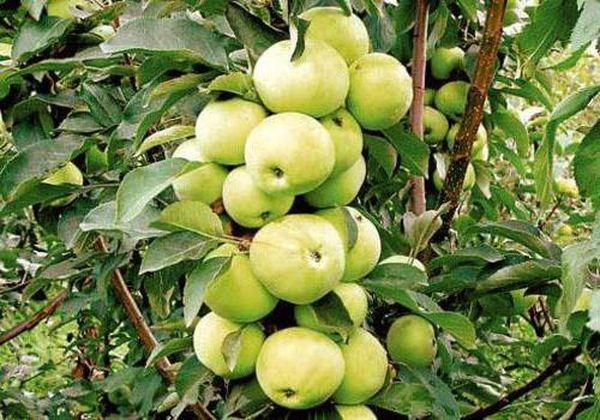
However, this variety does have some drawbacks. The main drawback is its modest fruiting rate. Furthermore, the apple tree produces fruit over a short period of time. Furthermore, seedlings of this variety are expensive.
Main characteristics
Before planting a plant in your garden, it's worth familiarizing yourself with its key characteristics.
Size and annual growth of the tree
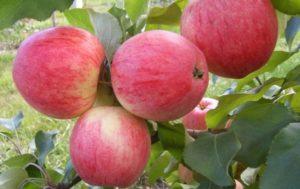
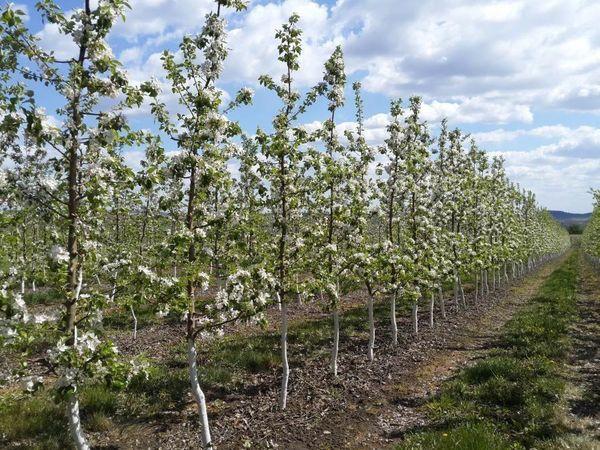
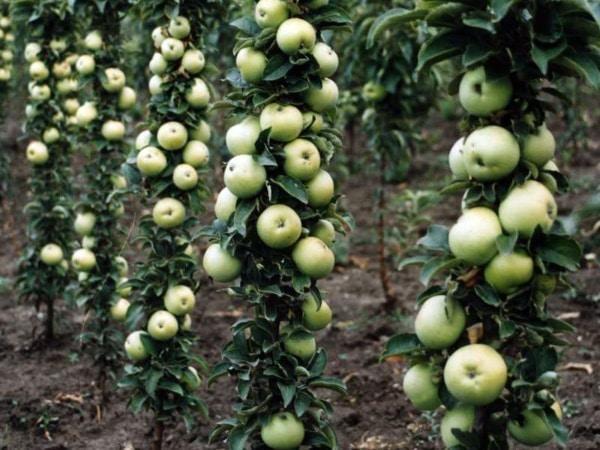
This dwarf plant grows up to 180 centimeters. The neat tree has a compact crown, evenly covered with fruit. Over the course of a year, the plant's shoots grow by 10-15 centimeters.
Lifespan
The columnar plant can live for more than 15 years. However, by this point, its fruiting significantly declines.
Maximum yield is observed at 8-10 years.
All about fruiting
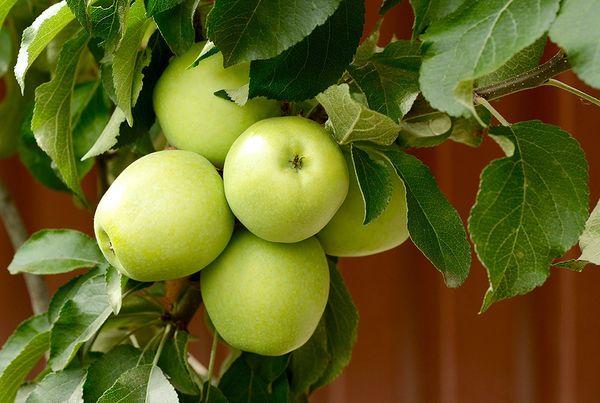
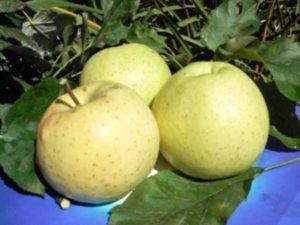
Ripe fruits are light green and slightly blushed. They have a wonderful sweet and sour flavor and juicy, crisp flesh.
Flowering and pollinators
To increase yield, apple trees require pollinators. Optimal varieties include Valyuta, Kitayka, and Chervonets. With timely pollination, a few fruits can be harvested within one year of planting. Subsequently, this yield increases to 4-5 kilograms. A mature tree can yield 12-15 kilograms of apples.
Ripening time and harvesting of fruits
The fruits ripen in September. This variety has a long shelf life. The apples retain their flavor until January.
Yield and taste of apples
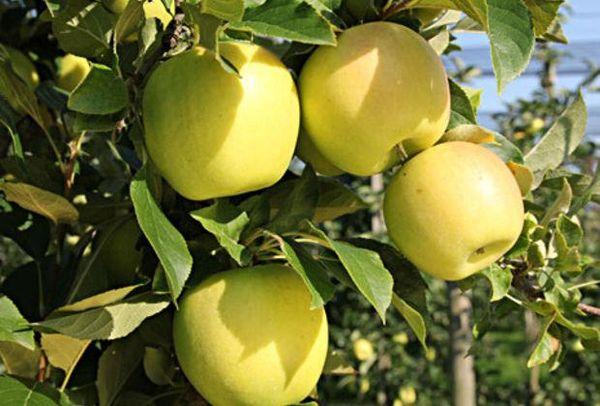
Apples of this variety are characterized by a rich, sweet and sour flavor and high juiciness. The flesh splits when bitten. The fruits have a distinct aroma. It's important to note that improper cultivation practices can result in small fruits and reduced yields.
A mature apple tree can produce 13-15 kilograms of fruit. The first fruits can be harvested as early as the second year. By the age of five, the plant will begin to bear fruit at full capacity.
Scope of harvest application
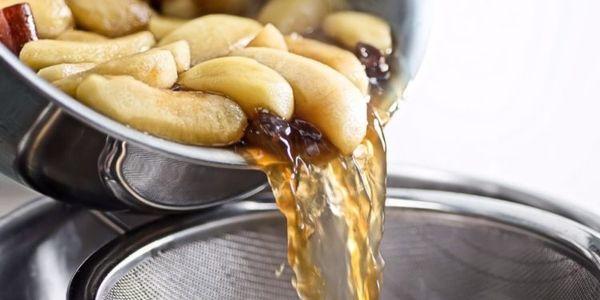
Apples of this variety are versatile. The fruit has a pleasant flavor, making it perfect for eating fresh. They can also be used to make preserves, marmalade, compotes, marshmallows, and other dishes.
Winter hardiness and disease immunity
This plant is distinguished by excellent winter hardiness. It can withstand temperatures down to -30 degrees Celsius. Spring frosts cause virtually no damage to the tree.
The crop is also characterized by high resistance to fungal infections and is practically not subject to pest attacks.
Planting rules for the Malyukha variety
This variety has many advantages, making it very popular among gardeners. To ensure a good harvest, it's important to plant it correctly.
Site selection and preparation
Plant the plant in sunny areas that are well protected from cold winds. Avoid planting in low-lying areas or pits where water and cold air accumulate.
How to choose a healthy and strong seedling
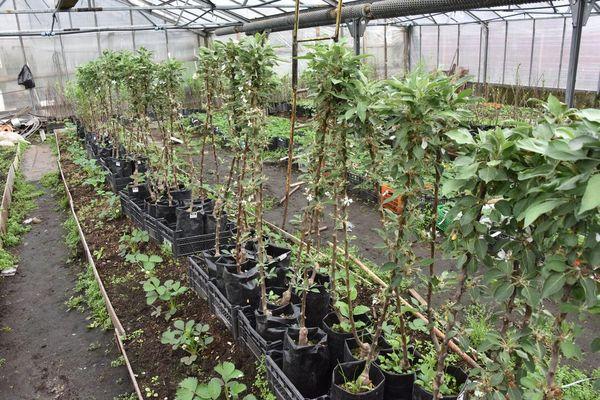
Saplings 1-2 years old are suitable for planting. When purchasing, it is recommended to carefully inspect the tree. It should show no signs of rot or other damage. The root system should be intact.
Timing and rules for planting a tree
In the north, trees should be planted in the spring, before buds appear. Fall planting is also acceptable, but this should be done no later than early October. In warmer climates, both fall and spring planting are acceptable.
The holes should be dug in advance, maintaining a distance of 40-50 centimeters. The hole should be 40 centimeters deep and 50 centimeters wide. The distance between rows should be 2-3 meters.
Organizing apple tree care
To achieve a good harvest and normal tree development, it is worth providing it with proper care.
Timely watering
After planting, apple trees should be watered generously. Mature trees should be watered during fruit set and before winter.
Fertilizer
Organic fertilizers are suitable for Malukha. For this, mix mullein with water in a 1:3 ratio and let it steep for 3-5 days. The resulting infusion is diluted with water in a 1:5 ratio.
Graft
Plant grafting can be done at any time. The following techniques are used:
- for the bark;
- side cut;
- into the cleft;
- cuttings;
- bridge.
Trimming
Starting in the second year after planting, the plant's crown is shaped. This is done by shortening the lateral branches to the second bud. Repeat this procedure annually for new growth. Branches that have produced fruit are pruned in the fall. It is recommended to leave some of the young shoots. In the spring, remove any diseased or damaged shoots.
Treatment against pests and infections
To protect young plants from diseases and insect attacks, it is recommended to use fungicides. To deal with ants and aphid carriers, use the drug Grom.

Protection from cold and rodents
Young plants can be damaged by frost and cold winds. In the fall, it is recommended to whitewash their trunks and wrap them in several layers of non-woven material. In Siberia and the Urals, it is also advisable to insulate mature plants.
To protect the crop from rodents, it is recommended to wrap roofing felt around the trunk and compact the snow around the tree.
Transfer
It is not recommended to repot mature plants, as this can negatively impact their development. One-year-old seedlings are best suited for relocation.
Methods of reproduction
The plant is propagated in a variety of ways. The most common methods are cuttings and grafting. Rooting from layering is also acceptable. Seed propagation is rarely used.
Gardeners' reviews of the columnar apple tree Malyukha
Today you can find many reviews about this plant:
- Kirill: "I planted this apple tree a long time ago. At first, I couldn't even believe I could get a decent harvest from such a small plant. But by the fifth year, I've already harvested a lot of delicious apples. I'm very happy!"
- Maria: "I have a small dacha. So, a columnar apple tree has been a real lifesaver. It takes up very little space, yet still produces a bountiful harvest."
The Malukha apple tree is very popular among gardeners. This compact tree produces delicious fruit. Proper care is recommended for the tree's healthy growth.
Related posts:
 Methods for planting and propagating cherries at home
 The best grape varieties for growing in the Urals, planting and care rules in summer
 Growing and caring for hazelnuts in open ground, rules for planting hazelnuts
 Rules for planting and caring for pears in open ground, how to grow them correctly
 Conditions for growing mandarin at home and rules for caring for the tree
 Description and rules for growing Solaris grapes
 Description of the 10 best columnar plum varieties, planting and care rules
 Peach tree care and agricultural secrets, pest control