
- The history of the Sinap apple tree's development
- Description and characteristics
- Habitat
- Tree dimensions
- Branching of the root system
- Foliage and flowers
- Productivity and annual growth
- Fruit tasting evaluation and scope of application
- Winter hardiness
- Disease resistance
- Advantages and disadvantages
- What rootstock can it be grown on?
- Vigorous
- Semi-dwarf
- Dwarf
- On clonal rootstock
- Planting the Sinap apple tree on the plot
- Optimal timing
- Preparing the site and planting hole
- Seedling planting technology
- How to care for a tree
- Watering and fertilizing
- Caring for the tree trunk circle
- Preventive treatments
- Sanitary and formative pruning
- Preparing for the winter period
- The nuances of harvesting and storing fruits
- Useful tips and recommendations from gardeners
- Varieties of the variety
- Heroic
- Belorussian
- Sary Sinap
- Almaty
- Khakassian
- Minusinsk
- Kandil
- Mountain
- Northern
This apple tree has been famous for many years; it was developed by Crimean specialists. Varieties of the Sinap apple tree have been developed that complement its characteristics. Gardeners widely use the Sinap for its qualities and low maintenance requirements. Its ability to produce high yields and delicate fruit flavor will delight those who have devoted their time to cultivating it.
The history of the Sinap apple tree's development
This variety bears fruit in the middle of autumn. Breeding work was completed in 1955. The Michurin Institute and a research institute specializing in fruit crop breeding worked on its creation. The Sinap variety was created using the "Memory of Michurin" and "Northern Sinap" varieties. The breeders who created this variety were Crimean gardeners: Zayets, Sedov, Krasova, and Trofimova.
Description and characteristics
Apple tree shoots are medium-thick and dark brown. Leaves grow relatively sparsely on the branches. The trunk of the shoot has a faceted appearance. A small number of small lenticels are present.
Habitat
Zoning was carried out for the following territories:
- Central Black Earth Region;
- North-West region;
- Central part of the Russian Federation;
- Middle Volga region.
Sinap Orlovsky is very popular in Russia's temperate climate zone. It is a welcome guest in both large farms and small garden plots.
Tree dimensions
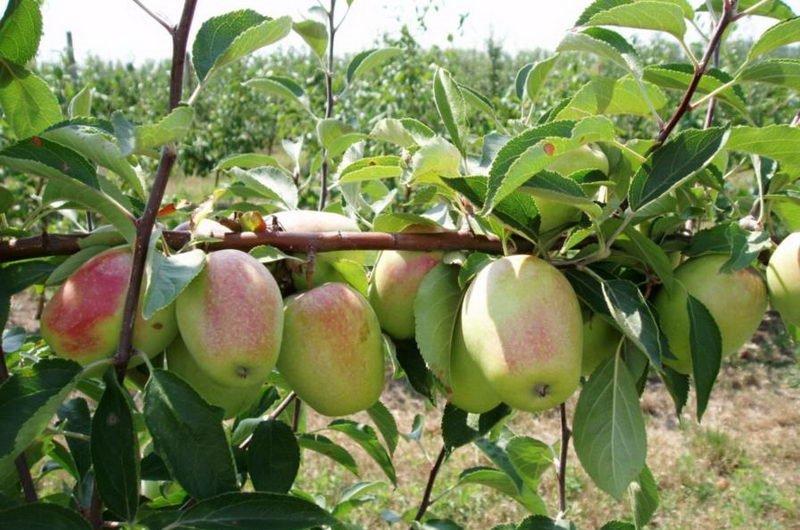
The trees are characterized by their large size. The Sinap Orlovsky apple tree grows up to 5 meters. Large branches grow relatively sparsely, making maintenance less labor-intensive. The variety is characterized by a 90-degree angle and vertical tips.
The crown is wide, spreading, pyramidal or rounded.
Brown bark covers the trunk. It feels rough to the touch.
Branching of the root system
Because these trees are typically large in size, they develop a powerful root system that requires a significant area to grow.
Foliage and flowers
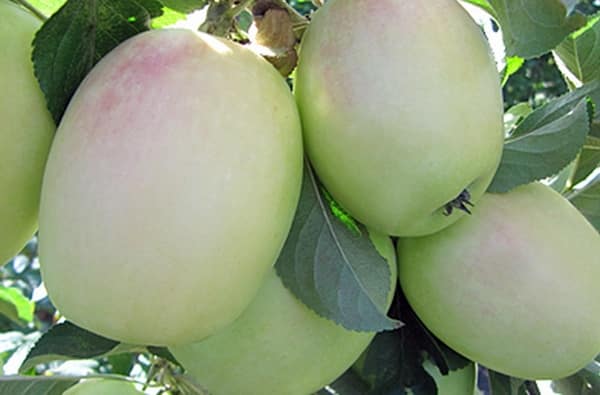
The tree's leaves are dark green. They are large and pubescent. Some have a smooth surface, while others are convex. The edges are wavy and serrate. The petioles are small, and the stipules are large and lanceolate. The pointed edges of the leaf blade are curved upward.
The flowers of the Sinap Orlovsky apple tree are a delicate pink. They are a luxurious addition to any garden in spring. The petals grow closed.
Productivity and annual growth
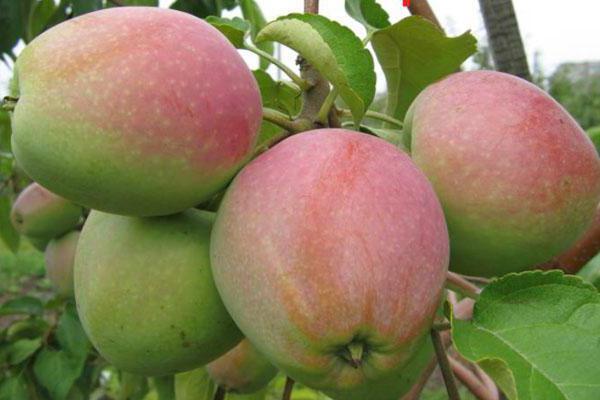
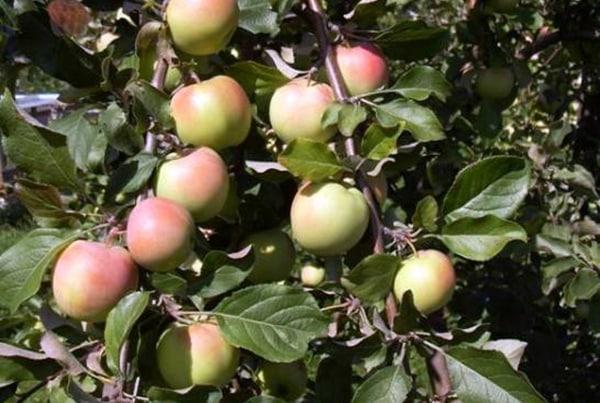
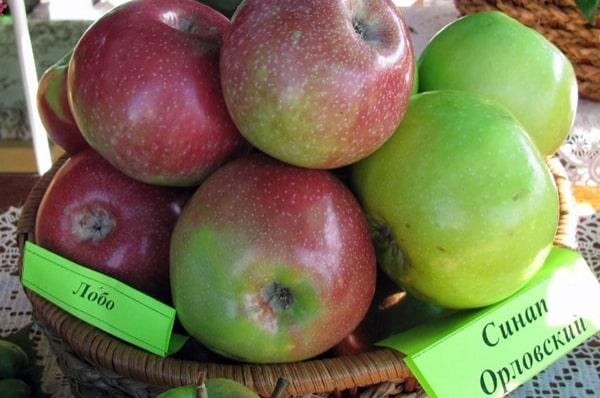
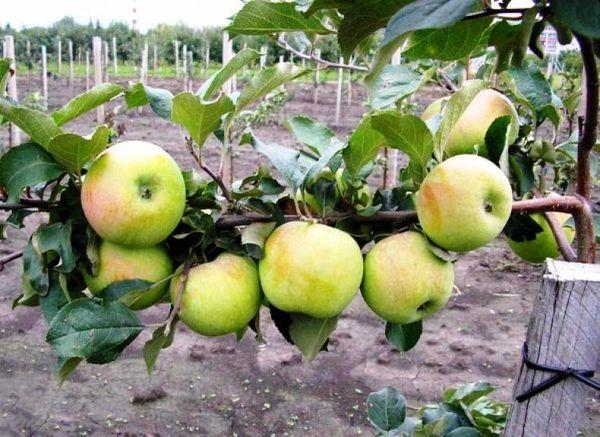
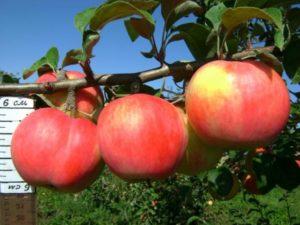
This variety delights farmers with its large fruits. When weighed individually, they weigh 150-160 g. Most of the oblong fruits are approximately the same size. They can also have a round-conical shape. The apple has a glossy surface, and the skin is thick and oily. Upon inspection, small white spots are visible beneath the surface.
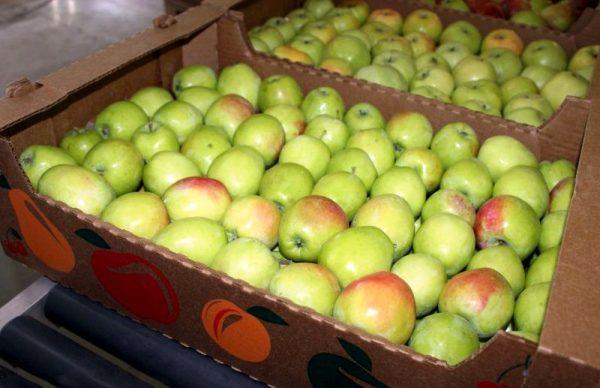
Ripe fruits are yellow-green in color. If left for a while, a golden hue develops.
The Sinap Orlovsky apple tree begins to bear fruit in its fourth or fifth year. After that, it produces fruit annually. One hectare of trees can yield a harvest weighing up to 160-170 centners. Pollination can be provided by varieties such as Welsi and Antonovka.
Fruit tasting evaluation and scope of application
The fruits are known for their excellent balance of sweet and pleasantly tart flavors. Consumers appreciate their delightful aroma and juicy, tender flesh. The apples are firm and easy to crack. The flesh is green and slightly creamy.
Take a look Also

The taste of Sinap Orlovsky apples was assessed using data averaged over several years. The variety received a rating of 4.5-4.7 out of 5. The experts also rated the species, which received a 4.3 out of 5.
Here are some useful elements:
- titratable acid, its content is 0.52%;
- the sugar content here is 9.5%;
- 8.9% pectin substances;
- P-active substances make up 194 mg per 100 g;
- ascorbic acid contains 13.7 mg.
- 55 kilocalories per 100 g of fruit.
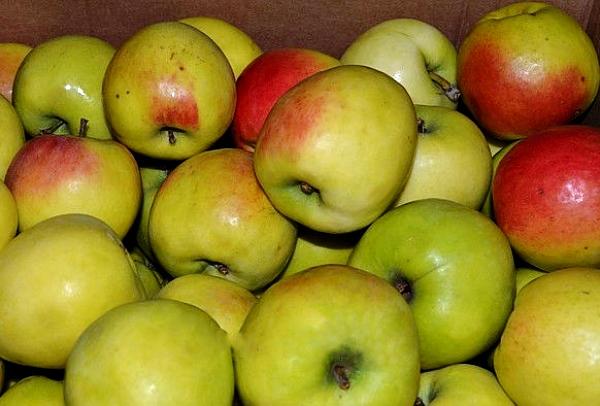
Late September is the time to harvest the fruit. The harvested apples are virtually impervious to spoilage during storage and can survive the winter without any damage. Sinap Orlovsky is deservedly popular among children's food producers.
The fruits can be eaten fresh or used to make jam, preserves or juices.
Harvested apples should be left alone for four weeks to rest. This will allow them to ripen and finally acquire their true flavor. Sinap Orlovsky apples contain a high content of essential nutrients.
Winter hardiness
The Sinap Orlovsky variety is known for its high winter hardiness. It can easily withstand temperatures as low as -8°C. This tree is well-adapted to cold climates.
Disease resistance
The Sinap Orlovsky apple tree is easily infected with scab, as well as most other diseases. Therefore, special treatment is required.
Advantages and disadvantages
This apple tree has the following advantages:
- This is an early-bearing plant.
- Sinap Orlovsky delights farmers with its high yield, reaching up to 200 kg per apple tree.
- The harvested fruit is easily stored throughout the winter. Apples spoil without deteriorating in flavor or losing their beneficial nutrients.
- These trees easily withstand sub-zero temperatures and can survive winter cold in the Russian climate.
- Apples do not spoil or lose their flavor when cooled.
- Sinap Orlovsky is adapted to growth in the north of the Russian Federation and can produce a good harvest here.
- Apples have an excellent taste that combines sweetness and piquant sourness well.
The following shortcomings can be pointed out:
- After planting, it must take four years before it begins to bear fruit.
- It is important that pollinator varieties grow in the area.
- Sinap Orlovsky is weakly resistant to diseases.
- The large size of apple trees creates difficulties for farmers with small orchard areas.
What rootstock can it be grown on?
Various types of rootstocks can be used to grow Sinap Orlovskyi. Each affects the mature tree's appearance.
Vigorous
In this situation, fruiting begins later than usual. The tree can grow up to 6 meters. The root system is powerful and grows deep. Using this rootstock is beneficial in areas where the apple tree must obtain moisture at relatively great depths.
Semi-dwarf
With this type of rootstock, the tree grows up to 4.5 m. The root system grows to a depth of 2.5 m. Fruiting begins when the tree is four years old.
Dwarf
Here, the Sinap Orlovsky apple tree will be smaller than usual, reaching 2.8-3 meters. The rooting depth of these trees does not exceed 1.7-2 meters. These trees are suitable for areas with shallow groundwater.
On clonal rootstock
This growing method makes the Sinap Orlovsky apple tree taller than usual. It will develop a broad crown. The variety has high natural resistance to disease and requires little care.
Using a clonal rootstock results in a tree with late fruiting, which only occurs at 10 years of age.
Planting the Sinap apple tree on the plot
If the Sinap Orlovsky apple tree isn't supplied with sufficient calcium, the fruit's quality will decline, developing a bitter taste. Furthermore, the tree becomes more susceptible to disease.
It's important to note that this Sinap is self-sterile. Pollinators are needed for fruiting. For this purpose, the following varieties are used:
- Slav;
- Pepin Saffron;
- Zhigulevskoe;
- Welsey;
- Antonovka ordinary;
- Sinap Severny.
Optimal timing
The best time to plant Sinap Orlovsky is from mid-September to mid-November. It is also possible to plant the Sinap Orlovsky apple tree in the spring. It is important to do this when there is no threat of frost. Planting is usually done in early April.
Preparing the site and planting hole
When choosing a suitable site, keep in mind that these apple trees prefer full sun and soil rich in micronutrients. It's undesirable for the groundwater to be close to the surface during planting. The Sinap Orlovsky apple tree will not grow well in waterlogged soil.
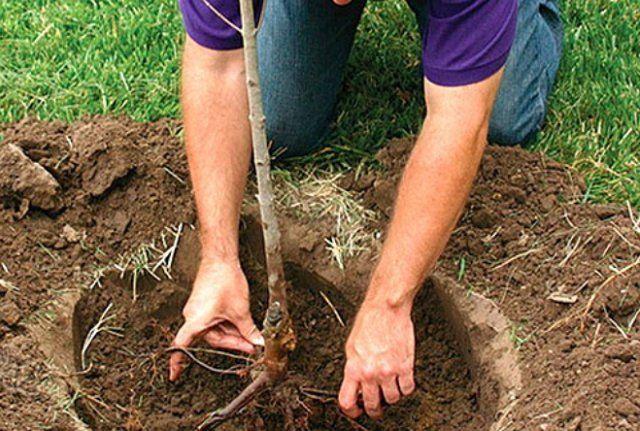
Planting of seedlings is carried out as follows:
- It's recommended to prepare holes for the seedlings two weeks before planting. The holes should be one meter long and one meter wide, and the depth should be 80 centimeters.
- The bottom of the hole created must be loosened with a rake.
- Crushed brick is placed in the hole to ensure drainage.
- To make the hole, prepare the soil, add a little manure, and sprinkle with ash. The recommended soil to additive ratio is 3:1. Add 40 grams of potassium sulfate to this mixture. Then add 80 grams of superphosphate.
- The prepared mixture is placed in each hole, prepared in advance. It should occupy a third of the height.
- Add 20 centimeters of soil to the hole.
Seedling planting technology
When planting the Sinap Orlovsky apple tree, it is necessary:
- Before planting, the roots need to be carefully straightened.
- It is necessary to leave 5-6 centimeters from the root collar to the ground surface.
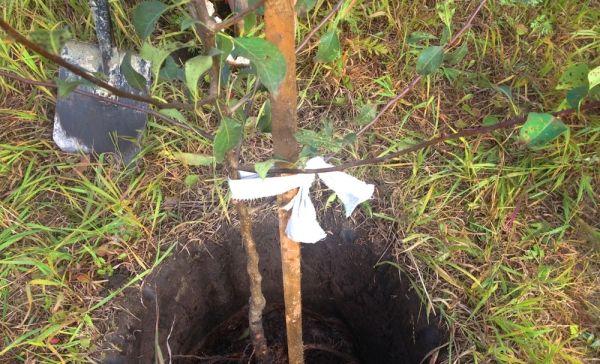
After that, How the Sinap Orlovsky apple tree sapling was planted, next to it they put a 60-centimeter-high peg to which they need to tie it.
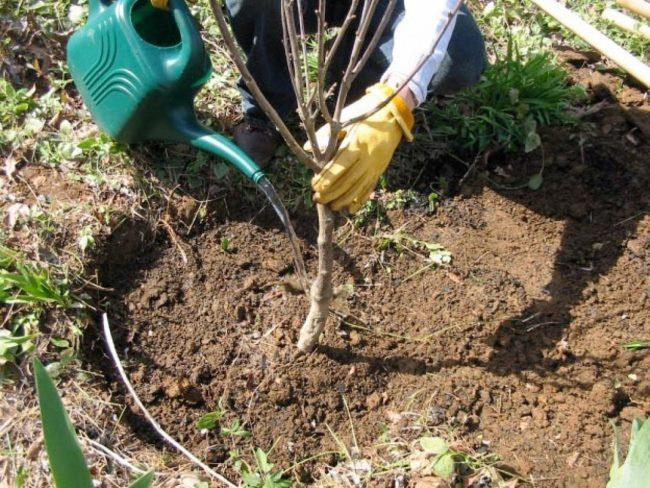
Immediately after planting, water the plant. Each tree will require 3-4 buckets of water.
How to care for a tree
Although this apple variety is considered low-maintenance, it still requires care. The better the quality, the more abundant and delicious the harvest will be.
Watering and fertilizing
In spring and fall, water 4-5 times monthly. Apple trees require at least 20 liters of water.
After finishing, it is necessary to loosen the soil.
Fertilizing of the Sinap Orlovsky apple tree is done four times per season:
- when winter has passed (a mixture is added: 700 g of manure diluted with a bucket of soil);
- when the kidneys are formed (0.5 kg of urea);
- at the end of flowering (a special mixture is used);
- when the harvest is fully collected (add 50 g of superphosphate dissolved in a bucket of water).
The composition for fertilizing apple trees at the end of flowering consists of the following parts:
- 100 g of superphosphate is needed;
- urea 60 g;
- 40 g of calcium is required.
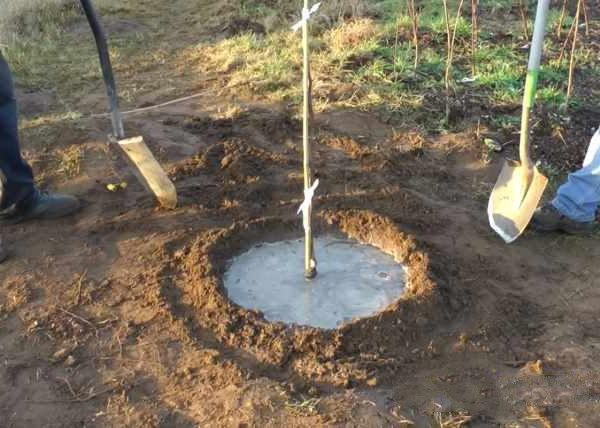
To prepare the composition, the components are mixed in ten liters of water.
Caring for the tree trunk circle
It is recommended to earth up the apple tree trunk to a depth of 20 centimeters. After watering, loosen the soil and apply mulch.
Preventive treatments
The time for disease prevention begins in the fall. It's important to monitor the appearance of the tree's bark and the condition of its branches.
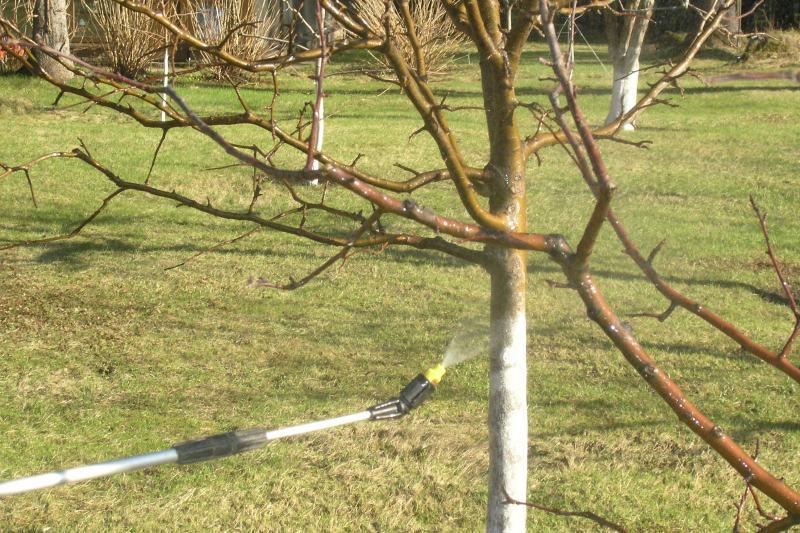
When the harvest is fully collected, the plants are treated with a solution of copper sulfate.
In the spring season, additional treatment is carried out using Fitosporin M or Bordeaux mixture.
Sanitary and formative pruning
During the period when apple trees are actively growing, it's important to prune regularly. Keep the following in mind:
- During the first year of growth, no more than a third of the branches can be pruned.
- In the second year of the seedling's life, the plant is processed in the spring, leaving three tiers of branches.
- In the future, it is necessary to process it in such a way that the main branches remain.
In the first years of life, pruning is performed at 20-25 centimeters, for an adult tree - at 40-45 centimeters.
It is necessary to remove dried or damaged branches.
Preparing for the winter period
Before the onset of winter cold, the tree trunk area is fertilized with organic fertilizer and dug over. Then, it is mulched with humus and peat.
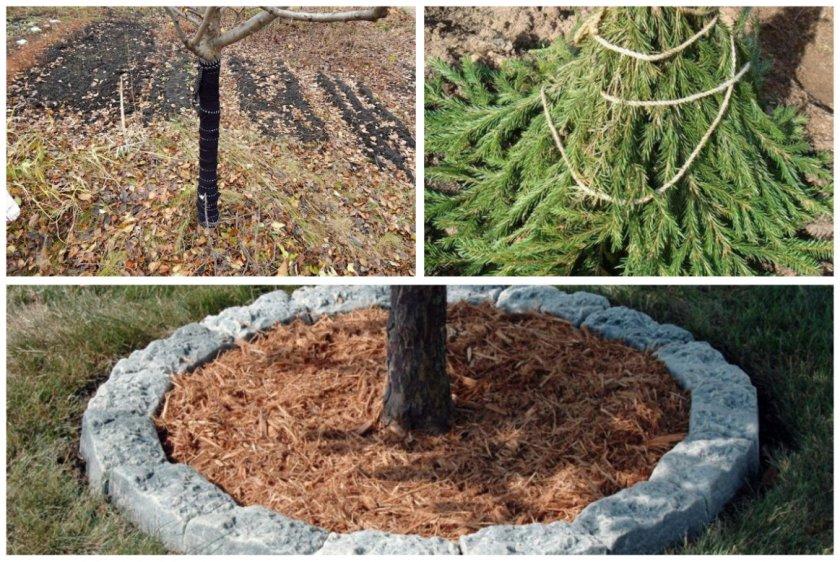
To combat rodents, the tree trunk is whitewashed with a lime mixture containing copper sulfate. For this purpose, you can also wrap the trunk with spruce branches or use protective netting.
The nuances of harvesting and storing fruits
Apples are harvested in the last ten days of September or during the first week of October. The best temperature for storing the fruit is 0-5°C (32-41°F). Apples can be stored throughout the winter, retaining their beneficial nutrients.
Useful tips and recommendations from gardeners
It's important to ensure sufficient calcium in the soil. This will reliably protect the apple tree from bitter pit disease. Once the apple harvest is complete, it's recommended to wait about a month for the fruit to ripen and develop a better flavor.
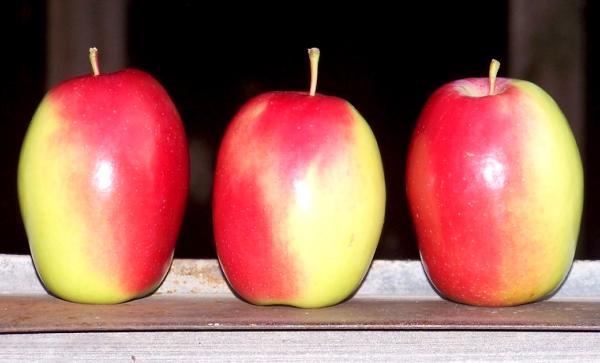
Varieties of the variety
There are different varieties of Sinap, each with different properties. The most well-known are described below.
Heroic
This variety is relatively large in size. The apple trees produce a bountiful harvest and demonstrate strong frost resistance. The fruits are white-greenish in color. The apples fully ripen in late September.
Belorussian
These apple trees are early fruiting and highly frost-resistant. The plants are resistant to scab. The foliage crown forms a pyramid. The fruit is greenish-yellow in color. The skin is thick. Harvesting begins in late September.
Sary Sinap
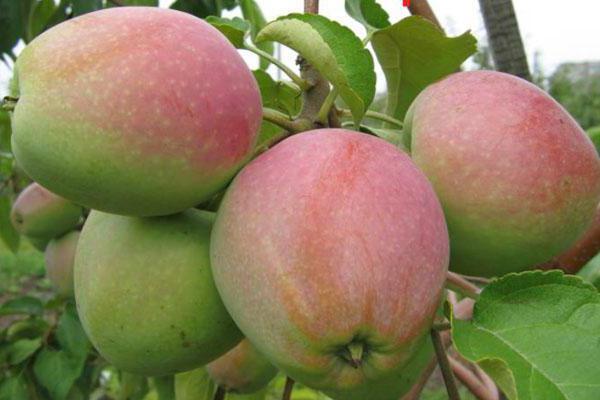
This variety is a late-winter variety. It is highly resistant to scab and winter frosts. The tree is medium-sized for this variety. The apples have white, firm flesh. Most fruits are yellow-green in color. Occasionally, a pink blush can be seen.
Almaty
The apple tree grows to a medium size. The variety is resistant to scab. The medium-sized fruits weigh between 110-150 g. The flesh is loose, with a flavor that is both tart and sweet. When ripe, the fruits turn a deep red. The harvest ripens in the last week of September.
Khakassian
This variety was created by crossing the Rossoshansky Striped and the Sinap Severny apples. The tree produces 50-60 kg of apples annually, with each fruit typically weighing 170 g.
Minusinsk
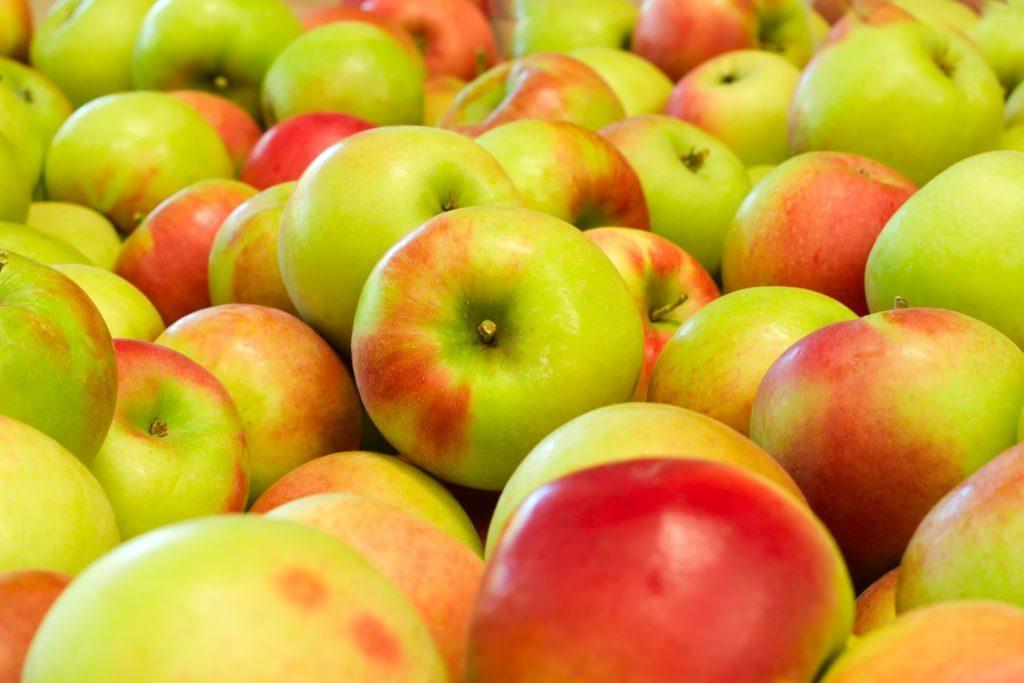
This is a medium-sized variety. It begins bearing fruit after its fifth year. Apples weigh 40-50 g. This apple tree is frost-resistant and resistant to scab.
Kandil
Late August is the time to harvest. Each fruit weighs 140 g. The apples are elongated and yellow-green in color with a subtle blush. Mature trees can yield up to 300 kg per fruit.
Mountain
Considered an early-fruiting variety, the harvest is in late autumn. It is resistant to scab. The apples are round and golden in color.
Northern
The variety descends from the Kandil-Kitaika variety and was created in 1927. Apples appear 5-9 years after planting. Fruit weight is 95-150 g. Early October is the harvest time.
Related posts:
 Description of the Red Early apple tree variety, agricultural technology and specific care
 Description and cultivation technology of the Kandil Orlovsky apple tree variety
 Description and planting of the Dream apple tree variety, care and propagation
 Description and varieties of Gala apple trees, planting and care in open ground
 Signs and treatment of apple tree cancer, varieties resistant to the disease
 Description and subspecies of the Antonovka apple tree variety, planting and care rules
 Description of the 10 best columnar apple tree varieties for the Moscow region, planting and cultivation
 Description of the Chudnoe apple variety, planting and caring for a dwarf tree