
- What you should know
- Compatibility chart of fruit trees and shrubs
- How to avoid competition for survival?
- We draw up a planting plan
- What to plant under an apple tree
- Plants
- Wild-growing
- Cultivated flowers
- Garden crops
- Pumpkin and zucchini
- Tomatoes
- Cucumbers
- Berry varieties
- Raspberries and currants
- Juniper
- Neighborhood with fruit trees
- Plum
- Cherry
- Cherries
- What is strictly forbidden to plant an apple tree with?
- What is recommended to plant after an apple tree?
What's a garden without a beautiful and fruitful apple tree, so pleasant to sit in its shade on a summer evening? But a garden plot doesn't always have enough space to accommodate trees and other plants. And the spreading crown takes away space from weaker plants. This raises the pressing question: what to plant under your beloved apple tree to save space and reap a bountiful harvest?
What you should know
Many plants, when grown close together, suppress each other, but some are good neighbors, not only not hindering, but, on the contrary, helping each other in their development.
Compatibility chart of fruit trees and shrubs
It's important to consider plant compatibility when planting in your garden; this will help ensure high decorative qualities, lush flowering, and a bountiful harvest.
Culture Good Neighbors Bad Neighbors
Apricot, apricot, cherry, apple, pear, peach
Quince, apple, peach, cherry, sweet cherry
Sweet cherry, cherry cherry, cherry, plum, hawthorn, apricot, apple, pear, peach, raspberry
Plum, cherry, sweet cherry, plum, apple, pear, peach, raspberry
Apple tree, quince, pear, apple tree, grapes, plum, apricot, cherry, sweet cherry, currant
Barberry, plum, apple, cherry, pear
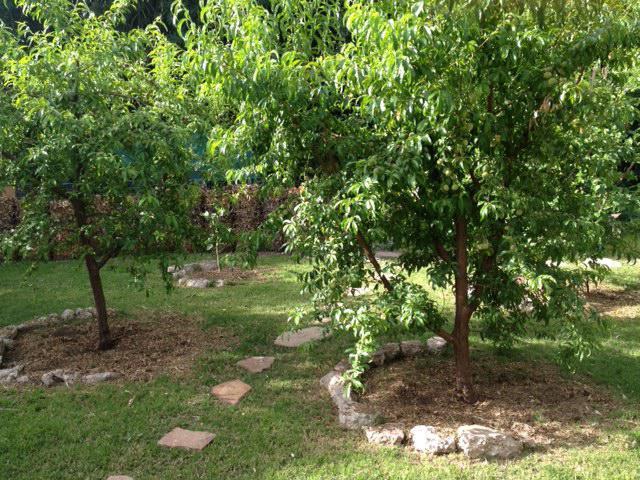
How to avoid competition for survival?
To ensure the growth, development and absence of competition between plants in mixed plantings, a gardener needs to know the following:
- neighboring cultures oppress, are neutral, or help each other in their development;
- the growth strength and size of neighboring plants, to choose the correct distance when planting;
- growing characteristics, ability to tolerate full or partial shade.
- requirements for soil structure and acidity;
- frequency of watering and the ability to tolerate partial drought or, conversely, waterlogging.
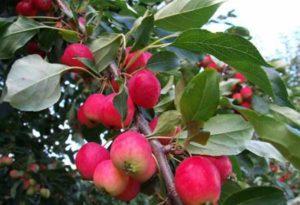
We draw up a planting plan
For a beautiful, proper, and successful garden, a planting plan is created, where it is noted in advance what, where, and at what distance from each other will grow.
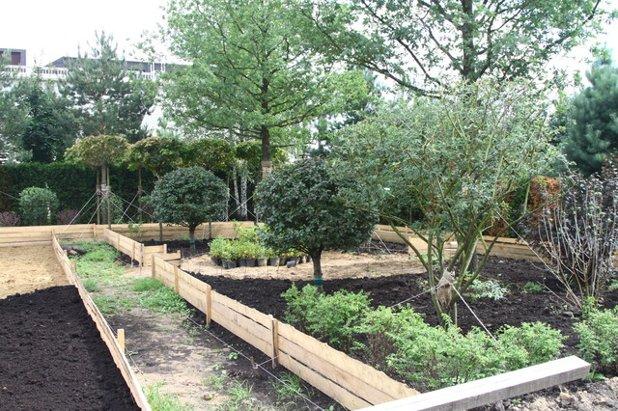
What to plant under an apple tree
Space is always at a premium in a summer house or garden. Not using a large patch of land under the crown for planting is a gardening crime. However, it's important to remember that this is a fairly robust tree, with a strong root system that absorbs a lot of nutrients from the soil.
Mature apple trees' dense crowns create deep shade, which not all plants will thrive in. Herbs and greens are planted around the tree trunks, particularly dill, parsley, and wild garlic, a treasure trove of vitamins.
In addition to saving space, this type of planting looks decorative, and the substances released by the spices repel many pests.
Plants
The diffuse shade of the apple tree crown creates its own microclimate, with higher air humidity than in well-lit areas.
Wild-growing
You don't need to buy or grow flower seedlings to plant under a tree. Just take a look around – wild plants in the meadow often yield fascinating specimens that simply need to be dug up and transplanted to your plot. Moreover, wild plants can often help repel pests from the apple tree. For example, tansy and celandine repel aphids and codling moths.
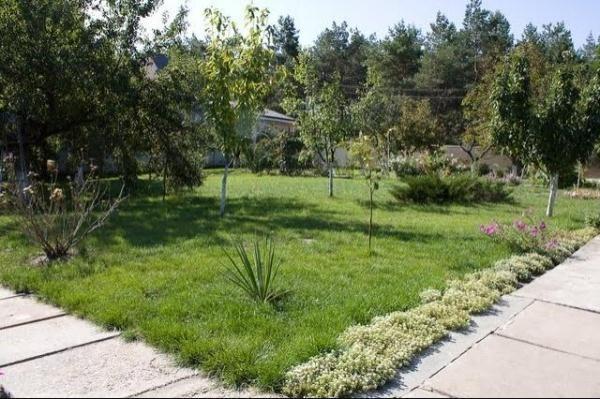
A beautiful, relaxing and tree-neutral solution is to sow the soil under the apple tree with lawn grass.
Additionally, weeds will be suppressed, and the green, lush grass will create a wonderful spot for family relaxation on warm summer days. In the fall, falling fruit will not hit the ground and become dirty. Suitable crops include ryegrass, bluegrass, fescue, and clover.
Cultivated flowers
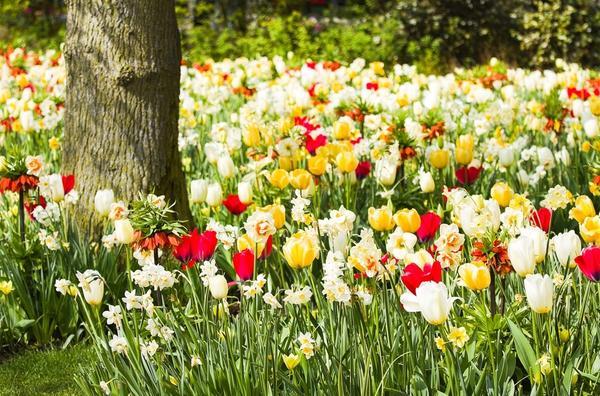
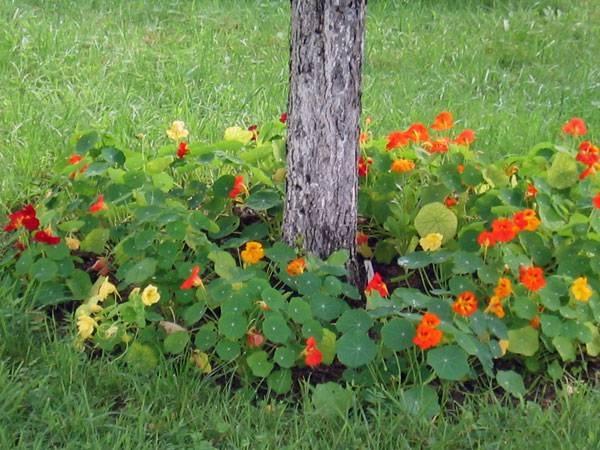
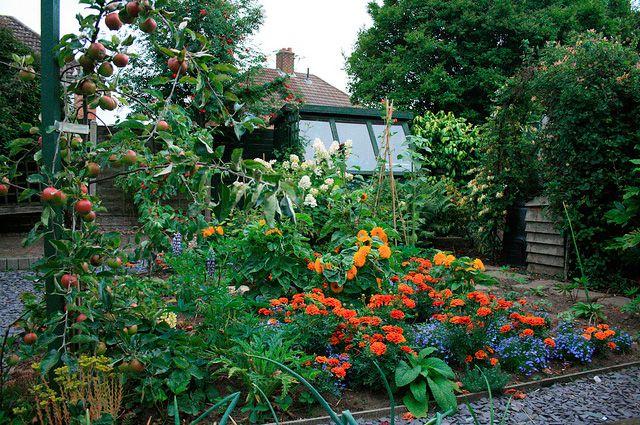
Tree trunks with cultivated flowers look especially impressive and decorative. When choosing, remember to choose species that thrive in or tolerate high humidity, and prefer shade to partial shade. Daisies, daylilies, various marigolds, forget-me-nots, bellflowers, early crocuses, daffodils, and violets thrive under apple trees. For example, marigolds protect apple trees from fungal root diseases and the most dangerous pest, nematodes.
Garden crops
To avoid wasting space, various garden crops are planted near the tree or in the dappled shade of its crown. Keep in mind that plants with developed, deep root systems will compete with the tree for nutrients, so additional fertilizing is required.
Pumpkin and zucchini
Zucchini and pumpkins grow successfully under apple trees, as long as the canopy provides light, dappled shade. The crops should receive at least a few hours of full sun each day. However, it's not a good idea to plant both zucchini and pumpkins under the same tree.
Tomatoes
Early, early-ripening tomato varieties are grown on the sunny, southern side. Tomatoes also repel codling moths, which can damage the tree. Later varieties can be grown under young trees that haven't yet developed a full crown. Tomatoes grow poorly and are susceptible to disease in areas with significant shade.
Cucumbers
They are planted no closer than a meter from the tree trunk, provided the crown is properly shaped and thinned, and the lower branches grow high enough from the ground. They are convenient for tying cucumber vines to them, gradually wrapping them with rope as they grow. Protected by the crown, cucumbers are less susceptible to powdery mildew and don't burn on hot summer days.
Berry varieties
Strawberries or small-fruited strawberries planted in the tree trunk circle look beautiful and unusual. Ornamental flowering, everbearing strawberry hybrids are especially striking, or they can be combined with traditional everbearing varieties. Strawberries require dappled shade and at least a few hours of full sun per day; strawberries, especially wild strawberries, thrive in shade.
Raspberries and currants
Raspberries do well next to apple trees, but avoid planting them in the trunk circle. Raspberries thrive in sun or dappled shade. When planted together, they help protect the apple tree from scab, and the apple tree protects it from gray mold. Currants, on the other hand, don't like this kind of planting.
Juniper
Avoid planting the following juniper species near it: Virginia juniper, rock juniper, common juniper, and horizontal juniper. Juniper carries rust spores and, if planted near an apple tree, will cause tree diseases.
Neighborhood with fruit trees
It doesn't like being near many fruit trees. And when grown nearby, it has a depressing effect on them.
Plum
Pome fruits suppress and crowd out stone fruits. It's best to plant plums 4-5 meters away from them.
Cherry
Cherry trees are highly undesirable next to each other, as their root systems will suppress each other. The minimum distance between them is 4 meters.
Cherries
The same situation applies to cherries: the apple tree's powerful crown and root system will suppress the cherry tree.
What is strictly forbidden to plant an apple tree with?
Lilies of the valley should not be planted near the tree trunk, as their root system can inhibit the apple tree's roots. And it's difficult to see and find fallen fruit in the dense foliage.
Planting periwinkle is also undesirable - a dense carpet of flowers oppresses the tree, absorbing a lot of nutrients from the soil.
Bad neighbors for apple trees include roses, viburnum bushes, and jasmine. The worst fruit tree neighbor is the walnut tree.
What is recommended to plant after an apple tree?
When planting a young apple tree in place of an old one, step back 1.5-2.0 meters or dig a larger hole, replacing the old soil. After pome fruits, stone fruits (plums, peaches, cherries, and sweet cherries) or berries, as well as various vegetables, are planted.
Related posts:
 Description and rules for growing the Bratchud apple tree variety
 Description of the Borovinka apple tree variety, cultivation and care
 Description and rules for growing creeping apple trees, planting and care
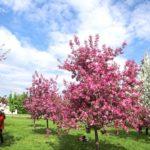 Description of the ornamental Nedzvetsky apple tree, cultivation technology
 Description and subspecies of the Sakharny Arkad apple tree variety, cultivation technology
 Description of the Venyaminovskoye apple tree variety, planting and care
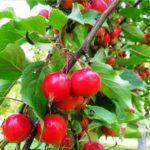 Description of the Yagodnaya Sibiryachka apple tree variety, planting and growing from seeds
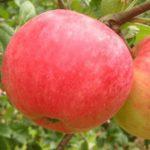 Description of the Auxis apple tree, planting and care features