
- History of selection and characteristics of the Ranetki apple tree
- Growing area
- External parameters of the tree
- Lifespan of a tree
- Pollinator varieties
- Flowering and fruiting
- Taste qualities and scope of application of the crop
- Fruit harvesting, yield
- Winter hardiness and susceptibility to diseases
- How to plant Ranetka in your garden
- Deadlines
- Scheme of seedling placement
- Site preparation
- Tree planting technology
- How to care for an apple tree
- Watering and fertilizing
- Caring for the tree trunk circle
- Formation of the bush
- Preventive treatments against diseases and pests
- Wintering
- The most popular varieties with descriptions
- Columnar
- Amber
- Dwarf
- Siberian
- Purple
- Laletino
- Red
- For a long time
- Dobrynya
- Golden
- Ermolaeva
- Honey
- Wild Siberian
The Ranetki apple variety is an easy-to-grow crop, widely grown in gardens across the CIS. The fruit is in demand regardless of the season. There are many varieties of Ranetki, approximately 13. To successfully grow an apple tree, it's important to familiarize yourself with all its characteristics.
History of selection and characteristics of the Ranetki apple tree
The Ranet apple tree variety was developed by crossing the Siberian Berry and other varieties common in European Russia, or plum-leaved apple trees. The variety appeared in 1937 and has since gained popularity even in the north of the country.
Growing area
Ranetki apple trees are grown in the European regions of Russia, but they bear fruit everywhere except the Far North. Gardeners prefer to cultivate Ranetki due to its high yield and low maintenance requirements. Thanks to the latter, this fruit tree can also be grown by gardening enthusiasts who visit their dachas on weekends. The tree adapts well to new conditions and is undemanding of soil.
External parameters of the tree
These trees require ample space and have a spreading crown. The canopy width ranges from 1 to 4 meters, depending on the variety. Apple trees reach 4 to 5 meters in height. During flowering, the buds open into white and lilac petals, appearing like a blooming globe. The tree serves as a decorative feature in the garden.
Lifespan of a tree
The Ranet apple tree can live for 10-15 years with proper care and optimal climate conditions. It bears fruit throughout its lifespan, without losing its flavor.
Pollinator varieties
There's no need to plant additional pollinators near the Ranet apple tree. When the tree flowers, other apple trees begin to bloom as well. Having other apple trees nearby is sufficient. The Ranet apple tree will bloom in late spring or early June, but much depends on the climate. Flowering lasts for 10 days, after which fruit buds form on the branches.
Flowering and fruiting
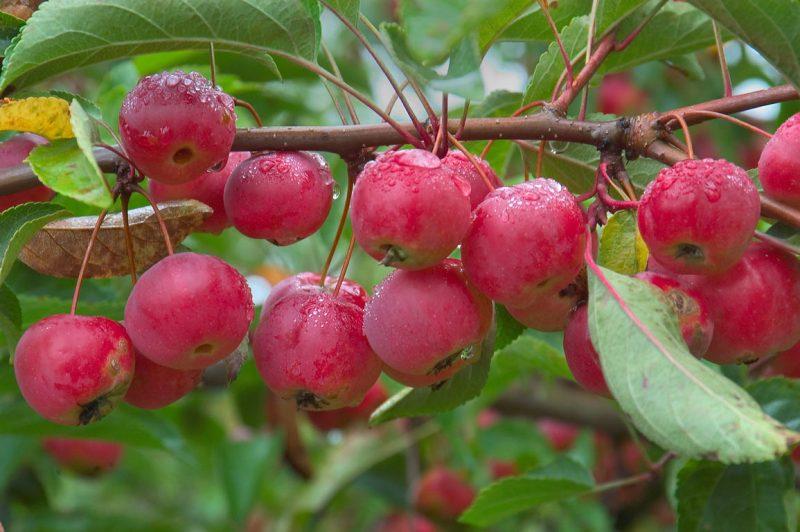
The fruit ripens on the trees in the second year. During the first growing season, the apples grow to no more than 15 grams. They have a slightly tart, sour taste and fully ripen by the end of September. Frosts will not affect the quality of the fruit. Almost all varieties have a characteristic tart flavor.
Taste qualities and scope of application of the crop
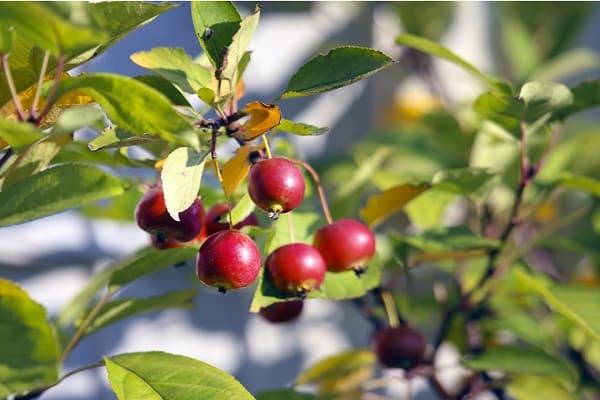
Ranet apples are suitable for fresh consumption or processing. They are used to make delicious jams, preserves, compotes, and fresh juices. The amount of biologically active elements is 10 times higher than that of other varieties. Regular consumption helps remove heavy metals from the body. The fruit contains 12% sugar and 1.5% pectin.
Nutritionists and doctors recommend eating ranetki for people with the following conditions:
- inflammatory processes of any etiology;
- slagging;
- weak immunity.
Apples ripen on the tree almost simultaneously.
Fruit harvesting, yield
Apple harvesting begins in late August or early September. A single tree yields 50-100 kg. Apple trees bear fruit until January. In warmer regions, harvesting takes longer than in colder areas. This is due to the early spring and late frosts.
Winter hardiness and susceptibility to diseases
Ranetki apple trees can withstand temperatures as low as -47 degrees Celsius. When winter is cold, they become even sweeter. Their Siberian roots help the tree cope with sudden temperature changes.
 Wild apples have a weak immune system, and are poor at resisting diseases and harmful bugs. Care plays an important role, as it determines the strength of the plant's defenses. Preventative treatments are recommended.
How to plant Ranetka in your garden
Planting apple trees doesn't require any special nuances; the cultivation techniques are standard for all crops. The site should be sunny and protected from drafts. It's best to plant apple trees away from buildings and densely wooded plots to avoid shade. Wild apples prefer fertile, but not overly acidic, soil. The balance can be improved by adding ash and dolomite flour. Groundwater should be at least 2 meters below the surface, or the soil should be well-drained.
Deadlines
Apple trees are best planted in March, before budding. Sometimes planting can be done in the fall, after the leaves have fallen.
Scheme of seedling placement
Seedlings should be planted in a 5x5 pattern, taking into account the overall size of the clump. The distance between medium-sized trees should be 4 meters, while 5 meters is considered optimal for vigorous apple trees, and 3 meters for dwarf apple trees. Dig holes 80 cm wide and deep.
Site preparation
The holes are prepared a week before planting. The soil is loosened and weeds are removed. Humus, peat, ash, and superphosphate are added to the soil.
Tree planting technology
To successfully plant a fruit tree, you should follow the tips below.
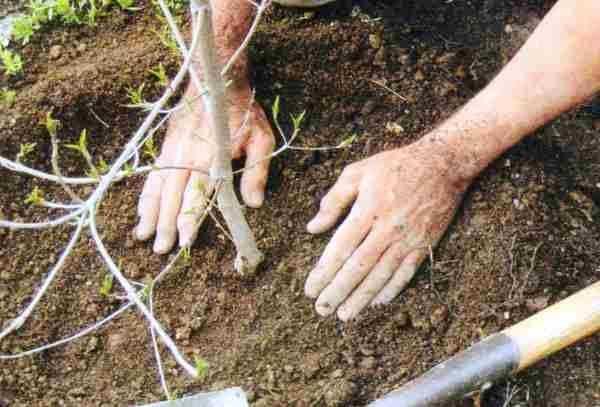
- Dig a hole 80*80*80. Drive a 1.5-meter-high stake into the middle.
- Straighten the rhizomes of the seedlings and place them in a prepared place.
- Fill the holes with soil so that the root collar remains 5 cm above the surface, and compact it.
- Add 2-3 buckets of water under each seedling.
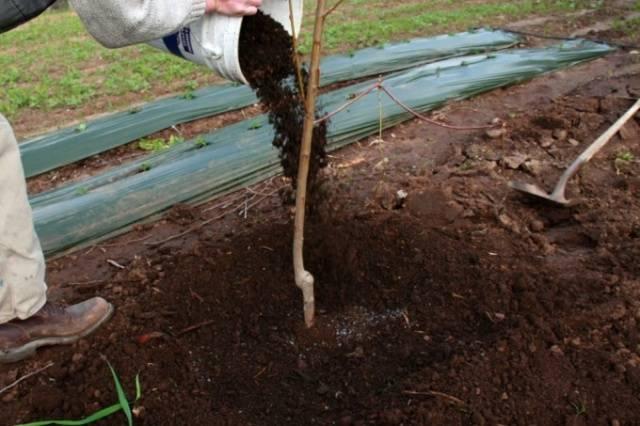
To ensure the young trees thrive, place a nutrient-rich mixture on the bottom. Humus can be used. Tie the young seedling to a stake to ensure it grows evenly.
How to care for an apple tree
Proper care includes timely watering, hilling, shaping the bush, covering for the winter, and fertilizing. Trees should be treated periodically with insecticides and fungicides.
Watering and fertilizing
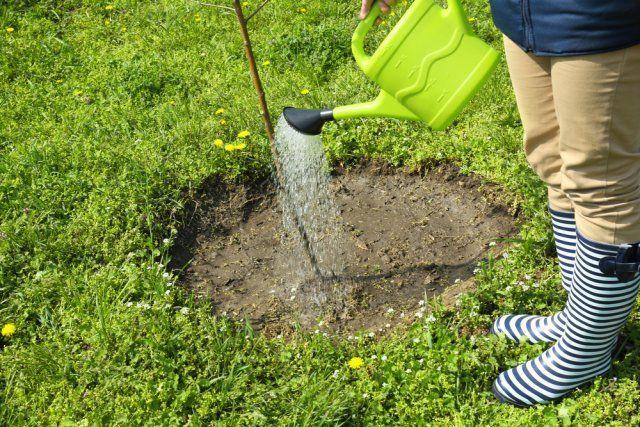
Trees should be watered at least once a week during wet summers. Add 4 liters of settled water under each seedling. During drought, water more frequently, with 5-6 buckets of water, to prevent the rhizomes from drying out. Starting in the second year, reduce watering. Add water during periods of intense heat or when fruit is actively ripening.
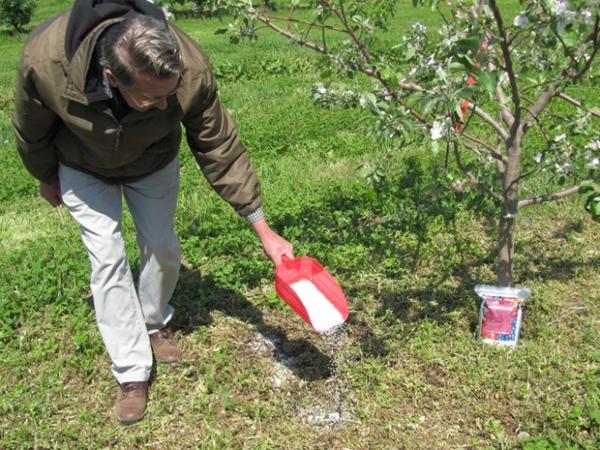
Fertilize apple trees according to the season. Four applications are made per season.
- In late April, it's recommended to feed the trees with organic matter—6 buckets of compost and 2 kg of urea. Apply these to the tree trunks.
- Before flowering. In hot weather, use liquid fertilizer. Add 800 g of potassium sulfate, 1 kg of superphosphate, and 1 bottle of "Effekton" to a 150-200-liter barrel filled with water. Let the mixture sit for 1 week, then apply 50 ml per hole to the plantings. Before and after applying the fertilizer, water the area around the trunk with 5-6 buckets of water.
- During active fruiting, to ensure the tree produces delicious apples, feed it with a solution of 15 g of potassium humate and 1 kg of nitrophoska, dissolved in 200 liters of water. Add three buckets of the nutrient solution per hole.
- In the fall. Apple trees are fertilized after harvest, using dry fertilizers. 300 g of superphosphate and 300 g of potassium sulfate are added under each tree, gradually saturating the soil during rainy periods.
With regular addition of nutrients, yield is stimulated and the taste of the fruit improves.
Caring for the tree trunk circle
The tree trunk area is mulched with sawdust, humus, or spruce branches to retain heat and moisture. This helps prevent beetle attacks and disease.
Formation of the bush
The tree's crown is pruned one year after planting. After the leaves have fallen, in March, damaged, broken, and dry shoots are removed with disinfected pruning shears.
If the apple tree is old, remove diseased, dried out or sharply angled branches.
Pruning creates a strong tree framework that supports a large number of apples. Without proper canopy formation, the plant becomes wild and produces fewer fruits.
Preventive treatments against diseases and pests
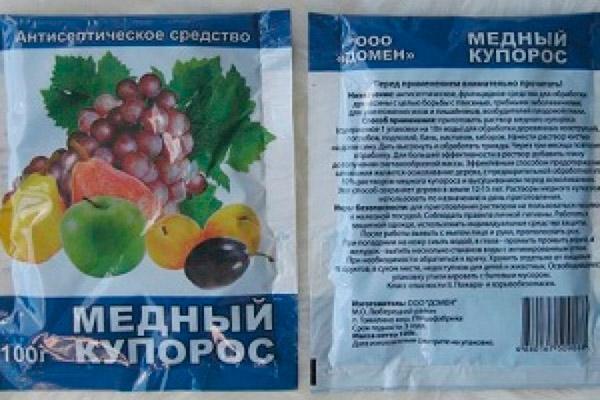
The first treatment is carried out before the trees begin to sap. They are sprayed with 700 grams of urea dissolved in 10 liters of water. After this treatment, overwintering beetles are destroyed. At the same time, the trees are sprayed with solutions to increase resistance to diseases and adverse weather conditions. When cracks appear in the bark, they are treated with a 1% copper sulfate solution.
Wintering
It's advisable to cover tree trunks with plastic film for the winter to protect them from rodents. Apples are winter-hardy, but young seedlings should be protected from freezing for the first two years. The soil around the tree should be mulched with compost, vermicompost, and chicken manure. Fertilizer is applied to the trunk area and covered with a 5 cm thick layer of straw. This "heat cushion" protects the apple trees from earthworms that consume the humus and straw.
The most popular varieties with descriptions
Below are the widely cultivated varieties of the Renet apple tree. They differ in fruit color, size, and tree height.
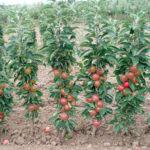
Columnar
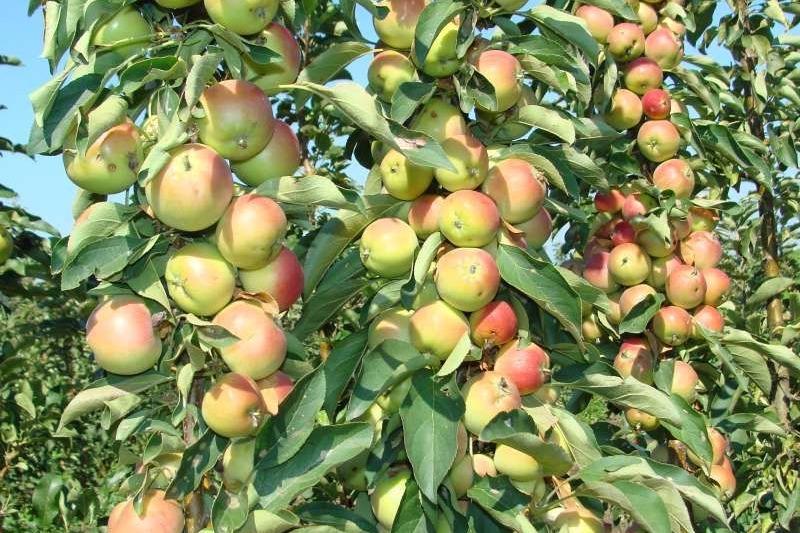
This variety is considered mid-season, producing a harvest in September. The small, juicy apples are rich red in color and have a tart flavor. With proper care, they yield up to 180 centners per hectare. The apple trees bear fruit consistently throughout the year, with no clear pattern.
Amber
This variety is known as Yantarka Altaiskaya. The trees begin bearing fruit in the fourth year; they are tall, frost-resistant, and live up to 15 years. Fruiting is consistent and the yield is high. The apples are small, weighing up to 10 grams. They are excellent for processing.
Dwarf
Dwarf apple trees live up to their name, producing abundant, bright red fruit. Among their shortcomings is their short lifespan, half that of other varieties. Due to the large number of ripening apples, the branches need to be staked.
Siberian
This variety was developed by the Novosibirsk Breeding Laboratory. The tree is compact, frost-resistant, and bears fruit abundantly. The apples reach 16-18 grams in weight and have a sweet and sour flavor. The yellow fruits ripen by August. They are used to make purees, compotes, and jams.
Purple
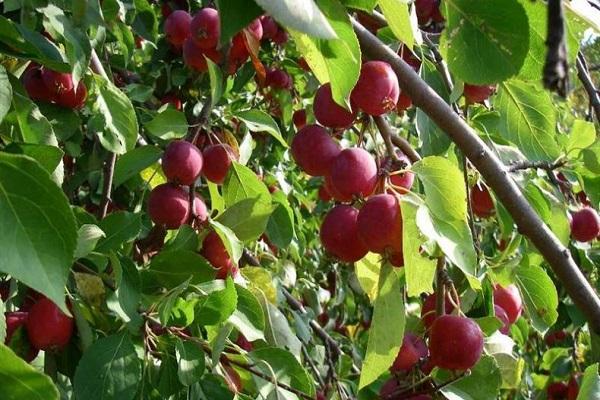
The Purple Apple tree is medium-sized, frost-resistant, and bears fruit early and abundantly in its second year. A single tree yields up to 100 kg of apples. This variety is rarely affected by scab. The onion-shaped fruits are a uniform purple hue. The average weight of an apple is 9 grams. The flesh is creamy, juicy, slightly tart, and medium-firm. The fruits ripen in early September and have a shelf life of up to 2 months.

Laletino
The trees are compact, with a rounded, sparse canopy. The advantage of this variety is the early ripening of the apples. The first fruits appear after 2-3 years. They are small, ribbed apples with scarlet skin. The flesh is soft pink and juicy. The fruits have a shelf life of 2 months; they are best eaten fresh. Gardeners consider the Laletino variety to be the most delicious.
Red
This variety bears fruit in the second year after planting. The harvest is consistent annually; the small fruits weighing approximately 10 g are typically used for processing. The apples are spherical and ribbed. They ripen by the end of August. The trees are winter-hardy, with a lifespan of approximately 8-10 years.
For a long time
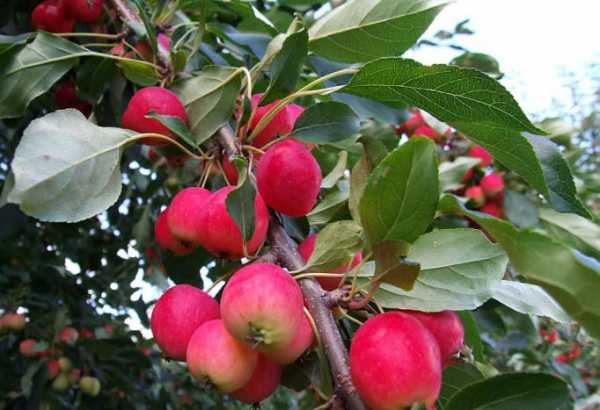
This apple variety bears fruit every 4-5 years, yielding approximately 25 kg per tree. The 13-gram fruits have a tart flavor, are aromatic, and the flesh is juicy. The apples are a deep purple. They ripen in September and store for about a month. They are widely used in compotes and juices. The trees are moderately frost-hardy and medium-sized.
Dobrynya
Ranetki apples are renowned for their high frost resistance and vigorous growth. The fruit ripens four years after planting; the trees withstand drought and frost, and are rarely affected by scab. A single plant can yield 35-50 kg of fruit. The apples have a sweet and sour flavor with a tart aftertaste. They ripen by September and can be stored without losing their flavor until February. The harvest can be frozen, as the apples retain their juiciness after thawing.
Golden
The trees grow up to 7 meters tall and bear fruit abundantly. The first harvest occurs after 3-4 years. A single tree produces 50 kg of apples weighing 10-15 grams. Depending on growing conditions, the harvest ripens by July and lasts until September. The fruits are yellow and have firm flesh. The apples have a tart, tart flavor and a short shelf life.
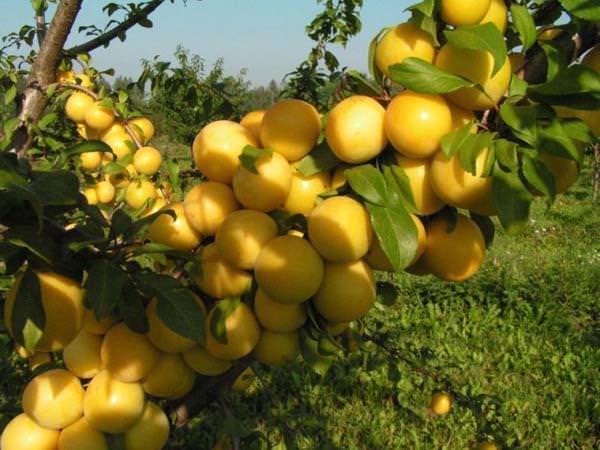
Ermolaeva
This semi-cultivated, regionalized variety was developed by P. Ermolaev in Krasnodar. Ripening occurs in late August or early September, three years after planting. The clump is pyramidal, moderately dense, and up to 5 meters tall. A single tree yields up to 10 kg of yellow apples with a blush and a slight bluish bloom. The fruit does not fall off, but is often susceptible to scab.
Honey
This variety is renowned for its tall, rounded trees that produce a consistent harvest by late summer. The fruits fall from the branches, making harvesting easy. They weigh approximately 40 grams. The apples are used in a variety of dishes and are also eaten fresh. The fruits do not store; they are consumed immediately or processed.
Wild Siberian
This apple variety was developed at the Novosibirsk Breeding Station. The trees are compact, productive, and frost-resistant. The apples are yellow, weighing up to 18 grams. By August, they develop a sweet and sour flavor.
Related posts:
 Description and varieties of the Sinap apple tree, planting and care rules
 Description of the Chudnoe apple variety, planting and caring for a dwarf tree
 Description of the 10 best columnar apple tree varieties for the Moscow region, planting and cultivation
 Description and varieties of Gala apple trees, planting and care in open ground
 Signs and treatment of apple tree cancer, varieties resistant to the disease
 Description and characteristics of Granny Smith apples, planting and care features
 Description and characteristics of the columnar apple tree President, planting and care
 Description and characteristics of the Orlovim apple variety, cultivation nuances
Of course, trees need to be cared for, but honestly, I've had so many of them growing in my village, I've never had to do anything with them, and they've just grown on their own. We've used them purely for eating. And what's more, not only did they retain their flavor in the frost, but it actually improved. And we never picked apples in August or September. We'd sometimes eat them straight from the trees at the beginning of winter.
Was it difficult to add photographs to the descriptions of the varieties?