
- History of the variety
- Habitat
- Characteristics of the Granny Smith apple tree
- Tree dimensions: crown and trunk
- Branching of the root system
- Flowering and pollination
- Fruiting
- When does it begin to bear fruit?
- Ripening time
- Yield per tree and annual growth
- Scope of application of fruits
- Calorie content and vitamins
- Beneficial properties
- Winter hardiness
- Disease resistance
- Pros and cons: is it worth planting in your garden?
- Planting and care technology
- Deadlines
- Landing algorithm
- Watering and fertilizing
- Pruning and crown shaping
- Caring for the tree trunk circle
- Preventive treatments
- Getting ready for winter
Consumers prefer winter Granny Smith apples for their pleasant sweet-tart flavor and health benefits. Their aesthetic appearance, rich green color, and excellent shelf life contribute to their widespread popularity.
History of the variety
Australians believe that the national brand, the Granny Smith apple variety, was first developed by New South Wales native Anna Smith. A passionate fruit breeder, the elderly woman developed a green-fruited apple tree by cross-pollinating a French crab apple and an Australian one.
Habitat
Granny Smith apple trees are grown worldwide. The variety, developed in Australia, has spread to New Zealand, England, the United States, and Canada. Apple orchards are also grown commercially in Turkey and Poland.
The crop is successfully grown by Russian gardeners in areas with mild climates—short winters without severe frosts and long, mild summers.
These areas include the Volga-Vyatka, Central Black Earth, and Central regions. However, the most abundant apple harvests are found in the North Caucasus, in the Krasnodar and Stavropol Krais, Crimea, Dagestan, and Chechnya.
Characteristics of the Granny Smith apple tree
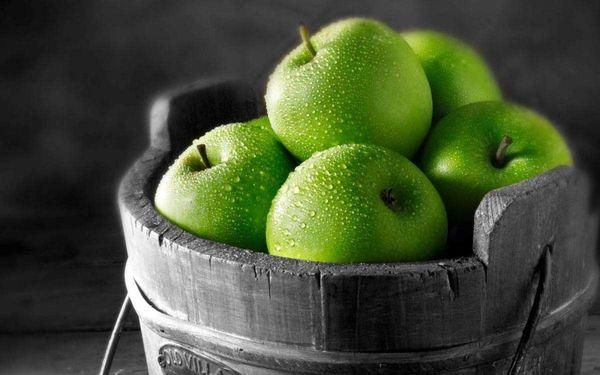
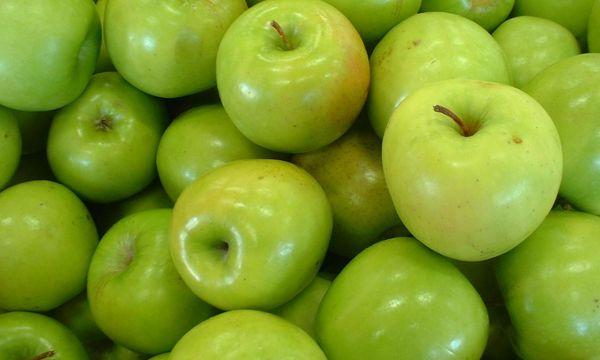
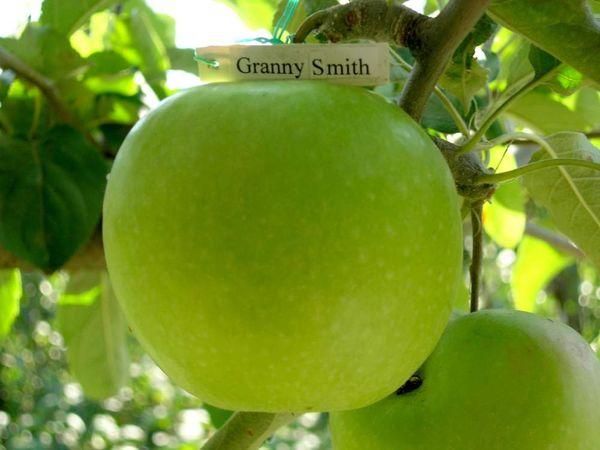
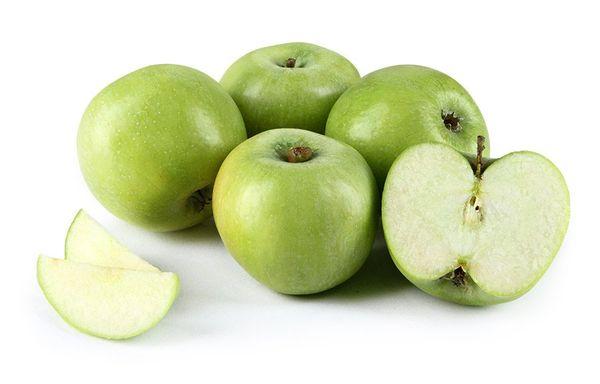
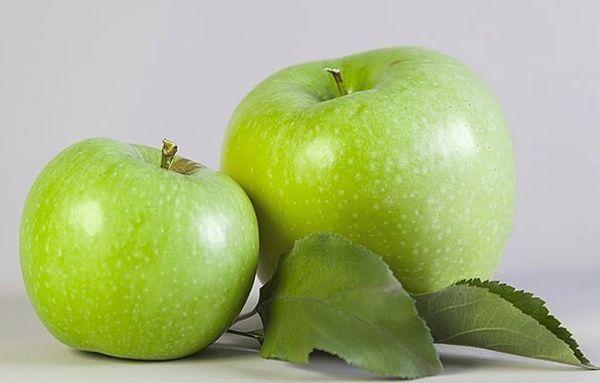
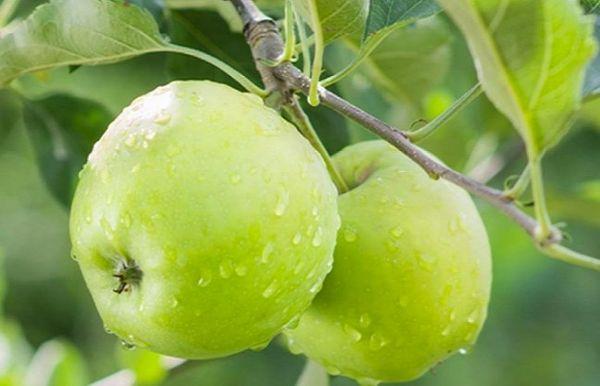
The Granny Smith apple variety is a late-winter variety with bright green fruit with red flecks. The average apple weight is 180–200 g, with a maximum of 300 g. The flesh is light green, juicy, and firm. Due to the high iron content, the fruit darkens when cut. The apples are similar in appearance to the Semerenko variety., but are distinguished by the absence of aroma and an ideal symmetrical round shape.
Tree dimensions: crown and trunk
The fruit tree grows to 2.5–3.5 m. Its crown is lush, spreading, and spherical. Regular sanitary and formative pruning is required for normal fruiting. Granny Smith apple tree grafting is most often done on dwarf varieties.
Semi-dwarf trees are easier to care for, including spraying and harvesting. The Granny Smith apple tree attracts gardeners with its decorative, well-maintained crown during flowering.
The fruit tree's bark is olive-green and smooth. The glossy green leaves are rounded, tapering toward the tip, and have a grayish tint on the underside.
Branching of the root system
The Granny Smith apple tree's roots are highly branched and located in the surface layers of the soil at a depth of 10–50 cm. The close proximity of groundwater does not pose a danger to fruit trees.
Flowering and pollination
In the southern regions, the flowering of 5-centimeter flowers, colored in pale pink tones, begins at the end of April, in the central regions - in May.
To increase the yield, simultaneously blooming pollinators such as the Elise, Delicious, and Pink Lady apple trees are planted next to the Granny Smith variety.
Fruiting
Semi-dwarf apple trees aren't known for their high yields, but they begin bearing fruit earlier than vigorous varieties. The fruit grows large, juicy, and has a dessert-like flavor.
When does it begin to bear fruit?
Individual apples are harvested starting in the second year. However, fruit trees reach their peak yield by the fifth year.
Ripening time
Granny Smith apples ripen in late September or early October. They are best eaten a month later. By this time, the fruit has acquired a rich, sweet and sour flavor.
Yield per tree and annual growth
The Granny Smith apple tree is a medium-yielding variety. A single tree produces 20–30 kg of fruit in its fifth to seventh year. From the second to fifth year, yield increases slightly. Fruiting declines beginning in the eighth year. The tree lives for 10–13 years.
Scope of application of fruits
Granny Smith apples are used as a filling for baked goods, in salads, and in sauces. The fruit is also baked and made into compotes, preserves, and jams.
Due to their low sugar content, green fruits are included in the diet of diabetics who want to lose excess weight.
Decoctions of apple peels are used in folk medicine to relieve constipation and laryngitis.
In cosmetology, this same potion or store-bought creams with added apple extract are used to improve skin tone and combat the first wrinkles.
A homemade mask made from grated fresh apple saturates the skin with moisture and beneficial substances.
Calorie content and vitamins
Granny Smith apples are a dietary product with an energy value of 48 kcal. The fruit's juiciness stems from the fact that water makes up 86% of its mass.
The nutritional value of apples is low: 4% protein and 4% fat, 9.7% carbohydrates.
Of interest is the vitamin and mineral complex, including vitamins C, E, A, PP, and group B.
Two green Granny Smith apples are enough to satisfy the body's daily requirement for ascorbic acid.
The fruits are rich in pectin, fiber, iron, manganese, and organic acids. They also contain iodine (seeds), zinc, and copper.
Beneficial properties
The beneficial properties of the winter green apples of the Granny Smith variety include:
- low calorie content, which allows the product to be used in dietetics;
- fiber in the composition, which improves intestinal peristalsis;
- inclusion of apples in complex therapy for anemia;
- increasing the body's immune defense;
- cleaning the oral cavity, strengthening the gums;
- hypoallergenic, can be used as the first complementary food for infants;
- beneficial effect on skin, hair, nails;
- lowering cholesterol, preventing atherosclerosis and heart failure;
- saturating the body with vitamins, minerals, organic acids;
- use in the diet of diabetics.
Green apples improve brain function thanks to the substance quercetin. Apples are known for their antioxidant properties, which include binding and scavenging free radicals.
Winter hardiness
The Granny Smith variety is recommended for growing in regions with mild climates. It does not tolerate prolonged frosts and requires winter protection.
Disease resistance
The apple tree is resistant to scab and powdery mildew, but is susceptible to rust, fire blight, and powdery mildew caused by the fungus Podosphaera leucotricha.
Pros and cons: is it worth planting in your garden?
Semi-dwarf apple trees, including Granny Smith, are no exception, and are sensitive to weather conditions. Insufficient warmth and light, as well as frosty winters, can negatively affect the flavor and shape of the fruit.
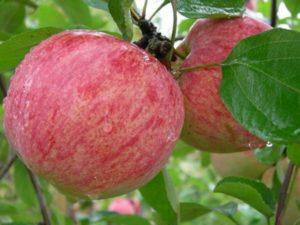
If the climate conditions are suitable for the crop and the plant is properly cared for, then the stable yield and harmony of acids and sugars in the apples will not disappoint.
The Granny Smith apple variety has average frost resistance, moderate drought tolerance, and is slightly susceptible to scab and powdery mildew. It is also susceptible to fire blight, powdery mildew, and rust.
In addition to their dessert flavor and marketable appearance, Granny Smith apples boast a long shelf life and excellent shelf life. The fruit is hypoallergenic and retains its appearance and flavor during long-distance transportation.
Planting and care technology
Selecting the optimal timing, preparing the planting hole, and following planting rules are important for the future development of the crop.
Deadlines
The Granny Smith apple tree roots well if it is planted two months after the end of winter frosts or in the fall 60 days before the onset of cold weather.
A seedling purchased in a container is planted in spring or fall. Bare-root seedlings are recommended to be planted exclusively in spring.
Landing algorithm
Two-year-old Granny Smith apple trees purchased from specialized nurseries thrive best. Before planting, the exposed roots are soaked in water and briefly dipped in a clay slurry.
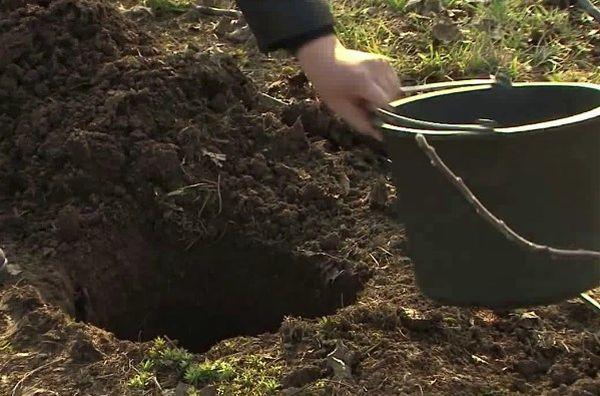
Prepare a hole 100 cm in diameter and 50 cm deep at least a month in advance. Allow the soil to settle and compact. Set the topsoil aside and mix with two buckets of compost, 100 g of superphosphate, and 1 tablespoon of potassium sulfate.
Landing algorithm:
- a stake is driven in the center for support;
- a small mound is formed at the bottom, on which the roots of the seedling are spread out;
- to ensure that the roots adhere tightly to the substrate, alternate partial sprinkling with prepared fertilized soil mixture with watering;
- the soil is compacted from above, the apple tree is tied to a support, and a circle around the trunk is formed;
- At the end of the procedure, the root collar should be 2–4 cm above the surface.
Compacting the soil around the seedling is not recommended, as it disrupts soil aeration. When planting multiple trees, maintain a 4-meter distance between them within and between rows.
Watering and fertilizing
Regular watering of the Granny Smith apple tree is important in the first year of life, during dry summers, regardless of the age of the tree, and in southern regions with little snow in winter.
Until the tree is five years old, pour 10 liters of water under each apple tree; if the tree is older, pour 20 liters. Water the soil around the crown diameter, not the trunk circle, as small root shoots grow to that size.
After the snow melts, the plant is fertilized with nitroammophoska by scattering the substance around the trunk, pre-moistened with warm water. A young tree requires 0.5 tablespoons of fertilizer, while a plant older than 5 years requires 1 tablespoon.
The second feeding is done during the fruit tree's flowering period. The plant is watered with a solution of mullein or chicken manure. Alternatively, a complex mineral fertilizer can be used. Under each Granny Smith apple tree, apply 15–30 liters of a solution consisting of the following components per 10 liters of water:
- urea - 500 g;
- potassium sulfate - 60 g;
- superphosphate - 10 g.
Towards the end of flowering, the apple tree is sprayed with a urea solution prepared at the rate of half a kilogram of urea per bucket of water.

Pruning and crown shaping
Sanitary pruning of the Granny Smith apple tree is carried out in the spring before sap flow and in the fall after leaf fall. Old, diseased, and misdirected branches are removed. The crown should be loosened to ensure adequate ventilation.
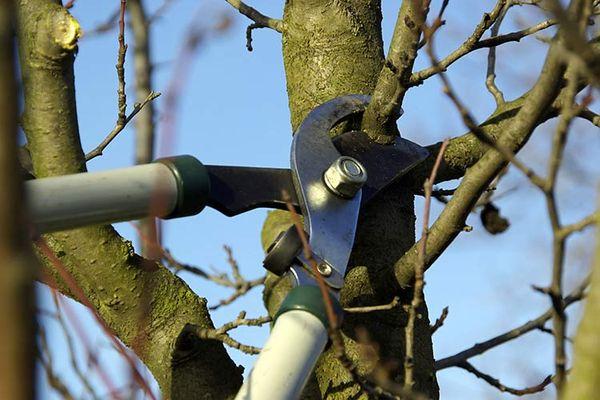
Formative pruning is done during the first 4 years after planting the seedling:
- First year
The standard is formed by cutting the trunk at a height of 60–70 cm.
- Second year
Leave 3 strong healthy branches, evenly spaced from each other – the skeletal branches of the first tier.
- Third year
The second-order shoots that have grown on the remaining branches are pruned by a third, and the conductor is shortened by 20 cm. The second tier is formed, leaving 3-4 branches directed in opposite directions and located 40 cm above the first tier.
- Fourth year
Young shoots growing from the stem are removed inward and crosswise, and the branches of the first and second tiers are shortened by half a meter. The central stem of the apple tree is pruned so that the lateral branches of the second tier are 25 cm below the conductor.
In subsequent years, maintain the shape of the crown by removing shoots and trimming lateral branches.
Caring for the tree trunk circle
After each watering or rain, the area around the Granny Smith apple tree trunk is loosened and mulched with humus and compost.
Coniferous sawdust and peat, which increase soil acidity, should not be used as mulch.
In addition to loosening and mulching, weeds are regularly removed. This preserves the soil's nutritional value and protects the fruit tree from pests and diseases.
Preventive treatments
The first preventative treatment for the Granny Smith apple tree is done after spring pruning, when the buds are dormant. Spraying the tree and the surrounding area with copper sulfate, Hom, and Profilaktin eliminates overwintering insects and fungal spores.
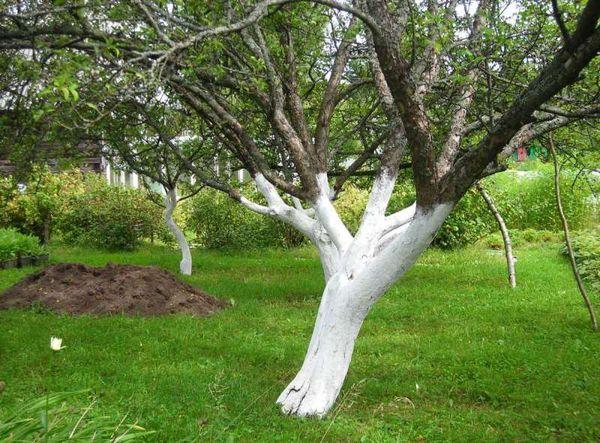
Early March whitewashing of the tree trunk protects the bark from cracking due to temperature changes, pests and diseases.
When buds have burst but leaves have not yet opened, treat the plant with Aktara, Tanrek, Biotlin, and Polihom. At the same time, place sticky traps on the trunk and pheromone-filled houses on the branches.
In April, before the flower buds open, use the following preparations: Karate, Skor, Horus.
The fourth final preventive treatment with fungicides and insecticides (Shar Pei, Aliot, Kinmiks) is carried out after flowering when the ovary is formed.
Getting ready for winter
When preparing the Granny Smith apple tree for winter, the following steps are taken:
- clear the soil of fallen leaves, broken branches, and weeds;
- water the crop abundantly;
- whiten the trunk and lower branches;
- loosen and mulch the area around the trunk with straw, bark, humus or compost.
To protect against rodents, the apple tree trunk is tied with spruce branches, and a frame of chain-link fencing is built around it.
Related posts:
 Signs and treatment of apple tree cancer, varieties resistant to the disease
 Description of the Chudnoe apple variety, planting and caring for a dwarf tree
 Description and varieties of the Sinap apple tree, planting and care rules
 Description and characteristics of the columnar apple tree President, planting and care
 Description and planting of the Dream apple tree variety, care and propagation
 Description of the ornamental Nedzvetsky apple tree, cultivation technology
 Description and varieties of Gala apple trees, planting and care in open ground
 Description and subtleties of growing the Sverdlovsk Beauty apple tree variety