
- The history of the Apple Savior apple tree
- Growing regions
- Pros and cons of the variety
- Characteristics and description
- Tree dimensions
- Annual growth
- Root system
- Lifespan of a tree
- Fruiting
- Flowering and pollinators
- Ripening period and harvesting of fruits
- Yield and tasting assessment
- Winter hardiness
- Disease resistance
- Specifics of planting work
- Deadlines
- Selecting a site
- Soil cultivation and fertilization
- Apple tree planting scheme
- Organization of competent care
- Watering mode
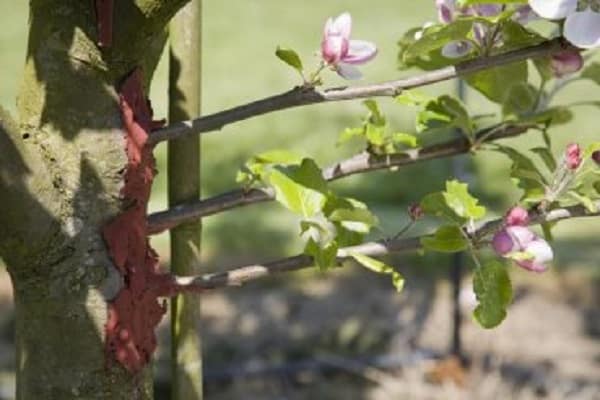
- Crown formation
- Fertilization
- Seasonal processing
- Shelter for the winter
- Methods of reproduction
- Gardeners' reviews
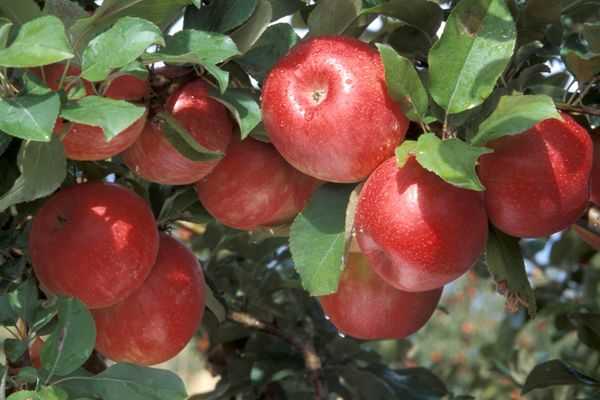
The Yablochny Spas apple variety is considered one of the most prominent apples bred in Russia. Its name derives from the Orthodox holiday celebrated on August 19th. Gardeners believe that the first fruits ripen on this day. The trees are highly resistant to cold and disease. The variety also boasts high yields and large apples. The juicy fruits are yellow with red stripes.
The history of the Apple Savior apple tree
This variety was bred in 2004 using the Papirovka tetraploidnaya and Redfree varieties. The apple orchard where it was grown was located in Krasnodar. The breeding team was led by E. N. Sedov. In 2008, the variety was accepted into the state register.
Growing regions
Yablochny Spas is a summer variety. It is grown in the Central and Central Black Earth regions. The apple tree is still undergoing breeding to be suitable for cultivation in colder regions.
Pros and cons of the variety
The advantages of this variety include:
- high resistance to diseases and parasites;
- resistance to cold and heat;
- early fruit bearing;
- stable and high yield.
Cons:
- careful shaping of the crown and the tree itself is required;
- Cannot pollinate on its own. Pollinating varieties are required.
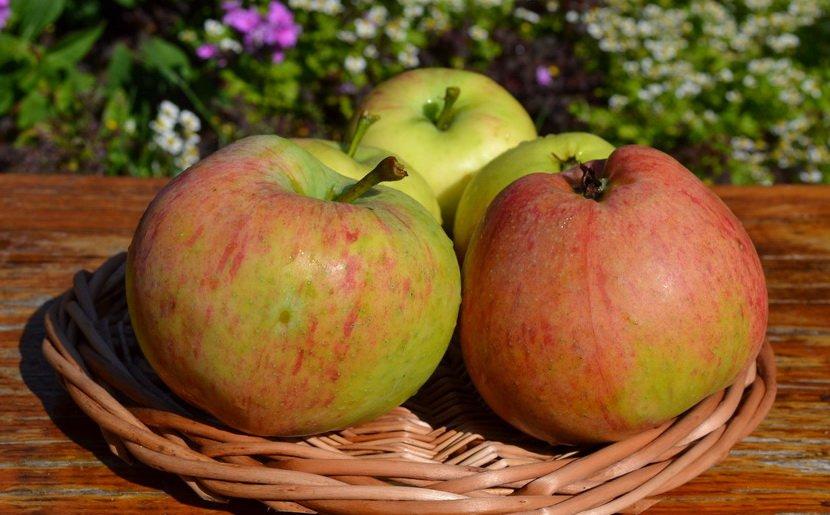
Characteristics and description
This species is triploid (has three complete pairs of chromosomes) and has the Vf gene.
Important! This provides protection against most diseases and increases cold tolerance. The tree has smooth brown bark. The apple tree's leaves are green and slightly fuzzed.
Tree dimensions
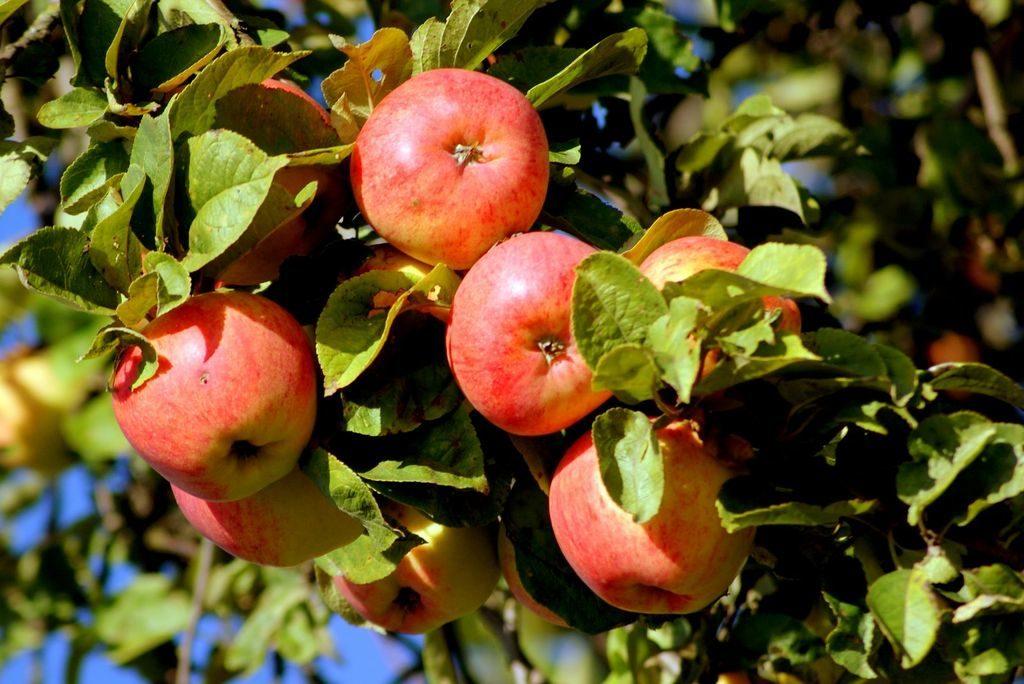
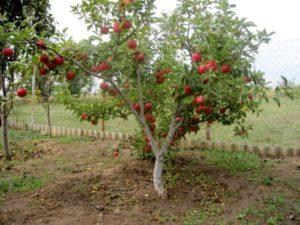
The apple tree can grow up to 16 meters tall. Therefore, it should be limited to 5-7 meters to ensure a higher yield. The apple tree's crown can reach 4-4.5 meters in diameter.
Annual growth
If the seedling receives the required amount of moisture and fertilizer, it will grow between 35 and 65 centimeters per year. If the tree receives too much nutrition, it may grow faster. However, this will negatively impact its health and ability to adapt to cold temperatures.

Root system
The apple tree has a well-developed root system. A thick shoot penetrates deep into the soil and grows with smaller roots.
Lifespan of a tree
Since the variety was developed only 15 years ago, it's difficult to estimate its exact lifespan. Breeders and agronomists estimate the tree will bear fruit for over 60 years.
Fruiting
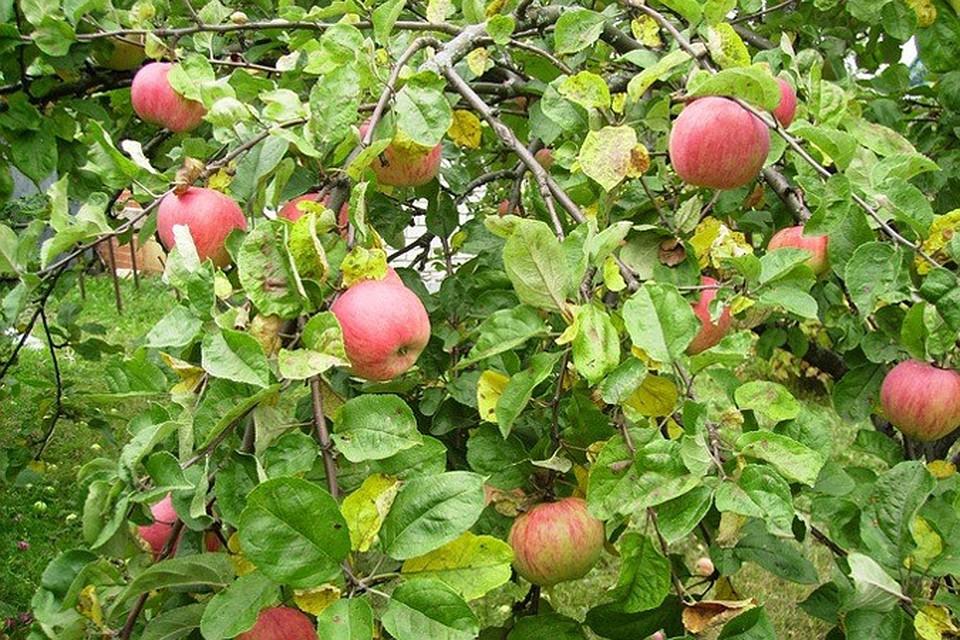
This variety is early-bearing. The first fruits can be seen within two years of planting.
Flowering and pollinators
The apple tree is self-fertile, but requires additional varieties for pollination. Several common varieties with two pairs of chromosomes that bloom at the same time as the tree should be planted near the tree. The flowers are pollinated by bees.
Ripening period and harvesting of fruits
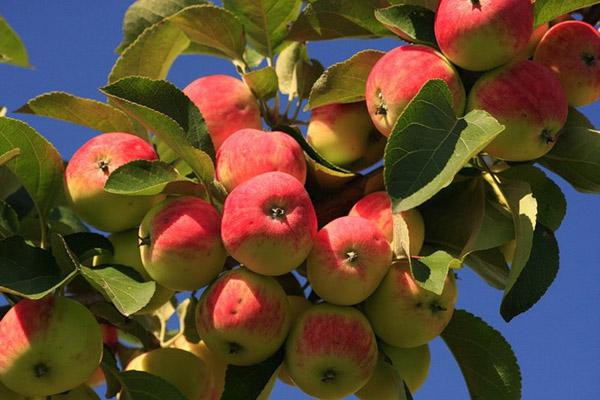
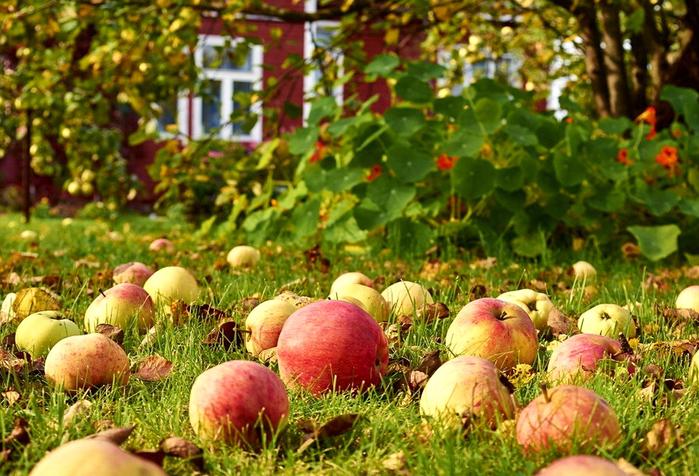
Since this is a summer variety, the fruit ripens between August 8 and 17. After picking, apples should be stored in wooden crates. The room temperature should be maintained at up to 4°C (39°F). It should have good ventilation and low humidity. The fruit does not tolerate sudden temperature changes, as this can cause them to spoil. During storage, it's a good idea to check the apples periodically for rot.
Yield and tasting assessment
With proper care, a tree can yield up to 60 kilograms of apples per year. A hectare can also yield up to 16 tons of fruit.
Winter hardiness
Apple Savior is resistant to temperatures down to -25°C. Gardeners have noted the ability to reverse frost damage to improve yields. This also contributes to the tree's longevity and its ability to grow in colder conditions.
Disease resistance
The presence of the Vf gene and three pairs of chromosomes in this variety gives it complete immunity to scab. The apple tree also has enhanced protection against:
- powdery mildew;
- rust;
- brown spot;
- monoliosis;
- ticks;
- codling moths;
- psyllids;
- flower beetle.
This means it doesn't need to be treated with chemicals, reducing the level of contamination of the fruit itself and the environment around the tree.
Specifics of planting work
When planting, carefully select seedlings. Choose specimens that are 1-2 years old. They should have no dry, tangled, or rotted roots. They should also be undamaged and adequately moist. The trunk should have one main shoot and several additional shoots. Healthy leaves should show no signs of disease or pests. Their color can be bright or dark green. The leaves should be uniform and free of spots.
Deadlines
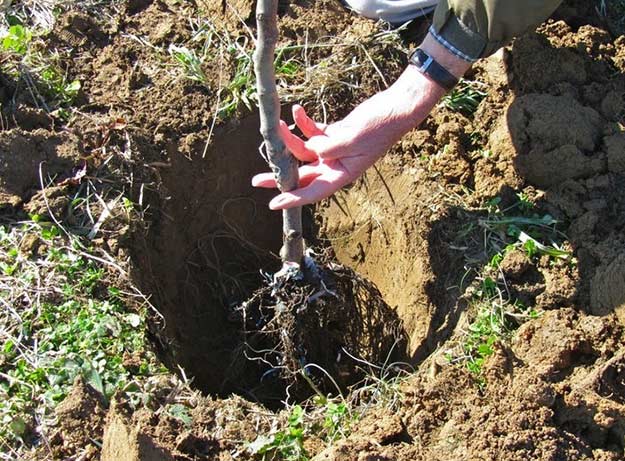
Seedlings should be planted in the fall. They can also be planted in the spring after the snow melts. Then, allow the soil to warm to 8–11°C and thaw to a depth of 1–1.5 meters. Gardeners have noticed that trees planted in the fall take root better and have a better chance of surviving the winter.
Selecting a site
Choose a site on a small hill for planting. The site should be well-lit and have a soil pH of 5 to 7. When planting, consider the location of the groundwater table. It should be more than 1.5 meters below the surface. The site should be protected from flooding and drafts.
Soil cultivation and fertilization
In the fall, before planting, thoroughly treat the entire area with a general herbicide. After weeding, plow or dig the soil to a depth of 30 cm. Add the following fertilizers to the soil:
- humus or compost from 11 to 13 kilograms per square meter;
- double superphosphate – 20 grams per square meter;
- Potassium chloride – 20 grams per square meter.
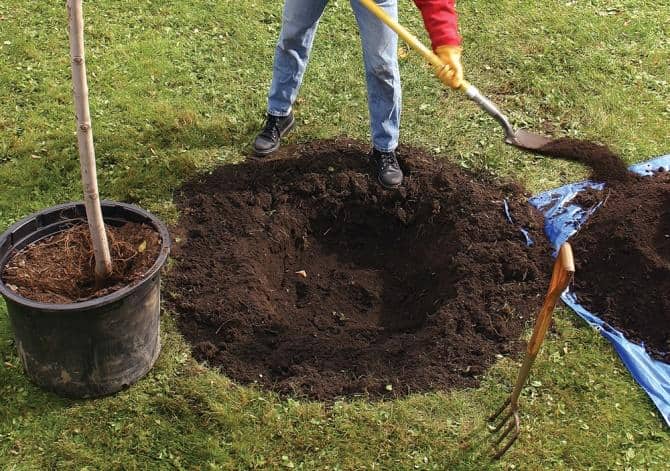
Apple tree planting scheme
To prevent trees from interfering with each other as they grow, the distance between them should be at least 1.5 meters. The distance between rows should be up to 5 meters.
Organization of competent care
To improve pollination of the Apple Savior, it's worth planting 3-4 diploid varieties in the same area. Mulching around the trunk and loosening the soil are recommended.
Watering mode
A newly planted seedling needs 2 buckets of water to promote growth. Mature trees require timely watering:
- before the buds begin to open;
- when the apple tree begins to blossom;
- when fruit is setting;
- when the fruits begin to ripen;
- before the leaves fall.
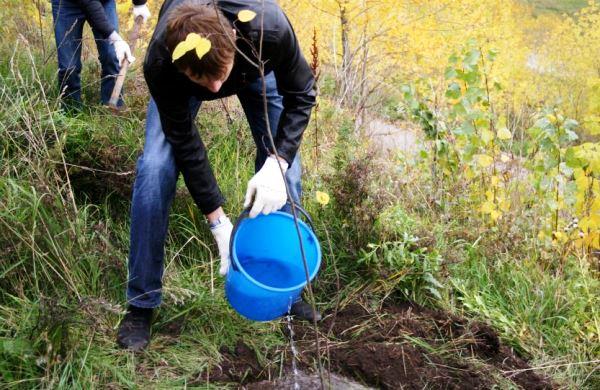
Apple trees should be watered at least four times a month. The amount of water needed varies depending on the tree's age:
- at the age of 1 and 2 years, 20-40 liters of water are needed per square meter of land around the trunk;
- at the age of 3 to 5, 50-60 liters of water are required per square meter of land around the trunk;
- For plants older than 6 years, 70-90 liters of water are needed per square meter of land around the trunk.
It's best to use warm rainwater. Pour it into a depression made around the trunk.
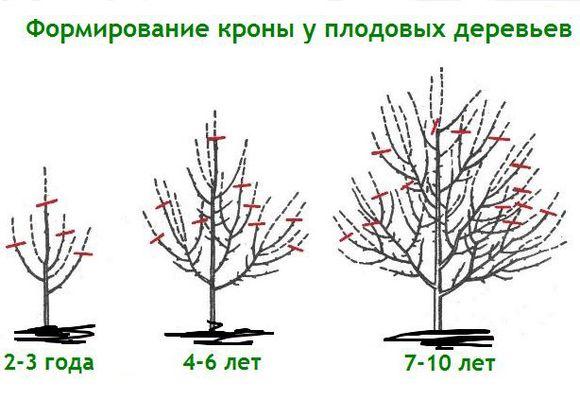
Crown formation
For apple trees, two types of pruning should be carried out:
- sanitary - for removing dry, overgrown or incorrectly growing branches;
- formative - to thin out the crown and grow a tree of the desired height and width.
Fertilization
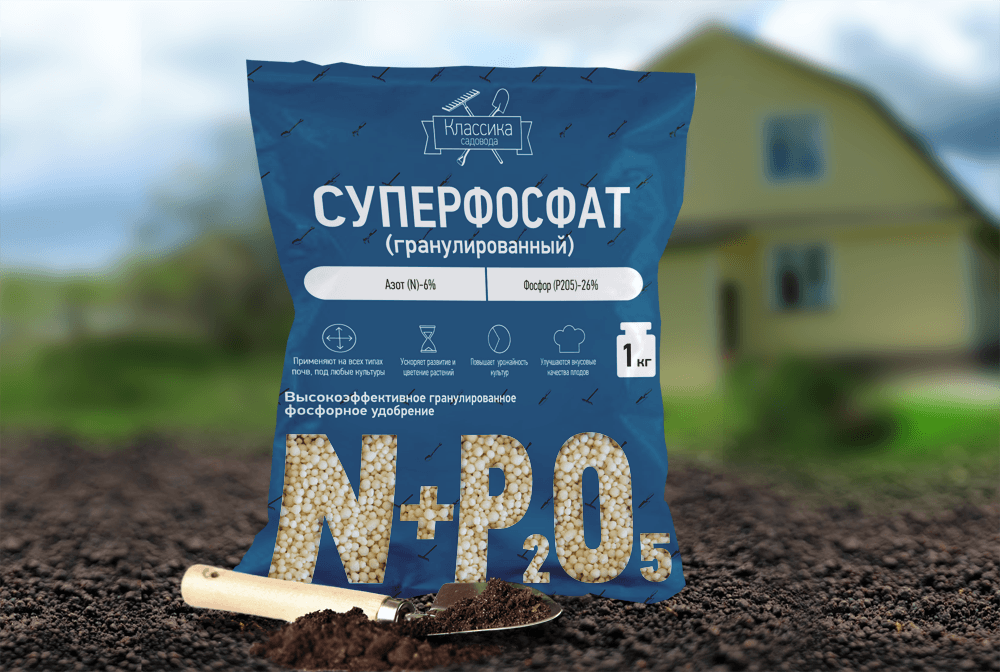
Seedlings shouldn't be fertilized until they're three years old. After that, fertilize three times per season:
- In spring, 50 grams of ammonium nitrate per tree should be added to the soil.
- In summer, when the fruits begin to ripen, you need to add 35 grams of ammonium nitrate to the soil per 1 apple tree;
- Towards the end of autumn, you need to feed the tree with 80 grams of double superphosphate and 70 grams of potassium chloride.
Apple trees should be fertilized in spring and summer after watering, and in autumn – while the soil is loosening.
Seasonal processing
In addition to proper watering and pruning, it's worth treating the trees with an aphid and scale control agent. If other diseases or insects are present, treat them with a fungicide or insecticide.
Shelter for the winter
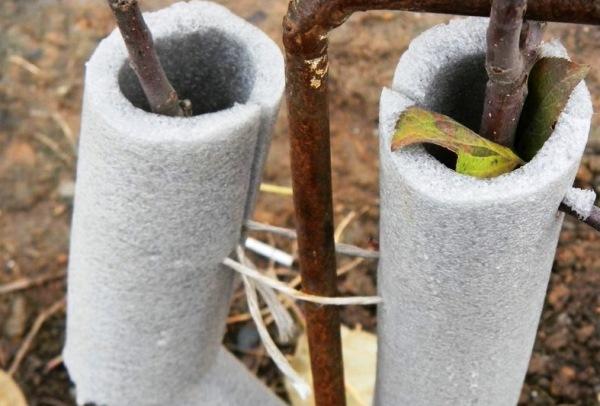
Apple Savior seedlings should be covered when temperatures drop below -15°C. Wrap the trunk with an insulating material that allows moisture and air to pass through. For older trees, a similar procedure is required when temperatures drop below -20°C to -25°C.
Methods of reproduction
This variety can be propagated in 3 ways:
- Using cuttings. Prepare them a few hours before planting by soaking them in a root growth stimulant. Then, plant the cuttings in the soil before roots develop. Then dig them up and replant.
- By grafting. This requires a branch no more than one year old, with 10-15 buds and a thickness of up to 10 millimeters.
- By seed. This is the most time-consuming method of propagation. This method does not preserve the characteristics of the parent tree.
Gardeners' reviews
Svetlana, Moscow:
"We planted it in our garden. We tasted the first fruits after just two years. The tree is already eight years old and produces a large harvest."
Vladimir, Voronezh:
"Our tree has been growing for five years. It hasn't been treated with chemicals. It bears fruit regularly and abundantly."
Irina, Tver:
"We bought a seedling a year ago. It hasn't borne fruit yet, but it's growing without a problem. It survived the winter well. We expect fruit next year."
Related posts:
 Description and cultivation of the 15 best cherry plum varieties for the Moscow region, planting and care rules
 Methods for planting and propagating cherries at home
 Descriptions of the 20 best cherry varieties for the Moscow region, their planting and care
 Peach tree care and agricultural secrets, pest control
 How to plant walnuts, care for them, and grow them at home
 Characteristics and description of the Shokoladnitsa cherry variety, pollinators and fruiting
 Conditions for growing mandarin at home and rules for caring for the tree
 Description and characteristics of the 27 best plum varieties for the Urals, planting and care