
- How the dwarf apple tree variety was bred
- Advantages and disadvantages
- Characteristics and description of low-growing crops
- Height and branching of the crown
- Features of the root system
- Flowering and pollinators
- Yield per tree
- How to plant
- Suitable location and required soil composition
- Timing of planting operations
- Schemes of placement and technology of planting seedlings
- How to care for a dwarf apple tree
- Watering
- Fertilizer
- Insect and disease control
- Formative and sanitary pruning
- Wintering
- Propagation of dwarf apple trees
- Horizontal layering
- By budding
- Root cuttings
- Lignified and green cuttings
- The best varieties of dwarf apple trees
- For the Central Belt of Russia
- For the Moscow region
- For the Nizhny Novgorod region
- For the Moscow region
- For Siberia
- New breeding products
Dwarf or low-growing apple trees are increasingly gaining ground in garden plots every year. Tall trees are gradually becoming a thing of the past. Dwarf varieties offer several advantages: the first apple harvest can be harvested as early as the third year, and they are much easier to care for. However, low-growing apple trees do not tolerate frosty winters well, as their roots are close to the soil surface. Before wintering, apple trees need to be insulated.
How the dwarf apple tree variety was bred
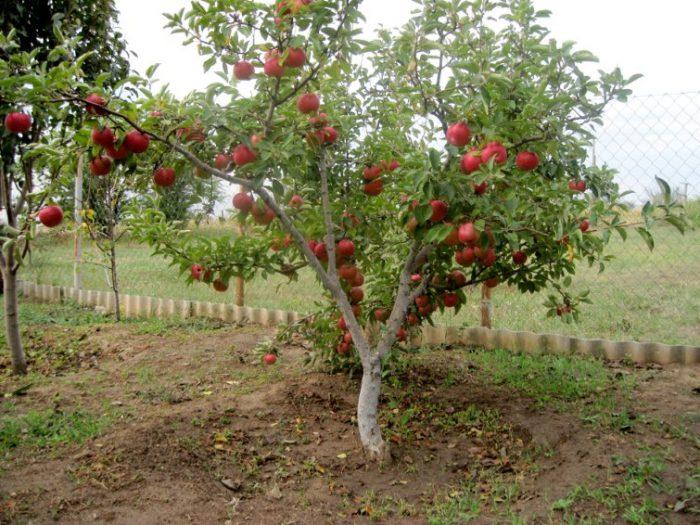
Dwarf apple trees grow up to 3 meters tall. The yield of these low-growing fruit trees is no less than that of their taller relatives. However, caring for smaller trees is much easier.
Dwarf apple trees are obtained as a result of grafting Common cultivated varieties are grown on clonal rootstocks. The fruit of rootstock trees is inedible. However, clonal rootstocks offer a number of beneficial properties: dwarfing, cold resistance, high yield, early maturity, and compatibility with cultivated varieties. The Paradizku and Dusen apple trees are used as dwarf rootstocks.
During the Soviet era, dwarf apple trees weren't grown on an industrial scale. Back then, orchards were dominated by tall fruit trees.
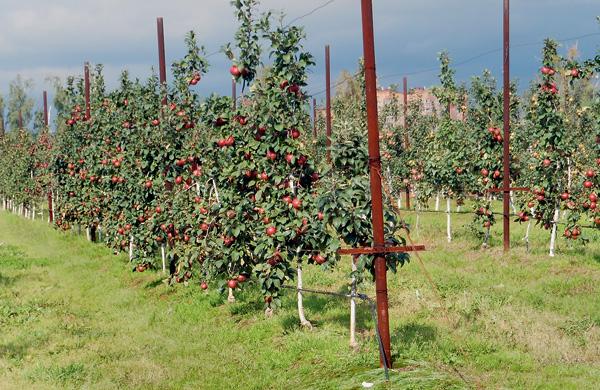
In the West, dwarf apple trees have been cultivated for nearly 100 years. After all, low-growing trees can be planted close together, bearing fruit early and abundantly (up to 30 tons per hectare), and after 10 years, apple tree plantings can be renewed. Young apple trees produce fruit within three years. After the collapse of the USSR, dwarf apple growing experienced a renaissance in Russia. A huge number of new varieties of low-growing apple trees have been developed.
Advantages and disadvantages
Compared to tall trees, dwarf apple trees offer several advantages. The popularity of dwarf varieties is growing every year.
Advantages of dwarf apple trees:
- early fruiting (three years after planting);
- high yield rates;
- ease of maintenance (the ability to prune, harvest, and destroy insect pests at human height);
- planting trees at close distances from each other, saving space;
- larger fruit size.
Disadvantages of dwarf trees:
- need regular watering, as the roots are located close to the soil surface;
- may tilt during a strong storm;
- For the winter, trees on dwarf rootstocks need to be insulated.
Characteristics and description of low-growing crops
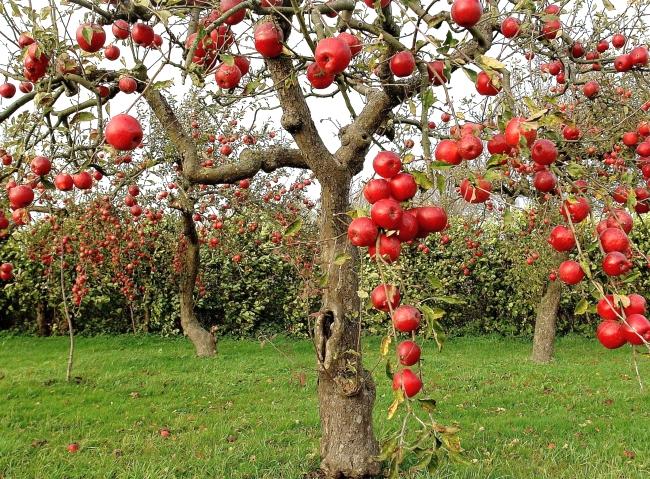
A dwarf apple tree is created by grafting a varietal scion onto a clonal dwarf rootstock. The resulting low-growing tree retains all the characteristics of the donor varietal except height. Its crown shape resembles that of a tall tree.
Height and branching of the crown
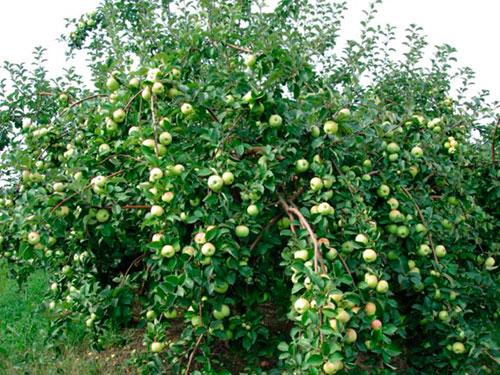
The dwarf apple tree grows to 2.5-3 meters in height. Its crown shape is similar to that of a typical tall apple tree. Skeletal branches extend alternately from the trunk at acute or right angles, laterally and upward. The crown is spherical, spreading, and branched, requiring pruning and shaping. The branches droop downward under the weight of the fruit. The leaves are oval, pointed, serrated at the edges, and have long petioles. The bark is light brown, with numerous lenticels and streaks.
Features of the root system
Dwarf apple trees have a shallow, fibrous root system. The roots are highly branched, extending only 0.60-1 meter deep. Dwarf trees are planted in areas where the groundwater is at a depth of 1.5 meters. The roots of dwarf trees cannot reach them. However, the shallow root system makes the tree fragile.
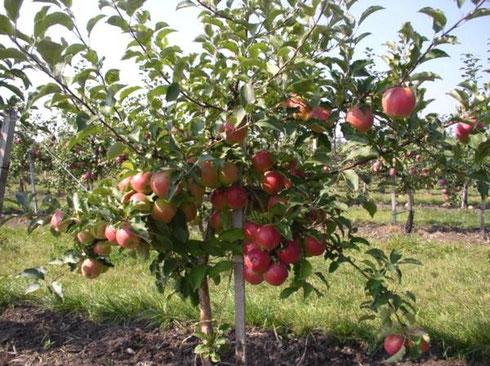
It's a good idea to provide dwarf apple trees with support to withstand strong winds. Before wintering, the area around the tree trunk can be mulched with peat humus to protect the roots near the surface from frost.
Flowering and pollinators
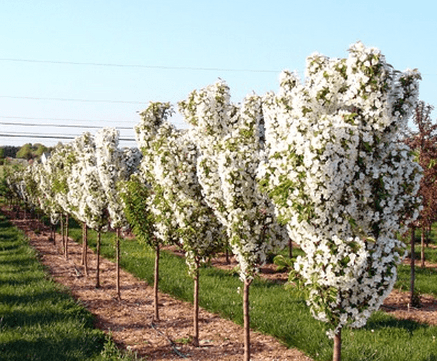
Dwarf apple trees are often self-fertile, but to increase their yield, they require pollen from other apple trees. Therefore, at least six different apple varieties are planted in the orchard. For pollination, apple trees of related species that bloom at the same time are selected. The trees are planted close to each other. Pollination occurs through insects. Apple trees bloom in April-May.
Yield per tree
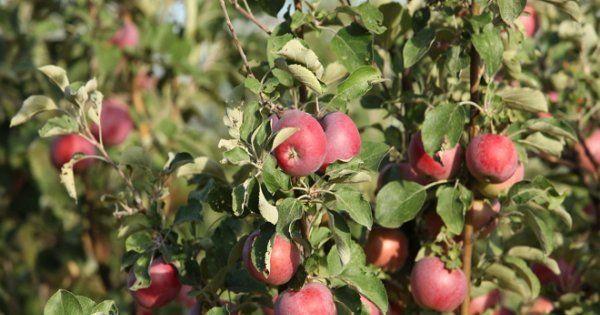
Dwarf apple trees can bear fruit for 15-25 years. Almost 60 percent of the nutrients are used to produce fruit, and only 40 percent is used for vegetative growth. A mature tree produces 35-70 kilograms of apples. Fruiting begins three years after planting.
How to plant
It's difficult to grow a dwarf variety yourself; it's better to buy a pre-grown tree. Before planting an apple tree, you need to choose the right seedling. A young tree, 1-2 years old, should not have dried-out or diseased roots. Dried roots do not regrow.
In addition, you need to be able to distinguish a grafted dwarf apple tree seedling from a wild one.
A grafted young tree has a knee-shaped protrusion where the root meets the trunk (the root collar). A fused cut is visible above the grafted bud. A two-year-old "dwarf" tree should be 55 centimeters tall, with a branched trunk and only 4-7 branches. Large buds should be present at the ends of the shoots.
The root of a dwarf apple tree is fibrous, consisting of many small, flexible rootlets. A tall wild apple tree, on the other hand, has many sharp branches, a straight trunk, no large buds, and a taproot. It's best to purchase planting material from garden centers or nurseries.
Suitable location and required soil composition
Low-growing dwarf trees thrive in elevated areas, lowlands, or slopes. The site should be well-lit and sheltered from the wind.
Dwarf apple trees can be planted in areas with close groundwater levels, as the majority of the roots of low-growing trees are located in the upper soil layer.
The soil should be neutral or slightly acidic. Apple trees are planted in loamy or sandy loam soils. Excessively clayey soil should be diluted with peat and sand. To do this, dig a deep hole (1.65 meters deep and 1 meter wide), remove the soil, and mix it with humus (1 bucket), peat, sand, leaf mold, or garden soil in equal proportions. If the soil isn't lightened, the roots won't be able to penetrate deep in heavy clay soil, which will lead to the tree's death. Prepare the planting hole a week before planting.
Timing of planting operations
Dwarf apple trees can be planted in the fall, up until mid-October. However, it's best to plant them in the spring. In mid-April, 1-2 weeks after the snow melts and a few days before bud break, young seedlings are planted in the ground.
Schemes of placement and technology of planting seedlings
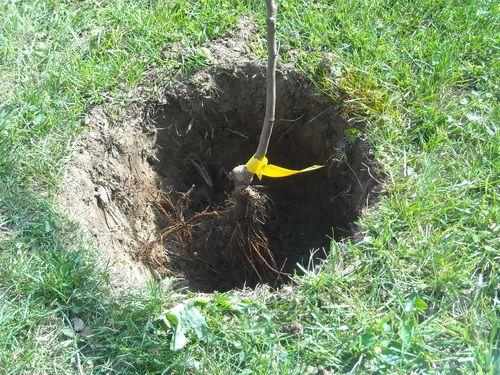
The planting hole shouldn't be too deep, but it should be wide. The optimal size is 60 centimeters deep and 55 centimeters wide. The grafting site should be 8 centimeters above the ground surface. It's important to keep in mind that a freshly prepared hole will settle. It's best to dig the hole in advance.
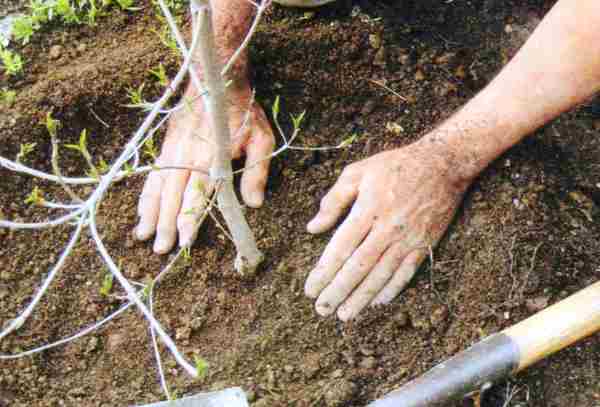
Place a mound of fertile soil at the bottom of the hole. Then place the seedling in the hole and spread out the roots. Add fertilized soil on top and compact it lightly. After planting, water the seedling with two buckets of water.
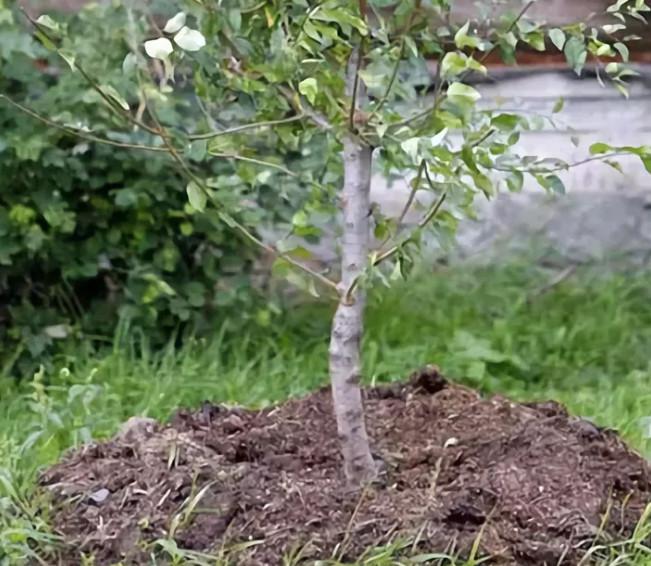
A planted one-year-old tree can be pruned to a height of 0.90 meters above ground level. The cut is made diagonally on the opposite side of the bud. After this pruning, lateral shoots will appear in the summer. Some of these can be left as scaffold branches for the following season. If several apple trees are being planted at the same time, leave some space between them. The distance from the adjacent tree should be 1.65 meters.
How to care for a dwarf apple tree
Dwarf apple trees bloom the following season after planting. It's advisable to remove some of the flowers in the first few years to allow nutrients to be used for crown formation. Planting and caring for dwarf apple trees is much easier than for taller trees. When growing dwarf apple trees, certain guidelines must be followed.
Watering
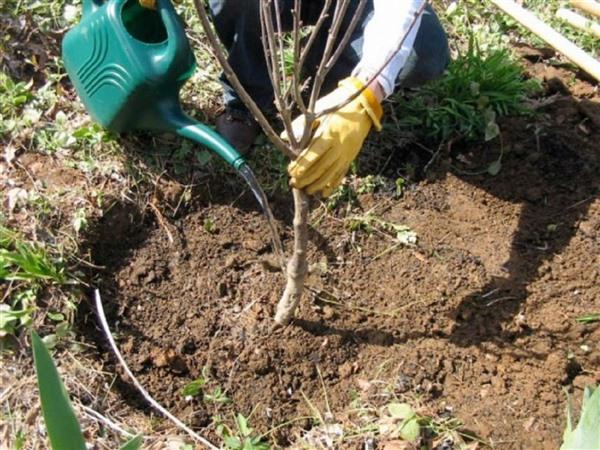
Dwarf apple trees are watered in dry and hot weather. They are not watered during rain. Apple trees are watered once every 7-10 days. Two to three buckets of water are poured under each tree. To prevent rapid evaporation of moisture, the area around the tree trunk is mulched with sawdust.
Fertilizer
In the second year after planting, dwarf apple trees can be fed with a solution of rotted manure or compost (5-10 kilograms per tree). For normal development, they need minerals—nitrogen, potassium, and phosphorus. Apples are fed with organic matter in the spring.
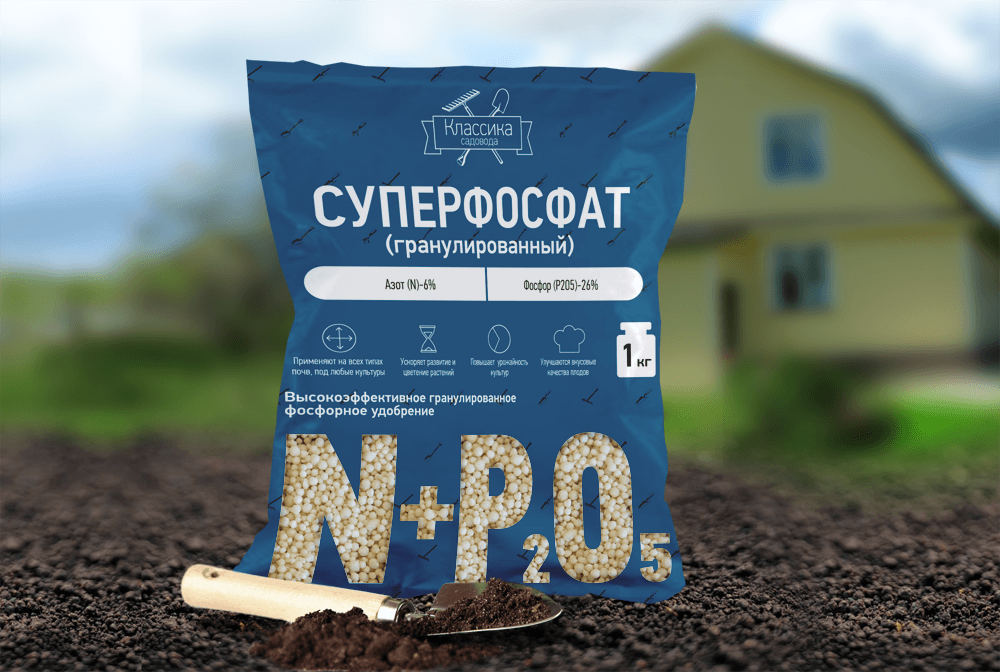
Ten to fourteen days after the first feeding, the tree can be fertilized with urea (30 grams per ten liters of water). In midsummer, apple trees are fed with superphosphate and potassium chloride (30 grams each per ten liters of water). Before winter, the trees can be fertilized again with organic matter.
Insect and disease control
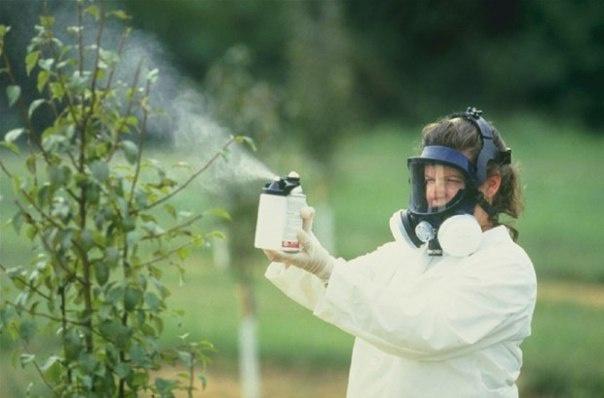
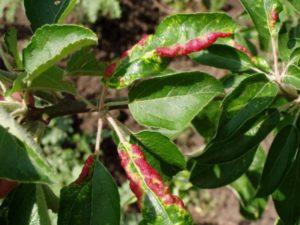
Dwarf apple trees can be affected by various fungal and viral diseases and are susceptible to insect attacks. To prevent diseases (scab, rot, and spotting), spray the leaves prophylactically in the spring with a fungicide solution (Nitrafen, Skor, Topaz, Fundazol). Bordeaux mixture, colloidal sulfur, urea, and calcium chloride can also be used. Plants are treated several times during the season before flowering.
To protect against insects, the trunk is whitewashed with lime or Bordeaux mixture in the spring. Tree traps are installed to catch pests. In the summer, to protect against codling moths and caterpillars, the leaves are sprayed with insecticides (Iskra M, Fufanon), tobacco infusion, or wormwood infusion.
Formative and sanitary pruning
In the spring, before the sap begins to flow, the branches of young seedlings are slightly pruned. Mature trees undergo formative and sanitary pruning. A few skeletal branches are left on the tree, and numerous shoots that thicken the crown are removed. Shoots growing on the skeletal branches are shortened by a third. Broken or diseased branches are pruned. During pruning, stumps should not be left; the cuts should be immediately disinfected with garden pitch. In the fall, after the leaves have fallen, another sanitary pruning is performed.
Wintering
Before frost sets in, the tree's trunk should be mulched with a thick layer of compost or well-rotted manure. This can be covered with spruce branches. In winter, rake more snow around the tree to protect the roots from frost.
Propagation of dwarf apple trees
Dwarf trees are usually propagated vegetatively. There are several simple methods for producing plants with similar hereditary traits.
Horizontal layering
With this propagation method, the lower stem is placed on the ground and covered with a layer of soil. Over the summer, several new shoots will emerge from the horizontally placed branch, each of which will develop roots. In the fall (September), the shoots should be cut from the parent plant and transplanted to a new location.
By budding
Propagation by budding is carried out in July. A woody scion with an bud and leaf petiole is taken from a cultivar cutting and then grafted onto a dwarf rootstock. The grafting is done just above the knee. You can take two buds of the same variety and graft them on opposite sides of the rootstock. After 17-20 days, the scions will take root in their new location. The following spring, the rootstock is pruned back to the grafted bud.
Root cuttings
In the fall, before the cold weather sets in, dig up the horizontal rhizome and cut off a small section, 10-12 centimeters long. For the winter, the root can be placed in a pot filled with peat. In the spring, bury the root horizontally in the soil to a depth of 2-3 centimeters and regularly moisten it with water. In the summer, several shoots will appear; select the strongest one and remove the rest.
Lignified and green cuttings
Propagation by green cuttings is done in early summer. Cut a young branch with 10-centimeter-long leaves. The cutting should have several buds and three leaves. Remove the bottom leaf, and soak the branch in a Kornevin solution for 23 hours. Then plant it in a pot with a moist peat-sand mixture and cover it with a plastic bottle. After 20 days, the cuttings will root and be transplanted to their permanent location.
Woody branches are harvested in the fall. 20-30 centimeter-long cuttings are removed from the soil. They are stored in a cool basement in a pot filled with peat until spring. When warmer weather arrives, they are planted in moist soil and covered with a plastic bottle. After rooting, the cuttings are planted in the garden.
The best varieties of dwarf apple trees
Dwarf apple trees grow well in any region of Russia. However, the roots of these trees need to be insulated for the winter, as they are located too close to the ground and can freeze. Breeders have developed suitable varieties of dwarf apple trees for each region.
For the Central Belt of Russia
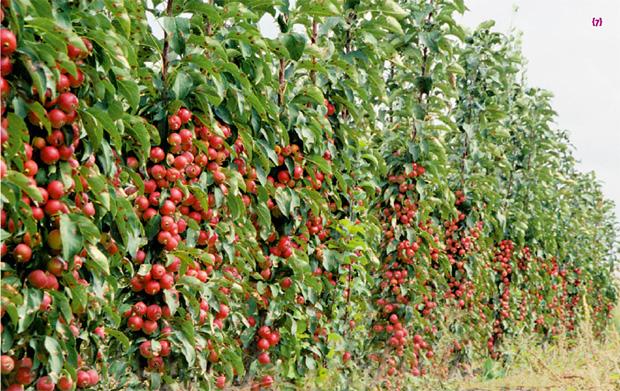
The following dwarf apple tree varieties are suitable for the European part of Russia: Melba, Moskovskoe ozherely, Bogatyr, Konfetnoe, Arbat, and Osennee polosatoe. Winter temperatures in this region range from -10 to -20 degrees Celsius.
For the Moscow region
In the Moscow region, summers are warm but rainy, lasting three months, gradually giving way to a cool autumn. Winters are cold, not too frosty, but snowy. Dwarf varieties suitable for planting in this region include Melba, Konfetnoye, Zhigulevskoye, Grushovka Podmoskovya, and Bogatyr.
For the Nizhny Novgorod region
The Nizhny Novgorod region has a more continental climate than the Moscow region. From November to April, the ground is covered in snow. Winter temperatures drop to -10°C to -20°C. Dwarf apple varieties suitable for planting in this region include Chudnoe, Podsnezhnik, Bratchud, Prizemlennoe, and Sokolovskoye.
For the Moscow region
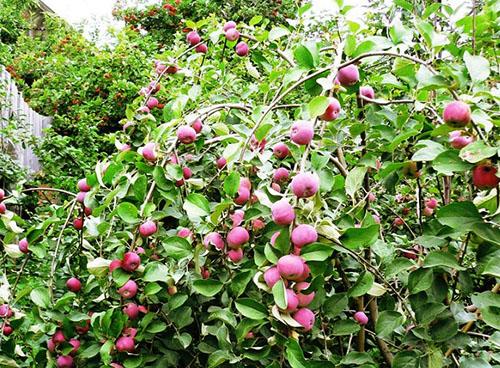
The Moscow region is located in the temperate continental zone. Summers here are warm and long, and winter temperatures rarely exceed 20 degrees Celsius. The best varieties for the Moscow region include Moskovskoe Orezhelie, Antonovka, Moskovskoe Krasnoe, and Podsnezhnik.
For Siberia
In the Siberian climate zone, dwarf apple varieties that can survive winter frosts of -40 degrees Celsius can be grown. The following low-growing varieties are suitable for this region: Antonovka Dessertnaya, Ermakovskoye Gornoye, Arkadik, Uslada, and Medunitsa Winter.
New breeding products
Breeders have developed new varieties of dwarf apple trees with a number of beneficial properties, including resistance to fungal diseases, frost hardiness, and high yields. The best varieties of dwarf trees include Bratchud, Kovrovoe, Solnyshko, Chudnoe, Prizemlennye, Podsnezhnik, and Sokolovskoe.
Related posts:
 Description of the 10 best columnar apple tree varieties for the Moscow region, planting and cultivation
 Signs and treatment of apple tree cancer, varieties resistant to the disease
 Description and rules for growing creeping apple trees, planting and care
 Description of the Chudnoe apple variety, planting and caring for a dwarf tree
 When and how to prune an apple tree, and is it possible to shape the crown in summer?
 How to properly plant apple trees with seedlings in spring and autumn, care instructions
 Description and characteristics of the Lobo apple tree, planting and care
 Description and subtleties of growing the Sverdlovsk Beauty apple tree variety