
- The history of the Lobo variety
- What is characteristic of an apple tree?
- External parameters of the tree
- Branching of the root system
- All about fruiting
- Beginning of the period
- Flowering and pollinators
- Fruit ripening time
- Productivity and annual growth
- Tasting and using apples
- Types of rootstocks
- slate
- Columnar
- Semi-dwarf
- Dwarf
- Sustainability
- To low temperatures and drought
- To diseases and pests
- Features of cultivation in different regions of Russia
- Landing
- Deadlines
- Site preparation
- Step-by-step process of planting a seedling
- Caring for crops in open ground
- Watering and fertilizing
- Caring for the tree trunk area
- Preventive treatments
- Trimming
- Preparing the apple tree for winter
Lobo apple trees are very popular among gardeners and farmers. These easy-to-grow trees are grown both commercially and in home gardens and vegetable patches. This productive fruit tree boasts excellent flavor, attractive appearance, and a long shelf life.
The history of the Lobo variety
The historical roots of this new apple variety date back to the early 20th century. Canadian breeders in Ottawa were working on the well-known McIntosh apple variety. After extensive testing, they developed a new variety called Lobo.
Lobo apple trees were brought to Russia in the 1920s and have since firmly established themselves as a popular fruit tree.
What is characteristic of an apple tree?
Lobo apple trees were bred through selective breeding, which is why they possess unique characteristics. However, like all hybrids, they have both advantages and disadvantages.
Advantages of the Lobo variety:
- Resistant to cold temperatures and drought.
- Annual fruiting.
- Seedlings begin to bear fruit already in the 3rd-4th year of growth.
- The dense peel of the fruit facilitates long-distance transportation of ripe fruits.
Flaws:
- In unfavorable weather conditions it is often affected by diseases.
- Short shelf life of the harvest.
- Due to abundant fruiting, the branches require additional support.
Important! Rapid growth and development of the apple tree promotes rapid recovery from frost and disease.
External parameters of the tree
Lobo apple trees grow up to 4 meters tall. The crown is loose, allowing sunlight to penetrate deep into the tree. The branches are dark brown with a reddish tint.
In the first years of growth, the crown of the tree is conical, elongated, and then acquires an oval outline.
The leaves are large, oval, and a vibrant, matte green. A distinctive feature of this variety is the rounded tips.
Branching of the root system
The structure and branching of the root system depends on the cultivar. Varieties grown on dwarf rootstocks have fibrous rhizomes without multiple vertical branches. A high-quality seedling of this cultivar can always be distinguished by a well-developed and branched root system.

All about fruiting
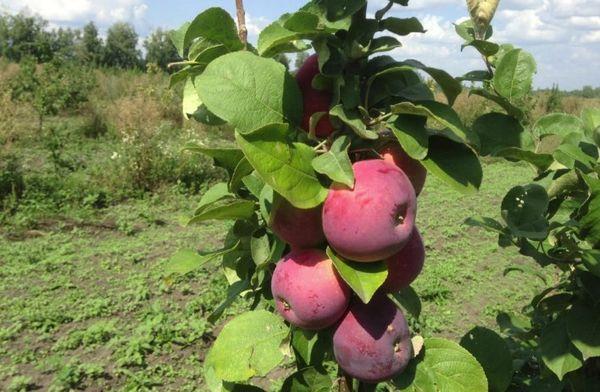
Lobo apple trees bear fruit annually. Fruit buds form on both main branches and young shoots.
Beginning of the period
Seedlings grown on rootstocks bear their first fruit in the second or third growing season. Trees propagated by bud grafting and seed bear fruit in the sixth or seventh year of growth.
Flowering and pollinators
The trees enter the active flowering phase in mid-May. To produce a fruit crop, these apple trees require pollinating neighbors. This variety is not picky about neighbors, so any apple tree variety with suitable flowering times will do. Even trees in neighboring plots can serve as pollinators for Lobo apple trees.
Important! Pollinators should be planted no more than 40-50 meters from the tree being pollinated.
Fruit ripening time
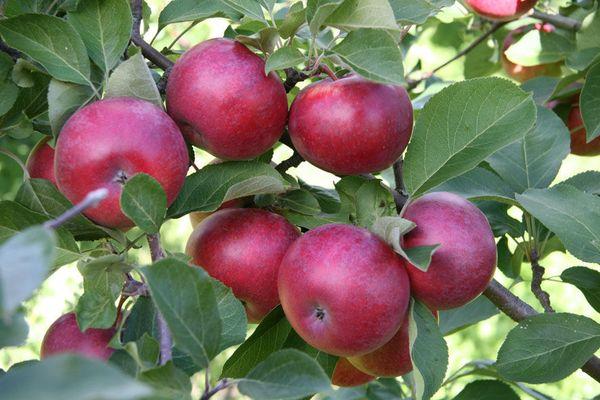
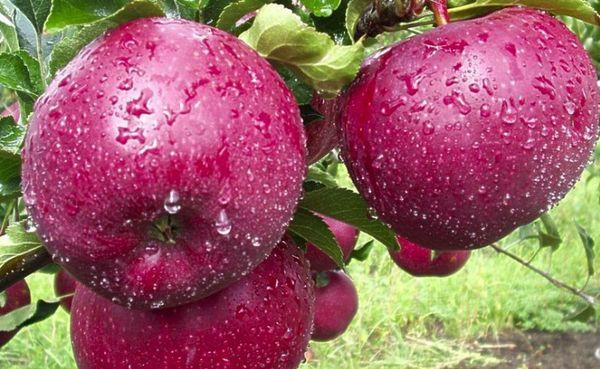
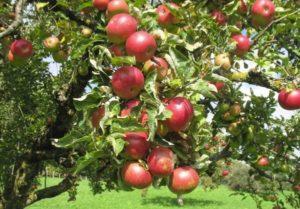
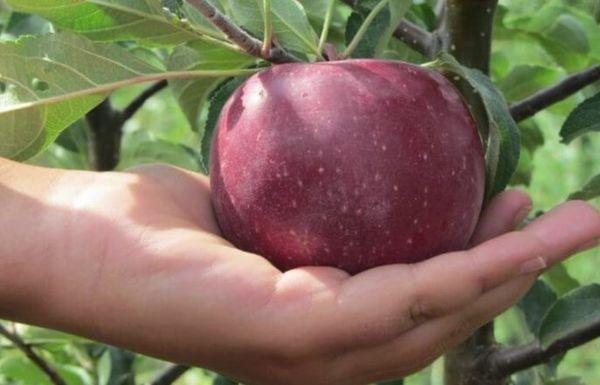
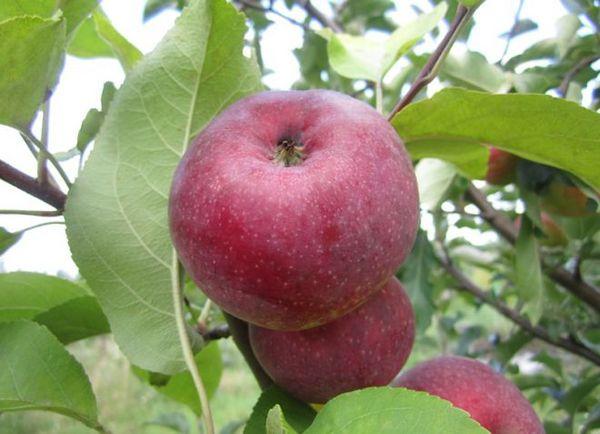
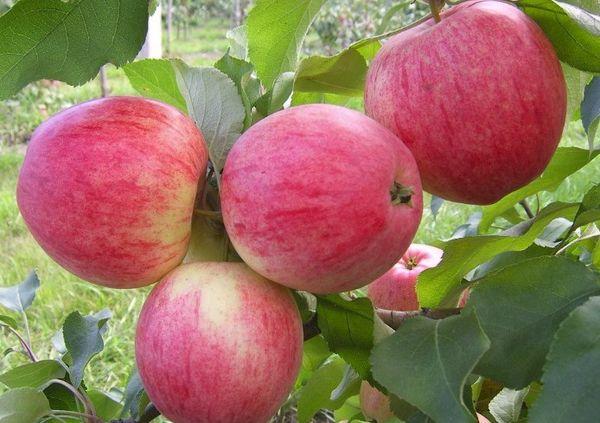
Lobo apple trees are a late-season fruit variety. The fruits fully ripen by mid-October. When ripe, they acquire a yellow-green color with a slight blush, and only during storage do they develop a vibrant burgundy hue.
Productivity and annual growth
This variety is known for its high yield. With proper care, a single tree can yield up to 300 kg of ripe fruit.
During the first three years after planting in open ground, apple trees grow and develop rapidly. After that, their growth slows.
Tasting and using apples
The taste of ripe fruits has received top marks from experts. The flesh is dense, juicy, and sweet, with a slight tartness and a caramel aftertaste. The fruits contain vitamins, amino acids, and nutrients that help with vitamin deficiencies and anemia.
The fruit is recommended for consumption raw, as this is how the beneficial components of the fruit enter the body. Apples are also used to make various semi-finished products, baby food, frozen foods, preserves, and dry mixes for compotes and baked goods.
Types of rootstocks
It is recommended to grow Lobo apple trees by grafting seedlings onto winter-hardy rootstocks.
slate
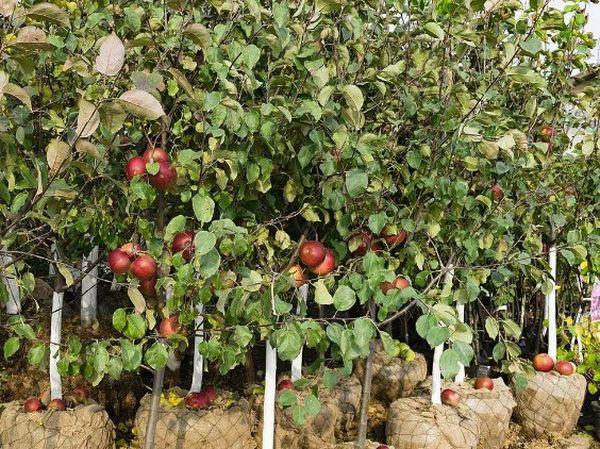
Fruit trees are most often grown using the espalier rootstock method in regions with cooler temperatures. This method of planting seedlings produces a high-quality and abundant fruit harvest. Trees grown this way have strong resistance to diseases and pests.
Columnar
The columnar apple tree grows to a maximum height of 2 m. The compact tree is completely branchless, with fruit buds forming on the main trunk and ringlets.
Semi-dwarf
This semi-dwarf rootstock is suitable for planting in confined spaces. The tree will begin bearing fruit within 2-3 years after planting.
Dwarf
In this case, the tree grows to a maximum of 3 meters, and the crown shape remains unchanged. Dwarf trees grow and develop more slowly. The yield of these apple trees is lower than that of standard plants.
Sustainability
As a rule, hybrid plant varieties are bred taking into account the best qualities and characteristics of fruit crops.
To low temperatures and drought
Lobo apple trees easily withstand freezing winters. Even in northern regions, at -35 degrees Celsius, the apple tree survives and produces large harvests.
The variety is also drought-resistant, so it is often grown in steppe and forest-steppe conditions.
To diseases and pests
Scab and powdery mildew are the main threats to Lobo trees. To prevent these diseases, the trees are treated with insecticides.
Features of cultivation in different regions of Russia
The care and cultivation of Lobo apple trees depend on the climatic conditions of the regions where the trees are planned to be planted.
In southern, steppe, and black soil regions, plants require little additional care or attention. However, in temperate and northern climates, apple trees must strictly adhere to agricultural practices and guidelines.
Landing
The key to obtaining a high-quality and abundant harvest is the correct selection, preparation, and planting of seedlings in open ground.
Deadlines
Fruit trees are planted in early spring or fall. Experienced gardeners and vegetable growers even plant young trees in the summer.
In spring, planting in open ground occurs while the seedling is dormant. The tree should have time to establish itself and root before the sun fully awakens.
In the autumn, planting material is planted 3-4 weeks before the first frost.
Site preparation
To ensure proper planting of trees in open ground, the following preparatory measures are carried out 2-3 months before the start of work:
- The groundwater depth should be checked in the area where fruit crops are planned to be planted. If the groundwater level is less than 2 meters, the planting area should be relocated or additional mounds should be installed.
- The area for planting trees should be well lit by sunlight and protected from strong drafts.
- The soil is thoroughly dug over, and weeds are completely removed. Heavy, infertile soils are mixed with sand, sawdust, and humus. Sandy soil is fertilized with peat and organic matter.
 Important! Select seedlings no older than two years for planting. Mature trees transplant much less well, and survival times are longer.
Step-by-step process of planting a seedling
Before planting in open ground, seedlings are placed in a container of water for 3-4 hours, and then the rhizomes are treated with antibacterial agents or a weak solution of potassium permanganate.
Holes for seedlings are dug 4 meters apart. If grafting onto existing trees, the distance between plants should be at least 5 meters.
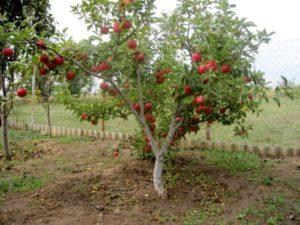
The depth and width of the holes are maintained between 70 and 100 cm. The dug holes are filled with fertile soil and pegs are inserted to support the young plants.
Place the seedling in the hole and cover with soil, leaving 4-5 cm of the root collar above the soil surface. Water the planted tree generously with warm, settled water.
Caring for crops in open ground
Young seedlings require more careful care than mature, established trees.
Watering and fertilizing
Mature apple trees are not demanding when it comes to watering, so they are watered 3-4 times throughout the season:
- At the beginning of the growing season.
- 2-3 weeks after the end of flowering.
- 2-3 weeks before harvesting.
- In preparation for winter.
Young seedlings are watered frequently, but care is taken to ensure that excess moisture does not accumulate in the soil.
Trees are fed with a mineral complex, organic fertilizers and compost.
Caring for the tree trunk area
Loosening the soil, removing weeds, and mulching the soil around the tree trunk is the minimum set of tasks that are carried out when caring for Lobo apple trees.
Preventive treatments
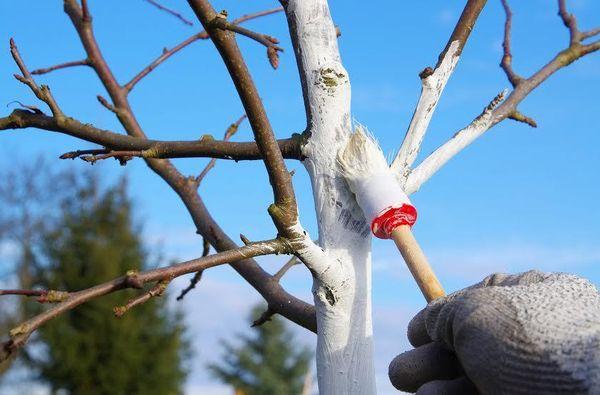
In spring, to avoid burns and overheating of the bark, trees are treated with whitewash.
To prevent harmful insects and the spread of diseases, trees are treated in the spring with professional preparations based on insecticides and fungicides.
Trimming
In spring and fall, sanitary pruning is performed. All frozen, broken, and dried branches are removed, and the cuts are treated with garden pitch. Some varieties require formative pruning of the crown. Apple trees grow actively for the first four years; after that, crown shaping is not necessary.
Preparing the apple tree for winter
During winter, the bark of fruit trees is a delicacy for small rodents and animals. To prevent damage to the plant, the trunk is wrapped in metal mesh or coated with a pungent odor to repel unwanted visitors. In northern regions, the trunks and root systems of apple trees are additionally insulated before winter dormancy.
Related posts:
 Signs and treatment of apple tree cancer, varieties resistant to the disease
 Description of the Chudnoe apple variety, planting and caring for a dwarf tree
 Description and varieties of the Sinap apple tree, planting and care rules
 Description and varieties of Gala apple trees, planting and care in open ground
 Description and characteristics of the Orlovim apple variety, cultivation nuances
 Description and characteristics of the Mantet apple tree, planting and care
 Description and characteristics of the Royalty apple tree variety, planting and care
 Description and subtleties of growing the Sverdlovsk Beauty apple tree variety