
- Why does an apple tree drop fruit? Main reasons
- Natural regulation of fruit number
- Deficiency or excess of moisture
- Lack of nutrients in the soil
- Tree damage by insects
- Apple florist
- Leaf roller
- Apple moth
- Ticks
- Aphid
- Codling moth
- Technical ripeness of fruits
- As a result of late return frosts
- Excessive soil acidity
- Insufficient pollination
- How to save the harvest
- We organize timely watering
- We add fertilizer
- Getting rid of parasites
- Soil deoxidation
- We carry out sanitary pruning
Growing fruit trees involves specific cultural factors. Sometimes, an apple tree begins to drop fruit before it ripens. The reasons for this become clear after a thorough analysis of the tree's condition. Dropping unripe apples is a phenomenon that can lead to partial or complete crop loss. Apple drop may indicate problems with the growing process.
Why does an apple tree drop fruit? Main reasons
If apples fall from a tree prematurely, it's a sign of problems or possible care violations. If the cause is identified and addressed promptly, the situation can be corrected with specialized treatments.
Natural regulation of fruit number
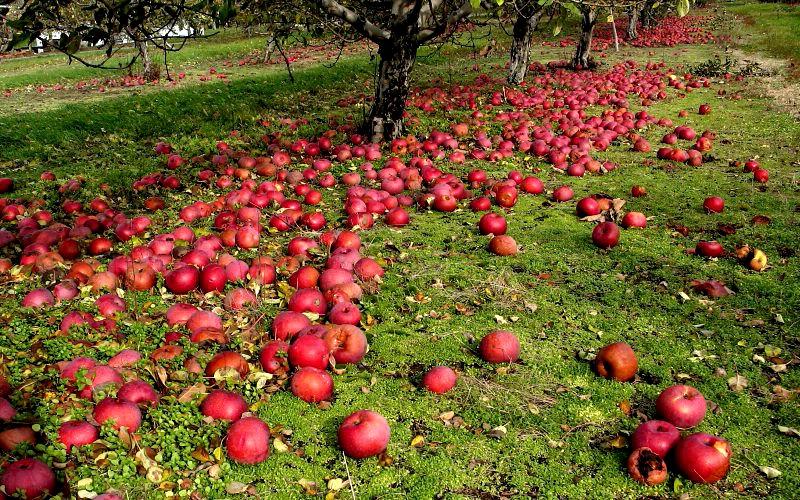
Self-regulation refers to the natural shedding of apples. This usually occurs in young trees. Sometimes, a large number of fruits are set on the branches. During the formation stage, each fruit receives sufficient nutrition. During the subsequent ripening stage, the plant stops nourishing the fruit due to a lack of strength. Formed but unripe apples are unable to hold on to their weak stems and fall off.
Information! With natural self-regulation, the number of apples dropped is significantly less than the number of fruits remaining on the branches.
Natural apple shedding cannot be eliminated. Fallen fruit is collected and used using various processing techniques. Apples dropped by the tree are not damaged by insects, are disease-free, and have high technical qualities.

Deficiency or excess of moisture
Unripe fruit drop can be caused by overwatering or insufficient watering. Young apple trees are particularly sensitive to irregularities in watering patterns. Drought tolerance also depends on the variety. Some everbearing varieties are intolerant to dry soil. Excess moisture can trigger fungal diseases, which are difficult to treat quickly.
Lack of nutrients in the soil
When a tree doesn't receive enough nutrients from the soil, it reacts by causing its fruit to fall before it's fully ripe. This is often caused by a potassium deficiency. This element is essential for apple trees during the formation and ripening stages.

Fruit-bearing apple trees also require additional iron supplementation. Mature trees that have begun to shed their leaves due to iron deficiency are given a special supplement. Several iron nails are driven into the trunk from different sides.

Tree damage by insects
Among the main causes of fruit drop are often signs of pest infestation on the trees. Pests are attracted not only to the leaves and flowers, but also to the apples themselves.
Apple florist
Florist or a weevil feeds on buds on apple trees In pears and other trees, after flowering, the parasitic larvae can remain on the tree and penetrate the apples. After this, young, unripe apples begin to fall to the ground.
Leaf roller
Codling moths are especially dangerous to mature apple trees. They appear on the fruit, infest it, leaving black spots and causing further fruit drop.

Apple moth
One of the most dangerous apple tree pests. They appear in June, lay eggs, and cause significant damage to the fruit.
Ticks
Mites entangle the fruits in a sticky web. The stems weaken and cannot support the weight of the apples.
Aphid
Aphids not only consume tree parts but also spread various diseases. Apples infected with aphids fail to ripen, fall off, and rot.
Codling moth
Butterflies that lay their eggs on the surface of the fruit. This results in the trees' inability to support the weight of the apples on their branches.

Technical ripeness of fruits
Ripeness is determined by appearance and nutrient content. Technical ripeness of apples is the stage when the fruit is saturated with nutrients, juices, and has reached its final weight. Some apples fall off after reaching this stage.
As a result of late return frosts
Regions with temperate or temperate continental climates are characterized by the return of late frosts. These can lead to freezing of tree parts and fruits, which can lead to the tree shedding apples from its branches.
Gardeners recommend:
- choose winter-hardy varieties if there is a risk of recurrent frosts;
- plant apple trees on level areas, do not place trees in lowlands or near the northern walls of buildings;
- Prevent freezing by mulching the soil around the tree.

Excessive soil acidity
Soil composition changes, poor nutrition, and nutrient deficiencies can cause unripe fruit to drop. Apple trees don't like over-acidified soil.
If the level rises, the root system stops receiving nutrients from the soil and loses the ability to bring the fruit to technical or consumer ripeness.
Insufficient pollination
Popular apple varieties require the presence of pollinators. For fertilization, flowers require pollen from other trees. Apple trees obtain this pollen from neighboring trees via wind or from bees, which carry pollen on their legs. Dropping unripe fruit can result in incomplete pollination. This means the fertilization process was not stable enough, and the ovaries did not receive enough pollen.
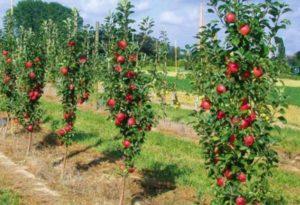
To avoid this problem, carefully select apple varieties when planting. If you don't plan to grow other apple trees on the site, choose self-pollinating varieties.
How to save the harvest
By external signs, it's easy to determine what an apple tree needs. The tree can be saved if the problem is detected early.
We organize timely watering
The soil layer should be moistened to a depth of approximately 80 centimeters. The first, deep watering should be done in the spring, and the second before fruit set. Additional watering is given as needed during drought periods.

We add fertilizer
Early fruit drop can be avoided by feeding the trees in a timely manner.
- In spring, nitrogen-containing mixtures are added; they promote the growth of green mass.
- During the fruit formation and ripening stage, trees require potassium and phosphorus. Complex mixtures are most often used, applied under the roots after heavy rain or heavy watering.
- After flowering, the soil needs organic matter to reduce costs.
Getting rid of parasites
To prevent the appearance of insects or to get rid of those that have infested the apple tree, seedlings or adult trees are treated with special agents.
| Type of insect | Processing |
| Aphid | Leaves curled by aphids are removed from each tree and burned. Foliar treatment is carried out with Karbofos. |
| Ticks | The leaves are sprayed with a solution of the Taurus preparation. |
| Apple moth, leaf roller | Healthy trees are specially treated before flowering with solutions that can repel pests. When pests appear, they are sprayed with ferrous sulfate. |
| Flower beetle | In the spring, traps containing insecticides are installed on tree trunks. When insects appear, spray with an Aktara solution. |
| Codling moth | Damaged, loose bark is removed from the trunk surface. The tree is sprayed with Decis. |
 Advice! Do not apply foliar treatment during flowering. Flower buds may react differently to chemical solutions.
Soil deoxidation
Liming the soil can often help save an apple tree. Gardeners recommend using one of the following methods.
- Finely ground slaked lime is embedded 20 centimeters deep. This method is used to deoxidize the soil before planting.
- Dolomite flour is added every 3-5 years. This material improves the overall condition of the soil by enriching it with minerals.
- To adjust the acidity, it is recommended to add wood ash. It is spread around the trunk in a thick layer several times throughout the season.
- Finely ground chalk is dug in and mixed into the top layer of soil. After watering, the chalk will settle naturally and gradually change the soil's pH.


We carry out sanitary pruning
Tree pruning plays an important role in tree care. It's performed twice: in the fall and in the spring. Pruning helps achieve several goals simultaneously:
- bush formation;
- removal of damaged diseased branches;
- tree rejuvenation.
After fruiting, branches that are damaged or appear unviable are removed sequentially. The tops are removed, thus stimulating spring flowering and the formation of new shoots. In the fall, young trees are pruned according to a pattern, removing about a third of the branches.
Mature bushes are subjected to severe pruning; branches are cut out completely to ensure proper crown formation.
Spring pruning involves removing damaged or frozen bark from the trunk. Broken branches are pruned at the base, and damaged branches are assessed and trimmed back to healthy sections.
If part of a tree is affected by fungus, it can be saved by completely pruning the affected part. The remaining tree is treated with disinfectant solutions, and the soil around the trunk is irrigated with a potassium permanganate solution.
Related posts:
 How to plant walnuts, care for them, and grow them at home
 Description of the Red Early apple tree variety, agricultural technology and specific care
 Description of the Chudnoe apple variety, planting and caring for a dwarf tree
 Peach tree care and agricultural secrets, pest control
 Description and varieties of the Ranetki apple variety, what they look like and when they ripen
 Description and technology of growing the Vishnevoe apple tree variety
 TOP 10 recipes for canned apple juice for the winter at home using a juicer
 Causes and treatment of cherry diseases, methods of pest control