
- What is special about columnar apple trees?
- Appearance and height of the tree
- Root system
- How long does a columnar apple tree live?
- Pollinators
- In what year do they bear fruit?
- Productivity
- Is it worth planting a tree: advantages and disadvantages
- Landing on the site
- Timing of planting operations
- Site and soil preparation
- Schemes and distances for planting seedlings
- Landing technology
- Caring for planted seedlings
- How to care for a mature tree
- Watering
- Fertilizer
- Pests and diseases: treatment and cure
- Tinning
- Harvest rationing
- Shelter for the winter
- How to properly shape the crown of mature and old trees
- What time do you prune?
- Spring
- Autumn
- Harvesting Rules
- The best varieties of apple trees
- Summer
- Ostankino
- Dialogue
- Vasyugan
- Autumn
- Iedzenu
- Arbat
- Triumph
- Winter
- Yesenia
- Bolero
- Moscow Necklace
- Columnar apple tree varieties for the Moscow region and Siberia
- Conclusion
A columnar apple tree is a fruit tree that lacks long lateral shoots. This variety appeared relatively recently, in the second half of the last century. Before planting this type of apple tree, it's important to understand its growing characteristics.
What is special about columnar apple trees?
It is recommended to understand all the features of this plant in advance.
Appearance and height of the tree
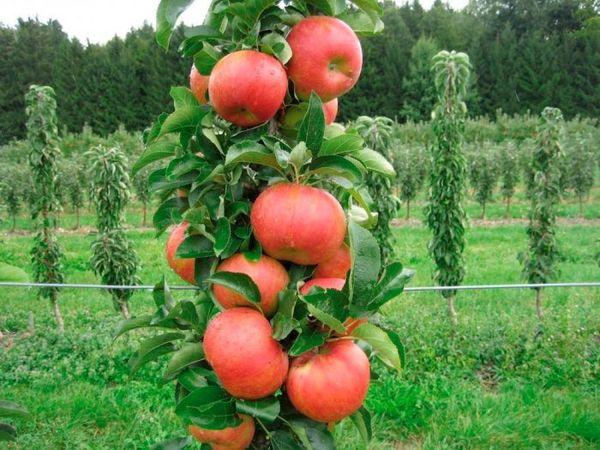
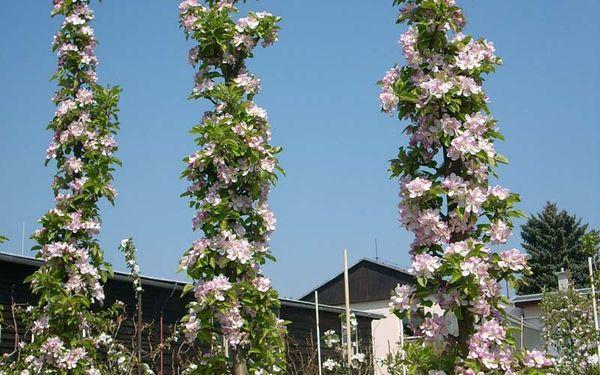
The main characteristic of columnar seedlings is their appearance. A distinctive feature is a thick trunk from which numerous miniature branches extend. Flower buds are located at the top of each branch.
With proper care, columnar apple trees can grow up to 2-3 meters tall. However, taller varieties are also available.
Root system
Experienced gardeners who have been growing these apple trees for many years consider their strong root system to be one of their advantages. It is protected from frost and rarely rots. The fibrous roots of the seedlings are located in the upper layers of the soil, so they require frequent watering. Without sufficient moisture, the roots will develop poorly, which will lead to slower growth of the entire tree.
How long does a columnar apple tree live?
People who have never grown fruit before are interested in how long their planted trees can live. On average, columnar seedlings live 17-18 years. After this time, most of the rings dry out, after which the trees completely stop producing new fruit.
However, there are ways to extend the life of fruit trees. This can be done through rejuvenation pruning, during which the main trunk is cut back by 80-90 centimeters. This promotes the formation and growth of new branches.
Pollinators
To ensure that planted apple trees bear fruit, pollination must be ensured. Bees are the most common pollinator. However, sometimes they fail to pollinate the trees well, which negatively impacts the yield. To attract bees, all seedlings are thoroughly sprayed with aromatic syrup.
In what year do they bear fruit?
Many beginning gardeners don't know when an apple tree begins to bear fruit. Some believe that fruit sets the same year it's planted, but this isn't true. Most often, the first harvest is reaped within a year of planting the seedlings in the garden. However, sometimes fruiting can take 2-3 years.
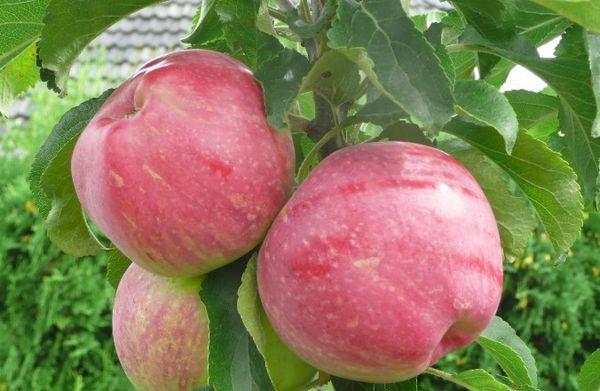
Experts recommend plucking flowers during the first year of planting to ensure the young tree bears fruit better the following year.
Productivity
Columnar apple trees are popular among gardeners for their high yields. Each tree can yield over six kilograms of juicy fruit. With proper feeding and watering, apple trees can achieve even greater yields.
Is it worth planting a tree: advantages and disadvantages
Before you start growing such apple trees, you need to understand their advantages and disadvantages.
The advantages of this plant include the following:
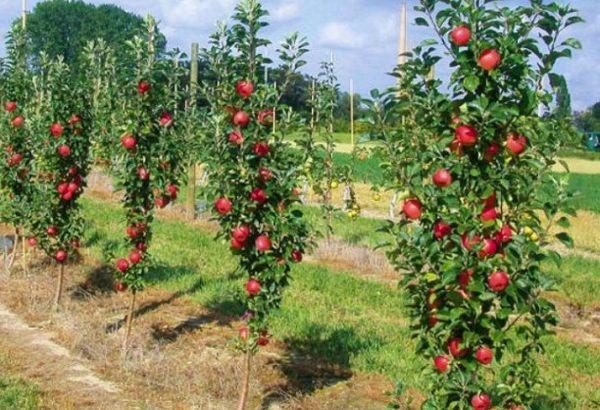
- Compactness. Some people choose to grow these apple trees because of their small size, which saves space in the garden.
- Productivity. Planted apple trees produce excellent fruit, even if they are poorly cared for.
- Ornamental value. Columnar seedlings have decorative properties and beautify the garden.
Among the disadvantages are:
- Short lifespan. Unlike regular apple trees, these trees grow for a much shorter period—15-20 years.
- High cost. Columnar seedlings are expensive, so not all gardeners can afford them.
Landing on the site
Before planting, you need to study the procedure that is performed when planting apple seedlings.
Timing of planting operations
It's recommended to plan planting dates in advance. Experts recommend planting apple trees in the spring, after the soil has warmed. This is most often done in the second half of April or in May. Spring planting promotes abundant flowering.
Sometimes people don't have the opportunity to plant in the spring. In such cases, planting is postponed until the fall.
Site and soil preparation
Once the planting time has been determined, begin preparing the site and soil. First, dig the area with a shovel to the depth of one spade. This loosens the soil, allowing it to better absorb moisture and air.
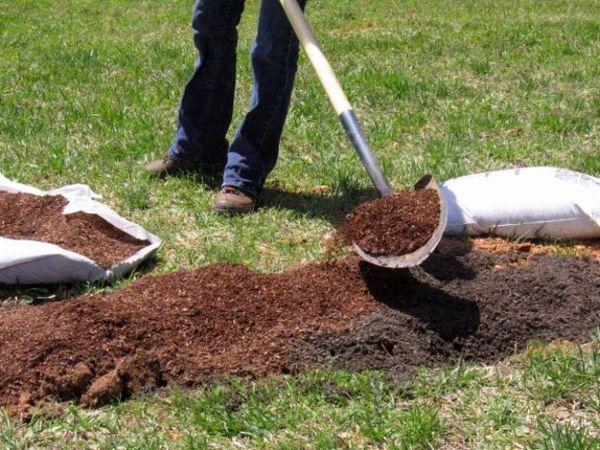
Then, fertilizer is added to the dug-up area. Experts recommend adding peat, dolomite flour, and river sand to the soil. Some use compost to promote tree growth.
Schemes and distances for planting seedlings
Before planting apple trees, dig holes in the area. Each hole should be 60-70 centimeters across and 50-65 centimeters deep. The holes should be spaced 90-110 centimeters apart, not next to each other. Avoid digging holes too close together, as the seedlings will shade the neighboring trees.
Landing technology
After digging the holes, you can plant the columnar fruit trees. However, before planting, all seedlings are soaked in warm water for 24 hours. This procedure not only disinfects the root system but also stimulates its further development. Instead of regular water, you can also use a clay slurry to soak the apple tree roots.
The soaked seedlings are placed vertically into the planting holes. They are then covered with soil so that the root system is completely underground.
Caring for planted seedlings
Planted seedlings are immediately watered with warm water to speed up their development. They are also fed with organic fertilizer 1-2 weeks after planting. Humus, chicken manure, and wood ash are added to the soil.
How to care for a mature tree
When growing apple trees, proper agricultural practices must be followed. Therefore, to grow trees and reap a good harvest, you'll need to understand the proper apple tree care.
Watering
Columnar apple trees are considered moisture-loving plants, so they will need frequent watering. In summer, the soil should be moistened every other day. During severe droughts, the trees will need to be watered daily to prevent the soil from drying out. Watering should be stopped at the end of July and the first half of August to allow the seedlings to develop flower buds.
Fertilizer
Apple trees, like other plants, require nutrition. Without nutrients, the tree will not develop properly and bear fruit well. To enrich the soil, it will need to be supplemented with organic and mineral fertilizers.
Mature trees can be fed with the following fertilizers:
- urea;
- chicken manure;
- superphosphate;
- wood ash;
- compost.
Pests and diseases: treatment and cure
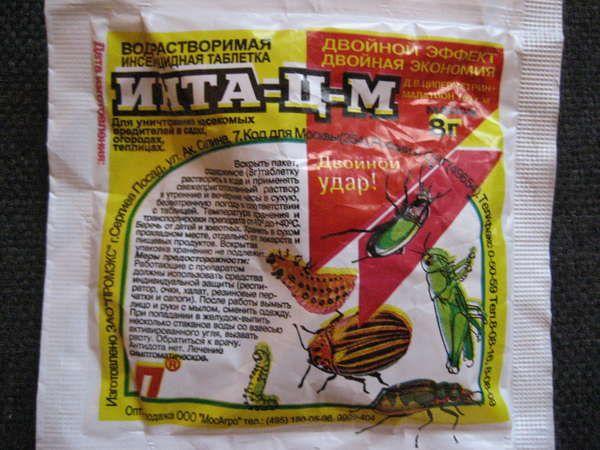
Columnar trees often suffer from pests and diseases that can lead to the death of the seedlings. Therefore, periodic preventative treatments are recommended. Experts recommend spraying trees with a mixture made from Fufanon. Inta-CM is also considered an effective insect and fungal control.
Tinning
When growing columnar apple trees, it's important to consider soil moisture conservation. To slow down evaporation, mulch the soil. To do this, spread a layer of peat or humus on the soil surface around the tree. The layer should be about five centimeters thick. Mulch should be changed 1-2 times per season.
Harvest rationing
Experts recommend rationing the harvest to ensure more fruit is produced. To do this, all blossoms are picked from the trees during the first year of cultivation. This is done to ensure more apples are produced the following year. No more than six ovaries are left on each plant; after two years, 8-10 can be left.
Shelter for the winter
Saplings don't tolerate severe frosts well, so before winter sets in, consider protecting planted trees. If the soil was covered with mulch in the spring, it will need to be removed in the fall. Instead, cover the soil surface with a thick layer of sawdust, which retains heat well. Dry tree branches and fallen leaves can also be used as a cover.
How to properly shape the crown of mature and old trees
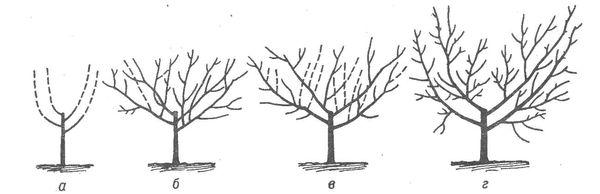
When growing columnar seedlings, you'll need to shape the crown. Experienced gardeners recommend shaping the seedlings into a single stem. This requires pruning all side shoots that have formed during cultivation. Pruning is done with sharpened pruning shears.
What time do you prune?
Before you begin shaping the crown, you need to determine the appropriate time for pruning the shoots.
Spring
Experienced gardeners recommend pruning lateral shoots in the spring, once the frosts have passed. This should be done no earlier than mid-April, as March is too cold. However, if the trees are grown in a greenhouse with a built-in heating system, the procedure can be done earlier.
Autumn
Sometimes people don't have time to prune seedlings in the spring, so they have to postpone the work until the fall. Pruning is done after the harvest, before the first frosts. In the fall, only the strongest shoots, those growing vertically, should be removed. Also in the fall, all shoots that didn't bear fruit during the summer are pruned.
Harvesting Rules
The ripe fruit is harvested in late summer. Apples must be picked very carefully to avoid damaging or breaking branches. The harvested fruit is rinsed with water, dried, and placed in a plastic container. The harvest is stored in a dark room with moderate humidity. To ensure long-term storage, the temperature should not exceed 3-4 degrees Celsius.
The best varieties of apple trees
There are several apple varieties that are popular among gardeners.
Summer
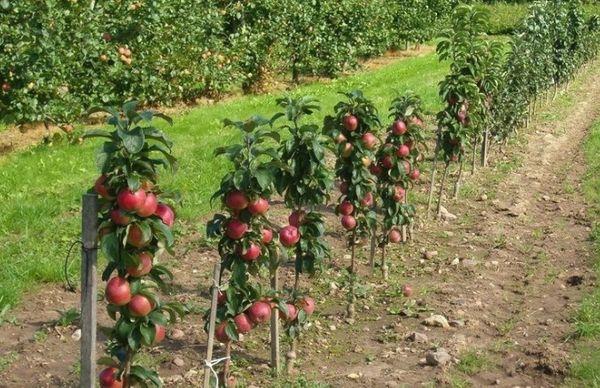
Some people prefer to grow summer varieties of apples in their garden.
Ostankino
This is a well-known columnar apple variety grown by many gardeners. Among the advantages of this sapling is its resistance to sudden temperature changes. Ostankino copes with frosts, so it doesn't need to be covered in winter. In summer, the tree produces large fruits weighing 250 grams. They have juicy, aromatic flesh with a slightly tart flavor.
Dialogue
This is a high-yielding fruit with a strong trunk and a robust root system. Dialog is considered a tall apple, as the tree can grow up to one and a half meters. The variety's distinguishing features include its resistance to fungal diseases, low temperatures, and high humidity. Dialog's fruits ripen in summer and are covered in yellowish skin with a red tint.
Vasyugan
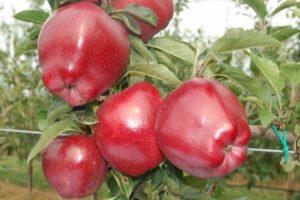
This columnar apple variety is considered a winter-hardy fruit. Vasyugan requires no winter protection, as its root system tolerates any frost. The trees begin to bear fruit in late June, and the fruits ripen by August. Each ripe apple weighs approximately two hundred grams.
Autumn
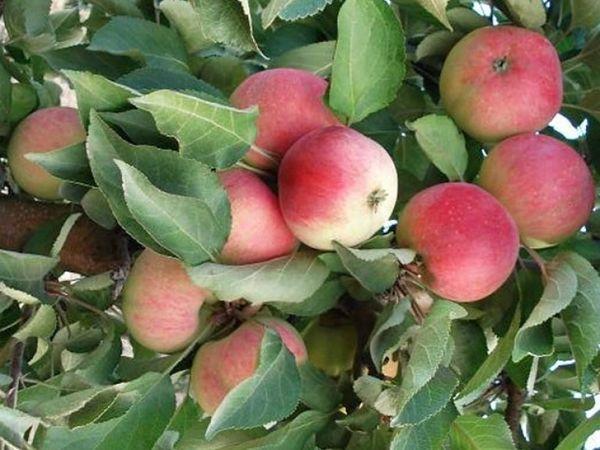
The main feature of autumn apples is that they ripen in the fall.
Iedzenu
A vigorous sapling that grows up to two meters in open ground. This variety is unique in that it is resistant to insect attacks. Iedzenu produces fruit in midsummer, and some of it ripens by September. The apples are not very large, weighing only 120-140 grams. They have a pleasant flavor, with a slightly tart aftertaste. The harvested fruit is used to make apple jam, compote, or fruit salad.
Arbat
Gardeners interested in winter-hardy varieties can plant Arbat apples. This high-yielding plant tolerates frosts and is virtually disease-free. The harvest begins in early September. Ripe apples have bright red skin. They have a fragrant aroma, and the flesh is sweet and juicy. Each fruit weighs 100-120 grams.
Triumph
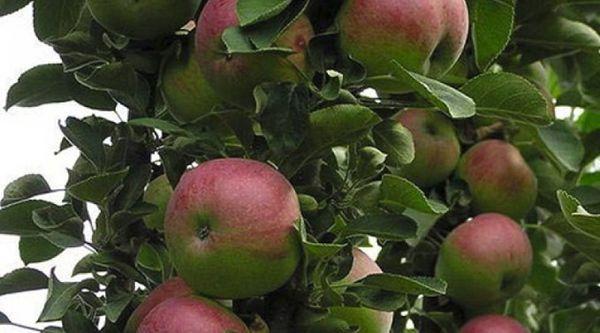
This compact apple tree grows to a height of 120-130 centimeters. Triumph is suitable for both greenhouse and outdoor cultivation. The variety is poorly protected from frost, so trees are covered with sawdust in the fall. Fruit forms on the seedlings in August and begins to ripen around the twenties of September. Each fruit is burgundy with a blush tint. Ripe fruits weigh 150 grams.
Winter
These late-ripening fruits ripen in October or November.
Yesenia
Gardeners interested in frost-hardy winter varieties can plant Yesenia. The seedlings easily cope with sudden temperature fluctuations and are protected from pests. Yesenia produces medium-sized fruits weighing 165 grams. They are red and covered with a thin layer of wax.
Bolero
A popular winter variety, distinguished from other apple trees by its large fruits. Each fruit weighs up to three hundred grams. Ripe apples have juicy, firm flesh with a pleasant sweet flavor.
Moscow Necklace
A productive and winter-hardy variety, suitable for outdoor planting. Moskovskoe Ozhelie is reliably protected from common diseases and pests. The variety's fruits ripen in early November, weighing 160-180 grams.
Columnar apple tree varieties for the Moscow region and Siberia
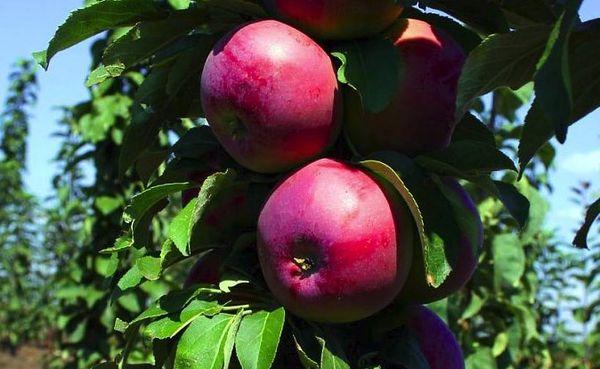
Any variety of columnar apple can be grown in the Moscow region. However, due to the climate in Siberia, some apple trees cannot be grown. Several varieties are cultivated in this region:
- President;
- Nectar;
- Currency;
- Mac.
Conclusion
Those planning to grow columnar apple trees should prepare in advance. It's important to understand the most popular varieties, as well as the specifics of planting and caring for them.
Related posts:
 Description of the Uralskoye Nalivnoye apple tree variety, planting and care
 Treatment rules and 20 best remedies for dealing with aphids on apple trees
 How to plant grapes step by step, with a description of the process and care
 Descriptions of the 20 best cherry varieties for the Moscow region, their planting and care
 Description of tomato tree varieties, planting, growing, and care in open ground
 How to treat grapes for mildew, the best control measures and treatment rules
 How to plant walnuts, care for them, and grow them at home
 Is it possible to grow an apricot tree from a seed in your garden? How to plant and care for it?