
- How the Brown Striped variety was bred
- Varieties
- Pineapple
- Smoky
- New
- Characteristics and description of plants
- Tree shape and size
- Fruiting
- Beginning of the period
- Flowering and pollinating varieties
- Ripening time
- Productivity and further use of fruits
- Transportation and shelf life
- Frost resistance of crops
- What diseases is the tree susceptible to?: tree treatment methods
- Root cancer
- Scab, powdery mildew
- Cytosporosis
- Cultivation of crops in the regions of Russia
- Permissible groundwater level
- Timing of planting operations
- Preparing the site and seedlings
- Tree planting algorithm
- We organize care for young and mature trees
- The importance of watering
- What to fertilize with
- Formative and sanitary pruning
- Caring for the tree trunk circle
- The need for a transplant
- Preparing the tree for winter
The apple tree is a favorite fruit tree in gardens. Breeders have developed a large number of varieties. These trees vary in ripening time and fruit flavor.
Compared to the new varieties, the Cinnamon Striped apple tree may be a bit lost, but those gardeners who continue to grow it receive an excellent harvest of delicious, aromatic apples.
How the Brown Striped variety was bred
The "Korichnoye Polosatoye" apple variety was first mentioned in 1810 in a book by V.A. Levshin, in which he provided recommendations for farmers. Thirty-eight years later, fruit grower N.A. Krasnoglazov described it in more detail. It is believed that the variety arose naturally as a result of cross-pollination between several apple trees.
Varieties
There are approximately 20 varieties of the Cinnamon Striped apple tree. Three of them are the most popular.
Pineapple
This variety produces larger fruits, weighing between 150 and 180 grams. The Cinnamon Pineapple apple variety has a dark red skin and soft, grainy flesh. The fruits don't store well: they begin to spoil within a month of harvest.
Smoky
The apple tree gets its name from the bluish bloom on the fruit's skin. The red stripes merge to form a continuous blush. Otherwise, the Cinnamon Smoky Apple is no different from the Cinnamon Striped Apple.
New
The harvest of this apple variety ripens at the end of the first month of autumn and is stored until spring. Fruit weight ranges from 120-130 grams. Cinnamon New is resistant to scab, but is susceptible to other fungal diseases. This variety was developed by crossing Cinnamon Striped and Welsh.
Characteristics and description of plants
To understand what the Cinnamon Striped apple tree is, you need to study its description and characteristics.
Tree shape and size
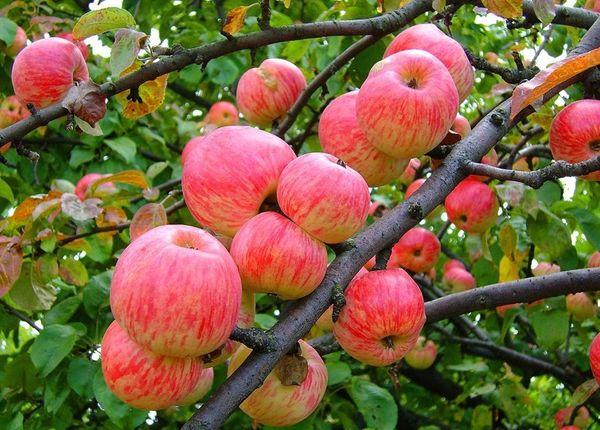
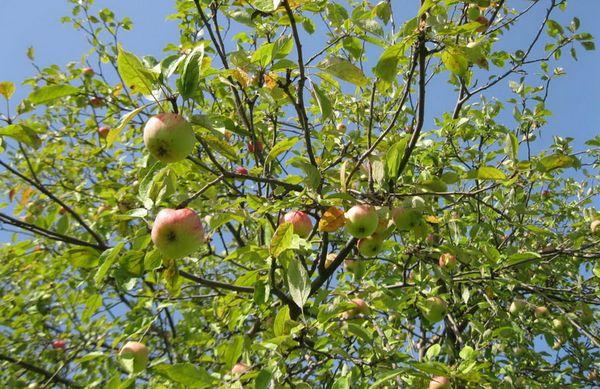
When young, the apple tree has a pyramidal crown. As it matures, the tree becomes more spreading due to thin, drooping shoots. The apple tree reaches a height of 6 meters. Leaves and fruits grow primarily at the ends of the branches.
Fruiting
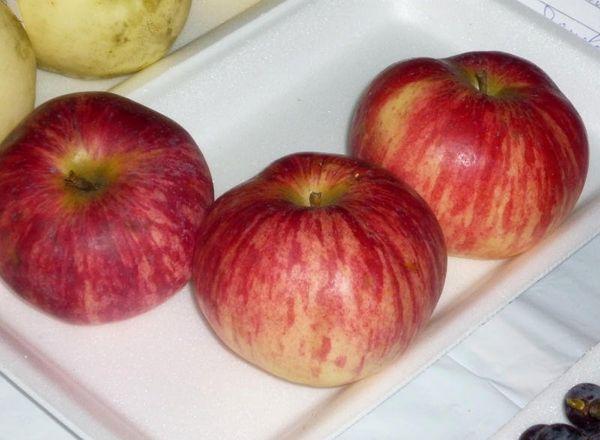
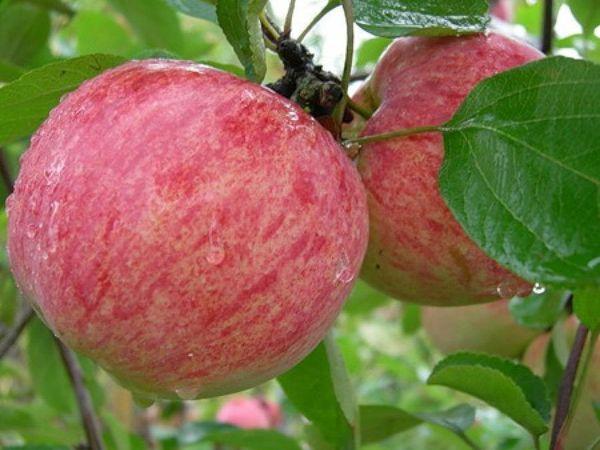
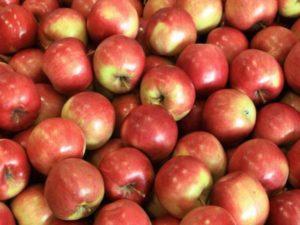
Unlike other varieties, Korichnevka doesn't produce as much fruit. The fruits are sweet, slightly tart, and have a cinnamon aroma. The flesh is firm, juicy, and creamy in color.
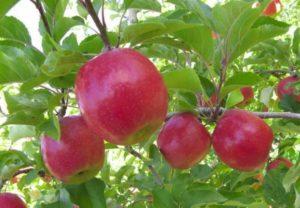
Tip! If your apple tree is bearing fruit heavily, support the lower branches with supports.
Beginning of the period
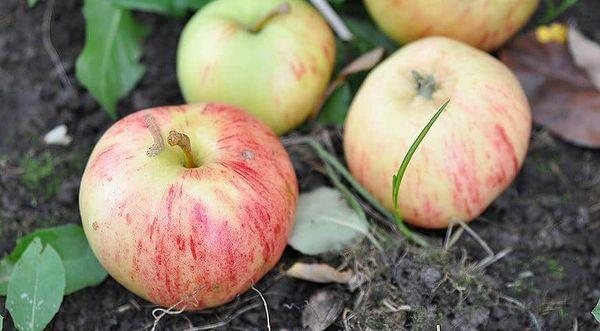
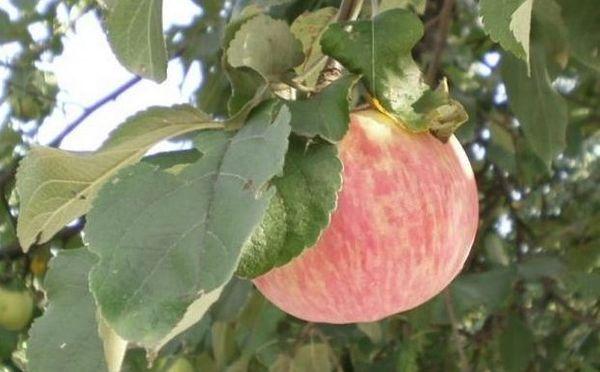
It takes many years for an apple tree to bloom. The brown apple tree begins to bear fruit 5-6 years after planting. The fruits first turn green, then yellow with red stripes. The more sunlight the fruit receives, the more intense its color.
Flowering and pollinating varieties
The Cinnamon Striped variety begins blooming in May. Since it is self-sterile, pollinators are needed for the tree to set fruit. To achieve this, nearby varieties with a similar blooming period to the Cinnamon Striped variety are planted.
Ripening time
Korichnevka is an early autumn variety. Depending on the region, the apple ripens in late August or early September. The harvest can be stored without loss until mid-December.
Productivity and further use of fruits
A gardener can harvest around 150 kilograms of Korichnevka apples from a single tree. By comparison, the Antonovka tree produces around 300 kilograms of fruit. Korichnevka apples are eaten fresh, used to make compotes, jams, and preserves, and are also used in baked goods.
Transportation and shelf life
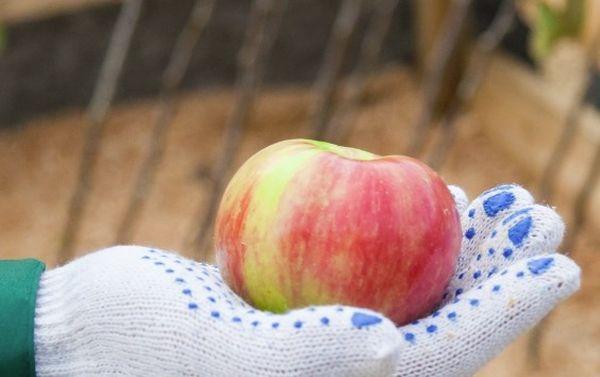
The fruit's delicate texture requires careful harvesting. Apples that fall to the ground quickly begin to spoil. The harvest lasts until early winter. To extend its shelf life, wrap each apple in newspaper, pack it in a crate, and then store the crate in a cool place.
Frost resistance of crops
The Brown Striped apple tree is a frost-hardy variety. It can withstand temperatures as low as -37°C without damage. According to gardeners, in some regions, the apple tree even withstood temperatures as low as -40-42°C. However, the damage was 0.4 points on a 5-point scale.
What diseases is the tree susceptible to?: tree treatment methods
The brown plant is susceptible to certain fungal diseases. Affected parts should be cut out and burned. Fallen leaves, which can carry pathogens, should also be burned.
Root cancer
This disease manifests itself as growths around the root collar and roots. To treat the disease, the growths are removed, then the plant is disinfected with a copper sulfate solution prepared from the following ingredients:
- 100 grams of substance;
- 10 liters of water.
The same solution can be used to disinfect the root system before planting.
Scab, powdery mildew
Scab manifests itself as brown spots on the leaves, which then spread to the fruit. The leaves dry out prematurely and fall off. This disease can be prevented by spraying with Bordeaux mixture several times per season.
Powdery mildew is easily identified by its white, powdery coating. Subsequently, the affected area of the tree becomes covered with dark spots. The affected parts of the apple tree are cut out and burned, then the tree is sprayed with a colloidal sulfur solution of the following composition:
- 80 grams of substance;
- 10 liters of water.
During the season, the apple tree is treated with copper-containing preparations several times.
Cytosporosis
This disease is caused by a fungus. It attacks the apple tree's bark. The disease spreads rapidly, eventually killing the tree. To prevent Cytosporosis, fertilize the apple tree with potassium and phosphorus in the fall. This fertilizer boosts the tree's immunity and resistance to various pests.
To prevent the disease, plants are also whitewashed with two layers of lime in the fall and again in the spring. The trunks and skeletal branches are treated. In early spring, the apple tree can be sprayed with a Homa solution according to the instructions. The trees are sprayed again before flowering, and then again after flowering.
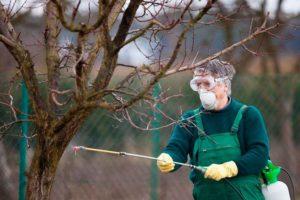
 Please note! When using chemicals, you must wear protective equipment: gloves, a respirator, and goggles.
Cultivation of crops in the regions of Russia
The brown cinquefoil is frost-resistant, so it can be grown in a wide variety of regions across Russia. The only regions where its cultivation is difficult due to weather conditions are Siberia and the Urals.
Permissible groundwater level
An apple tree won't thrive in a site with a high water table. The optimal depth is no more than 2.5 meters below the ground surface. If the water table is close, a gardener can save the seedling by laying bricks or slate at a depth of 1.5 meters during planting to prevent the roots from growing too deep. Another option is to plant the tree in a raised bed.
Timing of planting operations
Apple trees can be planted in either spring or fall. A good guideline for spring planting is when the soil has warmed to a depth of half a meter. In the fall, Cinnamon Striped apple trees are planted in September in northern and central regions, and until mid-October in the south. The tree should have time to establish roots before frost sets in.
Preparing the site and seedlings
The planting hole is dug twice as deep as the seedling's root system. Fertilize the bottom of the hole with a mixture of vermicompost (3 kilograms) and manure (3-4 kilograms). This will not only provide nutrients to the roots, but also protect them from freezing during the first winter. Before planting, trim the branches and root system of the seedling.
Tree planting algorithm
Planting is carried out as follows:
- the hole is filled ⅓ with soil;
- the roots of the apple tree straighten out, and the seedling turns its root collar to the south;
- the rest of the soil is added;
- The apple tree is watered abundantly.
The tree trunk area is mulched to retain soil moisture. When planting, ensure the root collar is 5-7 centimeters above the soil surface.
We organize care for young and mature trees
To grow a healthy, fruit-bearing tree, you need to provide it with proper care.
The importance of watering
Water the Cinnamon Striped Plant as needed. Experienced gardeners recommend once a week, morning or evening. During hot, dry summers, watering more frequently is recommended. If the roots don't receive enough moisture, the yield will decrease, both in quality and quantity.
What to fertilize with
Apple trees are fertilized several times per season. The first time is in the spring, after the buds begin to open. Organic fertilizer is used at this time. Then, during flowering, phosphorus and potassium are applied. Another feeding is done during fruit set. An infusion of mown grass can be used.
Important! After the apple tree has blossomed, do not use nitrogen fertilizers, otherwise foliage will grow at the expense of fruit production.
Formative and sanitary pruning
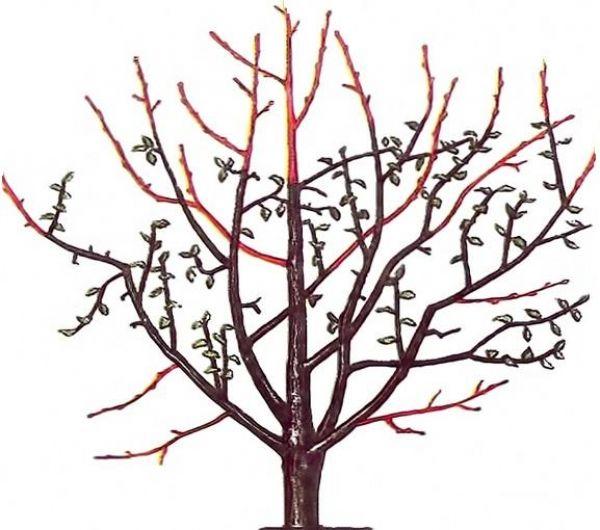
Every spring, diseased and damaged branches are pruned. Also removed are shoots hanging to the ground, which could break under the weight of the fruit. The resulting cavities will harbor microorganisms, negatively affecting the further development of the apple tree. Additionally, branches that thicken the crown are pruned.
Caring for the tree trunk circle
The apple tree forms a wide crown, so the tree's trunk circle should initially be 1.5-2 meters in diameter, then widened to 3 meters. The soil beneath the tree can be mulched, or shade-tolerant plants can be planted underneath. Bulbous flowers that bloom in early spring will thrive under it. The soil around the tree's trunk circle should be loosened shallowly, and any weeds growing within should be removed.
The need for a transplant
If you need to transplant a Korichnevka, it's best to do so in early spring or mid-autumn. Transplant the apple tree on a cloudy day. The younger the tree, the easier it will adapt to new conditions. The best age for planting and transplanting is 2-3 years.
Preparing the tree for winter
To prevent branches from being scorched by the bright February sun, apple trees should be whitewashed in the fall. To ensure the plants survive the winter, a frame is built around young saplings, covered with burlap and tied with rope. For mature apple trees, covering the base with pine branches is sufficient. Additional insulation can be provided by piling snow around the trunks of both young and mature trees.
Related posts:
 Description and rules for growing the Bratchud apple tree variety
 Description of the ornamental Nedzvetsky apple tree, cultivation technology
 Description and subtleties of growing the Sverdlovsk Beauty apple tree variety
 Description of the Borovinka apple tree variety, cultivation and care
 Description of the Chudnoe apple variety, planting and caring for a dwarf tree
 Description and subspecies of the Sakharny Arkad apple tree variety, cultivation technology
 Description and planting of the Dream apple tree variety, care and propagation
 Description and rules for growing creeping apple trees, planting and care