
- Classification of cracks
- Ring
- Round holes and bark peeling
- Transverse and longitudinal cracks
- The main causes of crustal deformation
- Fungal infection
- Cancer
- Cytosporosis
- Fire blight
- Frost cracks and sunburn
- Steaming
- Pests
- Sapwood beetles
- Carpenter moths
- Damage caused by bark beetles
- How to save a tree
- Wound treatment
- Putty
- Disinfection
- Cleaning the crack
- Tree grafting
- How to treat cracks in a young tree
- Sanitary pruning
- Treatment of diseases and pest control
- Prevention of cracks
Gardeners often encounter damage to the trunk of fruit trees. The causes vary, and each case requires an individual approach. Let's explore what to do if the bark on a young apple tree is cracking.
Classification of cracks
There are many variations of cracks on an apple tree, their shape and appearance indicate the severity of the damage.
There are ring, round, transverse and longitudinal types of damage.
Ring
Ring cracks are the most dangerous for apple trees, especially when they form a closed ring around the tree. All tissue above the wound is deprived of nutrition and quickly dies. Sometimes the apple tree can be saved, but only through timely grafting with a bridge or a piece of bark.
Round holes and bark peeling
When round holes a couple of millimeters in diameter and peeling are visible in the bark, this indicates the presence of wood-boring pests. The beetles move inside the tree, disrupting nutrition and shoot development. When the bark is noticeably drying out and cracking, this indicates the late stage before the tree dies.
Transverse and longitudinal cracks
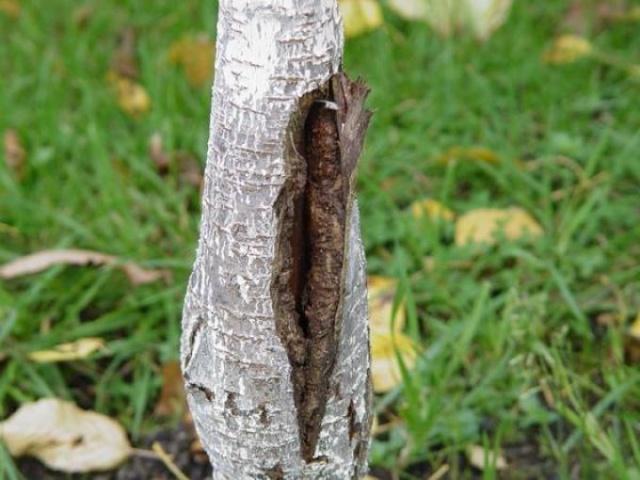
Cracks in the bark require immediate treatment, regardless of whether they are transverse or longitudinal. Longitudinal damage sometimes occurs due to differences in the growth rate of the inner and outer layers, often due to temperature differences. These cracks can heal on their own, but there is a risk of infection.
It is necessary to carefully examine the cracks, sometimes they are a sign of serious diseases.
Irregularly shaped transverse and longitudinal holes on the south side are caused by sunburn. This is safer for the apple tree than damage caused by disease.
The main causes of crustal deformation
Cracked bark on an apple tree can indicate fungal infection, canker, cystosporosis, fire blight, pest infestation, damping-off, frost cracks, or sunburn. Cracks caused by cancer are the most dangerous. This disease is virtually incurable; the only chance of saving the tree is by detecting the disease in its early stages.
Fungal infection
Apple trees are sometimes attacked by pathogenic fungi, which can cause the trunk to crack. These fungi are triggered by dampness and warm temperatures. They can be controlled with fungicides and Bordeaux mixture.
Cancer
Two types of apple tree cancer infest the tree: black apple cancer (St. Anthony's fire) and open apple cancer (Nectria canker), also known as European or common apple cancer. In the former case, the disease progresses rapidly and aggressively, with the infected apple tree dying within 1-4 years if left untreated. The diseases enter the plant through broken branches, cuts, and frost cracks.
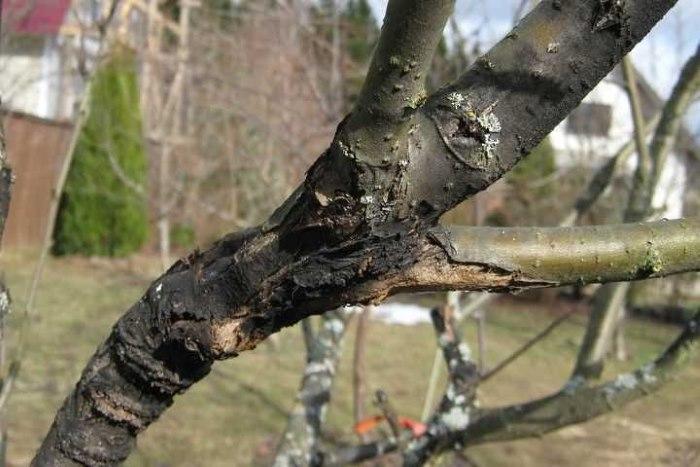
Black cancer is caused by colonies of fungi – brown pits with a blackish coating that encircle the trunk and forks of large branches.
Subsequently, numerous black bumps, resembling goosebumps, form on the surface. The bark peels and cracks, revealing dark wounds reaching down to the tree's core.
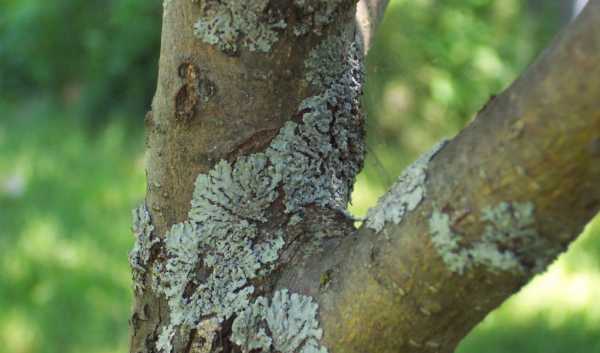
Common apple canker develops more slowly. Deep cracks are surrounded by reddish tubercles and growths. Trunks, forks of skeletal shoots, and lateral branches are affected. The bark and wood die, reducing the apple tree's resistance to natural factors and the quantity and quality of the harvest. Severely affected plants wilt due to a disruption of the water and carbohydrate balance. Infection occurs through breaks, wounds, and cuts. The first symptoms usually appear during a thaw.
Cytosporosis
A fungal disease of infectious origin causes shoots to dry out. They are deprived of nutrition because sap flow occurs only in the bark. Under the influence of toxins secreted by the fungus, the bark dries out, becomes spongy, and stops conducting sap. Over time, it darkens and dies, along with the shoots.
Cytosporosis is caused by the fungi Cytospora carphosperma Fr. and Cytospora copitata Sacc et Schnalz. The disease affects young, mature, and old trees.
Damage to the apple tree, such as hollows, burrs, open cracks, frostbite, and burns, serve as infection sources. The fungi are spread by wind and beetles. Pathogenic microorganisms overwinter on infected shoots as spores. High humidity is required for the disease to develop successfully. Apple trees are susceptible to Cytosporosis in winter and rainy autumns.

Fire blight
Bacterial agents spread through the tree via cell sap, penetrating through wounds contaminated with pollen from diseased apple trees. Green shoots and flowers quickly dry out, as if burned. The bark cracks, releasing a sticky whitish mass that later darkens.
The dead, reddish cambium is visible. Parts of the thicket and even trees die within 1-2 years.
In the early stages of the disease, the plant can sometimes be saved by removing the affected branches with a disinfected tool. Regular spraying with the biological product Fitolavin or the antibiotic Ampicillin five times during the growing season also helps.
Frost cracks and sunburn
Such damage consists of necrosis and cracks in the bark, sometimes partially extending into the wood. They occur due to frosts and sudden weather changes in winter and the off-season. In March, the sun's rays heat the dark trunks when reflected off the white snow. Night frosts quickly cool the plant tissue, causing deformation, partial death, and bark peeling. The best preventative measures include planting winter-hardy varieties and whitewashing. If wounds have already appeared, they are disinfected and sealed.
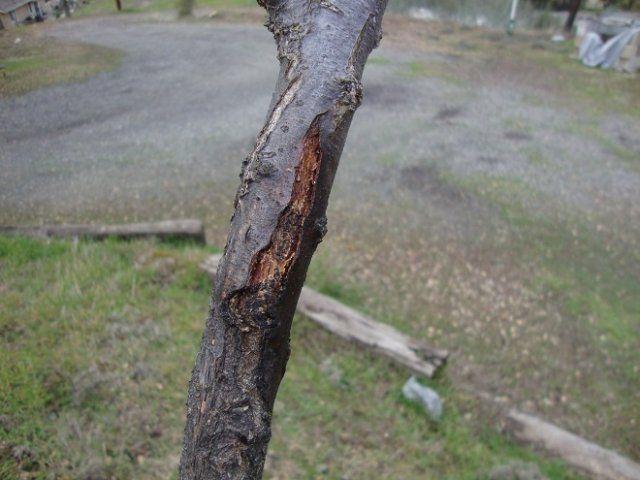
Steaming
Bark rot occurs when the tissues are poorly matured by autumn and then deteriorate during the winter due to dampness and weather changes. Sometimes the cause is a weak rootstock or deep snow cover. Saplings and young trees are most susceptible to rot. When the bark has dried out and peeled off in a circular pattern, after warmer weather, the affected apple tree may begin to bud, drawing on the nutrient reserves stored in the trunk. The roots stop sap flowing, and the plant gradually dries out. If the disease is detected early, the tree can be saved by grafting.
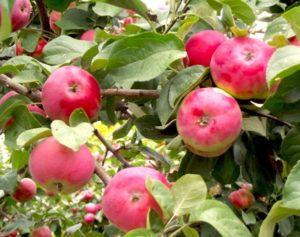
Pests
When the bark on an apple tree cracks, it may indicate the presence of stem-dwelling pests such as woodworms, bark beetles, bark beetles, and rodents. These can kill the tree, requiring immediate insecticide treatment.
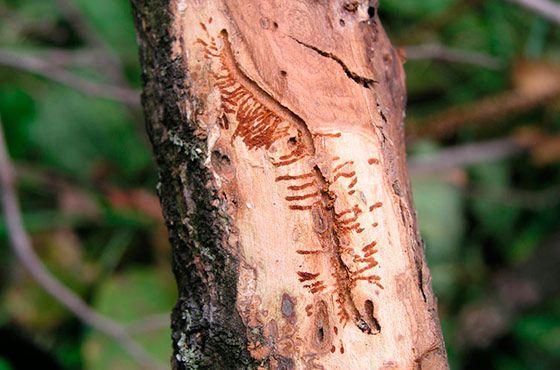
Sapwood beetles
The fruit bark beetle is a reddish-brown bark beetle, 3.5-4 mm in size. The insect attacks weakened apple trees, but can also infest healthy trees. Symptoms include small round holes. When the pests severely infest apple trees, cracks become visible.
Carpenter moths
Apple tree borer larvae live inside the apple tree, chewing holes and burrowing through internal tissue. This disrupts the tree's nutritional supply. Shoots damaged by the larvae lose their natural elasticity and strength, easily breaking in gusts of wind. If the damage is severe, the apple tree may die. Symptoms of infestation include the presence of a reddish or brown wormhole on the bark surface, which the larvae expel from the hole. The larvae, 5-7 mm in diameter, begin attacking trees when the air temperature rises above 10°C.
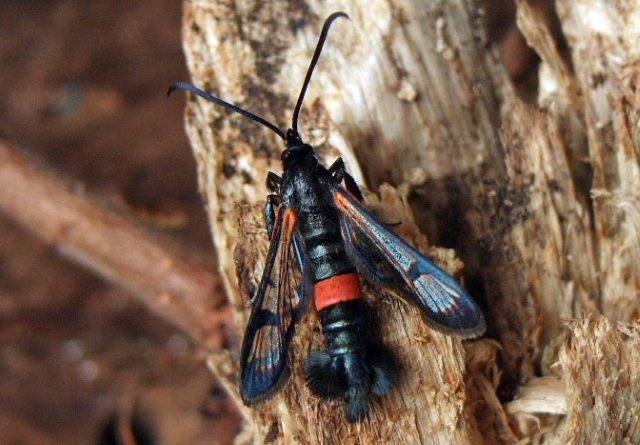
Damage caused by bark beetles
The bark beetle is a serious pest of orchards. During a mass infestation, the insects can destroy even a mature apple tree in 1.5-2 months. The tree becomes dehydrated, and it can dry out over the summer.
How to save a tree
If cracks or blisters are detected in the bark of an apple tree, immediate action is necessary. Below are the steps required for each specific condition.
Wound treatment
Treating damaged apple tree bark should prevent various diseases. Potassium permanganate and copper sulfate are used for disinfection:
- dilute 2 tablespoons of copper sulfate in 1 liter of warm water;
- dark pink solution of potassium permanganate;
- 2 tablespoons of iron sulfate are dissolved in 1 liter of water;
- Bordeaux mixture solution is prepared by stirring 1.5 tbsp. copper sulfate in 500 ml of water;
- Lime is diluted separately - 1.5 tablespoons per 0.5 liters of water, the finished solution will be light blue.
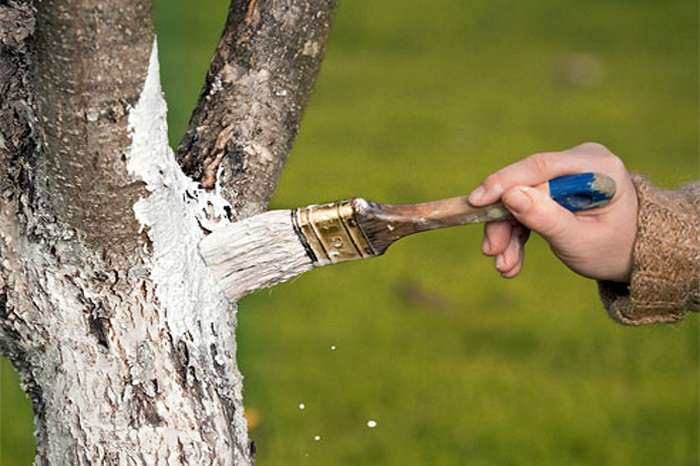 To prevent burns to your hands, wear gloves and use a brush to clean the cuts. Choose a dry, windless day.
Putty
Cuts should be sealed to prevent water and bacteria from entering the cracks. Without sealant, the shoots may begin to dry out. Sap flow is disrupted, and moisture evaporates. Garden resin, a mixture of loam and cow dung, or water-based paints can be used to seal wounds. In cases of severe damage, the wound is sealed with cement.
Take a look Also
Disinfection
Treating apple trees with insecticides is an effective method of controlling beetles.
- Confidor is widely used. Its effectiveness lasts for 20 days.
- The drug "Aktara" is used in the warm season in parallel with fungicides.
- The "Iskra" product is fast-acting; it is sprayed on apple trees 4 times with a 14-day interval.
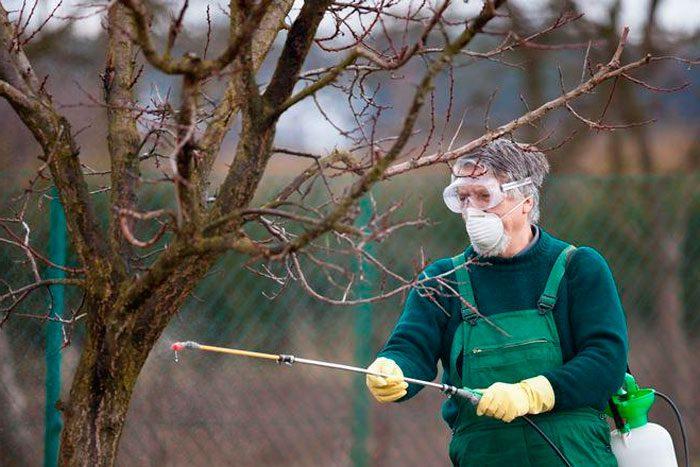 The last treatment with any chemical is carried out 30 days before harvesting.
Cleaning the crack
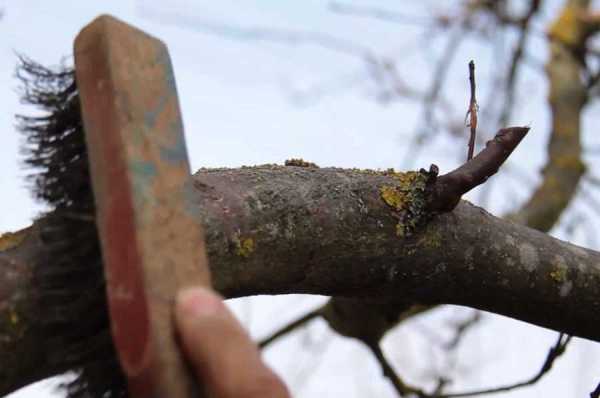
The damaged areas are carefully cleaned with a disinfected tool, avoiding the healthy bark. Then, they are washed with potassium permanganate, brilliant green, or hydrogen peroxide. Once the cracks are dry, they can be wrapped in plastic, burlap, or other readily available fabric to prevent infection. After this treatment, the wounds will heal, the bark will begin to regenerate, and the cut will close. The peeled bark is removed from the plot.
Tree grafting
Before grafting, dead wood is removed. The apple tree is grafted using a "bridge" or a bark ring. Minor wounds are protected until healthy tissue is exposed, then covered with sealant or transparent plastic film until healing occurs.
How to treat cracks in a young tree
Young apple trees often experience bark cracking. These cracks allow infection to enter and need to be sealed.
- The cracked parts are cut out to healthy bark, 2 cm deep.
- They are watered with 3-5% iron or 2% copper sulfate.
- They lubricate it with grease and whiten the barrel.
- All debris is removed from the plot. Before winter, the area around the tree is dug up.
Before spring flowering, young trees are fertilized with boron and magnesium.
Sanitary pruning
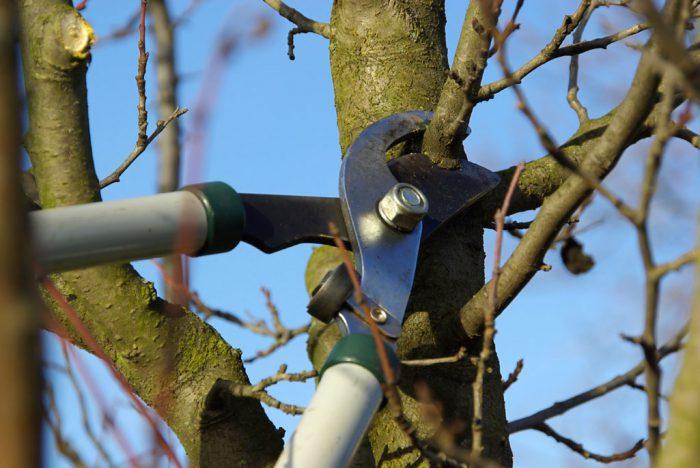
With the arrival of spring, the cracked bark is carefully removed with a knife. The diseased apple tree is treated with a copper sulfate solution and covered with garden pitch.
Treatment of diseases and pest control
Apple trees should be treated while the sap is flowing slowly. Otherwise, excessive moisture will prevent the wounds from healing and create favorable conditions for fungal growth. Affected parts should be cut off with healthy surfaces and treated with Topsin M and Funaben. Treatment should be carried out in dry weather.
Prevention of cracks
Preventive measures include the following aspects:
- in autumn, remove plant debris and fallen leaves;
- apple trees are properly fed and watered;
- Clean the damaged areas with a knife and treat them with copper sulfate.
In early spring, it is useful to carry out preventative treatments with fungicides.
Related posts:
 Signs and treatment of apple tree cancer, varieties resistant to the disease
 Description of the Chudnoe apple variety, planting and caring for a dwarf tree
 Description and varieties of the Sinap apple tree, planting and care rules
 Description and planting of the Dream apple tree variety, care and propagation
 Description of the ornamental Nedzvetsky apple tree, cultivation technology
 Description and characteristics of the columnar apple tree President, planting and care
 Description and subtleties of growing the Sverdlovsk Beauty apple tree variety
 Description and characteristics of the Mantet apple tree, planting and care