
- Selection and cultivation area of the Vishnevoe apple tree
- Advantages and disadvantages
- Botanical information
- Size and annual growth
- Crown and branches
- Foliage and buds
- Fruiting of the tree
- Flowering and pollinators
- Ripening time and yield per tree
- Harvesting and storage
- Tasting evaluation of the fruit and the scope of application of apples
- Winter hardiness and drought resistance
- Susceptibility to diseases and pests
- How to plant a tree on a plot
- Required soil composition
- Selecting and preparing a landing site
- Dimensions and depth of the planting hole
- Timing and step-by-step algorithm for planting a seedling
- Caring for the Cherry variety
- Watering mode
- We apply fertilizers
- We trim and shape the crown
- Loosening and mulching the tree trunk circle
- Prevention and protection of wood
- Covering a fruit tree for the winter
- Methods of reproduction
- Subspecies
- Columnar variant
- Early winter apple tree Vishnevoe
- Gardeners' reviews of the variety
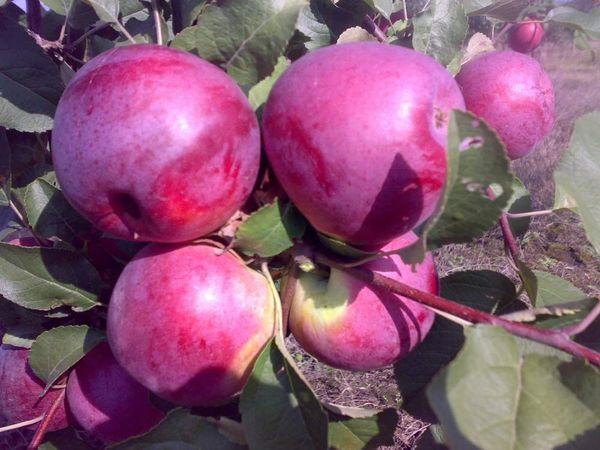
When choosing an apple tree for your garden, it's important to study the varietal characteristics of the fruit tree and its selection process. The high-yielding, winter-ripening hybrid apple tree, Vishnevoe, has gained popularity among gardeners relatively recently. During harvest, the tree is literally covered with bright red apples. The fruits are attractive, have good shelf life, and are suitable for transportation. This apple tree is zoned for the Central Black Earth Region.
Selection and cultivation area of the Vishnevoe apple tree
The progenitors of this high-yielding hybrid are the Antonovka Obyknovennaya and Pepin Saffronny varieties. The cultivar's creators are Lobanov, Isaev, Ivanova, and Zayets. This beautiful apple tree is most widespread in the Tambov and Voronezh regions. It is officially zoned for the Central Black Earth Region. It is successfully grown in the Volga, Moscow, and Leningrad regions.
Advantages and disadvantages
When choosing an apple tree for your plot, it's important to consider the variety's advantages and disadvantages. Advantages of the Vishnevoe apple tree:
- scab resistance;
- stable and regular harvests;
- long storage period of ripe apples;
- commercial appearance of fruits;
- early fruit bearing;
- high yield.
The disadvantages of the variety include:
- average frost resistance;
- lack of aroma from apples;
- poor drought resistance;
- late apple harvest period.
To achieve a bountiful harvest, it is necessary to have pollinating apple trees, such as Pepin Saffron and Northern Sinap.
Botanical information
The Cherry apple tree produces a medium-sized tree. It bears fruit annually and requires no special care, though it does require additional winter protection.
Size and annual growth
The mature tree reaches 3-3.5 meters in height; it is considered a medium-sized apple tree, suitable for commercial cultivation. It grows at a moderate rate, with annual growth of approximately 20-30 centimeters.
Crown and branches
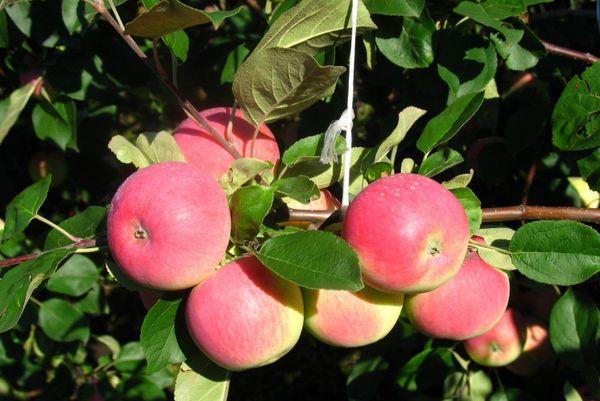
The tree forms a neat, dense, rounded crown. The apple tree is prone to becoming dense. Shoots grow horizontally, perpendicular to the trunk. The bark is reddish-brown.
Foliage and buds
The leaf blades are oval, with fine serrations along the edges. The leaf is smooth, slightly drooping. The petiole is medium in length. The flower buds are small.

Fruiting of the tree
The Cherry apple tree is distinguished by its regular fruiting, a quality that was passed on to the hybrid from its ancestor, the Saffron Pepin.
Flowering and pollinators
With proper care, you can begin to taste the first apples from a young tree as early as its fourth year. This variety is known for its early fruiting. The tree blooms in the second half of May.
For high yields, the hybrid requires pollinating neighbors, such as Antonovka vulgare, Severny Sinap, and Pepin Saffron.
Ripening time and yield per tree
By mid-September, the fruits reach technical maturity. The yield from one mature tree is 150 kilograms. The hybrid bears fruit continuously, ripening every year.
Harvesting and storage
The variety is resistant to fruit drop. When stored properly, harvested fruit retains its freshness and quality until spring. The apples are suitable for transportation.
Tasting evaluation of the fruit and the scope of application of apples
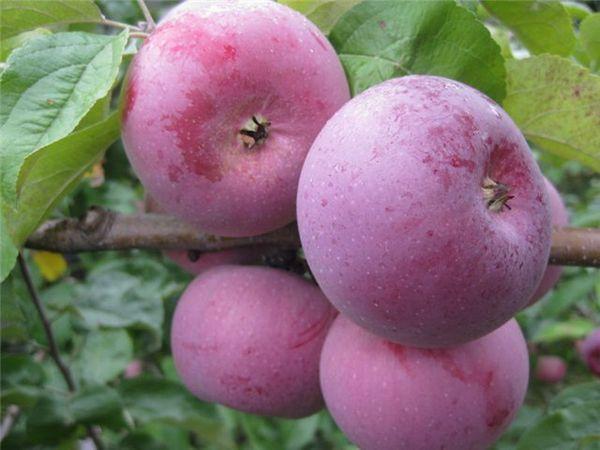
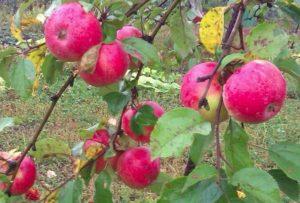
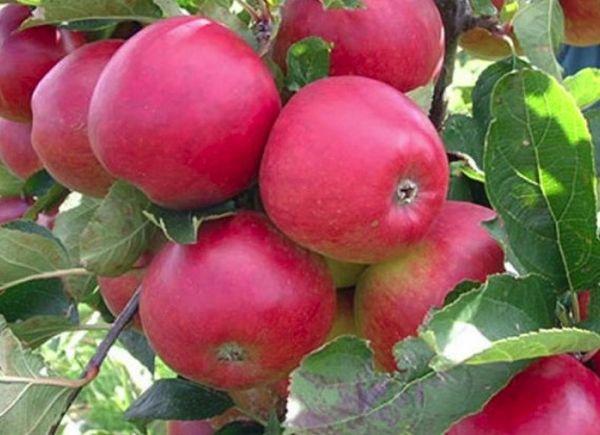
The fruit's flavor is above average. The variety's distinguishing feature is its bright red color and almost complete absence of apple aroma. The flesh is white, juicy, fine-grained, and sweet and sour. The apple's sugar content is 10%. The skin is thin. On a five-point flavor scale, the variety received a score of 4.5.
The fruit has a universal purpose: apples are eaten fresh, canned, and used to make juices and jams.

Winter hardiness and drought resistance
The variety doesn't stand out for these qualities; its winter hardiness and drought tolerance are average. In cold, snowless winters, the apple tree's tops and shoots freeze. Stagnant moisture around the roots is detrimental to the plant; it should not be planted in lowlands or marshy areas.
Susceptibility to diseases and pests
The Vishnevoe variety inherited resistance to scab and many other fungal diseases from the Antonovka ordinary. To prevent insect pests, preventative fungicide spraying is necessary before flowering. In winter, the trunk should be protected from rodents.
How to plant a tree on a plot
The success of growing the Cherry apple tree and the amount of harvest depend on the correct choice of growing location for the fruit tree, as well as the care system for the hybrid.
Required soil composition
The Cherry apple tree is an easy-to-grow hybrid. The ideal soil pH for this fruit tree is neutral. It prefers light, chernozem soils and requires organic fertilizers and phosphorus-potassium complexes.
Selecting and preparing a landing site
The planting site is prepared in advance. The Vishnevoe apple tree is planted in groups or individually. The soil must be dug, weeded, and loosened. The holes are marked in advance; when planting in groups, a staggered pattern is used.
Dimensions and depth of the planting hole
The optimal dimensions of a planting hole are 90 centimeters deep, 90 centimeters deep, and 90 centimeters in diameter. The distance between trees should be at least 3-3.5 meters.
Timing and step-by-step algorithm for planting a seedling
Young seedlings are planted in spring or fall. Here's the procedure for planting a young fruit tree:
- Drainage is installed in the planting holes.
- They add additional organic matter, add humus or horse manure mixed with wood ash and sand, and add 2 handfuls of urea.
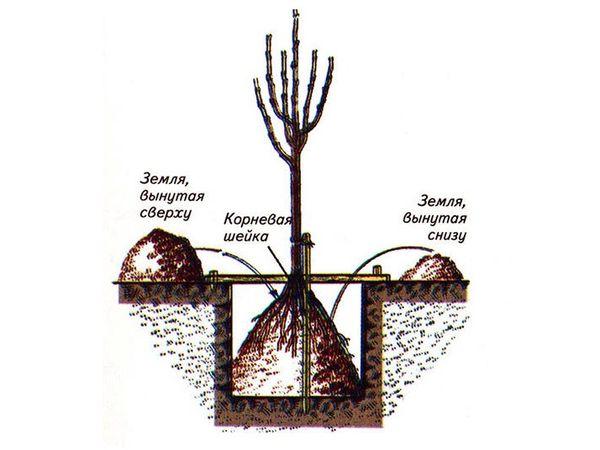
- A mound is made in the center of the hole, on which the tree's root system is carefully spread out.
- The apple tree is covered with soil, watered, sprinkled with the remaining mixture of humus and sand on top, and compacted.
Note! If planting in the fall, it's important to remember to leave at least one month before the first frost when choosing a time.
Caring for the Cherry variety
Fruit tree care involves fertilizing and properly shaping the apple tree's crown. The Cherry variety requires winter protection and preventative spraying with fungicides to control insect pests.
Watering mode
The seedling requires regular watering for a month after planting. Apple trees respond favorably to sprinkling of the crown. After that, reduce the frequency of watering, depending on weather conditions. Overwatering is dangerous for all fruit tree species. The variety does not tolerate drought well; avoid allowing the soil to dry out completely.
We apply fertilizers
The first fertilizing is done when the apple tree is three years old. Liquid organic matter is added, the area around the tree trunk is loosened, and a layer of rotted manure mixed with sand is applied. Potassium-phosphorus complexes and calcium are important for apple trees during flowering and bud formation.
 Note! Do not use fresh manure or concentrated bird droppings, as they may burn the tree.
We trim and shape the crown
The Vishnevoe apple tree is prone to developing a dense crown. Formative pruning is necessary. Crooked, deformed, and dried branches must be removed promptly; otherwise, the fruit will become smaller and the yield will decrease.
Loosening and mulching the tree trunk circle
The area around the tree trunk must be kept clean. Weeds must be removed and the soil loosened promptly. This ensures aeration for the tree's root system. Before winter, the area should be insulated with mulch: peat, humus, or last year's leaves.
Prevention and protection of wood
The Cherry apple tree, like any fruit tree, requires timely protection from insect pests and fungal infections. Prevention:
- Covering tree trunks with whitewash in early spring and autumn.
- Pruning diseased, crooked shoots.
- Clearing the tree trunk circle of weeds.
- Spraying trees with fungicides during the period of bud formation.
- Control of excessive soil moisture.
In winter, the tree trunk must be protected from attacks by hares and rodents with spruce branches.
Covering a fruit tree for the winter
The Vishnevoe apple tree requires winter protection to prevent frostbite at the tree's top, though the variety has average winter hardiness. The area around the tree trunk is carefully loosened, weeds are removed, and the soil is insulated with peat or last year's leaves. The trunk is covered with spruce branches or burlap.
Methods of reproduction
The Vishnevoe apple tree can be propagated. This can be done in three ways:
- vaccination;
- by cuttings;
- seeds.

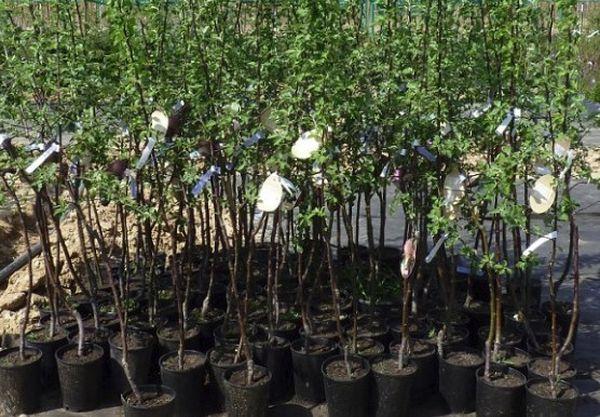
When purchasing a seedling in a store, carefully inspect the planting material; there should be live buds on the trunk and the root system should be well developed.
Subspecies
The type of rootstock used will determine the final height of the tree. Grafting can produce a columnar or dwarf variety, affecting the crown density and other plant qualities.

Columnar variant
A miniature dwarf, no more than 2 meters tall, it's ideal for small plots. Its varietal qualities are identical to those of the medium-sized hybrid, but the columnar variety begins fruiting earlier, is easy to harvest, and requires no additional equipment.
Early winter apple tree Vishnevoe
The Vishnevoe apple tree is an early winter variety. The fruit reaches technical maturity by mid-September. The yield per mature tree is 150 kilograms. This hybrid produces fruit continuously, ripening every year, and the apples remain fresh until February.
Gardeners' reviews of the variety
Tatyana Mikhailovna Konysheva, 48, Saransk: "This is probably the most beautiful apple tree in my garden. The rich red color of ripe apples really stands out on the tree. The fruit doesn't fall off and keeps for a long time. The yield is good, the tree hasn't been sick, but the top froze during the first winter after planting, even though it wasn't very cold. We nursed the tree back to health, and now I cover the trunk with burlap for the winter and cover the roots with fallen leaves."
Alexey Valerievich Mertvishchev, 50, Moscow: "Delicious apples with a long shelf life. Red and juicy. Bears fruit every year. Tree care is simple. Don't let the soil dry out too much, as the leaves curl immediately. Sprinkling water on the crown is beneficial. For the winter, I insulate the apple tree with spruce branches; it protects it from both hares and frost."
Anna Markovna Lezhnina, 39, Voronezh: "In my opinion, this apple tree is a true gem in any garden. It blooms beautifully, and when it's ripening, it's completely covered with incredible red apples. It's a popular variety, along with Antonovka. I process it into jams and preserves. I store the fruit fresh in the cellar, in fruit boxes. The apples retain their flavor until spring."
Related posts:
 How to plant walnuts, care for them, and grow them at home
 Description and rules for growing the Bratchud apple tree variety
 Description of the Venyaminovskoye apple tree variety, planting and care
 Description of the Chudnoe apple variety, planting and caring for a dwarf tree
 Description and subspecies of the Sakharny Arkad apple tree variety, cultivation technology
 Peach tree care and agricultural secrets, pest control
 Description and subtleties of growing the Sverdlovsk Beauty apple tree variety
 Description of the Red Early apple tree variety, agricultural technology and specific care