
- Selection of the Legend apple tree
- Cultivation regions
- Urals and Siberia
- Leningrad Oblast
- Moscow region
- Subspecies and variants
- Dwarf
- Columnar
- Main advantages and disadvantages
- Characteristics of the Legend variety
- Tree size and annual growth
- Lifespan
- All about fruiting
- Flowering and pollinators
- Ripening time and yield
- Tasting qualities of apples
- Fruit collection and use
- Sustainability
- To diseases and pests
- Unfavorable climatic conditions
- Specifics of planting fruit crops
- Deadlines
- Site selection and preparation
- Preparing seedlings
- Technological process of landing
- What can be planted nearby?
- Further care
- Watering and fertilizing
- Trimming
- Caring for the tree trunk circle
- Preventive treatments
- Winter protection
- Methods of propagation of the Legend variety
- Gardeners' reviews
The Legend apple variety is one of the best apples, a cross between the Japanese record-breaking Fuji and the Russian Brusnichnoe apple. In addition to its large yield, the Legend variety stands out from its peers for its high resistance to frost, diseases, and pests. Today, this variety is grown not only in private gardens but also in commercial orchards.
Selection of the Legend apple tree
This apple variety was developed by Russian breeder V.V. Kichina in 1984 by crossing the Japanese Fuji apple and the domestic Brusnichnoe apple. After extensive research, the variety was added to the Unified State Register of the Russian Federation in 2008.
Since then, the apple tree has become popular among breeders from all over the world, and today the crop is considered one of the most promising.
Cultivation regions
The variety is recommended for cultivation in the middle zone, but, thanks to the ability of this crop to adapt to changing climatic conditions, it can also be grown in cold latitudes.
Urals and Siberia
Thanks to its increased resistance to cold climates, the apple tree tolerates harsh local winters well and continues to produce fruit. The yield may be lower than in southern or central regions.
Leningrad Oblast
Because this variety is adapted to the central region, it exhibits good fruiting and yield in the Leningrad Region. It tolerates heavy rainfall and short summers.
Moscow region
In the Moscow region, the crop also produces high yields. The plant tolerates extreme climate fluctuations and strong winds.
Subspecies and variants
This variety has two cultivation methods, which differ not only in appearance, but also in their characteristics.
Dwarf
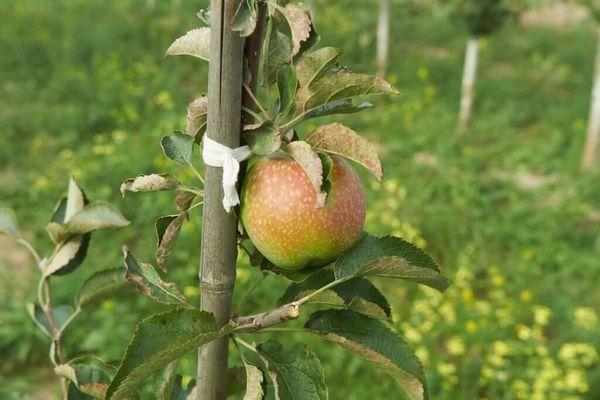
The Legend apple tree, grown on a dwarf rootstock, takes up less space due to its compact crown and produces a large harvest each season. Its short lifespan, peaking at 15 years, is a notable drawback.
Columnar
Apple trees on columnar rootstocks are characterized by small crowns and minor yield losses. This system is used in commercial orchards to increase productivity in a smaller area. Among the disadvantages is the inability to independently shape the columnar crown, as this is done by specialists.
Main advantages and disadvantages
The Legend apple variety has almost all the advantages, including:
- increased tolerance to frosty climatic conditions;
- compactness of the crown;
- no need for constant care;
- immunity to most diseases that affect apple trees;
- adaptive properties that help to better cope with sudden climate changes;
- a large amount of harvest from one dwarf tree.

Despite the fact that the variety is one of the best, it still has some disadvantages:
- short shelf life of fruits;
- the yield is not always stable;
- short life span of the plant.
Characteristics of the Legend variety
This apple tree variety has incorporated the best qualities of its parent trees. It is suitable for both home and commercial cultivation and boasts numerous advantages.
Tree size and annual growth
One of the main advantages of this plant is its compact size. At its peak, the tree rarely exceeds 3 meters, but in some cases it can reach around 4 meters. This height also depends directly on maintaining the right climate conditions for growth and consistent care.
Every year the tree grows by 50-60 centimeters.
Lifespan
The plant's lifespan is approximately 15 years. This lifespan can also vary depending on how well it is cared for.
All about fruiting
The tree begins bearing fruit early, 2-3 years after planting. The yield is large, but not always consistent, depending on the conditions in which the plant is exposed and growing.
Flowering and pollinators
This variety is only partially self-pollinating, which may result in lower yields. To ensure high-quality fruiting, the plant requires additional pollination from apple varieties with similar or identical flowering times. The following varieties are suitable for this procedure:
- Melba;
- Northern Sinap;
- Borovinka.
Flowering begins in early to mid-May, with clusters of 3-6 flowers appearing on the tree's branches. These flowers are medium-sized and white with a distinctive pink tint.
Ripening time and yield
Fruit formation begins in early to mid-June, and full ripening occurs between September and October. This timeframe may vary depending on regional climate conditions. For a dwarf tree, the yield is high. With proper care and consistent, high-quality care, the plant can produce up to 100 kilograms of fruit in a single season.
Tasting qualities of apples
Tasters gave the Legend apples a 4.5 out of a maximum of 5 points for taste and appearance. The fruits have juicy yet tender flesh, a moderately sweet flavor, a characteristic tartness, a vanilla flavor, and a rich, lingering aroma. Among the drawbacks, tasters noted the fruit's poor shelf life, even when stored in refrigeration.
Fruit collection and use
Fruit should be harvested immediately after they are fully ripe, between September and October. Otherwise, the apples will begin to fall off and spoil.
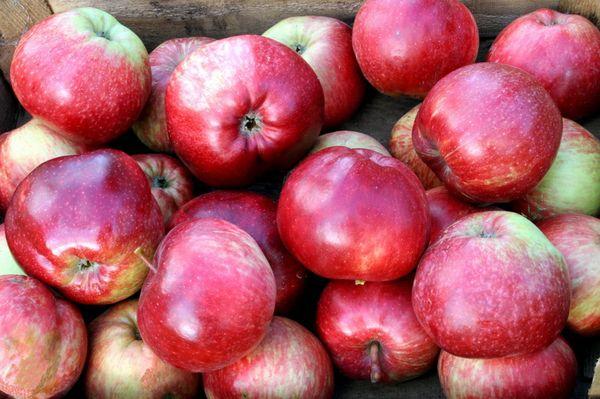
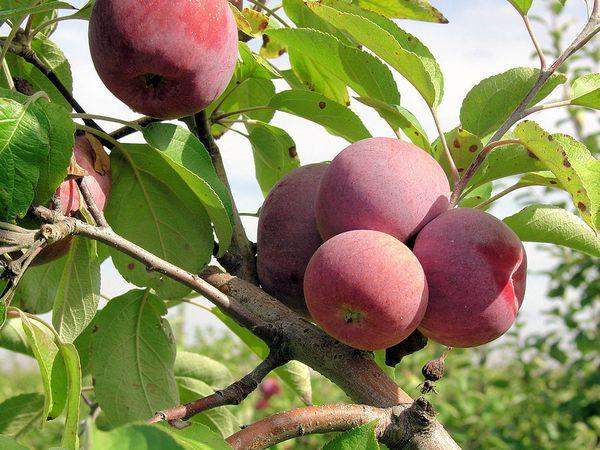
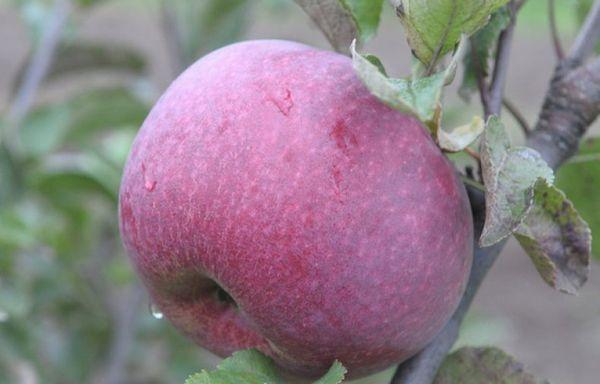
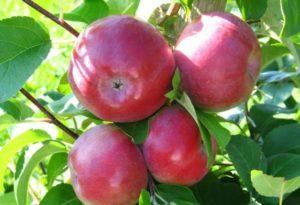
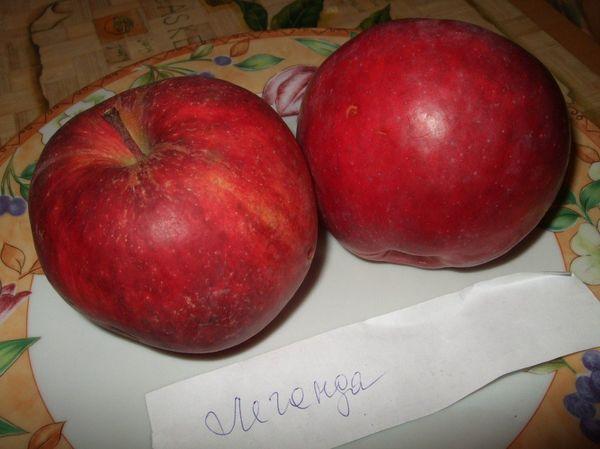
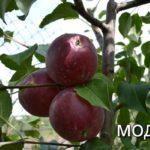
The fruits of this crop are large, weighing between 150 and 200 grams. The apples have yellow skin covered with a rich red hue.
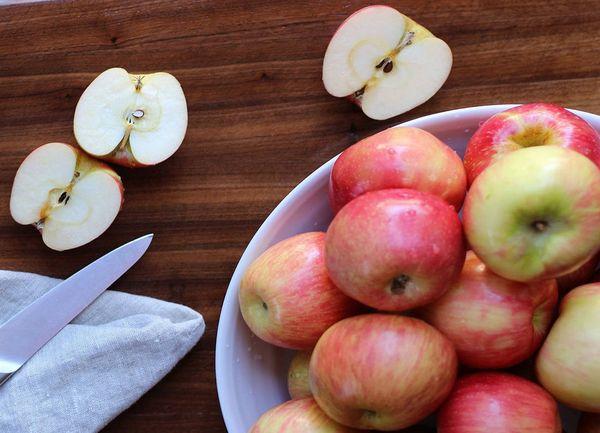 The fruits are used for sale, raw consumption, making liqueurs, juice-based drinks, dishes, confectionery, and baked goods.
Sustainability
This variety has increased resistance to cold climates and can adapt to sudden and severe weather changes. Most diseases cannot affect the Legend apple tree, due to its immunity to many bacteria and fungi.
To diseases and pests
This apple variety is not susceptible to fungal or bacterial diseases, but can be infected if the tree is planted near infected crops. The plant may occasionally suffer from scab.
As with diseases, Legend is resistant to most pests that affect apple trees, but for complete protection of the crop and tree, it is better to carry out preventative treatments.
Unfavorable climatic conditions
The main advantage of this variety is its adaptability to a variety of conditions. The plant can tolerate temperatures down to -50°C. Thanks to this unique feature, the plant is resilient to sudden climate changes and strong winds. The variety tolerates drought well, but if there's insufficient moisture, it will become diseased, and fruit production will decrease and may even disappear completely.
Specifics of planting fruit crops
If planted correctly, the plant will bear fruit annually and produce a large harvest.
Deadlines
Planting should be done in spring or fall. The first option is suitable for sowing seeds and then transplanting them into open ground, while the second is for planting cuttings.
Site selection and preparation
It's best to choose a level site with a shallow groundwater table (1-2 meters). The location should be well-lit, with some shade possible, which will fall on the tree for a few hours a day. The site should be fenced to protect the tree from strong gusts of wind and drafts. Even though this variety is well-adapted, it's important to provide the best possible growing conditions.
One month before planting, dig holes 3-4 meters apart. Set the top layer of soil aside for later use. Then, fill the hole with a mixture of warm water and bird droppings.
Preparing seedlings
After selecting a healthy seedling, 1-2 hours before planting, dip the root system in a special solution that stimulates its growth. This mixture can be purchased at a gardening store.
Technological process of landing
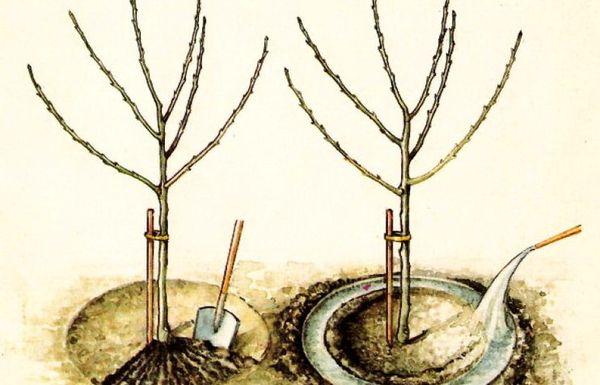
To carry out the correct procedure for planting cuttings, you need to follow the sequence:
- At the bottom of the hole, form a pile of fertile soil and light fertilizer.
- Dig a stick into it, which will become a support for the tree.
- Place the cutting in the hole and straighten the roots.
- Place the seedling on a mound of soil and fill the hole with the remaining fertile soil.
- Compact the surface and tie the cutting to a support stick.
- Water the plant generously with 10 liters of warm water.
What can be planted nearby?
Any crops can be grown nearby, but it is better to plant other varieties of apple trees for better pollination and increased tree yield.
Further care
Proper care of an apple tree includes:
- watering;
- top dressing;
- pruning;
- insulation;
- processing;
- cleaning the area.
Watering and fertilizing
Watering should be done up to three times a month, assuming average rainfall. If rainfall is higher, the amount can be reduced, while in dry climates, the frequency can be increased.
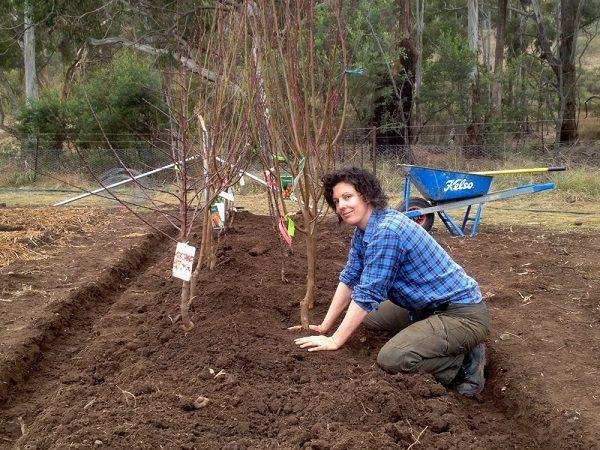
Apple trees are fertilized using mineral and organic fertilizers. This procedure is best performed during the following periods:
- before flowering;
- before fruit formation;
- after picking apples;
- before the beginning of winter.
Trimming
Pruning involves both sanitary and formative procedures. It should be performed annually by removing dead, diseased, or abnormally growing branches from the tree.
Caring for the tree trunk circle
After watering the plant, the soil should be loosened to allow oxygenation and moisture to reach the roots more quickly. After this, the area around the tree trunk should be mulched. For this, use:
- straw;
- fallen leaves;
- wood sawdust;
- specialized inorganic materials.
Preventive treatments
The variety has increased resistance to most diseases and pests, so regular treatments are unnecessary. To prevent disease, the tree trunk can be whitewashed annually.
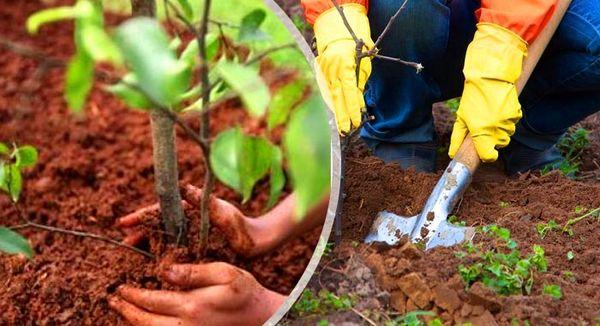 To enhance the preventative effect, fungicides should be added to the lime.
Winter protection
You don't need to take any protective measures for the winter, but if the tree is still young, you should wrap the trunk. To do this, line ¼ of the base with straw and wrap it with burlap. The entire structure should be tied together.
Methods of propagation of the Legend variety
Of all the methods, the most popular is cuttings. For this method, 1-3 healthy shoots with more than four leaves at the base are cut from the tree each fall. These shoots are then grown artificially until a well-developed root system develops. Once this occurs, they are transplanted into open ground.
Gardeners' reviews
Maria, 41 years old, Moscow.
"A popular variety among gardeners, renowned for its adaptability to all climate conditions. With proper care, it produces a large harvest."
Andrey, 38 years old, Uralsk.
"I've been growing the Legend apple tree for three years; it should start bearing fruit next year. It's best to wrap the young tree for the winter because it can't yet withstand frost."
Related posts:
 Description of the Red Early apple tree variety, agricultural technology and specific care
 How to plant walnuts, care for them, and grow them at home
 Descriptions of the 20 best cherry varieties for the Moscow region, their planting and care
 The best grape varieties for growing in the Urals, planting and care rules in summer
 Description of the Chudnoe apple variety, planting and caring for a dwarf tree
 Description and cultivation of the Skorospelka pear variety from Michurinsk
 Description of the Uralets apple tree variety and the rules for growing standard trees
 Description of the Modi apple tree variety, planting and care features