
- The history of the selection of the winter apple tree Modi
- Growing regions
- In the Moscow region
- In the Krasnodar region
- In Ukraine
- Main advantages and disadvantages
- Characteristics of the variety
- Tree size and annual growth
- Lifespan
- All about fruiting
- Flowering and pollinators
- Ripening time and yield
- Tasting qualities of Modi apples
- Fruit collection and use
- Resistance to adverse climatic conditions
- Immunity to scab and other diseases
- Specifics of planting fruit crops
- Deadlines
- Site selection and preparation
- Preparing seedlings
- Technological process of landing
- What can be planted nearby?
- Further care
- Watering
- Foliar and root feeding
- Trimming
- Caring for the tree trunk circle
- Seasonal treatment against insects and infections
- Winter protection
- Methods of propagation of the Modi variety
- Gardeners' reviews
The Modi apple variety is a winter crop developed in the late 20th century and is only now becoming popular among gardeners worldwide. The plant boasts high yields, early fruiting, and resistance to certain diseases and frost. Apples of this variety are prized for their flavor and appearance, and are also used in the mass production of various products.
The history of the selection of the winter apple tree Modi
The Modi apple tree was bred in 1982 by Italian breeders and underwent extensive testing and research. To achieve this The varieties were crossed with the Gala apple tree and Liberty. This variety only began to gain popularity in 2007, and was introduced to the United States in 2014. The variety is grown in Russia, but has not yet been added to the state register.
Growing regions
This variety has average cold tolerance, but can withstand temperatures as low as -25°C without prior preparation. It can be grown in various regions but requires constant care.
In the Moscow region
The Moscow region's conditions are ideal for the comfortable growth of the Modi apple tree; however, before frost sets in, the trunk should be wrapped and pre-fertilized.
In the Krasnodar region
The Krasnodar region is the most suitable region for growing this variety. The tree prefers full sunlight and does not tolerate extreme frosts.
In Ukraine
For growing in Ukraine, choose areas with temperatures that do not fall below -30°C; otherwise, pre-fertilize the soil and cover the tree trunk.
Main advantages and disadvantages
Among the advantages of the Modi apple tree, the following indicators can be noted:
- quantity of harvest;
- average tolerance to frosty climatic conditions;
- immunity to scab and powdery mildew;
- compact crown size;
- possibility of transportation over long distances;
- long-term preservation of fruits;
- taste and appearance of apples.
This variety has the following disadvantages:
- uneven development with excessive crown density;
- poor drought tolerance;
- rapid fall of ripe fruits.
Characteristics of the variety
The Modi apple variety is a medium-sized tree that can grow up to 6 meters in height, has a compact crown and is suitable for commercial cultivation.
For the size of the tree, the variety has a large yield and early fruiting.
 Due to its frost tolerance and immunity to some diseases, Modi is grown by gardeners all over the world.

Tree size and annual growth
This is a medium-sized tree that, given the right conditions, can grow up to 7 meters tall, but the average height is 5-6 meters. The tree's crown is small and oval or round. The tree grows 40-50 centimeters annually, but this height can vary depending on weather conditions and the consistency of proper care.
Lifespan
The tree has a long lifespan, reaching 70 years, but there are cases where apple trees live longer. Despite this, fruiting continues for 50-60 years, after which it ceases completely.
All about fruiting
This variety produces a large harvest for a medium-sized tree, potentially reaching 50-60 kilograms. Flowering begins late, but early frosts do not affect the quantity or quality of the harvest. The first fruiting occurs 2-3 years after planting.
Flowering and pollinators
Flowering begins in mid- to late May, with clusters of 4-6 white-pink flowers forming on the shoots. Pollination of the Modi variety requires the presence of other crops in the area with similar flowering times. The following apple varieties are suitable for pollination:
- Gala;
- Golden Delicious;
- Fuji.
Fruit formation begins in early or mid-June.
Ripening time and yield
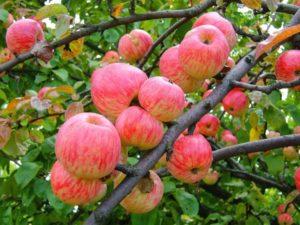
Apples fully ripen in August or September. The harvest per season is 50-60 kilograms, which can increase with regular tree care.
Tasting qualities of Modi apples
The Modi apple received a tasting score of 4.8 out of 5. This rating was awarded for its moderate sweetness, characteristic acidity in the aftertaste, attractive appearance, and juicy, firm flesh. Among the drawbacks, tasters noted a lack of varietal distinctiveness, as many apples share these flavor characteristics.
Fruit collection and use
Fruit harvesting should take place in August or September, immediately after they are fully ripe. Otherwise, they will begin to fall off, leading to spoilage.
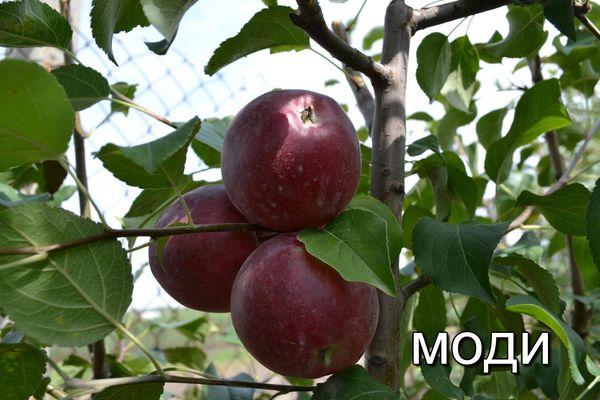
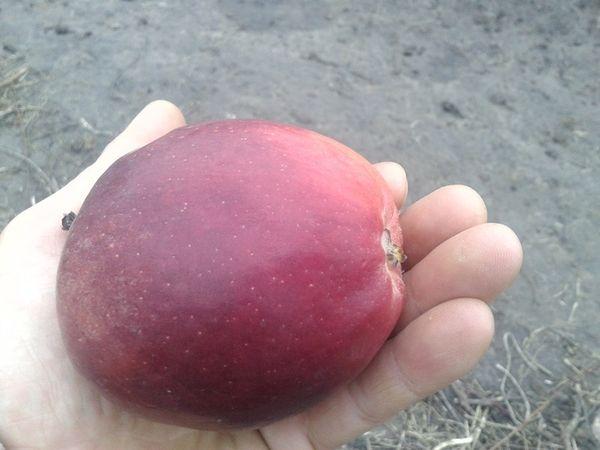
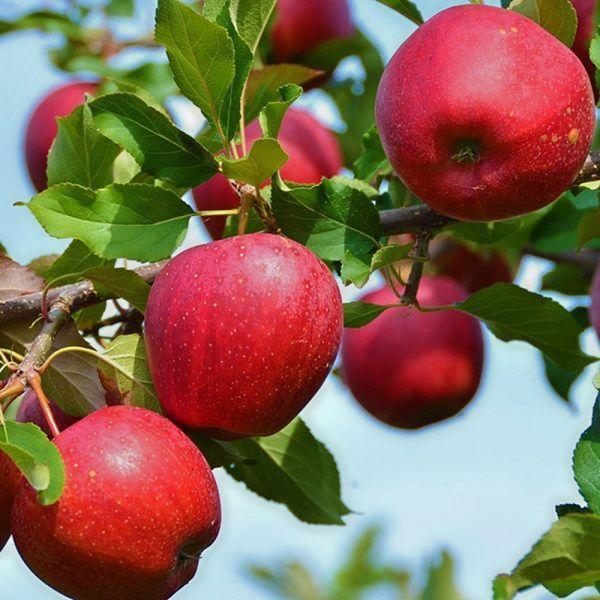
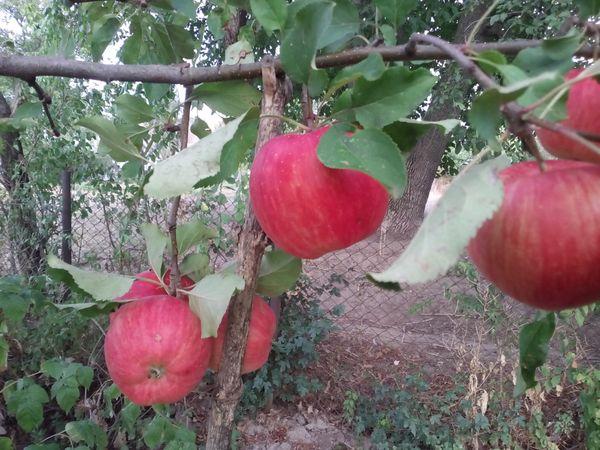
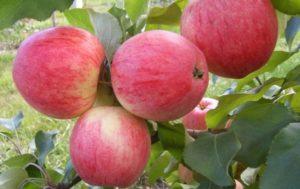
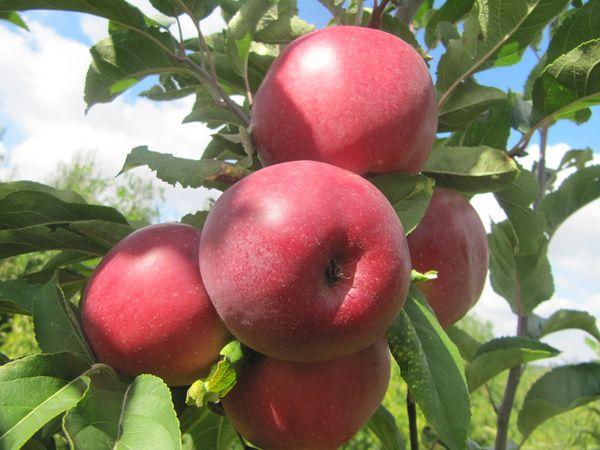
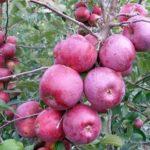
The Modi apple variety produces large fruits, weighing between 60 and 120 grams, depending on the tree's growing conditions and canopy density. The apples have a firm yet juicy texture, a round shape, and a deep red color.
The fruits are used not only for commercial purposes and raw consumption, but also for making baked goods, various dishes, liqueurs and natural juices.
Resistance to adverse climatic conditions
The apple tree has average tolerance to cold conditions and can withstand temperatures down to -25°C. In drought, the variety does not thrive and may become diseased and produce fewer fruits. Without timely watering, the plant is likely to die.
Immunity to scab and other diseases
The Modi apple tree is immune to scab and powdery mildew, but can be affected by other diseases and pests.
Specifics of planting fruit crops
If planted correctly, the Modi apple tree variety will bear fruit and develop annually.
Deadlines
Tree planting can be done in the fall or spring. The first option is suitable for planting cuttings in the garden and then covering them, or using seeds for transplanting into open ground.
An apple tree should be planted in the spring only if the winter is extremely cold.
Site selection and preparation
The Modi apple tree thrives in a flat area with adequate sunlight. Some shade is acceptable, providing light shade for a few hours a day. The site should be protected from strong winds and drafts. A suitable groundwater level is 2-3 meters.
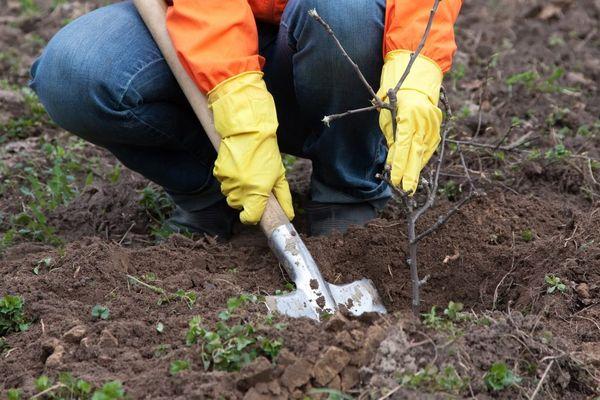
Before planting the cuttings, dig holes approximately 80 centimeters deep and wide. Afterward, fertilize them with a solution of water and bird droppings. This procedure should be carried out 1-1.5 months before planting.
Preparing seedlings
When purchasing seedlings, you need to pay attention to their general condition; the cuttings should not have:
- spots;
- damage to the base or roots;
- growths;
- raid;
- traces of decay.
1-2 hours before planting, the plant's root system should be soaked in a special growth stimulating solution.
Technological process of landing
To properly plant an apple tree cutting, you need to follow this procedure:
- Mix fertile soil with humus or fertilizer.
- Make a small mound of enriched soil at the bottom of the hole.
- Dig in a special stick to support the future plant.
- Place the cutting in the hole, straighten the roots and place the seedling on a mound.
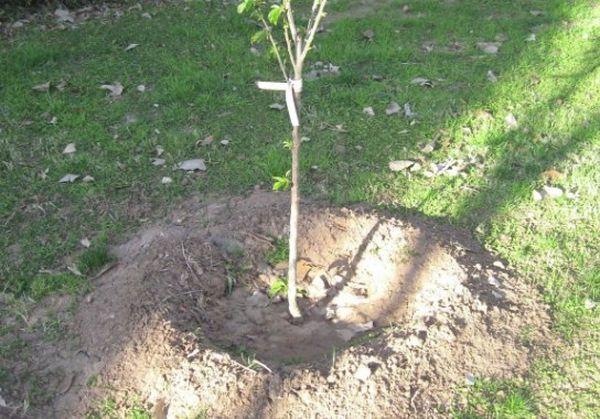
- Fill the hole with fertile soil and compact the surface. The root collar should be above ground.
- Water the plant with 10 liters of slightly warm water.
- Tie the cutting to the support.
What can be planted nearby?
Any crop can be planted next to the Modi apple tree, but only at least 4-5 meters apart. Otherwise, the other plant will interfere with the tree's stable growth by consuming essential nutrients from the soil.
Further care
Further care of the plant includes:
- watering;
- top dressing;
- crown formation;
- site clearing;
- preventive treatment.
Watering
The plant should be watered 3-4 times a month; in dry climates, the amount can be increased. Soil watering should be done only when needed, as determined by the soil condition (dry, moist, or marshy). Avoid overwatering, as this can lead to root rot.
Foliar and root feeding
Fertilizing the plant should be done 3-4 times a year:
- before flowering;
- after flowering;
- after the fruits have ripened;
- before the onset of frost.
Suitable as fertilizer:
- in spring – nitrogen-containing substances;
- in summer – complex fertilizers from nitrophoska and sodium humate;
- in autumn – a mixture of potassium and superphosphate.
Trimming
During the year, the following types of pruning should be carried out:
- Sanitary. Used to remove diseased or dead branches from a tree, thereby preventing the emergence and development of diseases.
- Formative pruning. This method is necessary for pruning overly long branches, as well as those growing toward the trunk, blocking sunlight, and shaping them at an acute angle. This method makes tree maintenance and harvesting easier.
Caring for the tree trunk circle
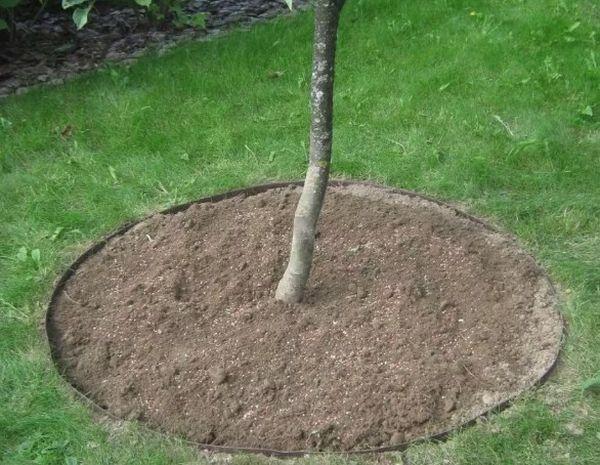
To make watering easier, you can create a hole around the tree. When watering, loosen the soil to oxygenate it and speed up the flow of moisture to the roots.
If weeds or other crops appear near the apple tree, they must be removed; otherwise, the tree may begin to grow more slowly and bear fruit poorly.
Seasonal treatment against insects and infections
The Modi apple variety is immune to some diseases and should be treated preventatively. Before the sap begins to flow, the plant should be treated with a solution of ferrous sulfate.
To prevent pests from appearing, you need to coat the tree bark with a mixture of water and clay.
Winter protection
If winter temperatures drop below -25°C, it's necessary to insulate the tree trunk. To do this, you can whitewash ¼ of the trunk beforehand. For preventative measures, add fungicides to the lime. Afterward, the tree can be surrounded with straw and wrapped in burlap.
Methods of propagation of the Modi variety
The most common propagation method for this variety is cuttings. In the spring, several of the healthiest branches are pruned and transplanted into a pre-prepared container. After several months, the cuttings will develop a root system. In autumn, the plant is transplanted into open soil.
Gardeners' reviews
Yuri, 35 years old, Krasnodar.
"This variety is suitable for most regions of the central and southern zones, but it doesn't tolerate frost well. The first fruiting begins early, but the plant requires constant care."
Pavel, 31 years old, Khimki.
"This apple variety produces a moderate amount of fruit; we harvest approximately 40 kilograms from one tree. The apples are beautiful and delicious, making them excellent for sale."
Related posts:
 Description of the Red Early apple tree variety, agricultural technology and specific care
 Description of the Chudnoe apple variety, planting and caring for a dwarf tree
 Signs and treatment of apple tree cancer, varieties resistant to the disease
 Description of the Uralets apple tree variety and the rules for growing standard trees
 Description and subtleties of growing the Sverdlovsk Beauty apple tree variety
 Description and varieties of the Sinap apple tree, planting and care rules
 Description of the ornamental Nedzvetsky apple tree, cultivation technology
 Description and characteristics of the Spartan apple variety, cultivation tips