
- History of the selection of the Anise variety
- Characteristics and description of the culture
- Tree dimensions
- Root system
- Annual growth
- Life expectancy
- Resistance to diseases and pests
- Winter hardiness and drought resistance
- Fruiting of apple trees
- Beginning of the period
- Flowering and pollinators
- Ripening time
- Tasting evaluation and scope of application of apples
- Planting and care
- When to plant an apple tree
- Choosing a location
- Preparing the site and planting hole
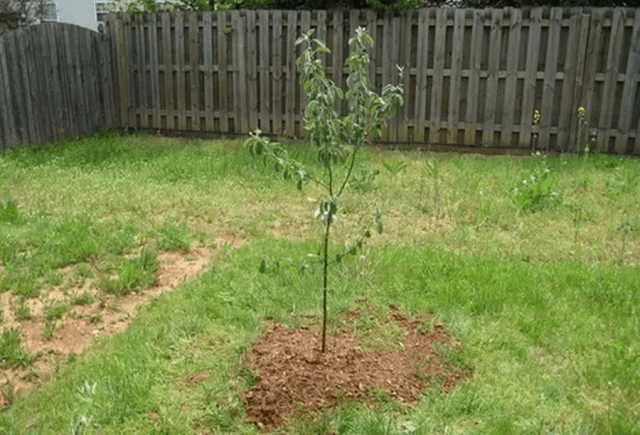
- Landing technology
- Watering
- Top dressing
- Loosening and caring for the tree trunk circle
- Seasonal processing
- Covering an apple tree for winter
- How does culture reproduce?
- Varieties
- Scarlet anise
- Sverdlovsk
- Striped
- Purple
The Anise apple tree will easily grace any Russian garden. Time-tested, it remains a popular choice and remains one of the most popular varieties. When choosing ripe apples at the grocery store, preference is given to aniseed varieties, which are just as good as the trendy hybrids. What's the secret of apples, and why are they so dear to the Russian soul?
History of the selection of the Anise variety
The Anis autumn apple variety was developed by plant breeders in the Volga region, where it became widespread in the 1930s. Its popularity rivaled that of the then-famous Antonovka variety. The ancestor of the varietal varieties was the scarlet anise. Selection was carried out over a long period of time, resulting in the creation of many subspecies with common traits and individual characteristics.
The apple variety was officially registered in the State Register in 1947 and recommended for cultivation in the Northwest, Volga-Vyatka, and Middle Volga regions. Anise apple trees quickly spread and can now be found in orchards across the country. Sixty varieties of this variety have been developed.
Characteristics and description of the culture
Anise has characteristic features that make it stand out from other apple varieties.
Tree dimensions
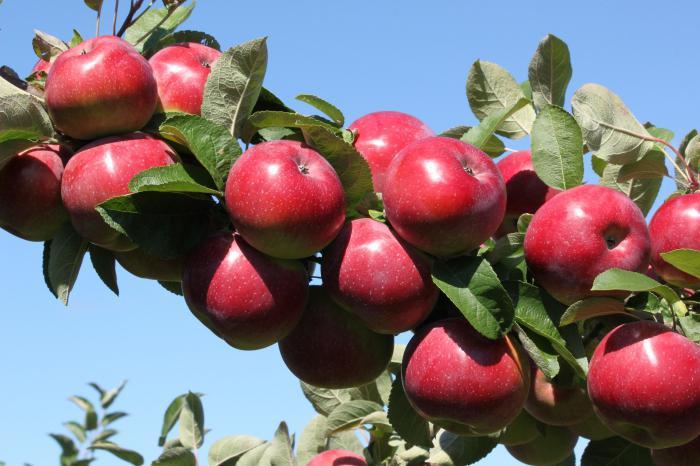
Tall (5-8 m) and strong trees have a conical crown, which becomes spherical with age. The crown is sparse and not densely dense. The branches are of medium thickness and arch upward. The trunk and branches are light brown. The tree has medium foliage, with a small number of leaves on the shoots.
Root system
The apple tree's roots are strong and well-developed. They support a robust above-ground part, which reaches 6-7 meters in width, and are the key to excellent fruit production. Anise seedlings are often used as rootstock for improved varieties to impart winter hardiness and adapt them to a specific region.
Annual growth
The annual growth rate of the Anise apple tree is 10 cm. This is an average figure that can vary depending on a number of factors:
- proper care;
- soil fertility;
- favorable season;
- location of branches.
Vertically located branches have more growth, horizontally located branches have less.
Please note: Growth is not an indicator of yield. The greater the growth of vertical branches, the lower the yield, so they need to be trained to change their growth direction.

Life expectancy
The Anis apple tree is a long-lived tree. Most varieties reach maturity by the age of 30, but this one is just entering its peak and achieving maximum yield. Some trees approach 100 years of age. On old trees, the fruits become smaller and sour in taste.
Resistance to diseases and pests
Anisovka isn't particularly resistant to pests and diseases, suffering from the same problems as other apple varieties. Apple trees are susceptible to scab and powdery mildew. With timely preventative treatment, these problems can be avoided.
Winter hardiness and drought resistance
This apple variety is frost-hardy and can easily withstand temperatures down to -40°C, making it ideal for growing delicious apples in Siberia. It quickly recovers from frost damage and continues to produce fruit. Summer drought is also no problem, as the variety can easily withstand it.
Fruiting of apple trees
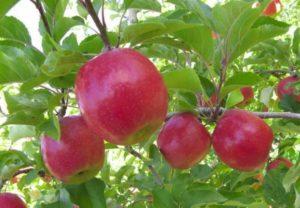
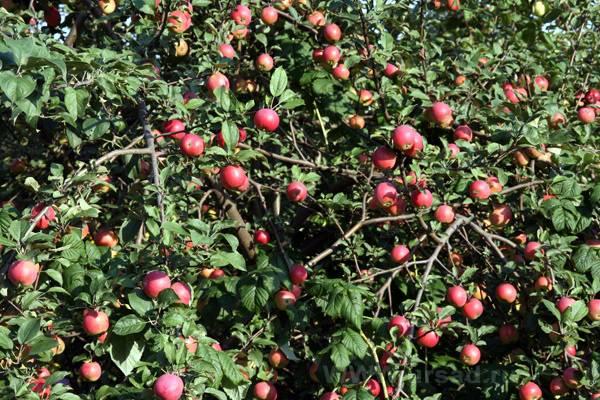
The high-yielding Anise is an autumn variety. Peak fruiting occurs at age 30, when the tree produces record-breaking yields of up to 300 kg of apples. The average yield is approximately 80 kg. The average apple weight is 70-100 g.
Beginning of the period
The first fruits appear in the fourth or fifth year, which is early. The apple tree bears fruit annually, but does not boast a consistent yield.
Flowering and pollinators
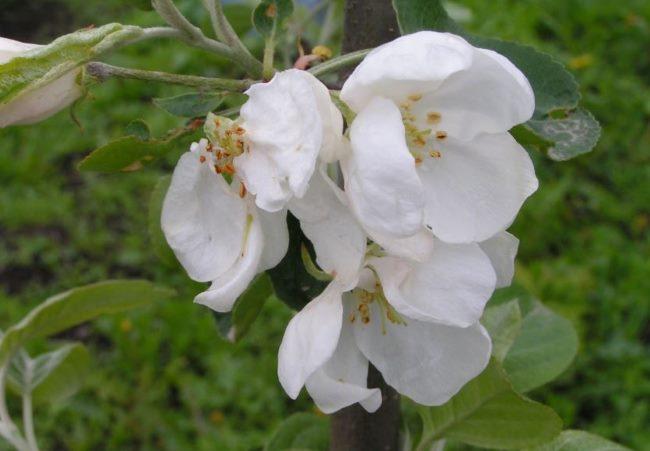
In May, the apple tree is covered with medium-sized white-pink blossoms. Fruit buds grow on spears and rings that are three years old. Anisovka apple trees are not self-pollinating, so several Anisovka apple trees should be present in the garden to ensure cross-pollination. Other varieties that can be used include Yandykovskoye, Bellefleur-Kitayka, Iyulskoye Chernenko, and Borovinka.
Ripening time
Among the varieties there are cultivars
- early ones, which bloom in mid-May and the harvest is collected in early September;
- medium-sized ones begin to bloom at the end of May, and apples ripen at the end of September;
- Late varieties open their buds at the end of May, and the harvest is at the end of October.
Note: Anise ripening times vary depending on the growing region. For example, in the upper Volga region, anise apples are considered winter apples, in the middle Volga region they are considered autumn apples, and in the lower Volga region, the fruits are considered summer varieties. However, traditionally, it is considered an autumn, late-ripening variety.
Tasting evaluation and scope of application of apples
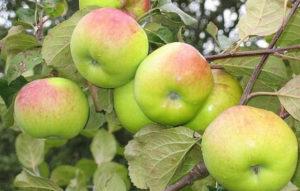
On a 5-point scale, the tasting score is 4.5 points, demonstrating the excellent taste of the Anis apple variety. The fruits not only have an excellent flavor, but also a distinctive aroma that allows one to identify the variety.

Fruits are eaten fresh: they're a tasty and healthy source of vitamins and minerals. They're also processed into juices, jams, marshmallows, and preserves. Dried apples are used in compotes.
Planting and care
With the right location and planting technique, your apple tree will produce excellent fruit. Keep in mind that Anise is a long-lived apple tree, so choose the right location carefully to avoid having to replant it later.
When to plant an apple tree
It's recommended to plant anise apples in the fall, a month before the first frost. This gives the tree time to take root, grow stronger, and adapt to the new conditions. In Siberia, apple trees are planted in September, while October is a suitable time for central regions. The variety can also be planted in the spring, but this is not the most favorable time.
Choosing a location
The tree thrives in a sunny, open area, protected from northern winds. Shade is unacceptable, as it negatively impacts fruit development and flavor. Apple trees should be planted up to 4 meters away from other trees and buildings. Sandy loam or neutral chernozem soils are suitable. Groundwater should be at a depth of no more than 2 meters.
Preparing the site and planting hole
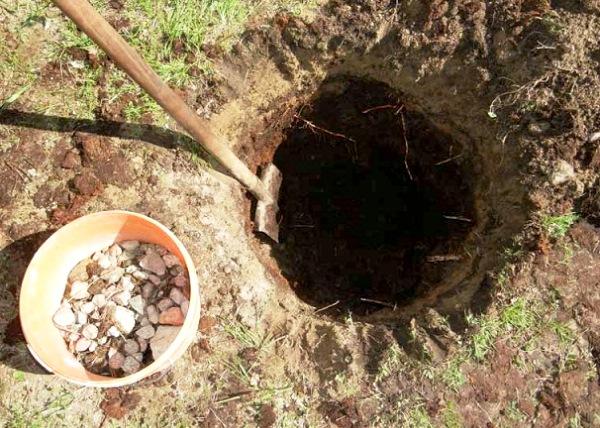
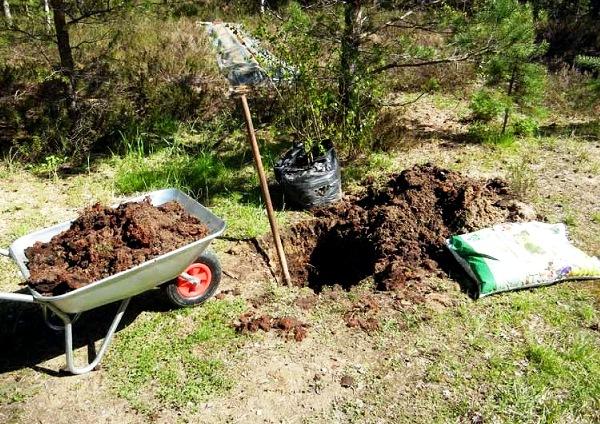
The hole is prepared a month before planting. It is filled with a mixture of black soil, compost, plant residues, and humus, with the addition of complex fertilizer. The hole is watered for a month to ensure the soil is moist before planting.
Landing technology
The tree is planted by performing a series of sequential steps:
- A mound of nutrient mixture is created in the planting hole, having poured it in beforehand.
- The roots of the seedling are placed on the surface, leaving the root collar above the ground at a level of 3 cm.
- The top layer of soil is poured on top, gradually compacting it so that there are no voids.
- The seedling is tied to a peg and a trunk circle is formed.
- The soil around the plant is watered and mulched.

Note: Preparing the planting hole is crucial. The tree needs to have a supply of nutrients for the first few years of its life. Fertile soil will help the apple tree adapt and grow faster.
Watering
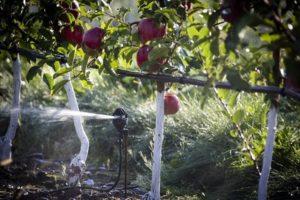
Despite its drought tolerance, aniseed requires watering. This is especially important during the first few years of life, while the tree is establishing itself and developing its root system. Irrigation is essential during flowering and fruiting. Each plant receives 20-25 liters of water.
Top dressing
Seasonal fertilizing begins in the anise tree's third year, when the soil's nutrient reserves are depleted. During the growing season, the apple tree needs to be fertilized up to four times:
- Before the buds open, 40 liters of water with 200 g of superphosphate and 250 g of potassium sulfate dissolved in it are poured under the tree.
- Before flowering, a bucket of humus mixed with 450 g of urea is added to the tree trunk circle.
- During the period of fruit formation, sodium humate (10 g) and nitrophoska (200 g), dissolved in 30 liters of water, are added.
- In the fall, 300 g of superphosphate and 300 g of potassium sulfate are added to specially dug grooves around the tree, and the apple tree is watered generously.
During the summer, you can apply organic fertilizers based on cow dung, bird droppings, and grass several times. If the apple tree is mature, it's necessary to deeply soak the soil to deliver nutrients to the roots.
Loosening and caring for the tree trunk circle
While the tree is young (3-5 years old), the area around the trunk is kept clean and thoroughly mulched with humus, straw, leaves, and grass clippings. When the apple tree begins to bear fruit, mulching is stopped. It can be turfed with wild grasses, which are mown occasionally.
Note: It is not advisable to create a lawn under an apple tree.
Grass absorbs water and nutrients from the soil intended for fruit trees. Dense sod disrupts aeration.
Seasonal processing
The Anis apple tree is pruned annually, otherwise the fruit tree's yield will decrease:
- in the spring, before the sap begins to flow, remove damaged, incorrectly growing, and diseased branches;
- In summer, unproductive lateral shoots are cut back by 1/3;
- In autumn, the crown is thinned out, leaving the most developed and strong skeletal branches.
Monitor and periodically remove shoots growing at an acute angle to the trunk.
Covering an apple tree for winter
Once the apple harvest is complete, the trunk and lower scaffold branches are whitewashed. This is necessary to kill pests and protect the fruit tree from rodents. Additionally, the trunk is wrapped in burlap and covered with spruce branches. In winter, a snowdrift is piled on top and compacted to protect the root system from frost.
How does culture reproduce?
Experienced gardeners propagate by grafting onto wild rootstock. Grafting is successfully performed in spring or early summer. Among the various methods, the most commonly used are
- copulations;
- cleft grafting;
- bark grafting;
- budding.
The latter is carried out in the summer when seedlings are received from nurseries.
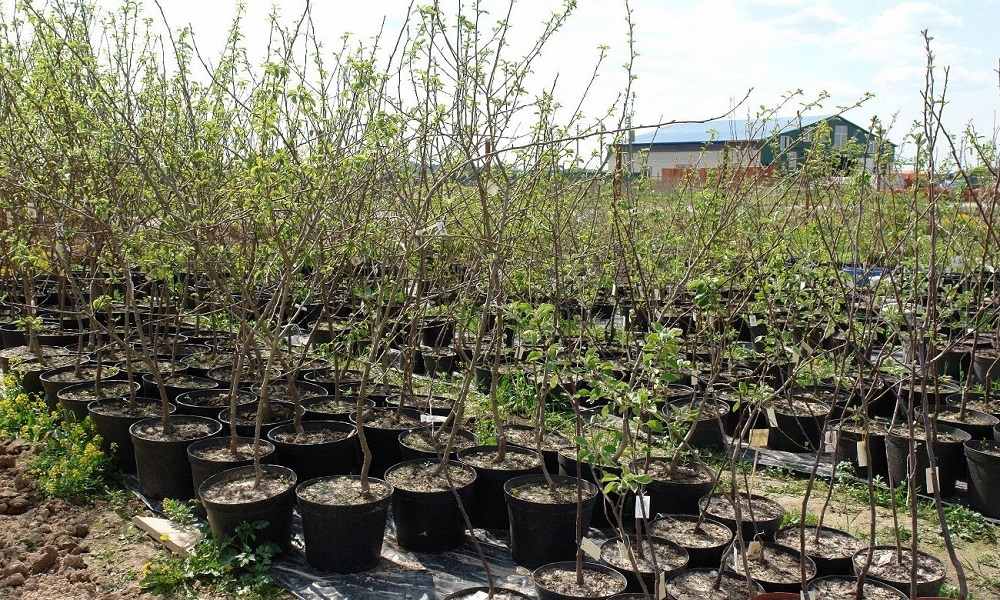
Note: Seed propagation is time-consuming and ineffective. A tree grown from a seed does not always retain the varietal qualities of the parent plant.
Varieties
Among the many varieties of anise, there are trees that are the most popular.
Scarlet anise
Common in the Volga region, it is used by breeders to create new varieties. Scarlet anise is undemanding and grows in a variety of soils. It tolerates slopes and hilly terrain. Its name refers to the color of the fruit, which has a scarlet blush.
Sverdlovsk
This medium-sized apple tree forms an oval-shaped crown. It is easy to care for and frost-hardy. The apples weigh 120 g and are yellow with a red blush. They transport well and store well. The variety is not susceptible to scab.

Striped
This tall apple tree is resistant to fungal diseases. It has greater winter hardiness and drought tolerance than other Anise varieties. The yellowish apples are covered with red stripes. They have a tart flavor with hints of anise.
Purple
The fruit tree tolerates adverse weather conditions and boasts a stable yield. The vibrant purple fruits have an excellent marketable appearance. The large apples store well and are transported over long distances. The flesh is juicy and delicious, and the fruit has a distinctive aroma.
This ancient Russian variety of Anisovka apple deserves a place of honor in any garden. Knowing the flavor of these aromatic apples, it's hard to resist. A few Anis apple trees will produce an excellent harvest throughout the gardener's lifetime.
Related posts:
 Description and rules for growing the Bratchud apple tree variety
 Description of the Chudnoe apple variety, planting and caring for a dwarf tree
 Description of the Borovinka apple tree variety, cultivation and care
 Description and planting of the Dream apple tree variety, care and propagation
 Description and subspecies of the Sakharny Arkad apple tree variety, cultivation technology
 Description of the ornamental Nedzvetsky apple tree, cultivation technology
 Description and subtleties of growing the Sverdlovsk Beauty apple tree variety
 Description of the Auxis apple tree, planting and care features