
- How timely and proper watering affects tree growth and fruiting
- Optimal temperature and composition of water for irrigation
- Irrigation rates
- young tree
- An adult and fruit-bearing apple tree
- Old tree
- How to properly water apple trees
- After planting the seedling
- Depending on the season
- In spring during the flowering period
- In summer, during the formation of the ovary
- In the fall during the harvest period
- Depending on climatic conditions
- In the heat
- During the dry period
- In rainy weather
- What can be added to water to feed a tree?
- Ferrous sulfate
- Copper sulfate
- Chicken manure
- Water and soap
- Potassium permanganate
- Yeast
- Basic mistakes
Children love apples, and adults adore them. These fruits have a pleasant taste, contain natural acids, various vitamins, and antioxidants. While the trees don't always produce a good harvest, many beginning gardeners wonder how to water apple trees in the summer, how much water they require, why they don't thrive, and why they don't offer the juicy fruits that improve digestion and boost immunity.
How timely and proper watering affects tree growth and fruiting
The climate has become increasingly variable. Drought is affecting areas where precipitation was previously common. Apple trees are beginning to lack the water that rainfall brings, and their roots are unable to extract it from the ground in sufficient quantities. Trees can withstand prolonged drought, but young plants fail to thrive when deprived of moisture. Mature apple trees have difficulty setting fruit, and green fruit is shedding.
Fruit trees require a lot of water during hot weather, but overwatering during prolonged rainy weather can be harmful. Apple trees undergo different developmental stages and growing seasons, which must be taken into account.
Optimal temperature and composition of water for irrigation
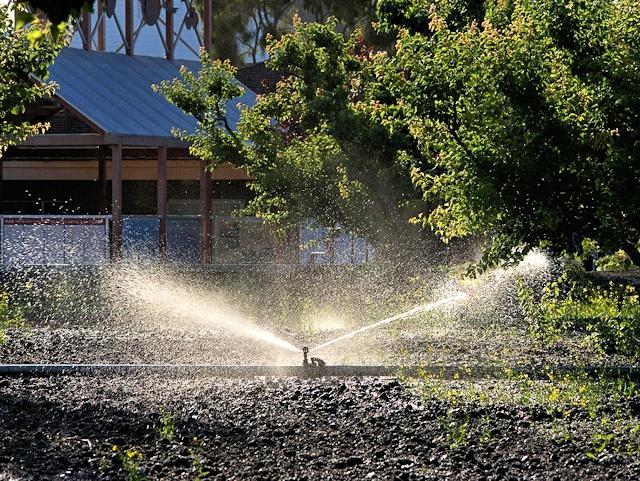
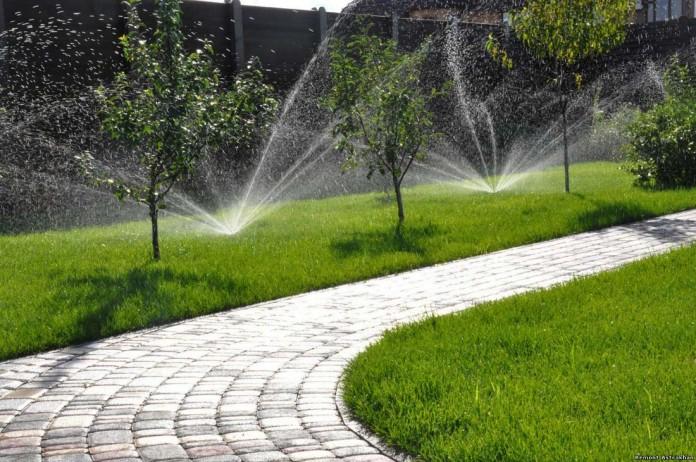
Irrigating the soil under fruit trees in the garden is as simple as directing a hose into the furrows and grooves. Another method is sprinkling. The soil under apple trees should be moist to a depth of at least 60 cm. Water for irrigation should be taken from a well, a borehole, or a tap, after checking the liquid for chemicals, toxic substances, and heavy metal impurities.
Fruit trees tolerate cold watering well, but if the temperature is just above 0, the roots stop developing and the apple tree may become sick.
Irrigation rates
The amount of irrigation depends largely on the age of the plant, although other factors also play a role. Trees planted in clay soil require the most water. To check if the apple tree is receiving sufficient moisture, dig a hole 25–30 cm deep underneath it and remove the soil. If the soil crumbles when pressed, the plant needs irrigation.
young tree
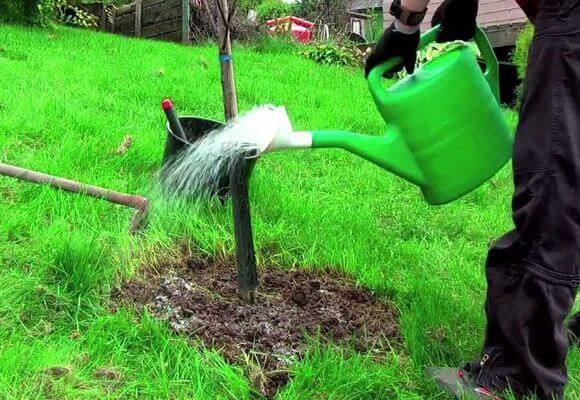
A seedling requires 3 buckets of water per watering; an apple tree up to 5 years old requires 6 to 8 buckets. The number of waterings is increased during prolonged heat combined with drought.
An adult and fruit-bearing apple tree
With proper care, a fruit tree develops and grows quickly, and when it begins to produce a fruit crop, it requires more water. An apple tree between 6 and 10 years old requires at least 12 buckets of water. The soil around the tree trunk should be moist to a depth of 70–80 cm.
Old tree
Apple trees bear fruit for a very long time, delighting with juicy fruit for up to 35 years or more. To irrigate such a plant, 30–40 liters of water are required for each quarter of the trench dug under the crown.
How to properly water apple trees
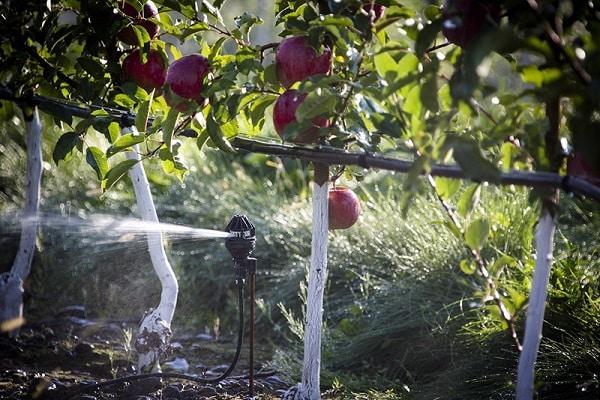
Fruit trees are planted so that the root collar is a couple of centimeters above the ground to prevent water stagnation. Several irrigation methods are available, including surface irrigation, drip irrigation, and sprinkling.
After planting the seedling
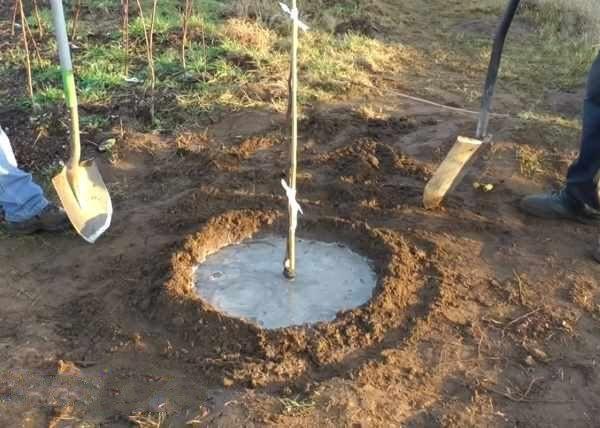
In regions with hot summers and mild winters, fruit trees are planted in the fall. In the harsh climates of Siberia and the Urals, apple trees thrive best after spring planting. The hole where the one-year-old tree is placed is filled with compost and mineral fertilizer. A ring-shaped hole is dug, and two or three buckets of water are added. During the growing season, the seedlings are watered three times.
Depending on the season
To ensure that apple trees develop well, the soil around the tree trunk is moistened several times during the warm season, but one of the criteria for watering is the composition of the soil.
If the soil does not allow water to pass through, over-irrigation will cause the area to become waterlogged, and the tree roots cannot tolerate this.
In spring during the flowering period
In regions with little snowfall in winter, mature apple trees are advised to be watered when the buds open. Experienced gardeners advise against irrigating fruit trees when they are in bloom. If there is excess moisture:
- The number of ovaries decreases.
- Mold appears.
- The resulting fruits rot.
Pomegranates should be watered 15 days after flowering ends, which in temperate climates typically occurs around the end of May. To prevent apple trees from experiencing a lack of moisture, check the soil's moisture level.
In summer, during the formation of the ovary
If extreme heat persists for a long time, seedlings should be watered once every ten days. If there is no abnormal heat, young trees should be watered in July and August, in addition to spring. During the summer, the area around the trunks of mature apple trees should be watered:
- 15–20 days after flowering;
- when apples are filled with juice;
- 2-3 weeks before the fruits ripen.
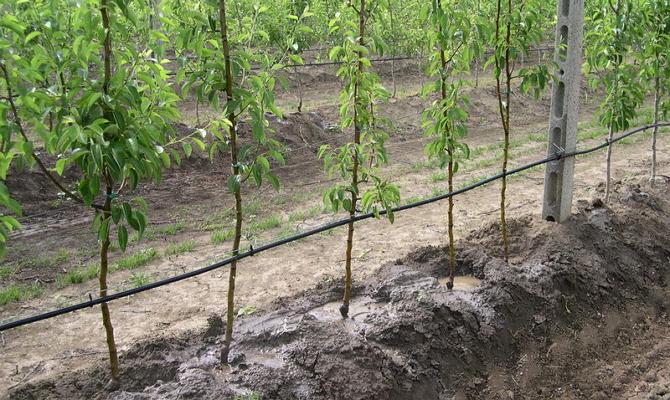
To irrigate the garden, you can use the surface method, or even better, install a drip irrigation system.
In the fall during the harvest period
Depending on the variety, apples are harvested at different times—July, August, and September. To prevent the fruit from rotting, the trees are irrigated for three weeks before harvest. The soil is moistened around the entire perimeter of the crown.
In October, apple trees are watered when there has been no rain for a long time and no rain is expected in the near future.
Depending on climatic conditions
In the steppe zone, dry weather prevails; in the western regions, the maximum amount of precipitation falls, and the soil becomes oversaturated with moisture.
In the heat
Timely irrigation helps prevent overheating in summer, when temperatures rise to 40°C. During this period, water the apple tree once a week. The amount is calculated based on the area occupied by the tree and is 30 liters per square meter, not four buckets, which won't reach the roots.
In temperate latitudes, it is not recommended to irrigate orchards in August, since apple trees may die in the cold winter due to the growth that has begun.
During the dry period
Unripe apples drop en masse when the tree lacks moisture. Gardeners often pour 3 or 4 buckets of water under their apple trees, but such irrigation during droughts isn't beneficial to the trees and can actually be harmful. Several furrows should be dug around each plant, spaced at irregular distances from the trunk. To ensure the soil is moistened to at least a 60 cm depth, at least 20 buckets of water should be poured into each ring.
In rainy weather
Apple trees don't tolerate drought well, but excess moisture can trigger fungi that cause root rot or moniliosis in fruit trees. If it rains constantly and the soil becomes very soggy, watering should be stopped.
What can be added to water to feed a tree?
For growth and fruiting, apple trees, like other plants, require minerals and nutrients. The soil is constantly depleted, so it's recommended to fertilize the trees in conjunction with watering.
Ferrous sulfate
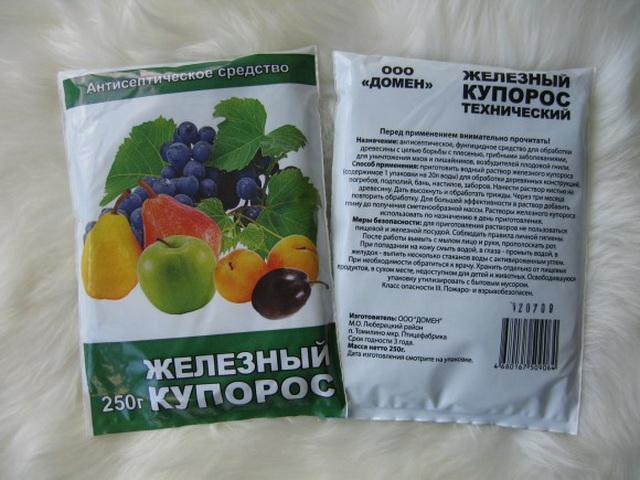
Berries are rich not only in vitamins but also contain various microelements. To ensure the tree develops normally and produces a bountiful harvest, it is recommended to dissolve ferrous sulfate in the irrigation water. If the soil is deficient in this substance, apple trees suffer from chlorosis. However, ferrous sulfate should not be used annually, but it can be used to prevent fungal diseases.
Copper sulfate
An inorganic compound that acts as an antiseptic and fungicide is used to spray trees in early spring. However, adding copper sulfate to apple tree water is not recommended. Excessive amounts negatively impact the tree's health, leading to degeneration and cancer.
Chicken manure
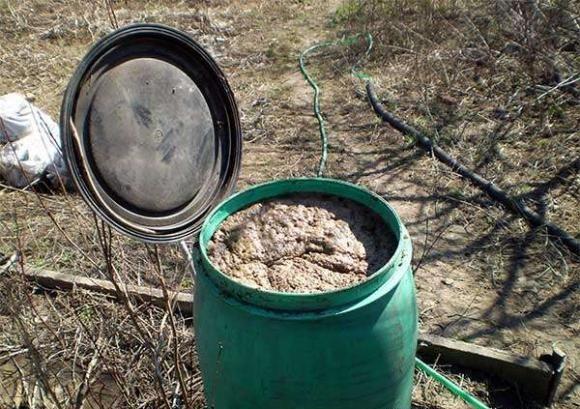
A concentrated organic fertilizer containing various microelements, phosphoric acid, and sulfur. In large quantities, it causes tree burns and is beneficial for the plant. Mix a bucket of chicken manure with 1/4 cup of water and let it steep in a barrel for several days before applying it to the apple tree's trunk. The amount of this fertilizer for a mature tree should not exceed three buckets; for a seedling, one bucket is sufficient.
Water and soap
Don't pour slop under your apple tree, as it contains dangerous sodium compounds that kill not only fungi and bacteria but also beneficial organisms. You can feed the tree with a solution of pure soap, free of additives and dyes.
Potassium permanganate
Potassium permanganate can be used to disinfect soil. However, it should not be added to water used for watering apple trees, as it strongly acidifies the soil.
Yeast
Fermented beer or kvass residues are used as fertilizer. To combat rot or rust, the leaves of fruit trees are sprayed with a solution made from yeast and water; this solution is not suitable for watering.
Basic mistakes
Although apple trees are considered easy-to-grow, not everyone enjoys their juicy fruit. Often, gardeners improperly mulch the soil under their trees during the summer to retain moisture. A thick layer of compost prevents water from penetrating the soil, causing the roots to dry out. Often, gardeners cover the soil with straw or sawdust so tightly that it touches the trunk, causing the apple tree to become diseased.
Tree growth stalls when it lacks moisture. Gardeners don't always check how deeply the soil is soaked. Many gardeners water their trees whenever they have free time, ignoring the fact that it's hot outside and they need to wait until the sun goes down.
Related posts:
 Signs and treatment of apple tree cancer, varieties resistant to the disease
 Description and varieties of the Sinap apple tree, planting and care rules
 Description of the Chudnoe apple variety, planting and caring for a dwarf tree
 Description and characteristics of the columnar apple tree President, planting and care
 Description of the ornamental Nedzvetsky apple tree, cultivation technology
 Description and planting of the Dream apple tree variety, care and propagation
 Description and subtleties of growing the Sverdlovsk Beauty apple tree variety
 Description and characteristics of the Orlovim apple variety, cultivation nuances