
- The history of apple tree breeding by Kandil Orlovsky
- Advantages and disadvantages
- Growing regions
- Characteristics and description
- Tree dimensions
- Annual growth
- Root system
- Life expectancy
- Fruiting
- Self-fertility and flowering
- Ripening period and harvesting of fruits
- Yield and tasting assessment
- Winter hardiness
- Disease resistance
- Specifics of planting work
- Deadlines
- Selecting a site
- Soil cultivation and fertilization
- Apple tree planting scheme
- Organization of competent care
- Watering mode
- Crown formation
- Fertilization
- Seasonal processing
- Shelter for the winter
- Methods of reproduction
- Subspecies and variants
- Gardeners' reviews
The Kandil Orlovsky apple tree is a winter apple variety with a high yield. Its fruits have a sweet, tart flavor and are rich in vitamins. They can remain edible for up to 20 weeks and are easily transported. The tree easily tolerates low temperatures and produces fruit even in cold conditions.
The history of apple tree breeding by Kandil Orlovsky
This apple variety was bred in 1997 at a research institute in Oryol. The tree was grown using the Jonathan and Welsey varieties and was added to the state register in 2002.
Advantages and disadvantages
The advantages include:
- Resistance to scab on fruits and leaves. The plant is also resistant to most fungal diseases;
- Resistance to temperature drops down to -35°C. If the temperature drops below 30°C, the barrel must be insulated;
- fast fruiting – the variety can bear fruit in just 2-3 years, but the main harvest appears 5 years after planting;
- easy transportation of apples;
- attractive appearance, which led to high demand among buyers and sellers.
Disadvantages of this species:
- capriciousness when watering times are not observed;
- the need for frequent feeding;
- the need to plant next to pollinating varieties.
Growing regions
This variety is frost-hardy and resistant to fungal diseases, making it suitable for cultivation in most regions. It grows in the Central, Black Earth, and North Caucasus regions.
Characteristics and description
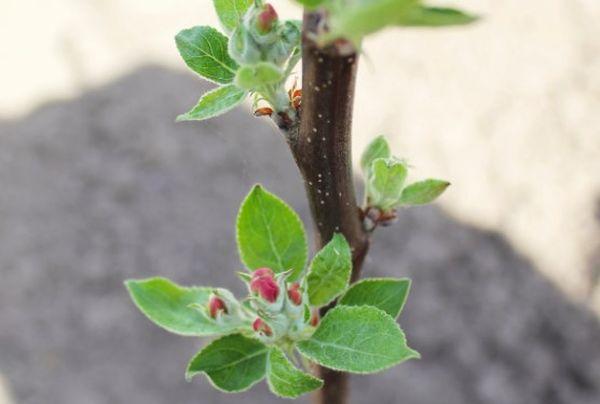
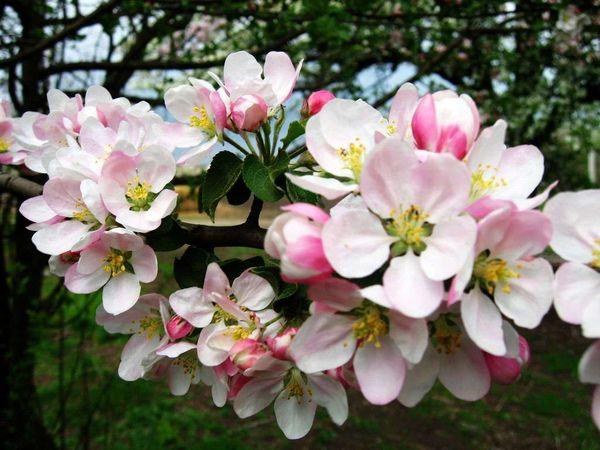
The branches are sparsely spaced in the tree's crown, drooping under the weight of the fruit. This variety also has smooth, dark bark, ovoid leaves, and inflorescences containing up to six white buds with a pink tint.
Tree dimensions
This variety is considered medium-sized. It has a small, rounded crown. The branches are asymmetrical and sparsely spaced, perpendicular to the trunk. A mature tree on a tall rootstock grows up to 5 meters, while on a dwarf rootstock, it reaches 3 meters.
Annual growth
Seedlings grow on the south and north sides. It's important to monitor each plant for disease and growth.
 Important! Crown size has no effect on tree yield.
Root system
This apple variety has a well-developed root system. Once a seedling reaches over one year of age, it becomes difficult to remove from the ground, so only one-year-old plants are sold.
Life expectancy
Apple trees can grow for 15 years or more. This variety's yield declines after 10 years of growth.
Fruiting
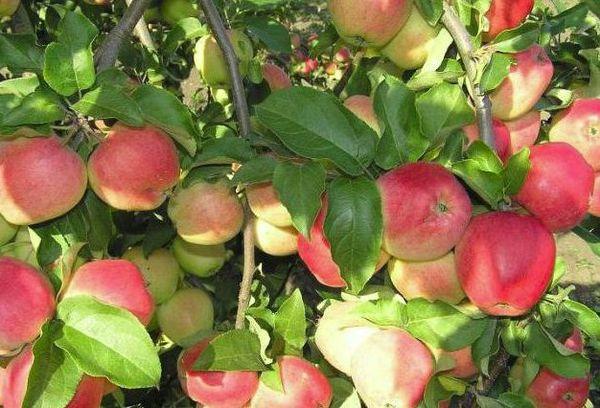
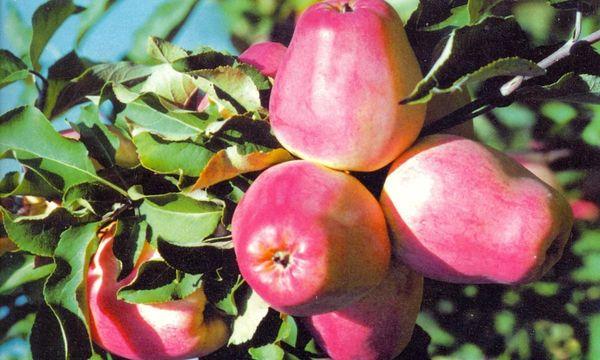
Seedlings can begin bearing fruit in as little as two years. The peak fruiting period is three to four years. Each apple weighs 120-170 grams. The fruit has a ribbed, conical shape and smooth skin.
Self-fertility and flowering
This variety is partially self-fertile, which isn't noticeable with a small number of trees. More than five seedlings will yield a more abundant harvest.
To increase fruiting, it is recommended to plant pollinating varieties nearby:
- Antonovka.
- Freshness.
- Aphrodite.
- Orlik.
- Venyaminovka.
- Welsey.
- Sinap Orlovsky.
Ripening period and harvesting of fruits
Apples ripen in the first half of September. This can vary depending on the region's weather. The fruits are harvested unripe, as they reach maturity after 8–12 weeks of storage.
Fruits intended for storage should be left on the branches for as long as possible. Apples should be picked from the tree in dry, dew-free weather. Shaking the tree during harvesting is not recommended. If the indoor temperature is maintained, the fruit can be stored until mid-February.
Yield and tasting assessment
The average apple yield per tree ranges from 110 to 160 kilograms. The yield per hectare can reach over 25 tons. Apples receive tasting scores ranging from 4.5 to 4.8 points. The juicy fruit has a sweet taste with hints of tartness. It also has a vibrant aroma.
The sugar content in fruits reaches up to 10%.
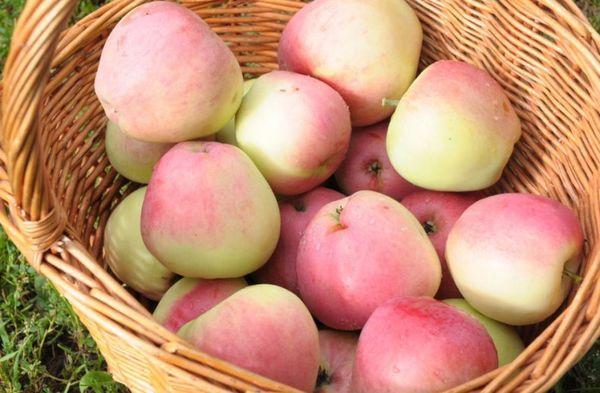
The fruit contains large amounts of vitamins C (7.3 milligrams per 100 grams) and P (600 milligrams per 100 grams). It also contains:
- potassium;
- pectins;
- ascorbic acid;
- vitamin A;
- manganese.
Winter hardiness
Trees of this variety are resistant to temperatures down to -35°C and are capable of producing fruit even in cold weather conditions. At temperatures below -30-35°C, insulating the trunk is recommended.
Disease resistance
This variety has increased resistance to scab and most fungal diseases. Trees can be attacked by aphids, sawflies, and apple blossom beetles. It is recommended to spray the base with insecticides before flowering. In the spring, treat the trunk with fungicides to prevent fungal growth.
Specifics of planting work
This apple variety is delicate when planting. The tree requires careful selection of location and time. Saplings should be chosen with particular care. It is recommended to choose trees with well-developed roots and no signs of drying out.
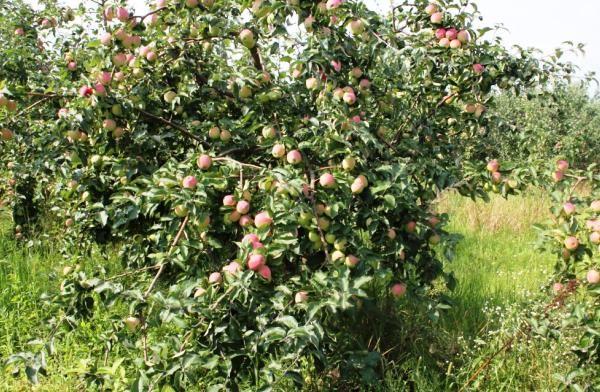
The tree should be free of visible damage or signs of rot or mold. It should also have a straight trunk, a clearly defined root transition, and at least five skeletal branches. The tree should be up to 1.5 meters tall for planting. Larger trees may fail to thrive.
Deadlines
Seedlings should be planted in the spring to allow them to develop roots and better adapt to lower temperatures. Regular watering is required to prevent root erosion. In areas with mild winters, planting can be done in the fall. In conditions of abundant moisture, the plant will grow stronger roots.
Selecting a site
Apple trees do not tolerate shade, excess moisture, or highly acidic soil. When planting, consider the presence of groundwater at the surface. The distance to the groundwater should be more than 2 meters. Melt and rainwater should not accumulate in the area where the trees will be planted. Also, avoid rocky areas, marshy areas, and lowlands near the trees. Seedlings should be planted in black soil with a low pH.

Soil cultivation and fertilization
Three to four weeks before planting, prepare a hole up to 80 centimeters wide and 1 meter deep. Next, lay a drainage layer of pebbles or crushed stone. Afterwards, fertilize the soil with a mixture:
- peat;
- humus;
- mineral fertilizers;
- excavated earth.
The hole should be covered with black plastic film, and the edges should be firmly secured to create a favorable environment. When planting, drive in a stake and secure the seedling to it. The root collar should be positioned 5-7 centimeters above ground level, as planting too deeply will reduce the tree's fertility.
If the seedling is planted too high, it will be more susceptible to drying out. A hole should be dug around the trunk to facilitate watering. The tree should also be mulched. After planting, the apple tree should be watered.
Apple tree planting scheme
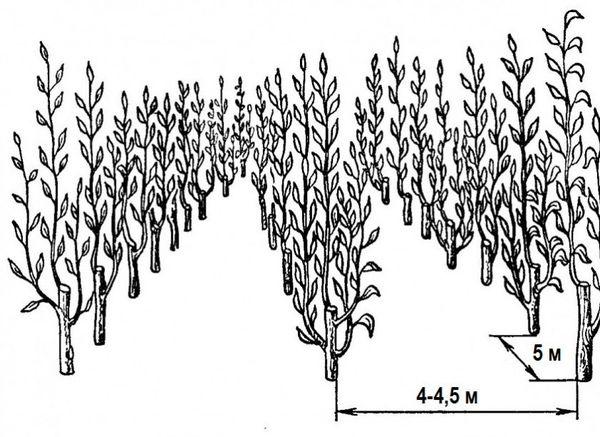
The planting pattern may differ depending on the rootstock. With a small rootstock, the distance between seedlings in a row should be 2.6 to 3.6 meters. With a vigorous rootstock, the distance within a row should be 3.6 to 4.6 meters. The distance between rows and with random planting should be 4.5 to 5.5 meters. Also, the row should be arranged so that the shadow of one tree does not cast onto the trunk of another.
Organization of competent care
The tree requires timely watering, pruning, and cultivation. This variety is susceptible to overloading with fruit. Staking should be used to prevent branch breakage. Harvesting should be done promptly to avoid the risk of fruit drop.
Watering mode
This apple tree variety does not tolerate excessive moisture. Watering should be done at the beginning of the flowering and fruit set period. A mature tree requires 20 to 40 liters of water once a week, while a young tree requires every 2-3 weeks. It's important to carefully monitor weather conditions and soil moisture. Overwatering the tree can cause fruit drop. Watering should be stopped in September or October if the weather has been dry.
Crown formation
This variety's crown forms properly without assistance. Removing old, weak, or inward-growing branches is sufficient once every two to three years. Older trees should be rejuvenated to prevent them from growing too tall. This also improves the quality of the harvest.
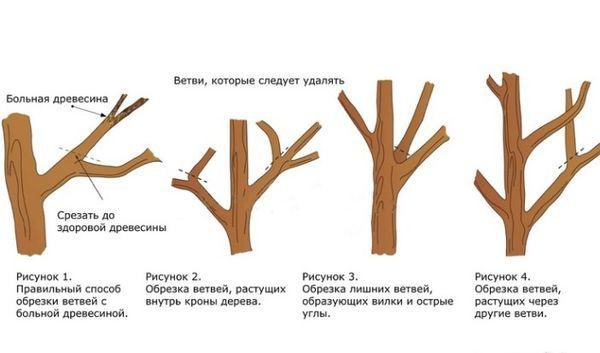
On apple trees, remove branches that are too thick or too close together. In the fall, after the leaves have fallen, remove any shoots that create shade.
Fertilization
This variety does not tolerate excessive fertilization. At the beginning of the growing season, it is recommended to water the roots with a nitrogen-containing solution to stimulate biomass growth. A 1:50 solution of chicken manure is suitable for this purpose. At the beginning of bud formation, the tree should be watered with a mixture consisting of:
- water at a temperature of about 20 °C (10 liters);
- superphosphate (150 grams);
- nitroammophoska (30 grams);
- calcium chloride (45 grams);
- ammonium nitrate (30 grams).
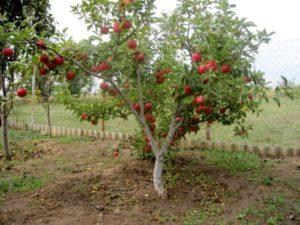
To improve the tree's winter resilience, the soil should be enriched with a fertilizer complex labeled "Autumn" or a superphosphate solution at a ratio of 50 grams per 1 liter of water. It is not recommended to use fertilizers containing nitrogen or organic matter before winter, as they cause the tree to develop new branches that will die in the cold.
Seasonal processing
Important! The Kandil Orlovsky variety has increased resistance to various common diseases.
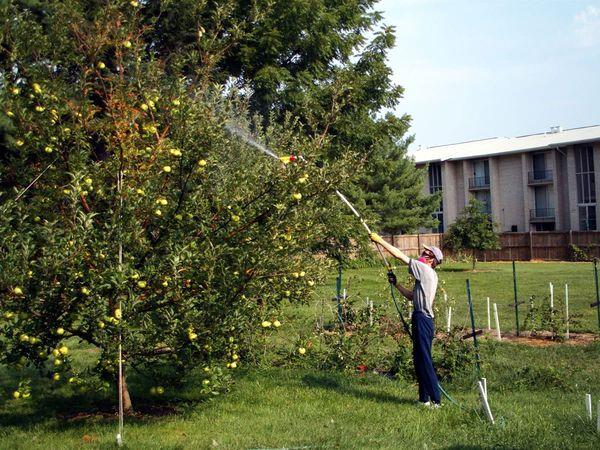
In early spring, treat the trunk with a copper sulfate solution at a ratio of 50 grams per 1 liter of water. If fungal diseases appear, use fungicides:
- Albite;
- Fundazol;
- Hom;
- Speed.
If the tree is infested with harmful insects, use insecticides such as Actellik, Ampligo, or Match. To protect against insects hiding under the bark, whitewash the trunks.
Shelter for the winter
Despite their high cold tolerance, trees should be prepared for winter. Young seedlings should have their lower trunks covered with protective materials. Agrofibre, paper, or nylon are all suitable. Roots should also be protected from frost by mulching with sawdust or compost.
The mulch layer should be 10-15 centimeters thick. To protect against rodents, wrap the trunk with spruce branches up to 50 centimeters high. In early spring, remove all wrappings from the trunk to prevent the tree from overheating and sprouting buds prematurely, as they can freeze due to temperature fluctuations.
Methods of reproduction
This apple variety can be propagated by planting seeds in the fall. Propagation by cuttings, layering, and grafting is also possible.
Subspecies and variants
The Kandil Orlovsky apple variety was recently bred, so it has no subvarieties. Its parent varieties are Jonathan and Welsi.
Gardeners' reviews
Marina, Oryol
"The apples have a distinctive flavor and aroma. I really liked them; the juice is rich and slightly tart. The tree also produces large, juicy fruits. The harvest is abundant and consistent, appearing in the fifth year."
Sergey, Kursk
"We bought a young tree. It's in its second year of growth. There's no fruit yet, but it's taken root well and growing without any apparent problems. We're planning to harvest it for the first time next year."
Stanislav, Krasnodar
"It bears fruit regularly, and the apples are quite tasty. I recommend the Kandil Orlovsky variety to those who want a beautiful and low-maintenance tree in their garden. It does require some maintenance, but not as often or as extensively. It's best not to leave it unattended."
Related posts:
 How to plant walnuts, care for them, and grow them at home
 Descriptions of the 20 best cherry varieties for the Moscow region, their planting and care
 Description of the Red Early apple tree variety, agricultural technology and specific care
 Peach tree care and agricultural secrets, pest control
 Description and cultivation of the 15 best cherry plum varieties for the Moscow region, planting and care rules
 Description and characteristics of the 27 best plum varieties for the Urals, planting and care
 Description of the Bryanochka cherry variety, planting and care instructions
 Description of the Vasilisa cherry variety, cultivation and care