
- Why do the fruits on the apple tree branches rot?
- Moniliosis
- Chlorosis
- Scab
- Reasons for occurrence
- The first signs of tree infection
- How to fight the disease
- Processing agents
- Biological drugs
- Chemical solutions
- Fungicides
- Folk remedies
- How to properly spray apple trees
- Is it possible to save the harvest?
- What to do with rotten fruit
- Preventive measures
- Autumn-spring processing
- Disease-resistant varieties
Preserving your harvest is a priority for most gardeners, but sometimes apples rot right on the tree. What should you do in this case? To protect your fruit, it's important to understand not only the methods for combating the problem but also its causes. Simply spraying your garden with pesticides isn't enough; you need to recognize the symptoms early and implement regular preventative measures. Well-maintained trees are less susceptible to infections and pest attacks.
Why do the fruits on the apple tree branches rot?
Fruit rot on a tree can be caused by several factors. Codling moths or other insects can eat the fruit from the inside. Fungal infections, combined with damp weather and a weakened apple tree, can lead to rotting and complete loss of the harvest. Fruit rot can also result from mechanical damage to the apple, especially if the skin is thin and delicate.
Moniliosis
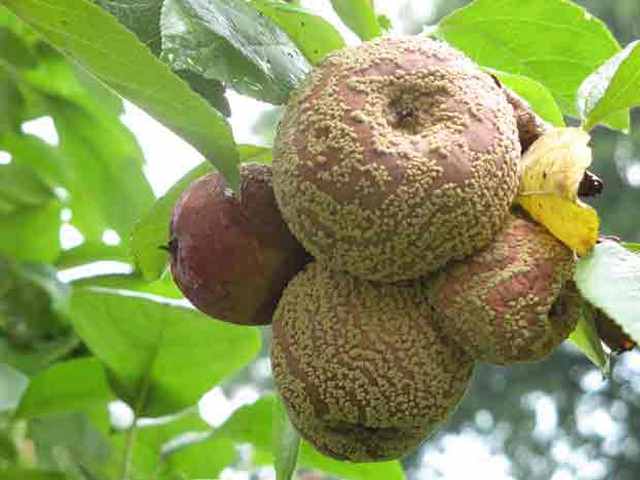
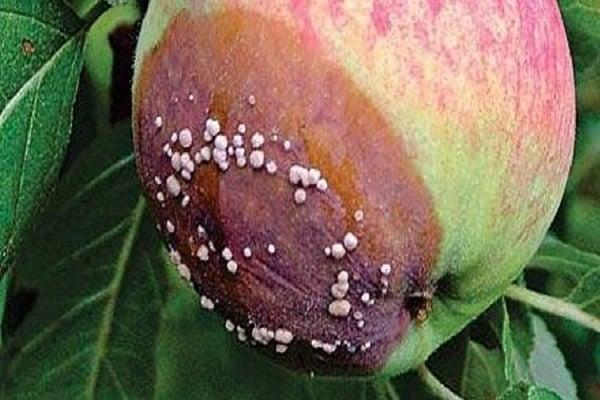
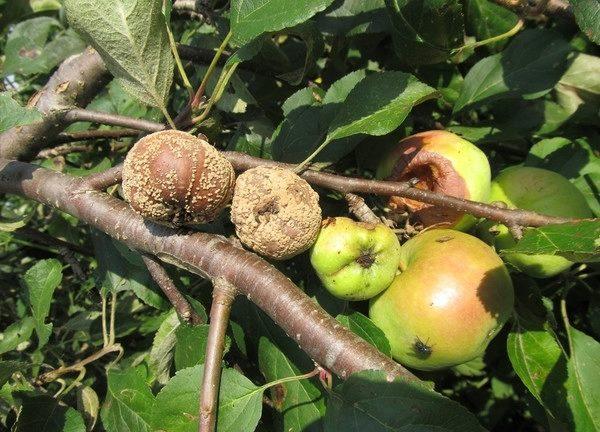
Fungal infection of apple trees occurs in hot and humid conditions. The situation is aggravated by mechanical damage to apples and dense plantings. The stages of apple tree moniliosis are:
- The appearance of a small light spot on an apple, which increases in size over time.
- After 5-7 days the fruit begins to rot.
- A scattering of convex white pads containing spores.
- Infected apples may fall off.
- Mummification of fruits on branches and on the ground.
Chlorosis
The disease indicates a disruption in the absorption and supply of nutrients to the tree. Leaves become light-colored, yellow, and covered with rotten spots, while retaining a vibrant, vibrant skeleton. Gradually, the disease spreads, causing apples to rot from the inside out, starting from the core. The specific nutrients the apple tree is deficient in can be determined from the external symptoms:
- Iron. Yellow leaves are concentrated at the top of the shoots.
- Nitrogen. Paleness begins with the leaves on the lower part of the branches.
- Potassium. The lightened foliage is located in the center of the shoot.
- Magnesium and manganese. Brown spots appear on leaves.
Scab
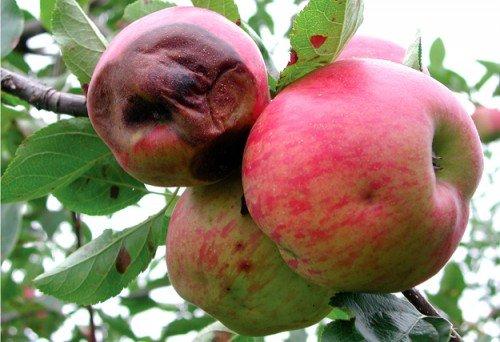
This dangerous fungal disease most often infects trees in regions with high humidity. The fungus attacks the entire plant, usually starting with young leaves and flowers. Distinguishing features of scab include:
- dark green spots on leaves that darken over time;
- the fruit is covered with grayish spots with a light border;
- the apple cracks and falls off.
Fruits in storage are also susceptible to this disease, which indicates the hidden presence of the pathogen on garden trees.
Reasons for occurrence
The appearance of fruit rot on apples can be caused by:
- heavy hail;
- prolonged rains;
- bird pecking;
- insect pests;
- fungal infections;
- varietal predisposition;
- weakening of the tree's immunity after a harsh winter;
- poor prevention.
The first signs of tree infection
Characteristic symptoms that indicate fruit rot in apples:
- dry leaves appearing singly on trees may be deformed or covered with black spots;
- wormy carrion is present;
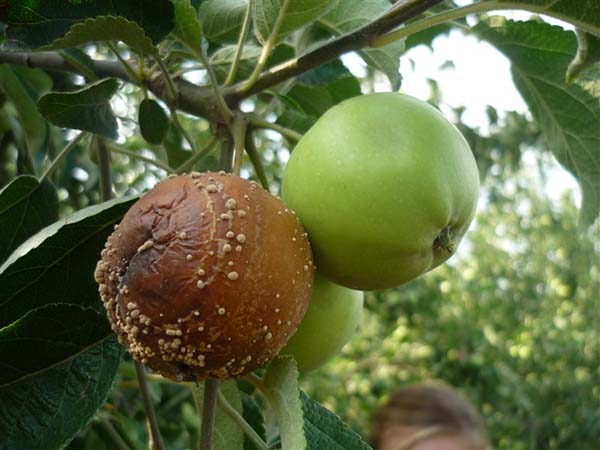
- the appearance of a tiny spot of rot that gradually spreads throughout the apple, or the entire fruit becomes covered with spots;
- mummified unripe apples fall to the ground;
- the pulp of the fruit becomes brown and soft;
- greyish spots appear on the surface of the rot.
How to fight the disease
Effective measures to combat fungal diseases of trees include:
- spraying with chemical or biological substances;
- use of traditional methods of protection;
- prevention of infection;
- planting apple tree varieties resistant to diseases and pests.
Processing agents
Timely and effective treatment of fungal tree infections depends on the severity of the infestation and the type of treatment used. Various treatments can be used as part of a comprehensive treatment program:
- biological;
- chemical;
- fungicidal;
- folk.
Biological drugs
These products are non-toxic and damage only the structure of the fungus, without affecting the health of the apple trees. The following products have shown good results in inhibiting spore development:
- "Alirin B";
- "Mikosan B";
- Fitosporin M.
Chemical solutions
Simple and proven chemical-based pest control products are most often used to combat fungal infections. These solutions can be applied to both diseased and healthy trees as a preventative measure. The most popular chemical treatments are:
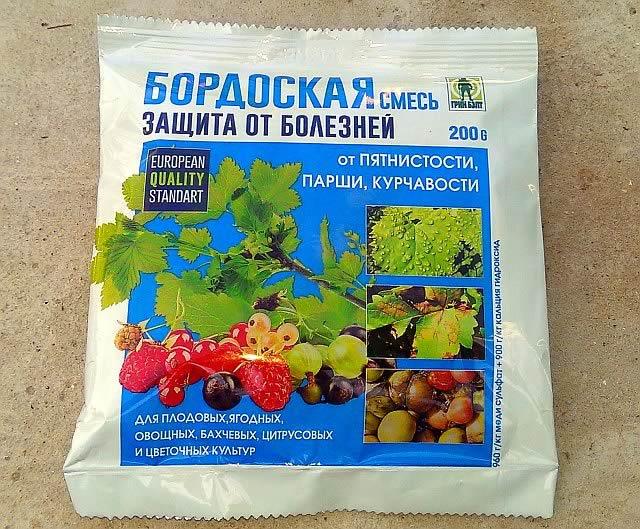
- Bordeaux mixture;
- colloidal sulfur;
- copper oxychloride;
- copper sulfate.
Fungicides
Modern commercially produced fungicides are the most effective treatment for fungal diseases. These products can cure even severely infested trees. The following are used to treat fruit rot:
- Horus;
- Abiga Peak
- "Skor";
- "Raek";
- "Delan";
- "Topsin-M"
- "Captain";
- "Poliram" and many others.
Folk remedies
There are no reliable folk remedies that can treat fungal infections in trees. Several traditional remedies exist, but their effectiveness has not been proven:
- a solution of 80 g of dry mustard per 20 liters of warm water;
- 1 kg of table salt dissolved in a bucket of water;
- Infusions of wormwood, black henbane, hogweed or hemlock repel pests.
How to properly spray apple trees
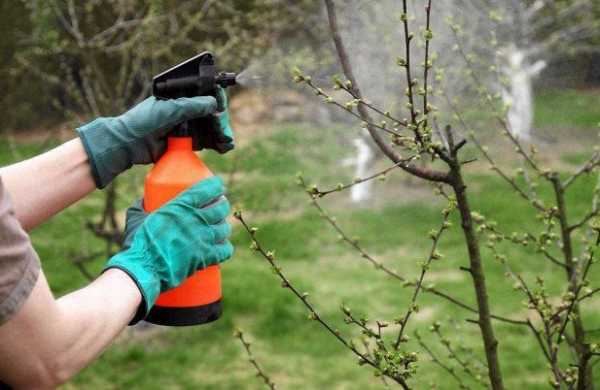
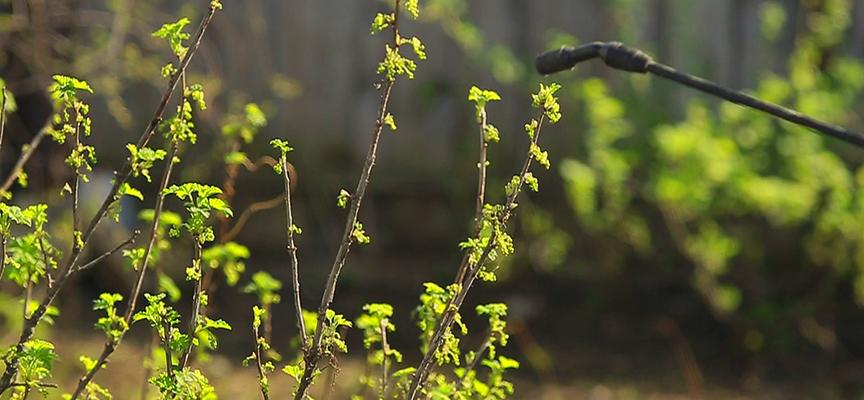
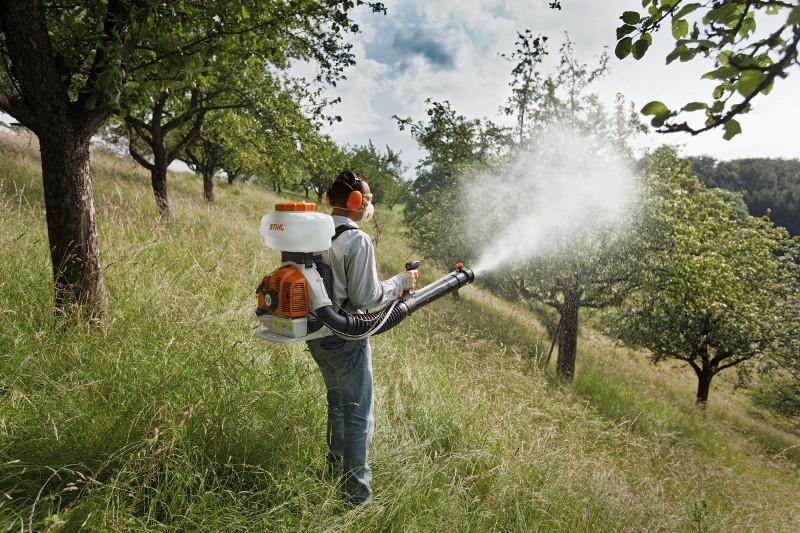
To spray trees correctly, you need to use the right product at the right concentration. Carefully reading the product's instructions is crucial. Using the right equipment is also crucial.
Sprayers or hand-held pump sprayers work best.
The spray head should be mounted on a long boom to reach tall canopies. Apple trees should be sprayed on all sides, including the ground beneath them. When carrying out work, it is necessary to wear a protective suit and mask to avoid poisoning or chemical burns.
Is it possible to save the harvest?
Apples that show signs of infestation should not be stored or used for animal feed or compost. Spores spread quickly and threaten to spread the disease further.
It is impossible to completely eliminate fungal infections, but by responding promptly to signs of infection, you can save part of the crop that is not affected by fruit rot.
What to do with rotten fruit
Under no circumstances should spoiled fruit be left on apple trees or the ground beneath them, even if the entire area has been treated with chemicals. Some spores will remain viable and will be carried by the wind to healthy trees or re-infect the apples. Rotten fruit should not only be removed from the orchard but also not left outdoors. It is advisable to bury the apples or burn them.
Preventive measures
To prevent diseases, it is necessary to take basic measures to protect apple trees from fruit rot:
- Rake and burn dry leaves after the leaves have fallen.
- Carry out sanitary pruning of the crown with preliminary disinfection of garden tools.
- Place seedlings loosely, allowing air to circulate between the trees.
- Avoid damaging the apple trees, and treat cracks and cuts with garden pitch.
- Dig the ground under the tree canopy.
Autumn-spring processing
In spring and fall, it's recommended to treat apple tree trunks with lime and a universal fungicide as a preventative measure. At this time, it's also a good idea to remove dead, dry branches and clear away plant debris from under the tree's crown. The soil beneath the tree should be dug over and fertilized to help prevent chlorosis during the current or next season.
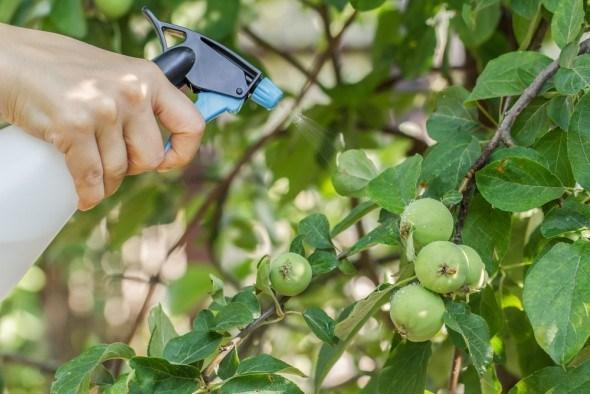 It is worth considering that when spraying before and after the growing season, it is worth treating both the crown and the soil underneath it.
Disease-resistant varieties
The following apple varieties have high immunity to scab:
- Fortune;
- Delight;
- Lungwort;
- Amulet;
- Moscow winter;
- Dawn.
More resistant to moniliosis:
- Renet Simirenko;
- Mutsu;
- Ontario;
- President;
- Florina.
The following apple tree varieties are highly resistant to chlorosis:
- Dialogue;
- Currency;
- Andryushka;
- Moscow necklace;
- Day.
Related posts:
 Signs and treatment of apple tree cancer, varieties resistant to the disease
 Description of the Chudnoe apple variety, planting and caring for a dwarf tree
 Description and varieties of the Sinap apple tree, planting and care rules
 Description of the ornamental Nedzvetsky apple tree, cultivation technology
 Description and characteristics of the columnar apple tree President, planting and care
 Description and planting of the Dream apple tree variety, care and propagation
 Description and subtleties of growing the Sverdlovsk Beauty apple tree variety
 Description and varieties of Gala apple trees, planting and care in open ground