
- The history of the Yubilyar apple tree breeding
- In which areas is landing possible?
- In the Moscow region
- In the North-West of Russia
- Main advantages and disadvantages
- Characteristics and description of the variety
- Tree size and annual growth
- Lifespan
- All about fruiting
- Flowering and pollinators
- Ripening time and yield
- Tasting qualities of apples
- Fruit collection and use
- Disease resistance
- Resistance to low temperatures
- Specifics of planting fruit crops
- Deadlines
- Requirements for soil composition and hole size
- Preparing seedlings
- Technological process of landing
- What can be planted nearby?
- Further care
- Regularity of irrigation
- Top dressing
- Trimming
- Whitewashing wood
- Caring for the tree trunk circle
- Preventive treatments
- Winter protection
- Methods of propagation of the Yubilyar variety
- Gardeners' reviews
- Conclusion
The Yubilyar apple tree has gained popularity relatively recently due to its low maintenance and disease resistance. When growing the tree, it's important to select the right planting material and adhere to all planting guidelines.
The history of the Yubilyar apple tree breeding
To create this variety, Golden Delicious and Floribunda were used. This allows the variety to tolerate diseases. The hybrid was developed in 1982. However, it has only recently gained popularity and is recommended for cultivation.
In which areas is landing possible?
The crop tolerates low temperatures and, with proper care, can be grown in northern regions.
In the Moscow region
The region is suitable for growing the crop, with no need for complex maintenance. The plant thrives and produces large harvests.
In the North-West of Russia
The crop tolerates low temperatures and can be grown in northwestern Russia. However, young plants should be protected with insulation such as spruce branches or burlap.
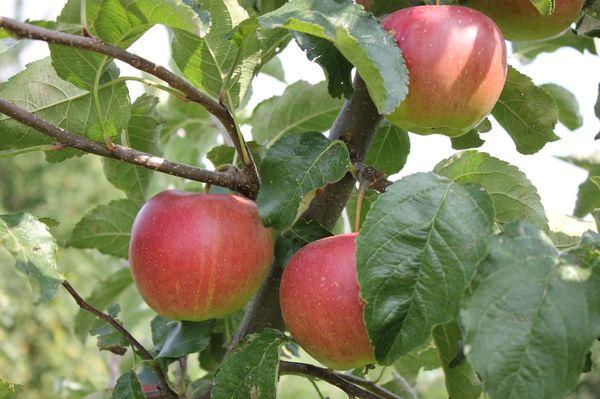
Main advantages and disadvantages
Growing crops in the garden has the following advantages:
- productivity;
- taste qualities;
- fruit storage;
- immunity to diseases;
- ability to tolerate low temperatures;
- care.
The disadvantages include the period when the young plant begins to bear fruit after planting.
Characteristics and description of the variety
The Yubilyar apple variety has taste characteristics that attract gardeners.
Tree size and annual growth
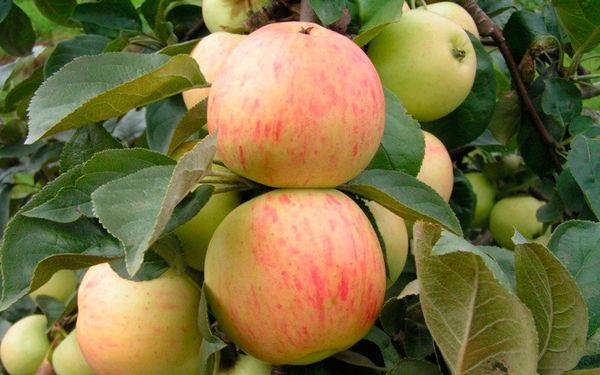
The tree is medium-sized and can reach 5 meters in a short time. Another distinctive feature of this cultivar is its spreading crown, which can reach up to 3 meters in width. The crown is round and often serves as a garden ornament. The branches are straight, without any curvature. The crown grows by 5-6 cm annually.
Lifespan
With proper care, the plant can live up to 50-60 years. However, fruiting continues for up to 25 years, after which it begins to decline.

All about fruiting
The crop produces a high yield. However, it should be noted that the first harvest only appears 7-8 years after planting.
Important: Careful care is required during the first five years to ensure large fruits without compromising flavor.
Flowering and pollinators
Apple trees bloom in late April. However, to ensure a good harvest, pollinating varieties must be used. These include:
- Red sweet;
- Beauty of the garden;
- Lungwort.
The variety is undemanding to pollinators; late summer varieties can be used.
Ripening time and yield
This variety is known for its high yield. With proper care, a tree can yield up to 200 kg of fruit. The fruit ripens in late August to early September.
Tasting qualities of apples
The fruits have distinctive features:
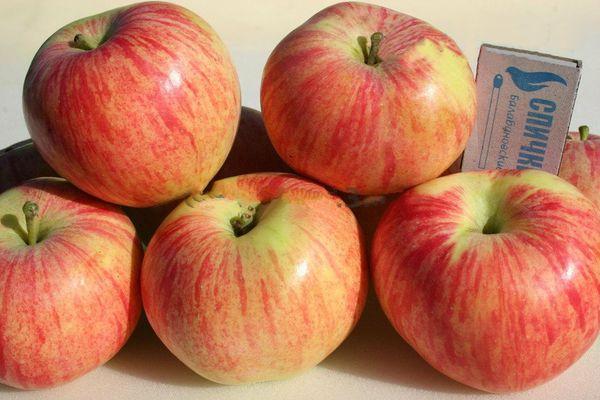
- the pulp is sweet and dense;
- high sugar content;
- The apple is juicy, with a pleasant aroma.
The fruits have an attractive appearance and a dense skin.
Fruit collection and use
The fruits are harvested after they are fully ripe. They can be used for preserves and jams. They can also be used in cooking for desserts. Stored in a cool place, they can be stored for up to a month.
Disease resistance
The hybrid is susceptible to diseases, including scab. In rare cases, root rot may occur if not properly cared for.
Resistance to low temperatures
The hybrid was developed specifically for cultivation in cold regions. Therefore, it has a high level of tolerance to low temperatures.

Specifics of planting fruit crops
The health of an apple tree depends on proper planting. Therefore, it's important to follow all the rules when planting seedlings.
Deadlines
Planting of seedlings can be carried out during the following periods:
- In spring, planting takes place at the end of March. In northern regions, it is necessary to insulate the seedling after planting.
- In autumn, seedlings are planted in mid-September.
It's recommended to plant seedlings in the fall. This period strengthens the roots and reduces the risk of freezing at low temperatures.
Requirements for soil composition and hole size
The planting hole size is 60 x 20 cm. The depth of the hole is at least 50 cm. The soil can vary, but for growth, the following is used:
- soil 1 part;
- peat 1 part;
- 0.5 parts sand.
If the soil is clayey, the amount of sand should be increased to 1 part.


Preparing seedlings
Before planting, seedlings must be properly prepared:
- inspect the planting material for damage and rot;
- carry out pruning, leaving one shoot, it should have at least 5 buds;
- soak in growth activator.
Properly prepared planting material quickly adapts to a new growing location.
Important: Before planting, the seedling can be treated with a manganese solution. This will reduce the risk of fungal infection.
Technological process of landing
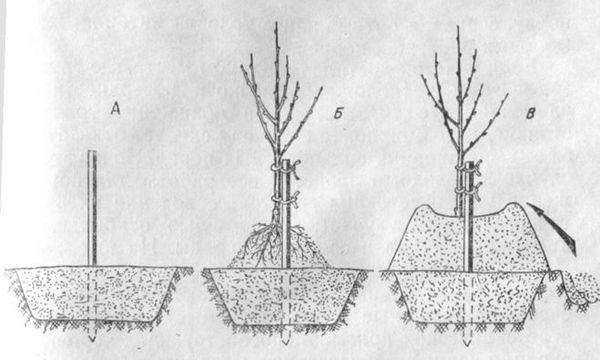
In order to plant the planting material correctly, it is necessary to follow the following algorithm of actions:
- Place broken bricks at the bottom of the hole;
- fill the hole ¼ full with nutrient mixture;
- install the seedling without bending the roots;
- sprinkle with soil;
- install a wooden support;
- Fill the seedling with the nutrient mixture and compact it.
After planting, it is necessary to water the seedling with warm water.
What can be planted nearby?
The plant is undemanding of neighbors, so all types of crops can be planted in the same plot. Walnut and cherry plum are exceptions.
Further care
Proper care after planting a seedling is necessary so that the crop quickly adapts to its new growing location.
Regularity of irrigation
The plant should be watered every three days for the first two months after planting. Subsequently, the frequency of watering is reduced to once a week. A mature plant should be watered twice a month. The minimum water requirement per tree should be 20 liters.
Top dressing
No additional fertilizing is required during the first year after planting. Subsequently, nitrogen fertilizers should be applied in the spring and composted in the fall. Potassium-phosphate fertilizers should be applied during flowering. Complex nutrients can be used during the summer if needed.

Trimming
Tree pruning is performed immediately after planting. Subsequently, pruning should be repeated every spring to shape the desired crown. All branches growing inward are removed. Also, in mature trees, branches that do not bear fruit and that create a dense crown, which negatively impacts fruit ripening, should be removed.
Whitewashing wood
Regularly applying lime to the trunk reduces the risk of pest attacks. Lime also eliminates all fungal infections. The trunk should be whitewashed with thick lime.
Caring for the tree trunk circle
During the summer, it's important to regularly loosen the soil and remove weeds. Loosening the soil increases the amount of oxygen in the soil, and removing weeds reduces the risk of pest attacks.
Preventive treatments
In the spring, before bud break, seedlings and mature trees are treated prophylactically with a copper sulfate solution to protect them from diseases. In the fall, the bark and branches should be treated prophylactically against harmful insect larvae using chemicals such as Topaz.


Winter protection
Apple trees tolerate frost, but young seedlings require additional insulation. The roots are insulated with peat or humus. Spruce branches are also used for insulation. The trunk is covered with burlap or a wooden structure.
Methods of propagation of the Yubilyar variety
This apple tree variety can be propagated in the following ways:
- Root suckers. Use shoots located 1 meter from the parent root. Using a shovel, carefully separate the seedling and transplant it to a new location. Use tools that have been disinfected beforehand.
- Layering. To use this method, bend one shoot in August, cover it with soil, and leave it for a year, watering regularly. The following season, the seedling can be transplanted to a new growing location.
- Grafting involves grafting a bud onto another apple variety that can act as a pollinator. Grafting is done in early spring; dwarf varieties can also be used, which not only speed up the ripening process but also save space.
Most often, seedlings that grow from the mother root are taken.
Important: When using dwarf rootstocks, such a tree has a lifespan of no more than 20 years.
Gardeners' reviews
Irina Petrovna, 35, Omsk: "This apple tree produces large fruits. The flesh is juicy and pleasant. This is my favorite apple variety."
Ivan Sergeevich, 56, Rybinsk: "The downside of this variety is the seedling's growth period. I got my first harvest eight years after planting. However, the yield is increasing every year."
Conclusion
The Yubilyar apple tree is a popular variety favored by gardeners. Its fruits are highly flavorful. The tree requires little maintenance and is frost-tolerant. Another advantage of this apple tree is its resistance to disease.
Related posts:
 How to propagate and grow peas, cultivation technology, and care in open ground
 How to plant grapes step by step, with a description of the process and care
 How to properly plant peas in a greenhouse and open ground
 Description of varieties of sowing peas and cultivation, to which family they belong
 How to control onion flies using natural and chemical methods
 Description and characteristics of the Svetlyachok plum variety, the intricacies of cultivation
 Growing and caring for almonds, planting and pruning rules at home
 Description and characteristics of the Veteran apple tree variety, the subtleties of cultivation