
- Selection of the early-fruiting apple tree Veteran
- Growing regions
- Advantages and disadvantages
- Botanical description of the Veteran variety
- Tree size and annual growth
- Lifespan
- All about fruiting
- Flowering and pollinators
- Ripening time and yield
- Tasting qualities of apples
- Fruit collection and use
- Transportability and storage of fruits
- Susceptibility to diseases and pests
- Resistance to adverse climatic conditions
- Specifics of planting fruit crops
- Deadlines
- Site selection and preparation
- Preparing seedlings
- Technological process of landing
- What can be planted nearby?
- Further care
- Watering and fertilizing
- Trimming
- Caring for the tree trunk circle
- Preventive treatments
- Winter protection
- Methods of propagation of the Veteran variety
- Gardeners' reviews
- Conclusion
The Veteran apple tree is disease-resistant and is often grown in orchards. It tolerates transplanting and produces large harvests. With proper care, it grows quickly and begins bearing fruit quickly.
Selection of the early-fruiting apple tree Veteran
The variety was developed in 1961. The hybrid was developed from the King variety. However, the variety gained popularity in 1989. The apple tree can be grown in all regions.
Growing regions
This variety can be grown in the central and northwestern regions. However, with proper care, it can be planted throughout Russia, Belarus, and Ukraine.
Advantages and disadvantages
The variety has the following advantages that should be taken into account when planting:
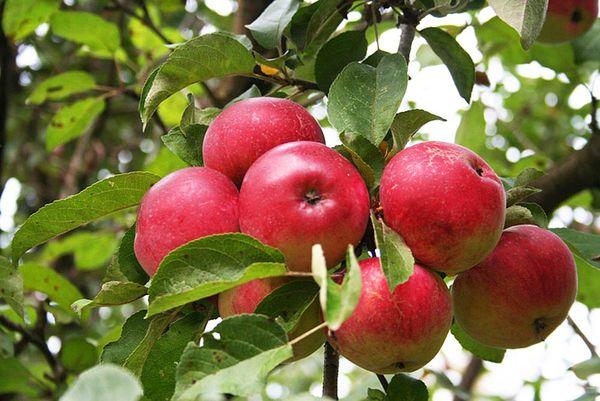
- can be stored for 2-3 months;
- the tree does not require regular maintenance;
- tolerates frosts without harming the crop;
- The fruits are of the same size.
The disadvantages of the variety include:
- the crop may become infected with scab;
- It is necessary to water regularly, otherwise the tree will lose its leaves;
- In northern regions it is necessary to insulate the plant.
Despite the presence of shortcomings, the variety is grown by gardeners.
Botanical description of the Veteran variety
The winter apple variety has an attractive description and is suitable for harvesting.
Tree size and annual growth
The tree grows 3-4 meters tall, with a loosely spreading crown. Annual growth is only 3-4 cm. The trunk is covered with brown bark that has a smooth texture.

Lifespan
The plant's lifespan is up to 60 years. However, it bears fruit for no more than 40 years after planting.
All about fruiting
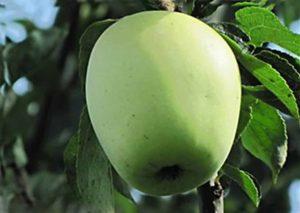
The apple tree is distinguished by its productivity; the fruits are round.
Flowering and pollinators
The tree begins bearing fruit in the fourth year after planting, and flowers in early May. To ensure a successful harvest, pollinator varieties must be planted in the same plot; all winter and late-autumn apple varieties can be used for pollination.

Ripening time and yield
Harvesting should take place in late September. During the first few years of fruiting, yields can reach up to 40 kg. However, after eight years, the tree can yield up to 120 kg.
Once ripe, the apples do not fall off and retain their appearance.
Tasting qualities of apples
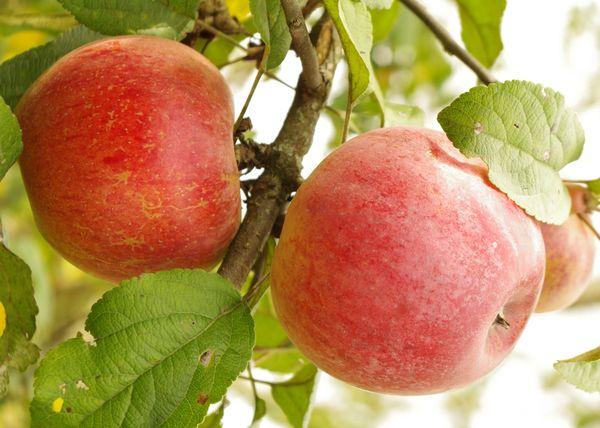
The apples are perfectly shaped. The fruit is sweet and the flesh is firm. They contain all the nutrients, including 9.5% sugar.
Fruit collection and use
The fruits are harvested immediately after ripening. They are used for preserving and candied fruit. Their dessert-like flavor is ideal for fresh consumption.
Important: To store apples for more than 4 months, pick them 1 week before they are fully ripe.
Transportability and storage of fruits
The fruits have dense flesh, making them suitable for long-distance transportation. They are also suitable for cool storage.
Susceptibility to diseases and pests
Apple trees are not immune to scab. The tree is susceptible to infection in damp weather conditions. Apple trees are immune to other diseases with proper care.
Tree pests include codling moths and aphids. However, by following preventative measures, these problems can be avoided.
Resistance to adverse climatic conditions
This variety is frost-resistant, but often freezes in harsh winters, requiring insulation. Drought is not a problem for this crop; with proper watering, abundant harvests can be achieved during dry weather.
Specifics of planting fruit crops
Planting the Veteran variety doesn't require any special skills. Standard care guidelines should be followed.
Deadlines
Apple trees can be planted outdoors in both spring and fall. In fall, planting occurs in late September. In spring, planting occurs in mid-April.

Site selection and preparation
When choosing a site for planting a seedling, choose a sunny location. Exposure to sunlight accelerates the ripening process. Planting seedlings in areas with close groundwater is also not recommended. Plant the seedling in a cleared area. Remove debris and weeds from the area.
Preparing seedlings
Before planting, the seedling should be inspected for damage. After this, the seedling is placed in a growth activator. After removing it from the solution, the roots should be dipped into the clay mixture before planting in the soil.
Important: Clay slurry protects the roots and helps retain moisture.
Technological process of landing
Before planting, prepare a hole. The hole should be at least 60 cm deep. Place pebbles on the bottom. Prepare a soil mixture for planting. Mix 1 part soil and 1 part peat. For clay soils, add 0.5 parts sand. After placing the seedling in the hole, cover it with soil and compact it. After planting, water it with warm water. Install a wooden stake for support.

When planting several seedlings, the distance between trees should be at least 5 meters.
What can be planted nearby?
All types of crops can be planted near an apple tree, but the distance between trees should be at least 4-5 meters.
Further care
Careful care of the tree must be carried out in the first 2 years after planting; subsequently, the crop requires adherence to the standard care process.
Watering and fertilizing
The plant tolerates drought, so it doesn't require frequent watering. The first watering should be done immediately after planting the seedling. After that, water every five days. Once established, water once a month, using three buckets of water per tree.

Fertilizing is done one year after planting. In the spring, nitrogen fertilizers should be applied to promote growth, followed by organic fertilizers in the fall. In midsummer, the plant should be fed with ash or bone meal. These elements strengthen the plant's immune system and prevent pests.
Trimming
Apple trees quickly become overgrown, so pruning should be done annually. In the second year after planting, the crown should be shaped by removing all lateral shoots, leaving only the branches that form the tree's skeleton. In subsequent years, some shoots growing inward should be removed in the spring. Such shoots generally do not produce fruit and reduce the penetration of sunlight needed for apples to ripen.
Caring for the tree trunk circle
As the tree grows, it's important to regularly loosen the soil around the roots. This will promote oxygen penetration. Weeds and root suckers should also be removed.
Preventive treatments
To reduce the risk of pests, treat the tree with chemicals in the spring. Use copper sulfate or Bordeaux mixture against diseases. Treatment should be done twice a year: in the fall and in the spring. Whitewashing the trunk is also necessary.

Winter protection
In the fall, mulch the soil around the trunk. Use sawdust and humus for this. The insulating layer should be at least 10 cm thick. The roots are insulated with spruce branches or fiber. The lower part of the trunk can be insulated with pine branches. Young trees are wrapped in burlap.
Important: In the spring, after the air warms up, remove the insulation to prevent fungal infections.
Methods of propagation of the Veteran variety
To propagate the Veteran variety, the following methods must be used:
- Cuttings of young shoots. This propagation method uses shoots with 3-4 buds. The cuttings should be soaked in Kornevin for 24 hours, then planted in the ground. The seedling will be ready for planting in a year.
- Root suckers. Shoots are taken 1 meter from the tree. The shoots are carefully separated from the parent root and transplanted to a new growing location. This transplant is recommended before the sap begins to flow.
Ready-made seedlings purchased from specialized nurseries are often used. Such planting material undergoes preliminary processing.

Gardeners' reviews
Alina, 34, Moscow region: "The advantage of this variety is the shelf life of the fruits. Also worth noting is the sweet and sour taste of the pulp and the ease of care."
Maxim Petrovich, 56, Rostov Oblast: "I encountered scab while growing this variety. However, after using copper sulfate, the variety quickly recovered and produced a harvest. The apples are sweet and store well."
Conclusion
With proper care, the Veteran apple tree produces large harvests. However, in some regions, the variety requires additional care in the fall. When planting an apple tree, it's important to select the right seedling, as this will determine the tree's future development.
Related posts:
 How to propagate and grow peas, cultivation technology, and care in open ground
 The best grape varieties for growing in the Urals, planting and care rules in summer
 80 Best Eggplant Varieties for Different Regions with Descriptions and Characteristics
 How to properly plant peas in a greenhouse and open ground
 The best eggplant varieties for growing in a polycarbonate greenhouse: planting and care
 How to plant grapes step by step, with a description of the process and care
 Descriptions of the 20 best cherry varieties for the Moscow region, their planting and care
 Description of the 90 best varieties of beans for open ground with names