
- History of variety selection
- Characteristics of the Kitayka apple tree
- Pros and Cons: Is It Worth Compressing?
- Popular varieties with descriptions
- Honey
- Creamy
- Golden
- Pink
- Columnar yellow
- Red
- Kerr
- Saninskaya
- Bellefleur the Chinese
- For a long time
- Bashkir Bellefleur
- Decorative Pioneer
- Pepin the Saffron
- Prunus-leaved
- Kuibyshevsky
The term "Kitaika" (Chinese) apple tree refers not to a single variety, but to a whole series of cultivars grouped into a single species. It also has an official name: Chinese plum apple. Despite their differences, all of them have attractive ornamental qualities and produce large harvests. The main characteristic of this species is its small fruit. Some varieties produce medium-sized apples, while only one produces fairly large ones.
History of variety selection
This variety got its name not because the apple tree originated in China, although it is also often grown there. The reason is that the leaves of the Chinese plum resemble those of the Chinese plum, hence its official name, the Chinese plum apple. It was bred by I.V. Michurin by crossing two species:
- garden apple trees;
- berry apple trees (primarily Sibirka).
As a result, many distinct varieties emerged. But all of them are beautiful additions to any garden and produce a bountiful harvest. Kitayka soon gained widespread popularity among gardeners.
Characteristics of the Kitayka apple tree
The Chinese tree looks great in a garden, especially if pruned and shaped regularly. This variety also has other interesting characteristics:
- It grows up to 9-10 meters, but there are low-growing varieties (2-3 meters).
- Branched root system.
- The crown is spreading, with branches growing straight up. In young trees, it is broom-shaped, while in mature trees, it is conical or spherical.
- The bark is brown with a grayish tint.
- The leaves are elongated, light green.
- Flowers, depending on the variety, are white, pinkish, or red.
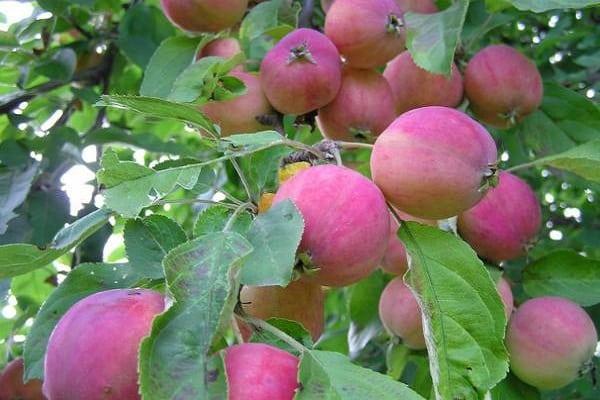
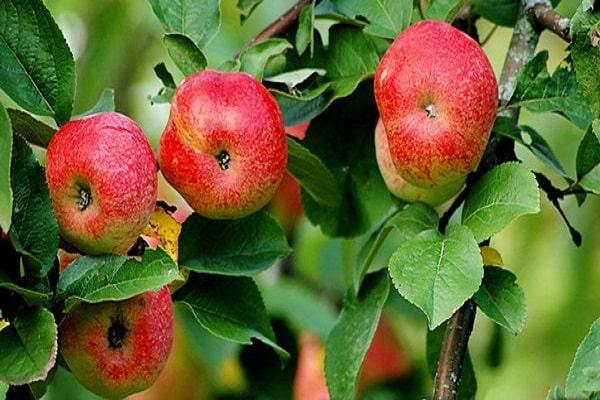
- Apples are usually 5-7 centimeters in diameter, grow in clusters, and have yellow skin.
Thanks to these qualities, Kitayka is well suited for planting in a variety of conditions.
Pros and Cons: Is It Worth Compressing?
This variety has many advantages, including:
- unpretentious;
- cold resistance – some varieties can withstand frosts of -50 degrees;
- grows in almost any soil;
- tolerates dry periods well;
- resistant to fungal infections;
- the fruits have a pleasant, delicate taste and aroma;
- The aroma attracts pollinators to the garden, so it is planted to improve the productivity of other trees;
- bears fruit annually;
- fruits can remain on the branches for a long time;
- It is well suited for decorating the garden thanks to its bright flowers and clusters of fruits.

But in some characteristics, the Kitayka is inferior to other types of apple trees:
- average yield;
- small fruits;
- ripens late;
- the fruits are not suitable for transportation and are easily damaged;
- susceptible to scab;
- low commercial quality.
Overall, the Chinese variety is a good choice for the garden, especially in temperate climates. However, it's best planted in sunny spots; shade will require more care. The varieties also differ in their fruiting times. Therefore, before purchasing, check when to expect a harvest from each one.
Popular varieties with descriptions
Breeders have developed numerous varieties of Chinese apple. They even vary in size, and some produce large, juicy fruits.
Honey
This variety lives up to its name. Ripe fruits not only have a honey-like flavor, but their flesh is so translucent that the seeds are visible. They're also large, weighing up to 40 grams.
However, because of this, the variety has a number of disadvantages:
- apples hardly keep well and rot quickly;
- the skin of overripe fruits cracks;
- fall off immediately after ripening;
- Due to the height of the trunk, it is difficult to collect them directly from the branches.
Such a tall apple tree is also difficult to care for. It's best grown only if you can quickly consume the harvest.
Creamy
This variety was bred from the Apricot plum-leaved apple tree. Compared to other varieties, it has many advantages:
- almost not susceptible to scab;
- cold-resistant;
- apples can be large – up to 60 grams; they are yellow-green, with red spots;
- stored for up to three weeks.
The harvest can begin in early September, earlier than many other Kitayka varieties.
Golden
This variety emerged after pollinating the Kitayka with pollen from the White Filling. Unlike other varieties, this apple tree is an early-ripening one, with its fruit ready to harvest as early as early July. Harvesting ends in mid-August. The apples fall quickly and have a shelf life of 10 days maximum. Therefore, after harvesting, they should be consumed fresh or processed.

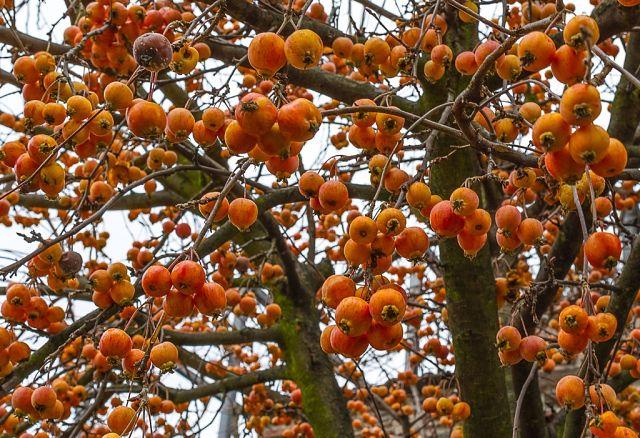
The apples themselves are small—up to 30 grams—but tasty, like other varieties. Also, the plot needs a pollinator variety, otherwise a good harvest is unlikely. White filling and Moscow pear varieties are suitable for this purpose.
Pink
This variety is one of the most undemanding, and it's also resistant to scab. The fruits weigh 40-60 grams, grow in clusters of several, and have a shelf life of only three weeks after ripening. However, the Pink Kitayka produces abundant harvests, and can be harvested in late August. Furthermore, this apple tree is distinguished by its very large, white-pink flowers that cover the crown. These flowers are what give it its name.
Columnar yellow
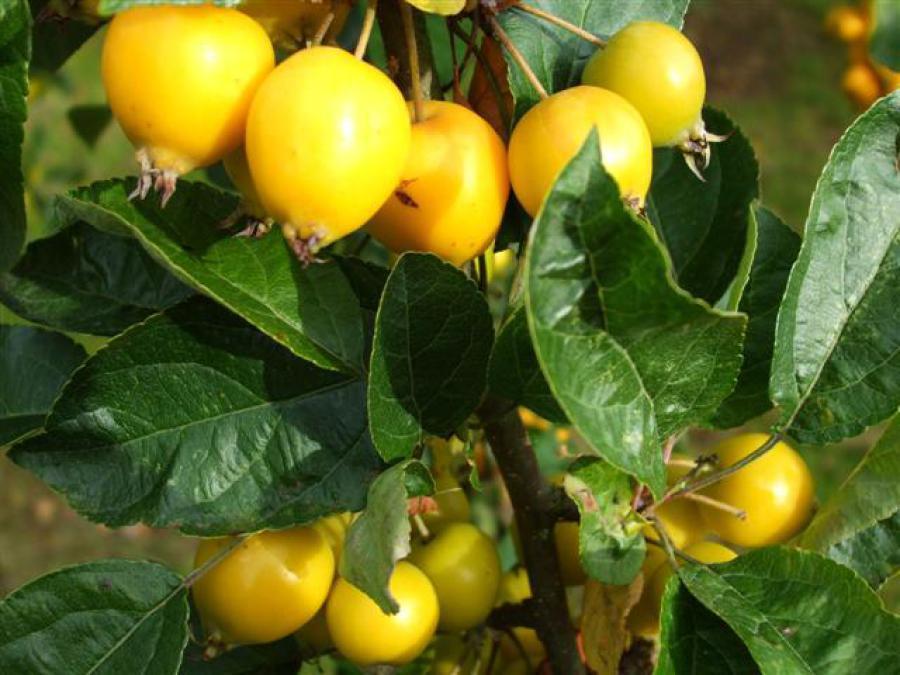
As its name suggests, this variety lacks lateral branches. The bark on the branches is yellow or orange. It ripens quickly, by the end of July, but the fruits fall off immediately and don't store for more than a week. The apples are small, with yellow or amber skin. They are often used in various dishes, desserts, and preserves.
Red
Chinese Red is one of the most popular varieties:
- produces large harvests (one tree can produce about 170 kilograms of apples);
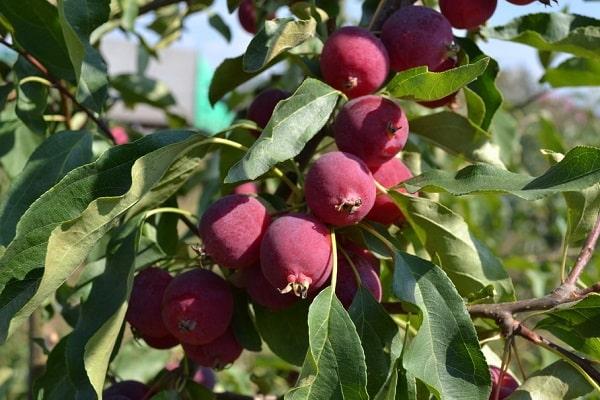
- the fruits, although small, are beautiful, with raspberry-colored skin;
- juicy pulp with a pleasant sour taste;
- can be stored in the cold for up to two months;
- convenient to transport;
- resistant to most diseases.
In fact, the only drawback of the variety is the risk of scab.
Kerr
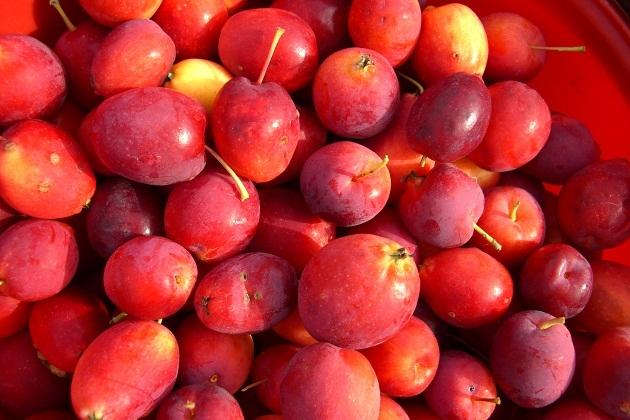
This variety is renowned for its decorative qualities. Large crimson flowers bloom first, later giving way to bright red, elongated apples. A major advantage of the Kitayka Kerr is that the fruit stays on the branches for a long time. Furthermore, it can be stored in a cellar or other cool place until January. This even improves their flavor, acquiring a honeyed aroma.
Saninskaya
This variety is distinguished by its high yield and resistance to scab. The apples can be stored for about two months, until November. However, their flavor is inferior to other varieties, and the fruits are small. Among other drawbacks, it's worth noting that the apple tree doesn't produce a harvest every year, and only begins bearing fruit in its sixth year.
Bellefleur the Chinese
This hybrid was created by pollinating the Yellow Bellefleur with pollen from the large-fruited Chinese apple. This is why the variety produces large apples—up to 400 grams. The fruits are aromatic and juicy, ripening in the second half of September. However, the tree only bears fruit after eight years, and it doesn't tolerate cold well.
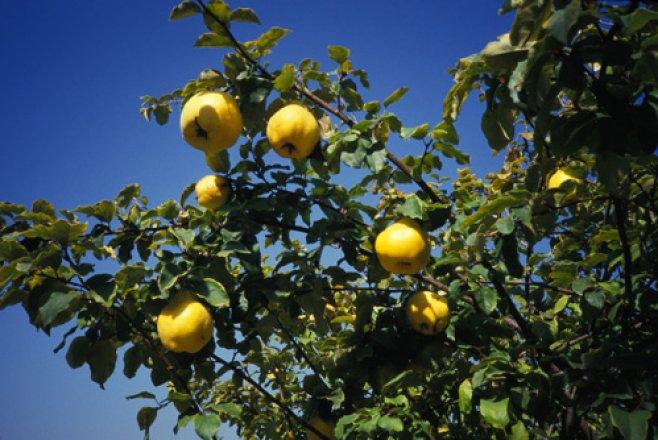
For a long time
This variety, developed in America, is often used for ornamental purposes. It begins blooming in May, and by late summer, the tree is covered with oblong red apples. The fruits remain on the branches for a long time, but do not last longer than a month. It has a sweet, wine-like flavor.
Bashkir Bellefleur
A medium-sized, frost-hardy variety. The fruits are larger than most Chinese apples, weighing up to 150 grams, and are green with pink highlights. The Biefler has an interesting, slightly spicy flavor. Pollination requires apple trees with a similar blooming season.
Decorative Pioneer
It's distinguished not only by its bright pink flowers but also by its burgundy foliage, which takes on a beetroot hue in the fall. The fruits are small, fragrant, and thin-skinned. However, they don't have a long shelf life.
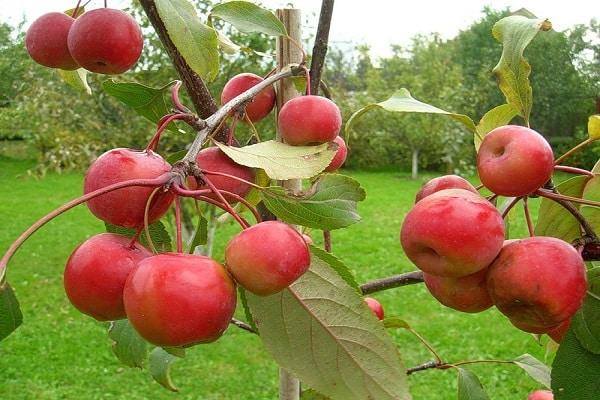
Pepin the Saffron
This apple tree produces beautiful yellow-green fruits with red spots. They are sweet, with a wine-like flavor, and they store for up to eight months. However, this variety requires careful care.
Prunus-leaved
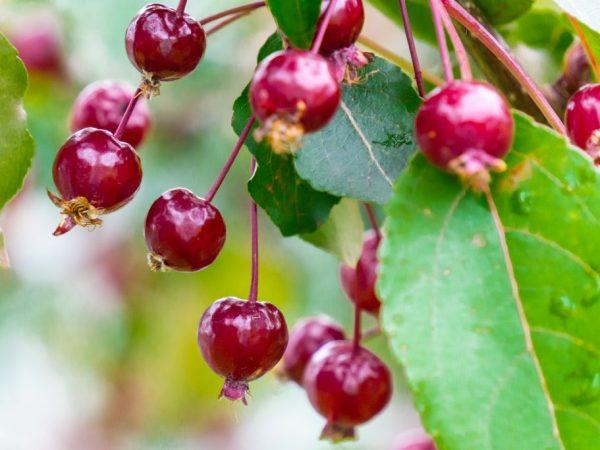
A dwarf variety, most often found in the Moscow region. The fruits are small, with shiny skin. Suitable for dishes and preserves.
Kuibyshevsky
Young apple trees bear fruit every year. The apples weigh up to 150 grams and can be stored for several months, until the end of winter. They ripen by mid-September.
Related posts:
 80 Best Eggplant Varieties for Different Regions with Descriptions and Characteristics
 The best grape varieties for growing in the Urals, planting and care rules in summer
 Descriptions of the 20 best cherry varieties for the Moscow region, their planting and care
 Description and characteristics of the 60 best sea buckthorn varieties, how to choose depending on the region
 Description of the 30 best plum varieties for the Moscow region, planting and care
 50 Best Pumpkin Varieties with Descriptions and Characteristics for Outdoor Planting
 Description of the best varieties of black tomatoes for open ground and greenhouses
 Description and characteristics of the 27 best plum varieties for the Urals, planting and care