
- History of the selection of the Augusta apple tree
- Where is it recommended to grow: climate and regions
- Pros and cons of fruit crops
- Description and characteristics
- Size and annual growth
- Crown and branches
- Foliage and buds
- Fruiting of the tree
- Cyclicity
- Flowering and pollinators
- Ripening time and yield per tree
- Harvesting and storage
- Fruit tasting and the scope of apple trees
- Winter hardiness and drought resistance
- Susceptibility to diseases and pests
- Landing
- Required soil composition
- Site selection and preparation
- Dimensions and depth of the planting hole
- Timing and step-by-step algorithm for planting a seedling
- Further care
- Watering mode
- Top dressing
- Trimming
- Loosening and mulching the tree trunk circle
- Prevention and protection of wood
- Covering a fruit tree for the winter
- Methods of reproduction
- Gardeners' reviews of the Augusta variety
The obligatory cultivation of apple trees has been practiced in gardening since ancient times. The aromatic fruits are prized for their flavor, productivity, and long-term storage. The Augusta apple variety is highly sought after. It's not particularly easy to care for, but the juicy and delicious fruits make up for the effort. The harvest begins in the summer.
History of the selection of the Augusta apple tree
The Augusta variety was developed at the Research Institute of Fruit Crop Breeding. Its origin dates back to 1882. Russian breeders E. A. Dolmatov, E. N. Sedov, Z. M. Serova, and E. A. Sedysheva crossed the tetraploid Papirovka and Orlik varieties. Testing of the Augusta variety took place in the early 2000s.
Where is it recommended to grow: climate and regions
The Russian Federation, Ukraine, and Belarus have been recognized as natural growing regions for the Augusta apple tree. The Central Black Earth Region offers optimal conditions. For example, confident and complete tree establishment has been observed in the Oryol Region, where the climate is particularly favorable for this fruit crop.
Pros and cons of fruit crops
Every crop has its advantages and disadvantages, and the Augusta apple variety is no exception. The following advantages can be listed:
- high cold resistance;
- high yield;
- good commercial properties;
- has immunity against scab.
A short shelf life is cited as a disadvantage of the Augusta variety.

Description and characteristics
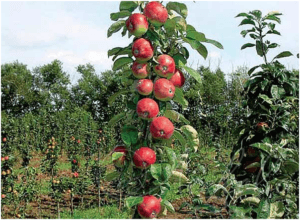
The Avgusta variety ripens in late summer, considering its growing region—the central part of Russia. Specifically, mid- to late August. The south enjoys plenty of sun and warmth. If the soil is fertile, the harvest is earlier. According to the description, the tree is large, reaching up to 4 meters in height. The crown is rounded, with the largest branches pointing upward. They are positioned at almost a right angle to the trunk. This ensures that the entire tree receives ample light. The shoots are hairy in texture.
Size and annual growth
The Augusta apple tree grows very quickly, with annual growth of 7 to 10 cm. A mature tree measures 3 m wide and 4.5 m tall. Improved apple tree development can be achieved with timely fertilization. In the first few years, apply nitrogen fertilizer, and after two years, apply potassium and phosphorus fertilizers.
Crown and branches
As the Augusta grows, it develops a spreading crown. Its diameter is up to 3 meters, without thickening. The skeletal branches extend almost perpendicularly from the trunk, spaced well apart. The tree reaches maturity, reaching a height of 4 or 4.5 meters.

Foliage and buds
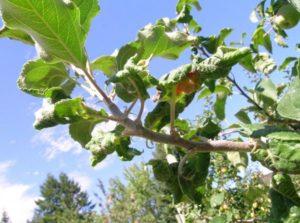
Medium-sized, cone-shaped buds are located on the branches, pressed against the gray bark. The Augusta apple tree's leaf is quite large and wide, matte, and oval-shaped, light green. The pubescent blades are slightly concave. The petioles are downward-facing and medium-sized. The inflorescences bear large, round buds.
Fruiting of the tree
The tree produces large, conical, slightly oblong apples. They average up to 170 grams in weight. They are noted for their sweet skin and juicy, sweet-tart flesh. The color of the fruit depends on the sun's rays, which in turn determines the tree's location in the orchard.
If the apple tree receives sufficient sun, the color will be more vibrant and juicy. The first apples will be green, then red or yellow-green, with a gradual transition of shades.
Cyclicity
The fruiting of the Augusta apple variety is stable and does not have any periodicity.
Fruit crops not only produce a regular harvest, but also prevent it from declining.
Flowering and pollinators
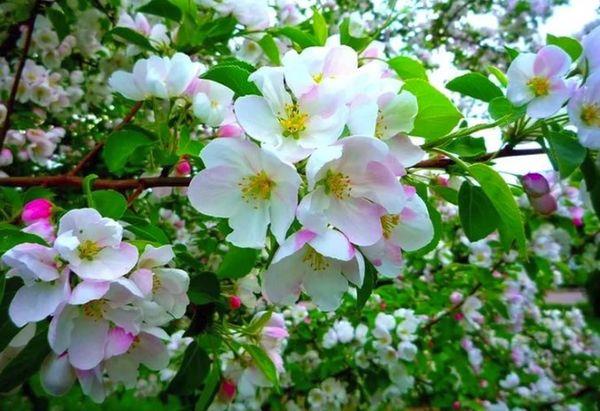
The Augusta apple tree requires cross-pollination. Then you can hope for a good harvest. All varieties that bloom at the same time are suitable for this purpose. Buds appear on the tree as early as two years of growth. They open as white flowers.
Ripening time and yield per tree
This late-season variety is prized for its high yield. At maturity, a single tree can yield up to 120 kg of apples. With proper crown formation, fruiting can begin four years after planting. At this time, up to 25 kg can be harvested per tree, considered a record. This figure then increases year after year. Ripening times depend on the regional climate; on average, it's mid- to late August (the 15th or 20th).
Harvesting and storage
Once fruiting begins, in the fifth year after planting, the yield increases annually. After mid-August, apples can be expected to be ripe. After just a month, the harvested fruits become deformed and lose their consumer qualities. Due to the significant yield, it is advisable to begin processing the apples immediately to prevent spoilage.
Fruit tasting and the scope of apple trees
Tasters rated the sweet and sour dessert flavor at 4.5 points. Therefore, the fruits are not only beautiful in appearance, but also have flesh qualities such as juiciness and graininess. It is firm, with a light green hue. In addition to eating fresh, apples are also used to make jam and baked into pies. They are suitable for private and retail sale. The Augusta variety is used to produce juices and sweets.

Winter hardiness and drought resistance
Frost damage to the tree's crown and roots is very rare. In winter, the apple tree can tolerate temperatures down to -35°C (-95°F). Being resistant to severe cold, it is gaining popularity in the northern regions of Russia. If Avgusta is grafted onto winter varieties, the tree will withstand temperatures down to -43°C (-113°F).

Susceptibility to diseases and pests
Augusta's pests include mites, aphids, leafhoppers, codling moths, and apple moths. Spraying the tree with a tobacco solution is a universal method. Prepare a tobacco decoction and add soap. A 3% solution of Nitrofen is also effective against mites.
Some pests overwinter, causing damage the following year. Apply olecuprite at 400 g per 10 liters of water. Mites are eliminated in spring and fall by pruning the affected branches. The cut should be treated with 1% copper sulfate.
After the procedure, apply garden pitch. It should be noted that the plant is immune to scab and powdery mildew. However, cytosporosis can occur as a result of infection. This fungus is a parasite and appears on the bark when the soil is poor and there is no regular moisture.

Landing
To ensure the tree's successful growth and subsequent fruitfulness, it needs a site with fertile soil and good light. The preferred time is early spring, between April and May. Fall is also acceptable, but before severe cold weather sets in. It's important to keep in mind the tree's deep root system (up to 5 m). When choosing a site, consider the groundwater depth, which should be at least 1 or 1.5 m.
Required soil composition
The soil should be well-drained, meaning it allows water and air to reach the roots. Sand is added to the clay mixture. The soil should be thoroughly dug before planting. When loosening the soil, add humus, peat moss, and compost.
Site selection and preparation
Augusta, like other apple trees, requires good light. Therefore, choose an open location. Fruit grown in the shade will have a different quality. The yield will be reduced, and the color will not be as vibrant.
Dimensions and depth of the planting hole
Dig a hole 40 cm deep and 50 cm wide in advance. Form a sand mound at the bottom, place the seedling upright on it, and spread out the root system. Cover with soil, compacting the soil. Leave the root collar 5 cm above the surface.

Timing and step-by-step algorithm for planting a seedling
Let's first consider the fall planting option. Selecting a sunny location ensures good establishment and development. Groundwater should be at a depth of 3 meters. The best time is early spring, before bud break.
It's best to dig in a seedling purchased in the fall and plant it in the spring. Follow these steps:
- dig a hole;
- sand and a seedling are placed on the bottom, distributing the roots;
- cover with soil, leaving the root collar 3-5 cm above the surface;
- compact the soil, pour in 2 buckets of water.
A distance of 4 meters between trees is required. Rows in the garden are spaced 5 meters apart.

Further care
The Augusta variety requires attention, including ample and regular watering. If the summer is rainy, the soil should be loosened, as the roots require oxygen. Avoid shading the apple tree, as this will reduce yield.
Watering mode
During hot and dry seasons, water in the evening to avoid burning. For proper tree development in such weather and climate conditions, the soil must be kept abundantly moist. During rainy summers, it is necessary to loosen the tree trunk circle to allow air to reach the root system.
Top dressing
The variety requires fertilizing. Sometimes the soil isn't very rich in minerals. This is done for the first time in the spring, and then again in late May or early June. Nitrogen fertilizers are applied during the first year of growth. In the second year, potassium-phosphorus fertilizers are applied until the fruit ripens.
Trimming
Early fruiting can be stimulated by proper crown shaping. The first pruning is done immediately after planting the apple tree. The top is removed, leaving just 1 meter of the sapling. This will trigger rapid growth of lateral shoots and the formation of fruiting shoots.

Every spring, weakened, dried, or frost-damaged branches should be removed. They are cut before the buds swell. Pruning also corrects the tree's shape, and excess shoots can be removed. The cuts are disinfected with a copper sulfate solution.
Loosening and mulching the tree trunk circle
Loosening the soil is essential. For effective loosening, use a pitchfork and work the area around the tree trunk using vertical movements. Weeding and weeding are also performed simultaneously. Mulching helps prevent moisture from evaporating quickly and also insulates the apple tree's root system for the winter. Weeds inhibit growth, so mown grass, straw, and sawdust are used to prevent weeds from sprouting.
Prevention and protection of wood
After planting, the tree isn't fertilized for the first year. It's important to protect Augusta from pests using appropriate treatments. For example, treat the apple tree's leaves with a 3% nitrofen solution to prevent spider mites.

Covering a fruit tree for the winter
Mulch made from cut grass or straw is suitable for insulating the roots. As for the branches, only the Leningrad Region, located in the north, reports some frost damage. In other zones, the tree tolerates cold well.
Methods of reproduction
This apple tree is propagated using the same methods as other trees. Home gardeners typically don't germinate seeds. They use seedlings from root cuttings or suckers, provided they have a good root system. To propagate by layering, fresh shoots are bent toward the soil and dug in. Roots develop over the summer, after which the new tree is planted for permanent growth. This is not very convenient, as all the branches are located at a considerable height.
Gardeners' reviews of the Augusta variety
The Augusta variety is popular with gardeners because it's beautiful, easy to care for, and produces a large harvest. They report harvesting up to 80 kg from a single tree. Many consider this apple tree the most productive of all their gardens. The fruit is versatile. Simply familiarize yourself with the planting and care guidelines, and the tree will grow well, and the fragrant apples will ripen as early as summer.
Related posts:
 Description of the Chudnoe apple variety, planting and caring for a dwarf tree
 Description of the Red Early apple tree variety, agricultural technology and specific care
 Signs and treatment of apple tree cancer, varieties resistant to the disease
 Description and subtleties of growing the Sverdlovsk Beauty apple tree variety
 Description and characteristics of the Orlovim apple variety, cultivation nuances
 Description and varieties of the Sinap apple tree, planting and care rules
 Description and characteristics of the Spartan apple variety, cultivation tips
 Description of the ornamental Nedzvetsky apple tree, cultivation technology