
- History of the creation of culture
- Varieties and comparative characteristics of pears
- Moscow
- Early
- Winter
- Advantages and disadvantages: is it worth planting in the area?
- What is special about a fruit tree?
- Trunk and crown dimensions
- Branching of the root system
- Fruiting of the variety
- Beginning of the period
- Flowering and pollination
- Ripening of fruits and their subsequent sale
- Winter hardiness
- Immunity to diseases and pests
- Landing features
- Timing of planting operations
- Necessary soil
- Preparing the hole for planting
- Seedling planting technology
- Care
- The importance of watering
- Fertilizers and care of the tree trunk circle
- Trimming
- Protection from pests and diseases
- Preparing for winter
- Gardeners' opinions on the Grushovka crop
According to documentary sources, apple trees in Rus' are known from the history of the Kiev Pechersk Lavra. This dates back to the 11th century. Archaeological excavations in Novgorod reveal apple seeds and even a small, presumably cultivated, whole apple. This dates back to the 12th century. In the 16th century, Olearius wrote of apples in Muscovy where "the seeds are visible right through." So, the question arises: when can we date the origin of the old Russian apple variety, the Moscow Pear Tree?
History of the creation of culture
Many old Russian apple varieties are considered descendants of wild apples with small fruits. The Moscow Grushovka apple tree is one of them. In different regions, this variety was called by different names: Pestrushka, Spasovka (because it ripened in time for the Savior's Day), and Skorospelka.
Alexander Timofeevich Bolotov (1738-1833) believed this folk variety was over two centuries old. It was eventually named after a Tula native named Grushovsky, who actively promoted it. The name "Moscow Grushovka" was given to distinguish it from the Revel Grushovka, common in the northwest.
Varieties and comparative characteristics of pears
Moscow
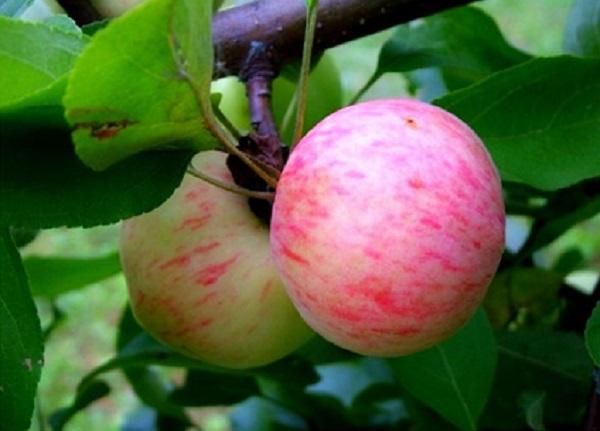
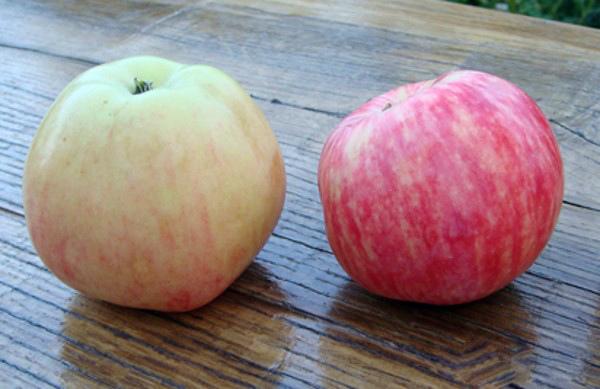
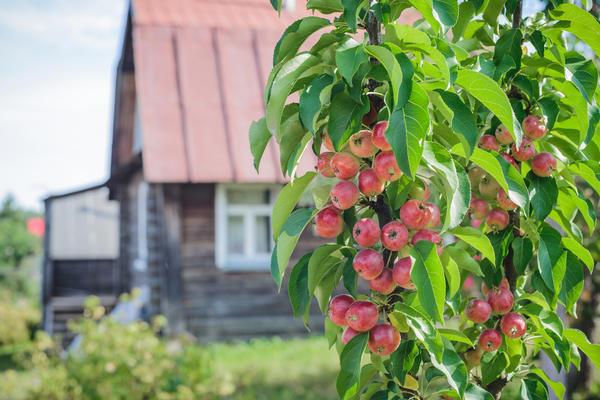
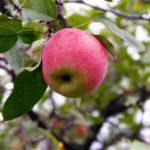
Gardeners value the Grushovka Moskovskaya apple tree for its high frost resistance and early and abundant fruiting. The apples are beautiful: turnip-shaped, medium-sized, with smooth yellowish-green skin, adorned with a blush and occasional pink stripes. They weigh between 70 and 120 grams, but the fruit-laden branches are stunning.
The flesh is aromatic, white, creamy-pink in places near the skin, tender, juicy, and has a honeyed, slightly tart flavor. The taste rating is 4.5. But human creativity always finds its way: "susceptible to scab, the fruits are small, and cannot be preserved over winter." And this variety gave rise to the wonderful Grushovka Rannaya and Grushovka Zimnyaya.
Early
Saratov scientist S. I. Isaev developed the Early Grushovka by pollinating the Moscow Grushovka with the Papirovka variety. This "newcomer" resembles the parent variety in its frost resistance, high yields, and, unfortunately, the frequency of crop failures: every other year. Early Grushovka apples are large, more beautiful, and even tastier than the parent variety. They are similar, but the early variety has a narrow seam, characteristic of Papirovka.
It ripens a week earlier and is more resistant to scab. However, in rainy years, it still requires some struggle with the fungal parasite. The yield is up to 200 kg: higher than its parents due to the larger tree. A plus for family gardens is the uneven ripening, meaning the fruits can be harvested gradually. Therefore, the Early Pear is not suitable for commercial plantings.
Winter
The Winter Pear variety was developed by breeder S.F. Chernenko, who in 1957 crossed the Moscow Pear apple with the excellent Kronselsky Transparent. The resulting fruits are large, slightly elongated, yellow, with pink streaks in places, sweet with a hint of tartness, and juicy.
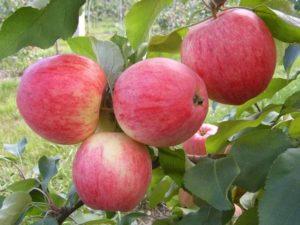
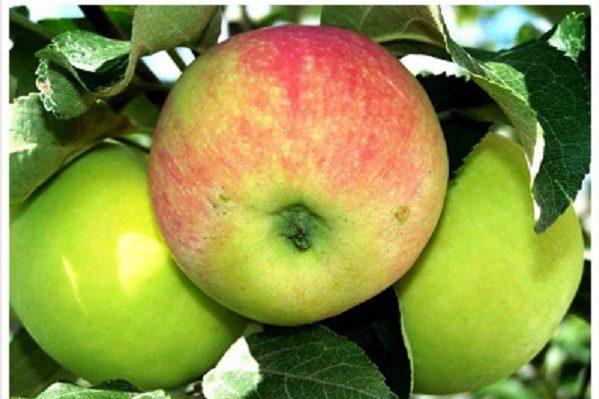
The yield is high: up to 100 kg. Apples are harvested until mid-October and stored until spring. The flavor improves after 2-3 months of storage. The variety is not frost-resistant and is susceptible to diseases. Therefore, it has not become as widespread as the early pear variety.
Advantages and disadvantages: is it worth planting in the area?
Advantages of the Moscow Pear apple tree:
- Rare frost resistance: down to -50°C. It even ripens on Valaam. This is likely a legacy of the wild apple tree.
- It easily adapts to new conditions and takes root almost 100%.
- It is being successfully developed from the North-West to Siberia.
- With proper agricultural technology, it bears fruit for up to 65 years.
- First fruits – from 4-5 years.
- Apples ripen in early August. Variations may occur depending on the growing location.
- The harvests are pleasing: they are getting better year after year.
- Good taste and highly decorative apples.
Disadvantages of the variety:
- Harvests are every other year.
- The fruits are small: on average ̶ 70 g.
- Not resistant to scab, especially in wet conditions.
- The fruits are stored for 2-3 weeks, so they are not transportable.
- It does not tolerate drought without care, sometimes dropping its potential harvest.
The gradual ripening of the fruit can be considered both an advantage and a disadvantage: great for a home garden, but not suitable for commercial use. And there's no reason to complain about short-term storage: it's a summer variety, one of the earliest – so much joy at the first ripe apples!
What is special about a fruit tree?
Trunk and crown dimensions
The Moscow Grushovka apple tree grows up to 7 meters tall. The crown shape, driven by consistently high yields, changes with age from pyramidal to spherical, up to 8 meters in diameter. The branches are long, strong, spreading, and well-foliated. The smooth bark of young Moscow Grushovka apple trees is reddish-brown. The bark of mature Moscow Grushovka apple trees, like that of all summer varieties, is light yellow.
Branching of the root system
The apple tree's root system consists of vertical and horizontal roots. The former anchor the trunk in the soil and extract nutrients from deep underground layers. The horizontal roots, in addition to nutrients, supply the tree with air.
Roots are also divided into skeletal and adventitious. The former are thick, while the latter are fibrous, thin, and small.
There are a lot of them. They are designed to absorb water with dissolved mineral salts and excrete waste products. This type of root is located at a depth of up to half a meter, directly under the crown. Therefore, it is in this layer that fertilizers applied will be most beneficial.
Fruiting of the variety
Beginning of the period
The onset of fruiting depends on the rootstock: on a dwarf rootstock, it begins three years after planting, while on a full-grown apple tree, it begins six years later. The yield will gradually increase, and in 9-10 years, it will be possible to obtain up to 100 kg.
Flowering and pollination
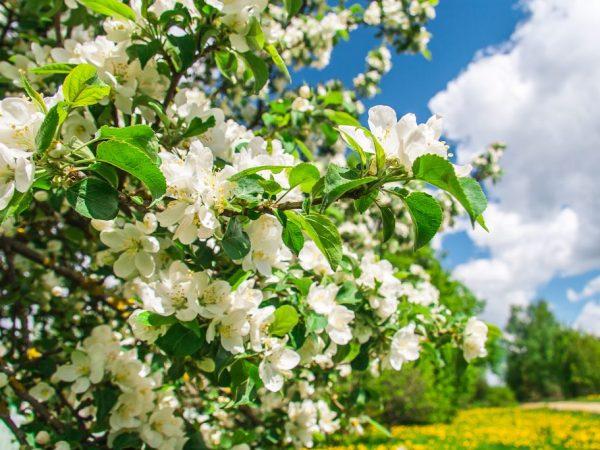
The Moscow Pear apple tree blooms well when the air and soil humidity are optimal and the weather is calm and windless. A dry spring or, conversely, a sudden cold snap, or rainy and windy weather will negatively impact both flowering and pollination. This apple tree is self-sterile, meaning it requires pollination from other varieties to set fruit.
When choosing a pollinator apple tree, you have to take into account:
- varietal qualities of pollinators;
- coincidence in flowering time.
Papirovka and Antonovka are the best varieties for Moscow pear, Anis Polosaty and Cinnamon are good, and Bellefleur-Kitaika is very productive.
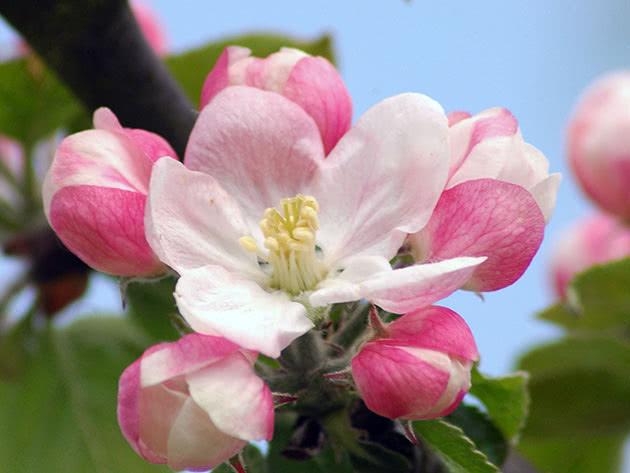 To ensure effective cross-pollination, specialists attract honeybees to the apple trees. During the flowering period, they spray the trees with honey water in the morning.
Ripening of fruits and their subsequent sale
The fruits ripen towards the end of summer. They usually reach maturity by Apple Savior Day. However, climate conditions are also important: on Valaam, for example, they begin to delight by mid-September. Our Grushovka is best consumed fresh. Firstly, its fruits are among the first apples of the season, full of vitamins and essential microelements.
Secondly, they don't have a long shelf life: three weeks at most. Therefore, they're not suitable for transportation or subsequent processing. They must be used on-site. They can either be eaten directly, which is very convenient for gardening families, or processed at home: into wine, juice, applesauce, and dried fruit.
Winter hardiness
One of the remarkable qualities of the Moscow Grushovka is its phenomenal frost resistance. A striking example of this frost resistance is the successful fruiting of the Moscow Grushovka apple tree on Valaam Island at -50˚C. Yellow apples with a fuzzy blush ripen at northern latitudes. Isn't that a miracle?
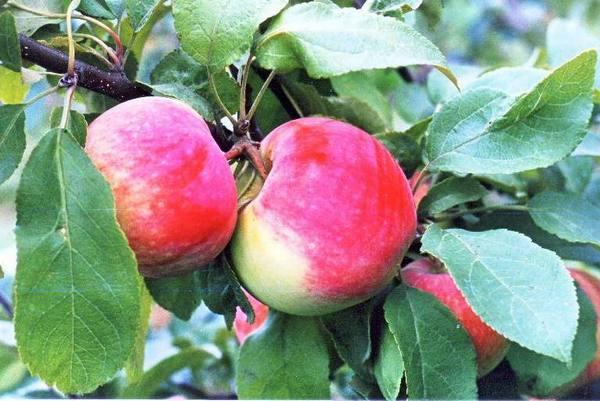 This variety of pear grows comfortably in places where many fruit trees simply cannot survive.
Immunity to diseases and pests
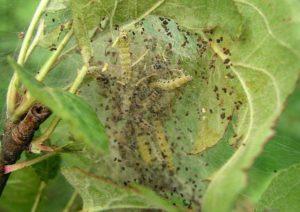
This variety lacks strong immunity to common apple tree diseases. However, its most vulnerable spot is susceptibility to scab, especially in wet weather. The most troublesome pest is the codling moth.
Landing features
Timing of planting operations
The best time to plant an apple tree in the ground depends on the region's climate. In the fall, apple trees are planted after the leaves have fallen. It will take up to 25 days for the tree to take root.
So by the time the cold weather arrives, she will have fully adapted to her new role and will survive the winter safely.
Although the Moscow Pear is frost-hardy like no other apple tree, the area around the young tree's trunk should still be covered with spruce branches or grass. Time is short in the spring, so it's best to plant the apple tree between the time the soil warms up sufficiently and the sap begins to flow actively.
Necessary soil
The pear tree prefers light soil: sandy loam or loam, preferably sod. Acidic soil can be neutralized with lime or dolomite flour. Choose a sunny, dry, and wind-exposed location.
Preparing the hole for planting
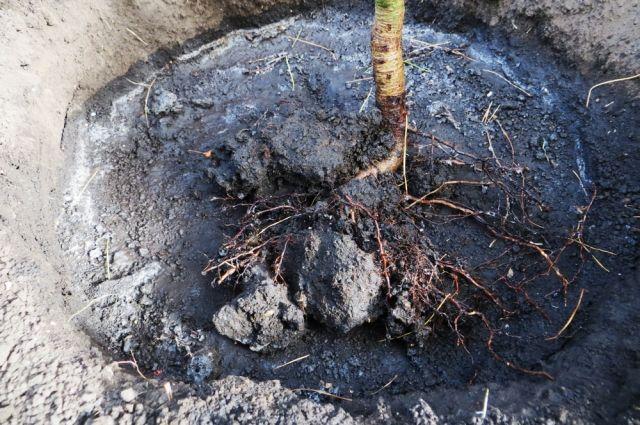
Prepare a hole for the apple tree about 10 days before planting. It should be about 1 meter in diameter and 0.7 meters deep. Fill it with a pre-prepared mixture of sand, clay, turf, and peat in equal parts. Add superphosphate, wood ash, and manure compost to the soil, mix, and form a mound.
Seedling planting technology
The technology is conventional:
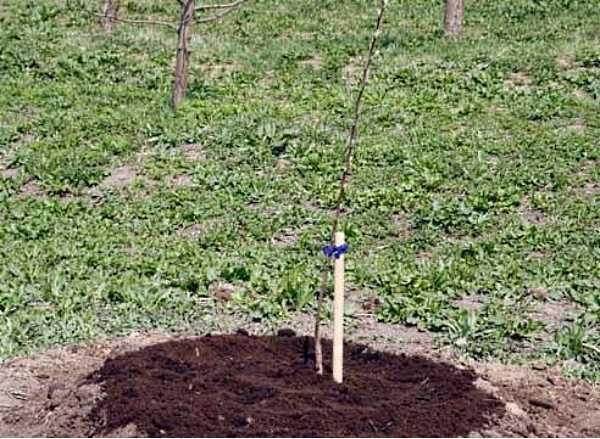
- Fix a stake in the prepared hole.
- Place a seedling nearby and spread the roots over the mound.
- Add soil in layers of 10 cm, tamping down each layer.
- The root collar should rise 5 cm above the soil.
- Tie the trunk to the peg with a soft rope.
- When planting deep, form a ridge around the tree and water the soil with three buckets of water.
- Mulch the tree trunk circle with humus or well-rotted compost.
Care
The importance of watering
The Moscow pear tree is a drought-tolerant apple tree. The following are required:
- Before watering, loosen the soil around the trunk along the diameter of the crown;
- weekly watering once a week, 2-3 times during drought;
- pour 20-30 liters at a time;
- stop watering by September.

Fertilizers and care of the tree trunk circle
Fertilize the Moscow pear tree one year after planting the seedling:
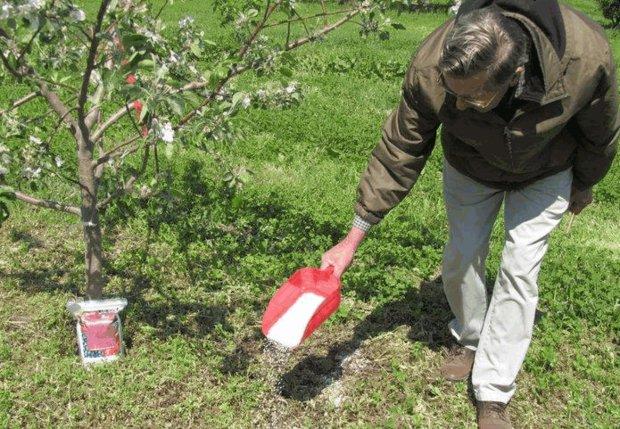
- in early spring with urea and rotted manure;
- in autumn with Kemira or Fertika fertilizer.
Fertilizer is distributed around the trunk and dug in thoroughly. Throughout the summer, the area should be loosened and weeded, removing fallen buds, diseased fruit, and leaves.
Trimming
Timely pruning is intended to:
- thin out the crown to avoid scab;
- select dry, diseased and damaged branches;
- make harvesting more accessible;
- prepare trees for winter.
Diseased and pest-damaged branches are burned. The cut areas are generously coated with garden pitch.
Protection from pests and diseases
The worst enemies of the Moscow pear are the fungal disease apple scab and the codling moth.
Scab is especially active in humid climates. To effectively combat this disease, it is recommended to:
- cut off and then burn the affected branches;
- destroy fallen leaves and spoiled fruits in a timely manner;
- treat the crown and the soil underneath with copper sulfate;
- whitewash the trunk before wintering;
- dig around an apple tree for the winter;
- smear the wounds with garden pitch.
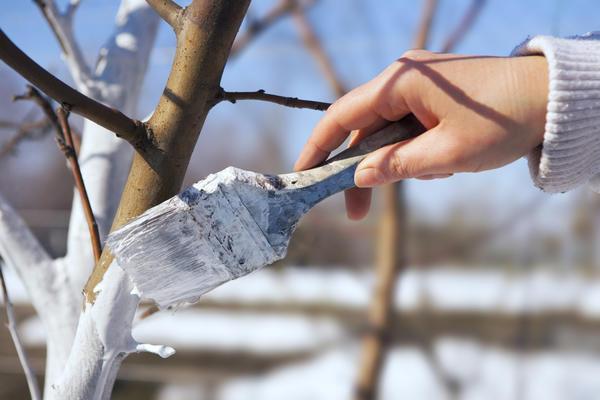
Of the special preparations, the most suitable are considered to be:
- "Strobi" - trees are treated with it in early spring;
- "Skor" - for prevention in autumn.
You can fight the codling moth:
- peeling off the bark under which the cocoons are hidden;
- catching butterflies and preventing worms from climbing up the trunk;
- insecticides;
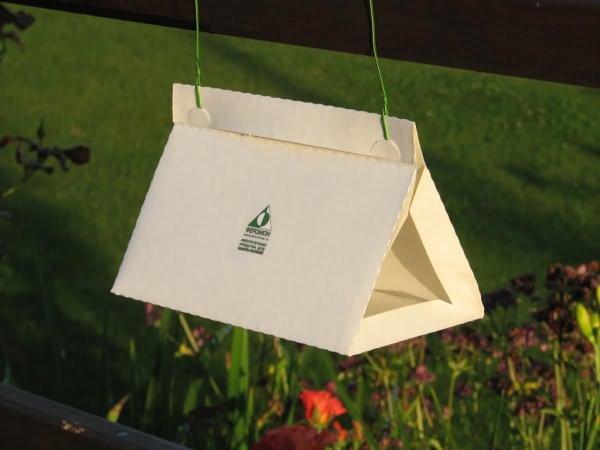
- pheromone traps;
- by growing nearby plants that repel the codling moth;
- attracting insects that are enemies of the codling moth (ichneumon flies).
One pheromone trap for five trees almost completely eliminates 20 species of pests from a garden. It is harmless to humans and animals.
Preparing for winter
The Moscow pear tree, like any other apple tree, is not usually (perhaps sometimes carelessly) protected for winter. In addition to pruning and other post-harvest sanitary measures, it is prepared for possible rodent attacks. To do this, the trunk is wrapped in rags, cut-up plastic bottles, spruce branches, and fluttering black T-shirt bags.
Gardeners' opinions on the Grushovka crop
Marina, Tula region
This variety is just what we need. I've known about Grushovka since childhood. I love it, and so does my whole family. It's never frozen. The apples are fragrant and delicious. The harvest is large every other year.
Pavel Ivanovich from Pskov
I got my first apples in the fourth year. It's a productive, early-ripening variety. The apples are small, but very tasty. I'm successfully fighting scab, so I'm happy with the variety.
Tatyana Gennadievna
Even here in Siberia, this Grushovka doesn't freeze and ripens by September. The apples are beautiful, fragrant, and wonderfully flavorful. We eat them like seeds. One summer, it rained nonstop, and they were completely covered in scab. But we still love them.
Related posts:
 Characteristics of the Grushovka tomato variety and hybrid varieties
 Signs and treatment of apple tree cancer, varieties resistant to the disease
 Description of the Chudnoe apple variety, planting and caring for a dwarf tree
 Description and varieties of the Sinap apple tree, planting and care rules
 Description of the ornamental Nedzvetsky apple tree, cultivation technology
 Description and planting of the Dream apple tree variety, care and propagation
 Description and characteristics of the columnar apple tree President, planting and care
 Description and subtleties of growing the Sverdlovsk Beauty apple tree variety