
- What diseases and pests cause cobwebs?
- Spider aphid
- Spider mite
- Apple leafhopper
- Ringed silkworm
- Gypsy moth
- Winter moth
- Apple moth
- Leaf roller
- Leafhopper
- How to save apple trees
- What to spray with
- Bitoxybaccillin
- Dendrobacillin
- Entobacterin
- Verticillin
- Bicol
- The best biological drugs
- Mechanical and agrotechnical techniques
- Folk remedies
- When should wood be treated?
- Before and after bud break
- During the flowering period
- During fruiting
- Final processing
- Prevention methods
The appearance of spider webs on apple trees is associated with attacks by harmful insects. This symptom is caused by aphids, mites, leaf rollers, and other pests. To combat pests, it is recommended to choose the right treatment. Insecticidal products are the most effective. However, they should not be used once fruit has set. Biological products and folk remedies have a more gentle effect.
What diseases and pests cause cobwebs?
There are many pests that cause web formation. To deal with these parasites, you need to identify their species.
Spider aphid
This parasite attacks young, succulent parts of the plant. It absorbs the sap from the leaves. As a result, they swell and change color, and then wither.
Spider mite
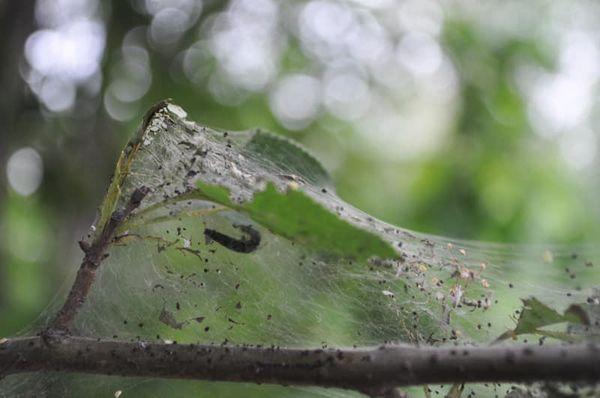
This small insect belongs to the arachnid family. Individuals reach 1 millimeter in length and are greenish in color. After some time, they acquire a brown or red tint. The parasites absorb plant sap. They reproduce especially actively in dry and hot weather. These pests can cover entire trees and bushes in the garden with webs.
Apple leafhopper
The insect has a greenish color and transparent wings. It reaches 3 millimeters in length. By the end of the summer season, individuals acquire a darker shade. The parasites lay eggs in the bark and at the bases of buds. In the spring, larvae emerge. As they develop, they can destroy all parts of the apple tree.
Ringed silkworm
These butterflies are also known as ringed runner moths. Individuals are brown in color. Females are significantly larger than males. They choose young, thin branches to lay their eggs, forming a neat ring.
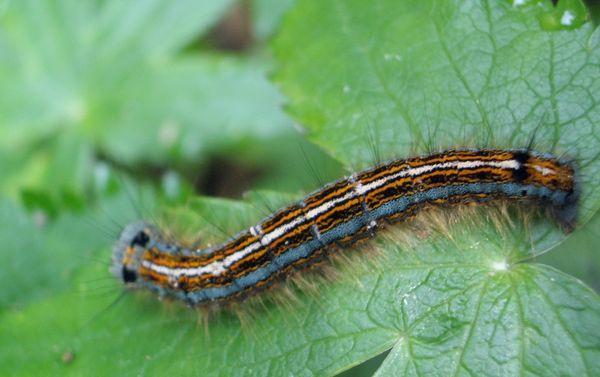
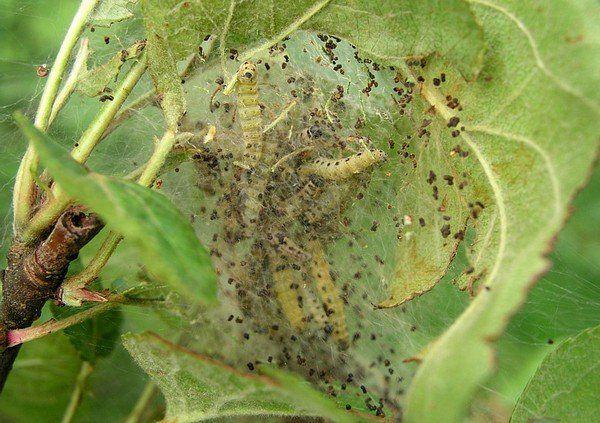
The caterpillars are large, reaching 5.5 centimeters in length. They are characterized by brightly colored stripes. The pests appear during bud swelling and damage young leaves, causing large clumps of webbing to appear on them.
Gypsy moth
These butterflies belong to the family of Wave Moths. Females have a cylindrical abdomen and white wings. Males are light brown in color, with dark markings and a thin abdomen.
Females lay numerous eggs on the bark. In the spring, caterpillars emerge, causing damage to leaves, buds, and flowers. The leaves curl and become covered in webbing.
Winter moth
This moth is brownish-gray in color and has underdeveloped wings. This parasite can damage up to half the leaves on an apple tree. The moths appear in the garden when the heat subsides. They can lay eggs until December and easily tolerate temperatures as low as -15 degrees Celsius. The pests are active in the evening and at night. The eggs hatch into yellow-green caterpillars, which quickly attack new leaves and buds.
Apple moth
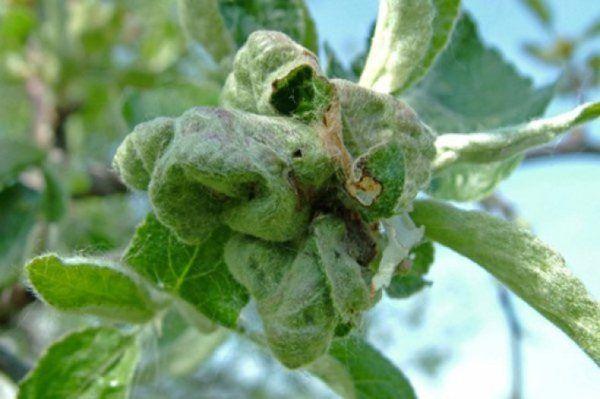
Apple trees are threatened by caterpillars. They easily survive frosts, but with the arrival of warm weather, they begin to infest the trees. The caterpillars consume the foliage over the course of 1.5 months. The affected leaves curl and dry out.
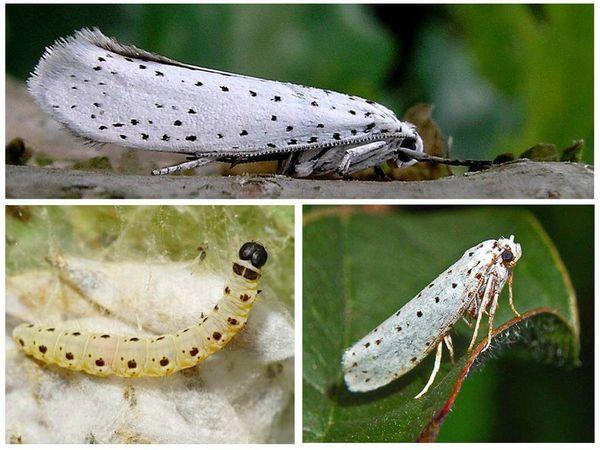
If crops aren't treated promptly, parasites can destroy young and even mature plants. Trees stripped of their leaves may not survive the winter.
Leaf roller
These parasites cause leaves to curl into tubes. Leaf rollers are characterized by horizontally positioned wings. The butterfly is gray or white in color. On average, its wings reach 20 millimeters.
If a leaf roller appears in the garden, it is recommended to remove the cocoons immediately.
The caterpillars should be shaken off and burned. Afterwards, the apple tree is treated with chemicals.
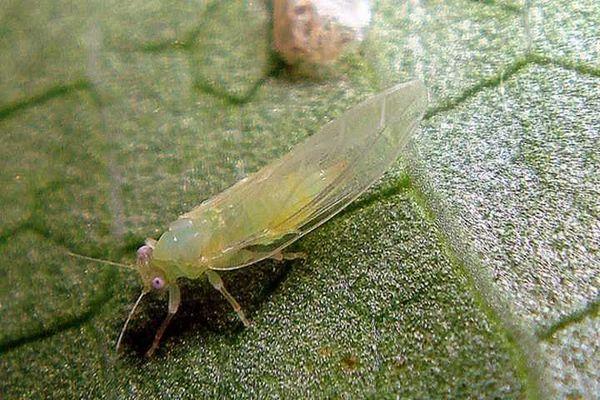
Leafhopper
This pest rarely produces dense webs, but it can cause significant leaf damage. Psyllids are small, measuring no more than 3 millimeters in length. They lay yellow eggs on the bark and buds. The larvae that hatch from these eggs consume the tree's sap.
When psyllids are active, white spots appear on apple trees, which are their excrement. If left untreated, there's a risk of developing a fungal infection.
How to save apple trees
To combat pests, it's important to treat the tree promptly. It's recommended to do this several times.
What to spray with
Special chemicals help combat parasites that cause cobwebs to appear on apple trees.
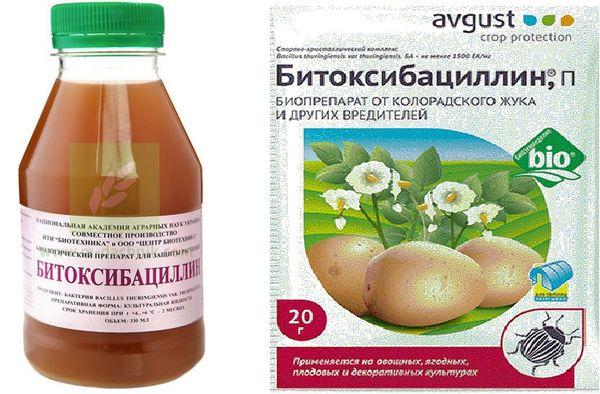
Bitoxybaccillin
This product has a wide range of applications. It controls aphids, hawthorn moths, and silkworms. It can also be used against leaf rollers, mites, and geometer moths.
For best results, mix 40-80 grams of the product with a bucket of water. Use 1 liter of product per 10 square meters. Apply treatments at weekly intervals.
Dendrobacillin
This product is a bioinsecticide. It comes in the form of a dry, pink-gray powder. It is harmless to humans and animals. It controls moths, caterpillars, and silkworms. It also kills geometer moths and leaf rollers.
For best results, add 30-50 grams of powder to a bucket of water. Use 0.5 grams per square meter. The product can be used even during flowering. Spray the tree no more than twice, every week.

Entobacterin
To treat an apple tree, mix 10 grams of the product with 1 liter of water. To combat aphids, 5 grams is sufficient. The product also controls moths, silkworms, and other pests.
The product contains Cereus bacteria spores. It eliminates 97% of parasites and does not harm beneficial insects. Its effect lasts for 1.5 weeks. Its effectiveness gradually decreases. A maximum of two treatments per season is permitted.
Maximum efficiency is achieved at a temperature of +20-30 degrees.
If the temperature drops to +14 degrees and rainy weather is observed, it is better not to use the product.
Verticillin
This product helps control aphids, whiteflies, and spider mites. The product is based on the spores of the Verticillium lecanii fungus. These spores enter the parasite's body, infecting it. It is recommended to water the tree thoroughly before using the product. Soak the product in water for 24 hours before use. This will stimulate spore growth.
Bicol
This product effectively controls spider mites, aphids, and moths. It also helps eliminate codling moths and American white moths.
The product is applied during the growing season. A total of two treatments, one week apart, are recommended. 700 grams of the product is used per hectare. It is effective against 80 species of pests.
The best biological drugs
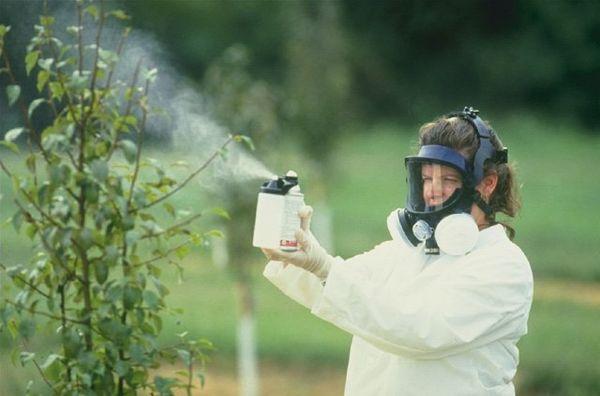
Biological products should be used in dry, warm weather. It's important to strictly follow the instructions on the packaging. To prevent allergies, use protective equipment.
Mechanical and agrotechnical techniques
Mechanical methods of pest control include the following:
- use of birdhouses – birds help to deal with harmful insects;
- use of traps - they contain pheromones that attract male pests;
- use of trapping belts.
Agronomic measures include weed control, loosening the soil around the tree trunks, and whitewashing. If necessary, the crop can be treated with garden pitch.
Folk remedies
The choice of home remedies depends on the type of pest. The simplest method of killing pests is considered to be a strong stream of water. This helps wash the insects off the tree. They should then be collected and destroyed.
You can also treat wood with the following compounds:
- Mix 200 grams of wood ash, 5-6 tablespoons of laundry soap, and 5 liters of water. Spray the wood with the mixture.
- Take a 1-liter jar and fill it with onion peels. Fill it to the top with boiling water and let it steep for 24 hours. Then, strain the mixture and add 1 liter of cold water.
- Take 2-3 onions, chop them, and add 1 liter of water. Leave for 1-2 days and strain.
- Add 1 liter of water to 100 grams of dandelion leaves. Let sit for 2-3 hours and strain.
- Take 1 kilogram of nettle, add 5 liters of warm water and let it steep for several hours. Strain.
- Add 2-3 liters of boiling water to 800 grams of dried yarrow and let it steep for half an hour. Then add another 2-3 liters of warm water and let it steep for 24 hours.

When should wood be treated?
To combat pests and improve apple tree development, it's important to adhere to the timing of agricultural practices and crop spraying.
Before and after bud break
It's recommended to treat your apple tree for the first time in the spring. This should be done in dry weather with temperatures above 10-15 degrees Celsius. This helps control caterpillar larvae that attack young buds.
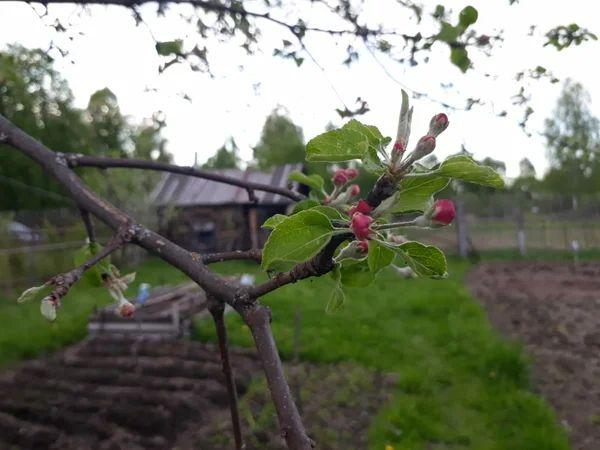
After the buds open, another treatment is acceptable. For this, copper sulfate or Bordeaux mixture should be used.
During the flowering period
During the flowering period, the use of insecticides is not recommended. It is best to remove the webs manually.
During fruiting
If necessary, biological agents are used. They are recommended to be used at least three weeks before harvest.
Final processing
The final treatment is carried out in the fall, after the leaves have fallen. Spraying is carried out in dry, windless weather. The temperature should be between 8 and 10 degrees Celsius. Bordeaux mixture is recommended for this purpose.
Prevention methods
To avoid the appearance of parasites, you should do the following:
- Remove weeds promptly. This helps minimize the number of larvae.
- Remove root shoots in a timely manner.
- Avoid planting flowers near apple trees.
- Apply fertilizer.
- Perform tree pruning.
- Treat affected bark fragments with disinfectants.
- Discard any curled or dry leaves immediately.
The appearance of spider webs on an apple tree indicates an infestation by harmful insects. To combat the pests, it's first important to identify their species. After that, it's recommended to choose the right pest control product. Insecticides, biological agents, and folk remedies can be used for this purpose.
Related posts:
 Methods for planting and propagating cherries at home
 Methods of dealing with caterpillars on apple trees, how to treat them correctly and what is the best way to do it
 The best grape varieties for growing in the Urals, planting and care rules in summer
 Conditions for growing mandarin at home and rules for caring for the tree
 Rules for planting and caring for pears in open ground, how to grow them correctly
 The best methods for growing grapes from seeds at home
 Peach tree care and agricultural secrets, pest control
 Growing and caring for hazelnuts in open ground, rules for planting hazelnuts