
- Selection and cultivation area of the Quinti apple tree
- Advantages and disadvantages of the variety
- Botanical information
- Size and annual growth
- Crown and branches
- Foliage and buds
- Fruiting of the tree
- Flowering and pollinators
- Ripening time and yield per tree
- Harvesting and storage
- Fruit tasting and the scope of apple trees
- The content of useful and nutritious substances in the fruit
- Winter hardiness and drought resistance
- Susceptibility to diseases and pests
- How to plant a tree on a plot
- Required soil composition
- Peculiarities of growing on sandy soils
- Selecting and preparing a landing site
- Dimensions and depth of the planting hole
- Timing and step-by-step algorithm for planting a seedling
- How to care for the Quinti variety
- Watering and fertilizing
- We trim and shape the crown
- Loosening and mulching the tree trunk circle
- Prevention and protection of wood
- Covering a fruit tree for the winter
- Methods of reproduction
- Subspecies
- Early Queen
- Early ripening apple tree Quinti
- Gardeners' reviews of the crop
The Quinti apple tree is considered a popular crop among many gardeners. This plant is known for its high yield and delicious fruit. Apples of this variety are versatile, suitable for fresh consumption or culinary use. Proper care is essential to ensure a bountiful harvest.
Selection and cultivation area of the Quinti apple tree
Quinti is considered an early-ripening variety. This plant was bred in Canada by crossing Crimson Beauty and Red Melba. In 1986, the plant passed the required testing in Russia, resulting in its inclusion in the State Register.
The apple tree can be grown in the Kursk, Rostov, and Lipetsk regions. It is often planted in Vologda and Astrakhan. It is also suitable for cultivation in the Volga region, Krasnodar, and North Ossetia.
Advantages and disadvantages of the variety
The key benefits of this plant include the following:
- quick harvest after planting;
- resistance to hot and dry weather;
- excellent transportability.
However, the culture also has certain disadvantages:
- low frost resistance;
- lack of strong immunity to scab.
Botanical information
Before planting a crop in your garden, you should familiarize yourself with the main characteristics of the plant.
Size and annual growth
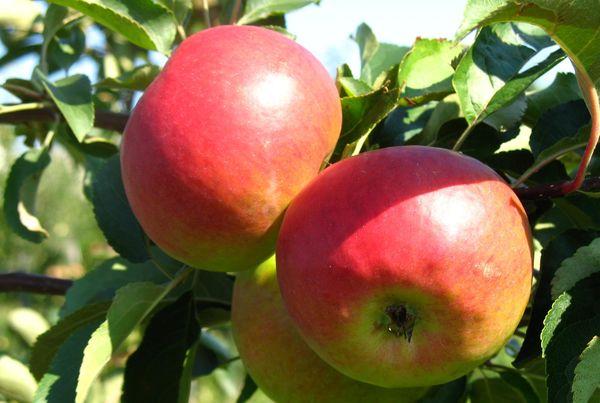
The Quinti apple tree is considered a medium-sized tree, reaching 4-5 meters. Its crown is broadly rounded and has drooping lower branches. Skeletal shoots grow 5-6 centimeters per year.
Crown and branches
The plant is characterized by a lush, spreading crown with a semicircular shape. Branches extend from the trunk at right angles, with the lower branches bending toward the ground. The skeletal shoots have a smooth surface and a green-gray color.
Foliage and buds
The leaves are large and dark green. They have a wide base and a narrow tip. Their shape is rounded-oval. The leaves are smooth on the sides.
Fruiting of the tree
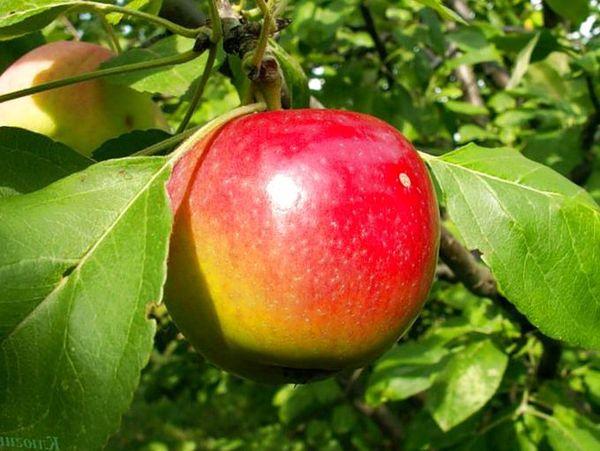
The fruits are medium-sized. If the crop yield declines, the apples are quite large. They are typically pointed at the bottom. The color varies depending on the plant species. Yellow-green and red fruits are also found. In most cases, they are a mixture of colors, with red being the predominant color.
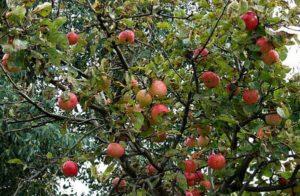
Apples are covered with subcutaneous spots. Their skin is thick and smooth on top. With prolonged storage, there's a risk of developing an oily coating. The peel has a distinct aroma.
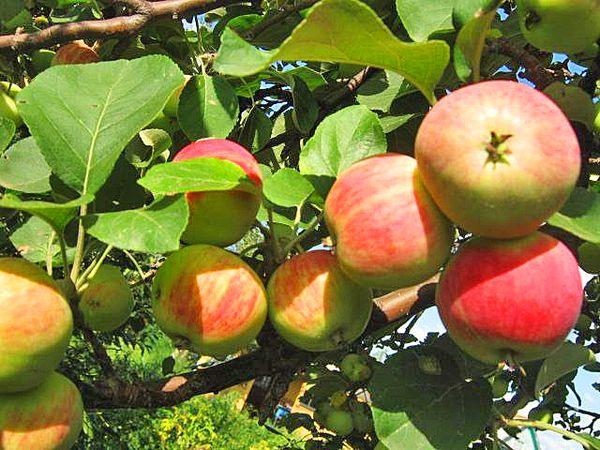
Inside the apple are medium-sized seeds. They are all located in a closed chamber. The peduncle is quite wide, emerging from the very edge of a wide funnel.
Flowering and pollinators
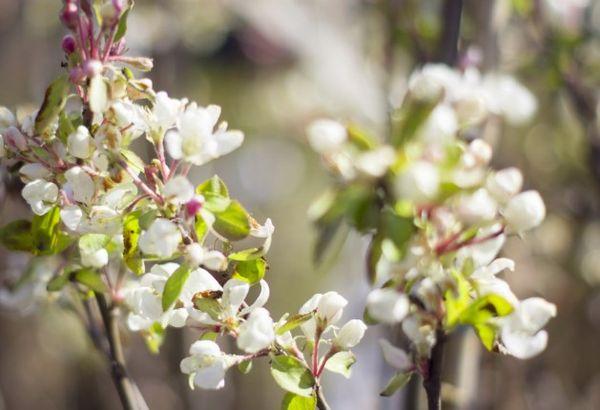
The flowers are white and large. This variety is considered self-sterile, so other apple varieties are needed for ripening. Experts recommend planting two varieties, maintaining a distance of 5 meters.
Good pollinators for this plant include the Stark Elriest and Papirovka varieties. Julired and Vista Bella varieties are also suitable.
Ripening time and yield per tree
The first apple tree harvest can be obtained after 5-6 years. Dwarf varieties begin bearing fruit as early as the second year. Fruiting is regular and unaffected by weather conditions. In warm climates, two harvests are possible. The fruits ripen in late July.
This variety is characterized by high yields. Specific yields depend on the regional climate. On average, one tree produces 100 kilograms of fruit.
Harvesting and storage
It's recommended to store apples of this variety at temperatures between 0 and 10 degrees Celsius. Separate the fruits using parchment paper or newspaper. Store apples in plastic crates. Avoid wooden containers, as they can harbor rot or other pathogenic bacteria.
Fruit tasting and the scope of apple trees
Summer apples grown in warm climates are juicy and sweet. Their flavor has a pleasant tartness. In a tasting review, the Quinti variety received a 4.5 out of 5 stars.
The fruits of this variety are widely used to make jams, compotes, and preserves. The fruit is quite sweet, so a minimal amount of sugar can be added to preserves. Dried apples are ideal for compotes.
The content of useful and nutritious substances in the fruit
Quinti apples are very healthy. 100 grams of the fruit contain the following nutrients:
- 8.4-11.2 milligrams of ascorbic acid;
- 15.9-16.8% fiber;
- 0.53-0.6% acids;
- 10.3-11.2% fruit sugars.
Fruits contain many vitamins and minerals. Apples are considered a valuable source of iron. Eating them helps normalize hemoglobin levels in the blood. They also contain fiber, which helps normalize metabolic processes and detoxify the body.
Winter hardiness and drought resistance
The Quinti variety has poor frost tolerance. Even light frosts can damage the tree. Temperatures dropping to -20°C (-4°F) can kill the tree. Therefore, the plant requires careful insulation. However, it tolerates hot and dry weather well.
Susceptibility to diseases and pests
This apple tree variety is not immune to fungi and bacteria. In high-humidity conditions, the branches and leaves of the plant are often susceptible to scab.

How to plant a tree on a plot
To achieve success in growing crops and obtain a bountiful and full harvest, it is important to carry out planting work correctly.
Required soil composition
Apple trees thrive and produce a good harvest in humus-rich soil. It's best to plant them in dense soil that's permeable to air and water.
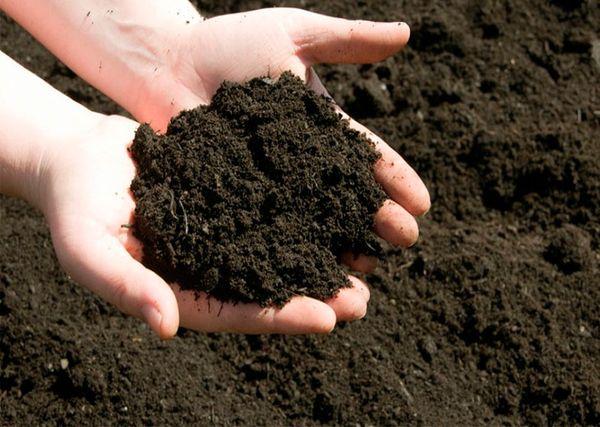
If the soil contains a lot of clay, it is recommended to add sand and ash. The same procedure is performed if acidity needs to be reduced.
Peculiarities of growing on sandy soils
When planting crops in sandy soil, there's a risk of disrupting root development. In this case, we recommend the following:
- add humus and minerals into the depression;
- sow the tree trunk circle with grass and then mow its tops;
- In autumn, apply 1 tablespoon of urea under the tree.
Selecting and preparing a landing site
Choosing the optimal planting location is fairly easy. This variety thrives in warmth, so it's recommended to plant it in a sunny spot sheltered from the wind. A week before planting, dig holes in the soil, leaving at least 5 meters between them.
Dimensions and depth of the planting hole
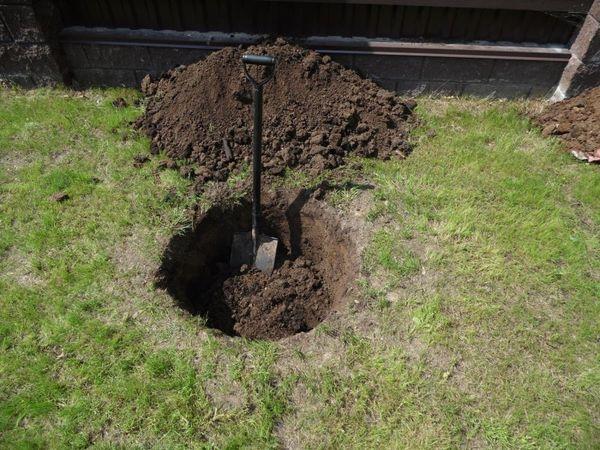
The planting hole should be dug one week before planting. To do this, dig a hole 2 meters in diameter and 1.5 meters deep.
Timing and step-by-step algorithm for planting a seedling
It's recommended to plant the plant one month before the onset of cold weather. This will give the roots time to strengthen. With the arrival of spring, the tree will begin to grow rapidly.
For planting, it's recommended to spread out the root system. After this, plant the tree and cover it with soil. Then, compact the soil lightly and water thoroughly.
How to care for the Quinti variety
For the plant to thrive, it needs proper care. This includes watering and fertilizing it regularly.
Watering and fertilizing
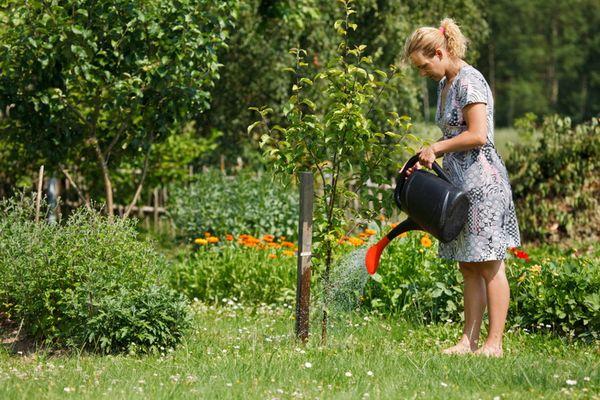
When growing a tree in a warm climate, it needs to be watered regularly. The soil should be moistened for the first time after planting. Subsequently, the frequency of waterings should be adjusted based on the climate. Particular attention should be paid to this in the summer. Use 10 liters of water per meter of tree.
The soil for the seedling requires nitrogen fertilizer. After two years, it is recommended to apply other fertilizers. The plant is considered a heat-loving plant, so it is best not to use organic fertilizers. A large number of pests thrive in such fertilizers. Synthetic fertilizers are better for Quinti.
We trim and shape the crown
It is recommended to begin crown shaping the following year after planting. Pruning is performed in the spring. Branches that have grown more than 60 centimeters should be trimmed. Use scissors for this. Pruning should be done so that the crown acquires a rounded shape.
Loosening and mulching the tree trunk circle
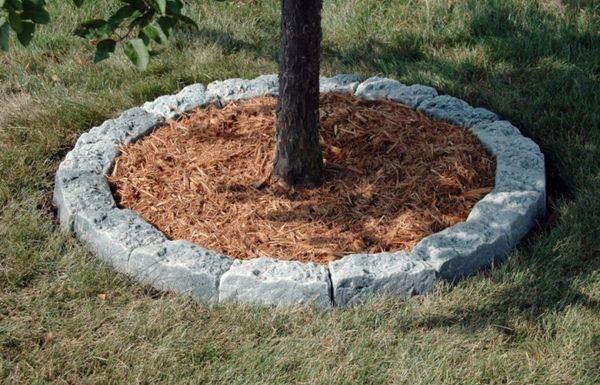
The soil around the tree should be loosened regularly. This eliminates weeds and provides the roots with nutrients. Mulching the soil is essential. Use straw, grass clippings, or fallen leaves for this purpose.
Prevention and protection of wood
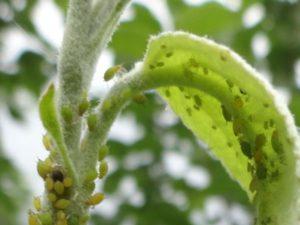
To control or prevent pests, insecticides are used. These products should be applied before bud break and flowering begins.
If the tree has been damaged by disease or pests, it is recommended to cut off and burn the affected parts. After this, the damaged areas are treated with garden pitch, and the tree itself is sprayed with Bordeaux mixture or fungicide solutions. To prevent recurrence of the disease, these treatments are performed at intervals of 7-10 days.
Covering a fruit tree for the winter
The plant has low frost resistance. Therefore, it is essential to properly prepare it for winter. To do this, the trunk should be insulated with special materials, and the area around the trunk should be covered with a layer of mulch.
Methods of reproduction
Apple trees can be propagated in a variety of ways: by seeds, cuttings, layering, and grafting. Seed propagation is rarely used, but is typically reserved for breeding purposes. Other methods are readily available to gardeners.
Subspecies
The Quinti apple tree has several varieties that differ in certain characteristics.
Early Queen
This plant was bred in Holland. The fruits ripen in mid-October and are large. They weigh 190-250 grams and are characterized by a conical-round shape. The outer skin is yellow-green, and the inside contains dense, juicy flesh.
Early ripening apple tree Quinti
This variety is characterized by its early ripening period. It can be grown in Vologda or Astrakhan. Kursk, Krasnodar, Rostov, and the Volga region are also considered favorable regions.
Gardeners' reviews of the crop
Numerous reviews of the culture confirm its popularity:
- Maria: "I've had this apple tree growing at my dacha for many years now. I can say it produces excellent fruit and its flavor is delicious."
- Grigory: "I've been growing the Quinti apple tree in my garden for several years now. Immediately after planting, the tree took root well and began growing rapidly. We got our first harvest two years later. The fruits are very tasty and aromatic."
The Quinti apple tree is considered a high-yielding variety, very popular with many gardeners. To achieve success in growing this plant, it's important to provide it with comprehensive and high-quality care.
Related posts:
 Methods for planting and propagating cherries at home
 The best grape varieties for growing in the Urals, planting and care rules in summer
 The best methods for growing grapes from seeds at home
 Conditions for growing mandarin at home and rules for caring for the tree
 Rules for planting and caring for pears in open ground, how to grow them correctly
 Description and cultivation of the Baron Solemacher strawberry variety, planting and care
 Growing and caring for hazelnuts in open ground, rules for planting hazelnuts
 Description and rules for growing Solaris grapes