
- Selection and cultivation area of the July Chernenko apple tree
- Pros and cons of the variety
- Botanical information
- Crown and branches
- Foliage and buds
- Size and annual growth
- Lifespan of a tree
- Fruiting of the tree
- Flowering and pollinators
- Ripening time and yield per tree
- Harvesting and storage
- Fruit tasting and the scope of apple trees
- Winter hardiness and drought resistance
- Susceptibility to diseases and pests
- How to plant a tree on a plot
- Required soil composition
- Selecting and preparing a landing site
- Dimensions and depth of the planting hole
- Timing and step-by-step algorithm for planting a seedling
- Caring for the July Chernenko variety
- Watering mode
- Fertilizing apple trees
- Young
- Adult
- We trim and shape the crown
- Loosening and mulching the tree trunk circle
- Prevention and protection of wood
- Covering a fruit tree for the winter
- Methods of reproduction
- Gardeners' reviews of the July Chernenko variety
The Iyulskoye Chernenko apple tree is an early-ripening variety. It exhibits high winter hardiness and productivity. Its fruits are medium-sized and have a pleasant flavor. It is suitable for cultivation in the Central and Middle Volga regions. This variety can be found in private gardens as well as commercial orchards.
Selection and cultivation area of the July Chernenko apple tree
In 1965, the July Chernenko variety was included in the State Register of Russia. It was obtained by crossing apple trees Anise Alago and Papirovka. The new variety inherited the best qualities of its parent varieties.
The work was carried out at the Michurin Research Institute of Fruit Plant Breeding and Genetics. The author is S. F. Chernenko. It was sectioned for cultivation in Central Russia and the Middle Volga region.
Pros and cons of the variety
The July Chernenko apple tree has its advantages and disadvantages. Among its positive qualities are:
- earlier ripening of fruits, usually by mid-July;
- early fruiting, begins to bear fruit in the 3rd-5th year of vegetation;
- winter hardiness;
- high yield;
- ease of care;
- immunity to some infections;
- transportability of fruits.
Among the disadvantages are the lack of resistance to scab and the fact that the apples ripen at different times, making it impossible to harvest the crop all at once.
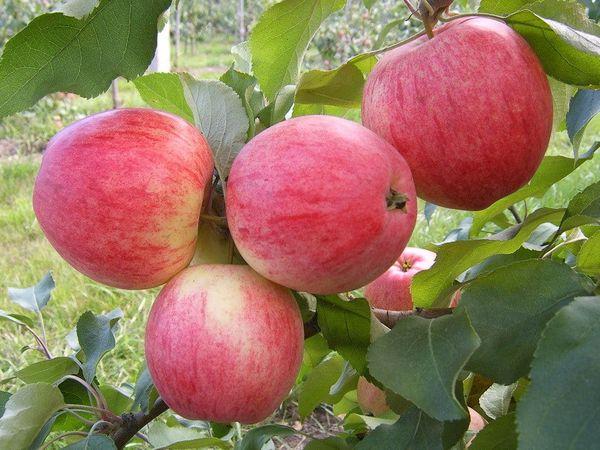 Important! The fruits are harvested from the tree as they ripen, a process that takes about 10 days.
Botanical information
To get an idea of the tree and decide whether to grow it, it is recommended to study its botanical characteristics.
Crown and branches
The tree has spreading branches, and its crown is spherical. Each branch has several pubescent internodes.
It is necessary to form the crown from the moment of planting.
Foliage and buds
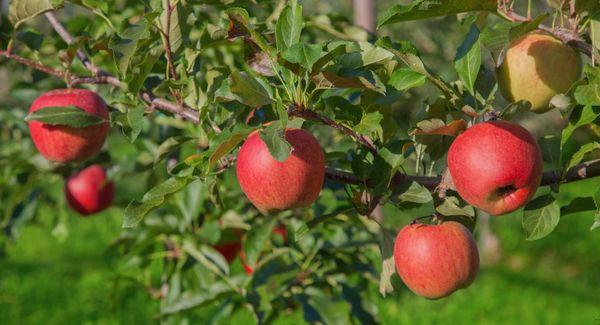
Buds form in early spring and fully open by early May. The leaves are large, dark green, and oblong.
Size and annual growth
The apple tree reaches a height of about 5 m, with annual growth of 70-100 cm. The tree grows quickly, beginning to form fruit in its 3rd to 5th year.
Lifespan of a tree
A tree lives for about 35 years. This is the maximum lifespan, after which it needs to be replaced. It's best to perform rejuvenating pruning and remove old shoots every seven years.
Fruiting of the tree
The fruiting period includes several stages: flowering, ripening, and harvesting.
Flowering and pollinators
Flowering begins in early May. Pollinators are required to produce a large number of ovaries. The variety is self-sterile. Other apple varieties with a similar flowering period are suitable for this purpose.

The most suitable are:
- Lungwort;
- Quinti;
- Melba;
- Robin.
Ripening time and yield per tree
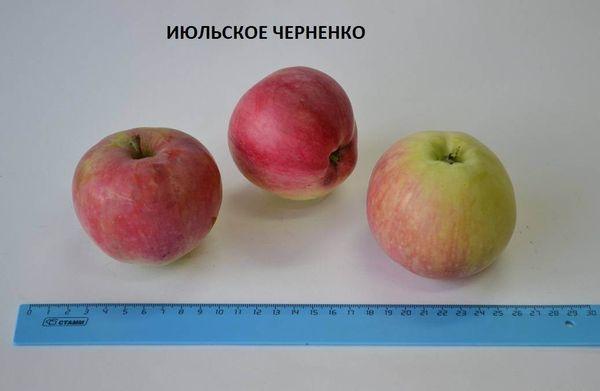
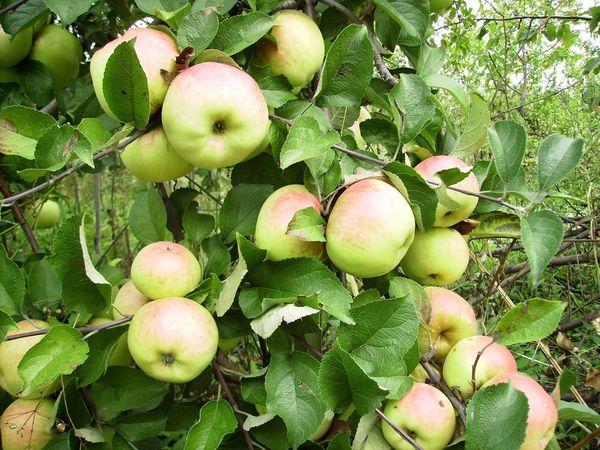
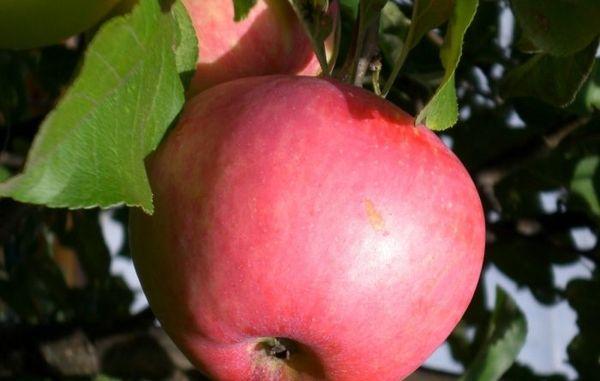
Apples ripen in mid-July. By this time, the fruits are completely crimson and emit a pleasant apple aroma. Each fruit ripens at a different rate. The entire process takes about 10 days. This variety produces a high yield, with 50-80 kg of apples per tree.
Harvesting and storage
Apples are harvested according to their ripeness. Once the fruit reaches a full crimson color, they are picked from the tree. Since this variety ripens early, the harvest can't be stored for long. To do this, the fruit is collected in wooden crates and stored in a cool, dark place. They can be stored in this way for no more than one month. After that, their flavor deteriorates.
Fruit tasting and the scope of apple trees
Tasters rated the July Chernenko apples 4 out of 5. They taste sweet with a slight tartness. The flesh is firm, juicy, and beige. This variety is grown in private gardens and commercially.
Winter hardiness and drought resistance
July Chernenko inherited its winter hardiness from its parent varieties. It tolerates temperatures down to –35°C. Suitable for cultivation throughout Russia.
The tree's root system is robust. It tolerates prolonged heat and drought well, as its roots penetrate deep into the soil and draw nourishment from groundwater.
Important! Despite the apple tree's winter hardiness, it is recommended to prepare it for winter after harvesting.
Susceptibility to diseases and pests
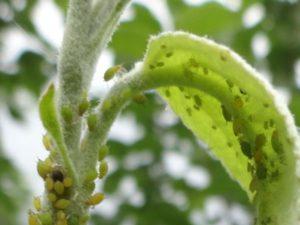
Apple trees have strong immunity to major fungal diseases. However, they are susceptible to scab. If proper agricultural practices are not followed, they are also susceptible to:
- aphid;
- thrips;
- peduncles;
- May beetles.

How to plant a tree on a plot
To plant a seedling in your own garden, you need to know the recommended soil composition, choose the right location, and carry out the procedure efficiently.
Required soil composition
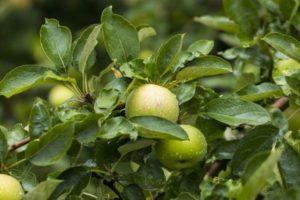
Apple trees prefer sandy or loamy soils, including leached chernozem. The soil should be neutral or slightly acidic. The tree develops deep roots, so choose a site with a groundwater table no deeper than 2 meters.
Selecting and preparing a landing site
Choose a well-lit place, protected from drafts.
Pollinator varieties are planted at a distance of 4-5 m.

Soil preparation begins in advance, no later than two weeks before planting. Dig a planting hole, mix the soil with 10 kg of compost, 300 g of superphosphate, and 200 g of potassium salt. Add some of the mixture back into the soil and let it sit for 14 days.
Dimensions and depth of the planting hole
Since the tree is large, the planting hole should be at least 70 cm deep and 70 cm in diameter. This is the optimal size for the tree's trunk circle.
Timing and step-by-step algorithm for planting a seedling
Planting is done in early spring, when the soil warms up to 10°C, or in the fall, at the beginning of October. The plant takes root better after spring transplanting. The procedure is carried out according to the following algorithm:
- The roots of the seedling are kept in a manganese solution for 24 hours.
- Then the tree is placed in the center of the hole and the roots are straightened by hand.
- The roots are covered with soil layer by layer, compacting it with your hands.
- Leave a 10 cm deep area around the tree trunk.
- Water with 10 buckets of water.
Important! To protect the tree from strong winds, drive a wooden stake into the tree and tie it in place before planting.
Caring for the July Chernenko variety
To get a decent harvest, you need to follow the rules for caring for the tree.
Watering mode
Apple trees are watered 2-3 times per season. First, during bud formation, then during flowering and fruiting. Use 20 buckets of water for a mature fruiting tree, and 10 for a young one.
Fertilizing apple trees
During the first three years of growth, the tree receives sufficient nutrition from the planting. It is then fed in the spring, during fruiting, and after harvest. The following are used for this purpose:
- mineral fertilizers for fruit trees;
- superphosphate;
- potassium salt;
- humus;
- chicken manure;
- manure;
- wood ash.
Nitrogen fertilizers are applied before fruiting begins.
Young
A young seedling doesn't require much attention. The main tasks are to ensure it's watered, loosen the soil around the trunk, remove weeds, and cover it for the winter.
Adult
A mature apple tree requires regular fertilizing, watering, sanitary pruning, and preventative treatments against diseases and insects.
We trim and shape the crown
Crown formation begins in the first year of planting. A central shoot is selected and all other branches are pruned. The following year, two more branches are left from the central shoot. This process is repeated until the fourth year of vegetation, at the end of which there should be eight main branches.


Loosening and mulching the tree trunk circle
Regular loosening of the soil around the tree trunk is essential. This prevents the formation of a ground crust, which interferes with the tree's nutrition. Mulching is also recommended to preserve mineral fertilizers. Suitable options include:
- straw;
- chopped grass;
- humus;
- manure;
- moss;
- forest cones.
Prevention and protection of wood
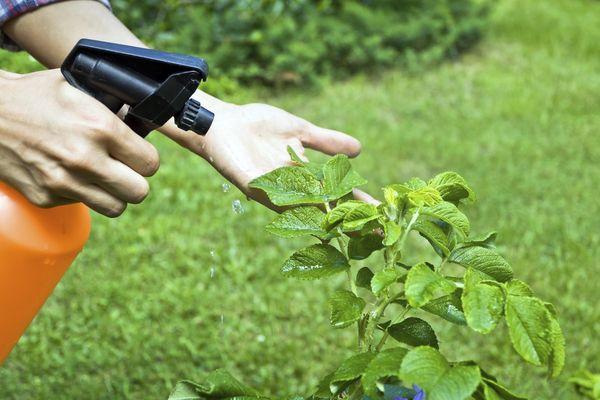
To prevent fungal diseases, apple trees are sprayed prophylactically with a fungicide, and to protect against insects, with an insecticide. Two compatible products can be selected and used together. This treatment is performed before flowers begin to form.
When working with chemicals, take safety precautions.
Covering a fruit tree for the winter
It's impossible to completely cover a mature tree for the winter. This is done for seedlings. They are covered with spunbond or agrofibre. They also undergo a full winter preparation:
- water and feed the apple tree;
- paint the trunk with whitewash;
- mulch the tree trunk circle.
Methods of reproduction
The propagation of the July Chernenko apple tree is carried out using several methods:
- by cuttings;
- rootstock;
- shoots.
Gardeners' reviews of the July Chernenko variety
Valentina, 54, Smolensk: "We've been growing the Iyulskoye Chernenko apple tree for many years now. Every year, the tree delights us with its bountiful harvest. The apples are small, with a crimson blush. We've made many preserves from the harvest."
Arkady, 43, from Vladivostok: "We inherited the Iyulskoye Chernenko apple tree along with the plot from the previous owner. We immediately wanted to get rid of it, but after the harvest, we changed our minds. This variety allows us to enjoy sweet, home-grown apples from mid-summer."
Anna, 65, from Chekhov: "We planted the 'Iyulskoye Chernenko' apple tree three years ago. It hasn't borne fruit yet. Otherwise, the tree is easy to grow. It's growing quickly. While I'm shaping the crown and observing, I can't wait for the harvest."
Related posts:
 How to plant walnuts, care for them, and grow them at home
 Peach tree care and agricultural secrets, pest control
 Descriptions of the 20 best cherry varieties for the Moscow region, their planting and care
 Description and cultivation of the 15 best cherry plum varieties for the Moscow region, planting and care rules
 Description and characteristics of the 27 best plum varieties for the Urals, planting and care
 Description of the Red Early apple tree variety, agricultural technology and specific care
 Description of the Vasilisa cherry variety, cultivation and care
 Description and technology of growing the Vishnevoe apple tree variety