
- The Origin of the Colette Potato
- Description and characteristics
- Appearance of the bush
- Yield of the variety
- Taste properties of the root vegetable
- Advantages and disadvantages of culture
- Optimal conditions for growth and fruiting
- How to plant potatoes in a garden
- Site selection and preparation
- Landing scheme and algorithm
- We organize proper care for bushes
- Watering and loosening the soil
- What and how to fertilize plantings
- Hilling up the beds
- Protection and treatment from diseases and insects
- Harvesting and storage
- Reviews of the variety
The Colette potato has established itself in the Russian market. It is prized for its early ripening, consistent yield, and excellent taste. Colette is advertised as a double-fruiting variety, but in temperate climates, it yields only once. A description of the Colette potato, its characteristics, photos, and reviews speak volumes about its popularity.
The Origin of the Colette Potato
Colette was developed as an early table grape variety by German breeders in the late 20th century. It has undergone variety testing in Russia and is included in the State Register of the Russian Federation. It is recommended for cultivation in the Central, Volga-Vyatka, and North Caucasus regions.
Two harvests per season are produced in Ukraine and Moldova, where the variety is well-known and in demand. Colletta has also quickly spread throughout Russia, as it tolerates cold and wet summers.
Description and characteristics
The early-ripening Colette variety produces tubers two months after planting. If potatoes are planted in April, the earliest harvest can be enjoyed in early June. However, such early planting times are not suitable for temperate climates, and the first tubers are ready for consumption only in late July or early August.
Appearance of the bush
The upright, slightly spreading Caleta bush is distinguished by its compact size. Juicy green leaves with wavy edges form a fluffy bush. It is adorned with purple flowers, typically medium to large.
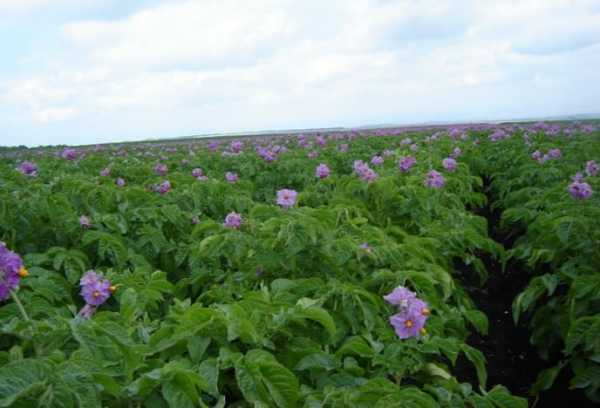
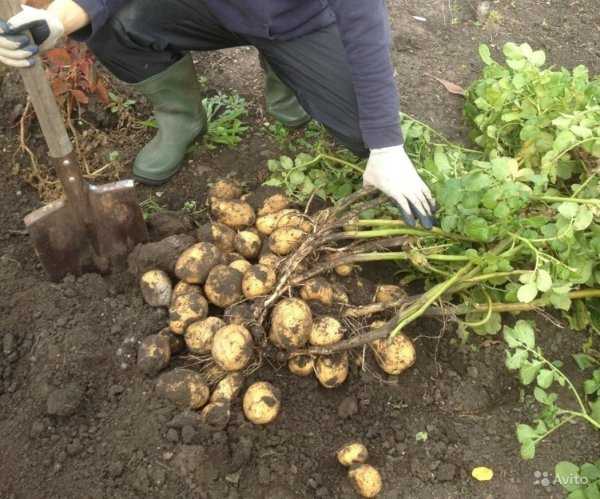
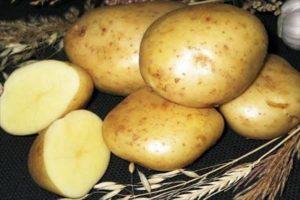
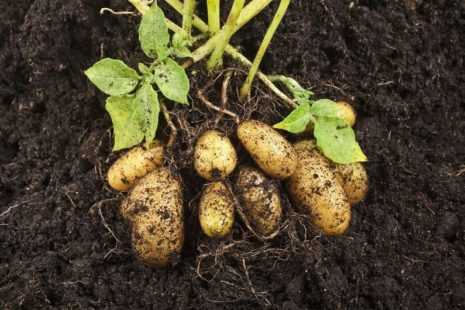
Tubers form almost simultaneously: they are smooth and uniform, with up to 10-12 tubers per cluster. Small tubers are extremely rare. The yellow skin and light yellow flesh are a distinctive feature of this variety, as can be seen in the photo.
Yield of the variety
Each tuber weighs between 60 and 125 grams. With proper cultivation practices, Colette yields approach 250 centners per hectare. The first harvest yields up to 110-150 kg per hectare, and after 10 days, the yield reaches 160-280 kg.
Taste properties of the root vegetable
The tubers of the Colette variety are characterized by the following features:
- oval shape;
- a flat surface without deepening the eyes;
- the same color of the peel and pulp;
- low amount of starch (12-15%).
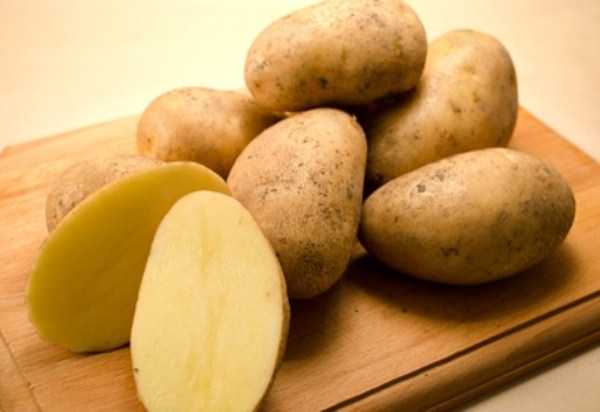
The tubers have 85-95% marketable quality. The roots have excellent shelf life: 90% of the harvest is preserved over the winter. Colette is a table variety with a general purpose use.
Take a look Also

Note! Thanks to their low starch content, tubers can be used in a variety of dishes. Cooking preserves the tubers' flavor and shape, preventing them from becoming overcooked.
Advantages and disadvantages of culture
The Colette variety has many advantages, for which it has received recognition and respect from experienced vegetable growers:
- early and simultaneous ripening of tubers;
- strong immunity and resistance to some diseases;
- presentation and excellent taste of the product;
- long-term storage;
- the possibility of long-term cultivation in one area while maintaining varietal qualities.
The following are noted as disadvantages:
- high soil requirements;
- susceptibility to late blight;
- poor yield in dry and cold summers.
 Note: Good predecessors for this variety include legumes, annual grasses, and winter crops. Mustard is an excellent predecessor. Colette doesn't require frequent replanting: it grows well in the same spot for several years.
Optimal conditions for growth and fruiting
Growing potatoes involves a whole range of agricultural practices, without which a successful harvest is impossible. Colette is a typical representative of its genus, requiring sprouting, hilling, pest control, disease prevention, and other measures.
How to plant potatoes in a garden
Planting times vary depending on the region where the variety is grown. In southern regions, this is from late April to early May, while in temperate climates, the timing shifts to late May. The seeds are germinated and planted in soil warmed to 10-12°C.
Site selection and preparation
Potatoes are planted in a well-drained, wind-free area. Loamy and sandy loam soils, pre-fertilized, are suitable. It's important to avoid groundwater levels close to the surface.
The area is dug to a depth of a spade, adding humus or compost. Weeds are removed, and the soil surface is leveled. The soil should be neutral or slightly acidic.
Landing scheme and algorithm
The day before planting, select high-quality, medium-sized tubers for germination. They are placed in a warm room at 20°C and humidity up to 80%. The temperature is then reduced to promote stronger sprouts.
To protect tubers from pests and diseases, before planting they are treated with one of the following preparations: Prestige, Maxim, Cruiser, Albit.
Sequence of planting operations:
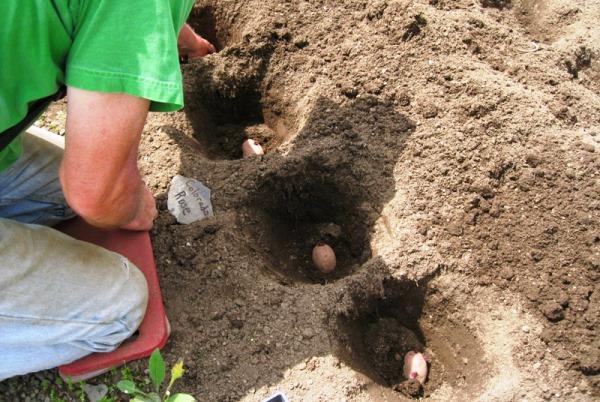
- Prepare holes or furrows 6-12 cm deep (depending on soil density).
- Add a handful of wood ash and humus to each hole. Place the tubers with the sprouts facing up.
- The distance between the holes is 30-40 cm, and between the rows – 60-70 cm.
- The tubers are covered with the top layer of soil. The first shoots will appear in 10 days.
Tip! To get two harvests per season, sprout the tubers. This gives you a two-week window to plant again. In temperate climates, you can only get one harvest per season.
We organize proper care for bushes
Caring for the Colette variety includes traditional measures: watering and fertilizing, loosening and removing weeds, hilling and pest and disease control.
Watering and loosening the soil
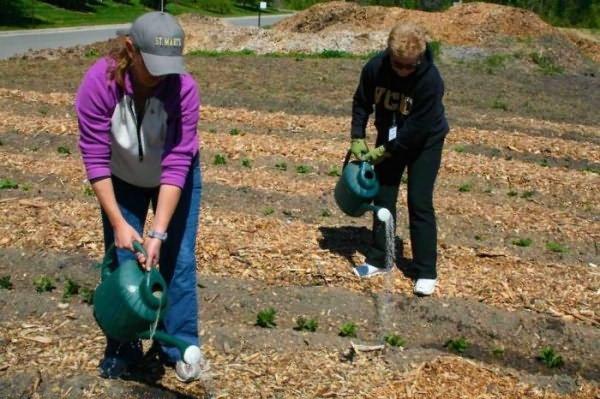
Potatoes thrive on moisture, and in dry summers, three thorough waterings are needed per season. The first is when the tops begin to grow, the second is during flowering, and the third is when the ovaries (green berries) are forming.
Typically, after the snow melts, the soil is well-moistened, and Colette potatoes don't require additional water. During tuber formation, watering can lead to the development of late blight. As the tubers grow, loosen the soil to remove the crust and control weeds.

What and how to fertilize plantings
Colette potatoes require additional nutrition because they are an early variety and develop tubers quickly. Three basic feedings per season are recommended:
- The first is carried out at the initial stage of growth, to allow the green mass to form and the bush to begin active growth. This requires nitrogen, so urea or mullein infusion is added to the soil.
- The second occurs when buds are forming. The plant requires potassium, which is added in the form of wood ash or potassium sulfate.
- The third is organized at the flowering stage, feeding the bush with superphosphate for good tuber formation.
Advice! In poor soil, Colette's tops may become elongated or its leaves may turn pale, which is due to a lack of nutrients. In this case, supplement with any organic fertilizers.
Hilling up the beds
Hilling is a traditional potato cultivation technique. It encourages the formation of additional roots, which eventually support tubers. Without hilling, achieving a good harvest is difficult.
The procedure is performed twice. The first time, when the tops have grown 10-12 cm, and the second time, two weeks later. Soil is raked onto the stem from both sides, simultaneously loosening the soil and retaining moisture.
Protection and treatment from diseases and insects
The German variety Colette has a strong immune system, but is sometimes susceptible to diseases and pests. It is most often attacked by:
- Colorado potato beetle;
- wireworm (click beetle larva);
- potato moth;
- late blight (fungal disease).
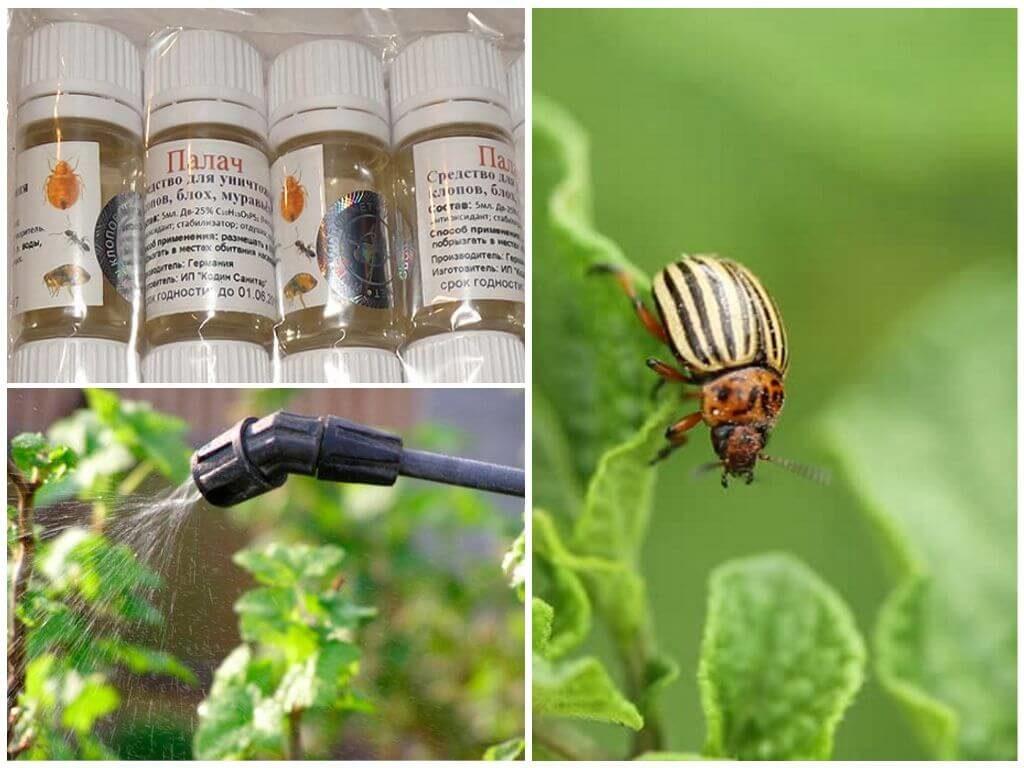
Preventative measures against late blight include pre-treatment of tubers, and in cases of widespread infestation, treatment with fungicides. Colorado potato beetle and potato moth larvae are collected by hand or sprayed with insecticides. Wireworm control is more complex and requires special techniques.
Note! The Colette potato variety is not affected. golden nematode and does not get potato disease cancer, which is a big plus for the nightshade crop.
Harvesting and storage
Tuber harvesting begins after the tops have yellowed and dried. Harvesting is done mechanically or manually in dry weather to ensure healthy tubers are stored. The harvested crop is left outdoors for two hours to allow air to circulate and dry. The potatoes are sorted, discarding any diseased, damaged, or small tubers.
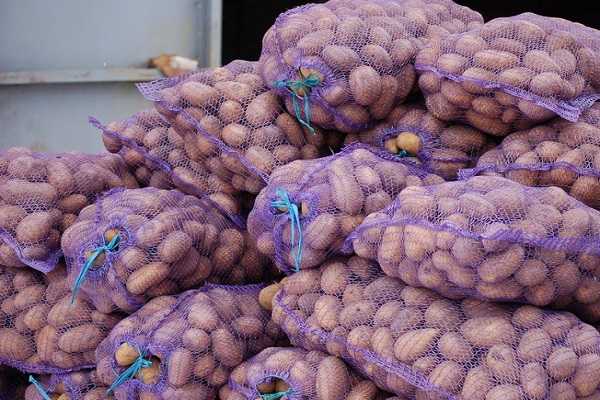
Small specimens can be stored separately for use as seed the following year. The harvest is stored in a cellar, creating optimal storage conditions: 2°C and humidity up to 80%.
Reviews of the variety
Tatiana, 60 years old, Kyiv
I manage to get two harvests of the Colette variety per season. But this requires a long, warm summer and sprouted tubers. Watering is essential for this variety, otherwise small tubers develop.
Olga, 54 years old, Tyumen
I planted Colette late, but it quickly caught up with the others in growth. Harvesting is a pleasure: the tubers are smooth, even, and neat. The dishes turn out delicious.
Victor, 43 years old, Voronezh
I grow several early varieties, among which Colette stands out for its culinary appeal. The tubers don't overcook and have an excellent flavor in any dish.
Dmitry, 40 years old, Minsk
I've been growing the Colette variety for several years, but during rainy summers, it constantly shows blight spots. I need to rotate the location, as the fungal spores overwinter in the soil. Otherwise, it's a decent variety, but not outstanding.
Oksana, 38 years old, Novosibirsk
I fell in love with the Colette variety for its early harvest. In northern latitudes, potatoes begin bearing fruit late, but Colette produces a harvest as early as the first days of August. The smooth, tasty tubers are a real treat.
The Colette variety has adapted well to temperate climates. It boasts an early harvest, uniform tubers, and excellent flavor. The tubers are suitable for creating any culinary masterpieces or simple dishes. Plant this German-bred variety and reap a wondrous harvest.
Related posts:
 Why potatoes aren't growing well in the garden, and what to do to ensure a bountiful harvest
 Description and characteristics of the Jelly potato variety, planting rules and care
 Description of the best potato varieties of domestic and foreign selection
 Description and treatment of potato diseases, methods of control using folk and chemical means
 Description of the best potato varieties for 2025, selection for regions
 Description and characteristics of the Gala potato variety, planting and care instructions
 Description and characteristics of the Bellarosa potato variety, planting and care
 Description and characteristics of the Rodrigo potato variety, cultivation and care