
- History of the creation of culture
- Positive and negative qualities of potatoes
- Description and characteristics of "Kolobok"
- Bush
- Root vegetable
- Where the harvest is used
- Necessary conditions for the growth and fruiting of the variety
- How to plant a plant in a plot
- Sorting of planting material
- Site selection and preparation
- Timing and technology of planting
- We organize potato care
- How often to water and what to feed
- Loosening and hilling the beds
- Treatment and protection from diseases and pests
- How to harvest and store root vegetables
- Reviews from producers and gardeners
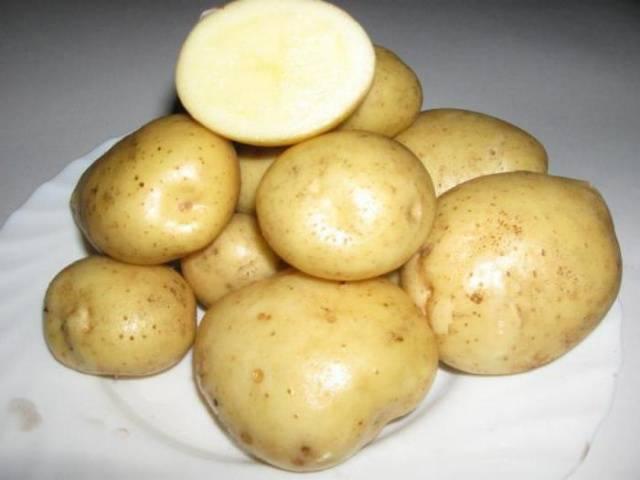
Until recently, yellow-fleshed potato varieties were considered forage crops. However, thanks to the work of scientists and breeders, new varieties have been developed that rival white potatoes in terms of characteristics and taste. The Kolobok potato variety is one such vegetable crop. A description, reviews, and photos of this variety can be found in this article.
History of the creation of culture
A new potato variety, Kolobok, was developed in the Moscow region by breeders at the Lorch Research Institute in 2000. After five years of testing, the variety was registered and approved for commercial cultivation. This vegetable crop is suitable for cultivation in temperate regions, but can also be grown in southern and northern latitudes.
Positive and negative qualities of potatoes
To decide whether to plant this vegetable variety in your garden, you need to understand the pros and cons of the Kolobok potato.
Advantages of the variety:
- Easy to care for.
- Low starch content in mature tubers.
- High yield rates.
- Equal size of ripe root vegetables.
- Natural immunity to fungal and viral infections.
- Long shelf life.
- The taste is superior to that of other potato varieties.
- Ripe tubers tolerate long-distance transportation well.
Thanks to its taste and long shelf life, the Kolobok potato has earned great popularity among gardeners.
But we must not forget that hybrid crops have negative traits as well as positive ones.
Disadvantages of the variety:
- Kolobok is sensitive to the moisture content of the soil.
- For potatoes of this variety, additional feeding and fertilizers are important.
- Very dense and thick skin of root vegetables.
Important! To get a large harvest of Kolobok potatoes, apply fertilizers and fertilizers correctly and on time!
Description and characteristics of "Kolobok"
Recommended for commercial cultivation, potatoes are a high-yielding and low-maintenance crop. Three months pass from planting to harvest, making them a mid-season variety.
Bush
This vegetable crop is distinguished by tall bushes with spreading branches, which should be taken into account when planting in open ground. Medium-sized, light green leaves densely cover the entire bush. During the growing season, inflorescences appear on the bushes, which bloom into white flowers.
Root vegetable
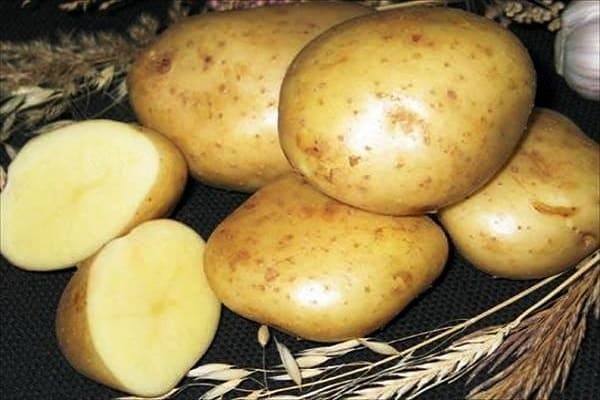
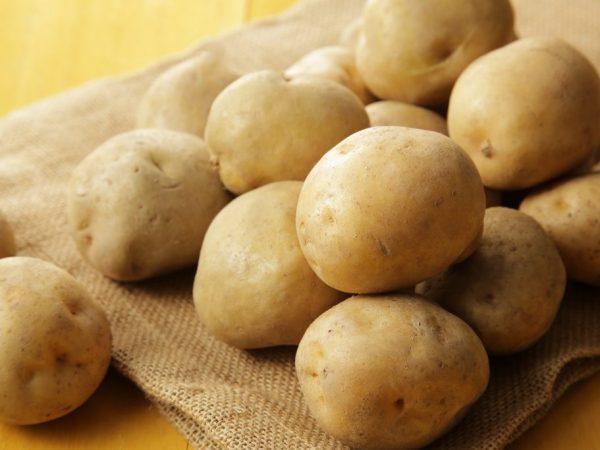
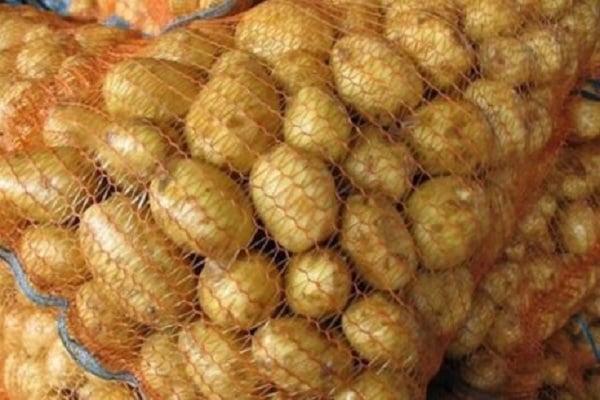
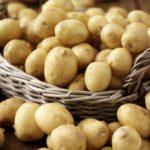
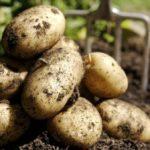
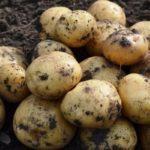
Ripe roots are round or oval, smooth, and free of blemishes and bumps. The skin is thick and dense, with light brown and yellow hues. The main distinguishing feature of this variety is its yellow flesh. The roots are approximately uniform in weight, ranging from 90 to 130 grams, and a single plant yields up to 15 tubers. On an industrial scale, up to 40 tons of vegetables can be harvested from one hectare.
Where the harvest is used
On an industrial scale, the Kolobok potato variety is used to produce dried, frozen, and semi-finished products. Due to its low starch content, this variety is often used to make chips and crisps.
When boiled, vegetables remain firm and don't overcook, making them versatile. Potatoes are fried, stewed, baked, and added to various salads.
Necessary conditions for the growth and fruiting of the variety
This vegetable crop is undemanding in terms of climate and soil composition. The timing of planting in open ground depends on the growing region. It does require watering and additional fertilizing. By following the necessary planting and care guidelines, gardeners, vegetable growers, and farmers can reap a bountiful harvest of root vegetables.

How to plant a plant in a plot
The key to growing potatoes is proper and timely planting. The future vegetable harvest depends on this process.
Sorting of planting material
Tubers for planting are selected from the previous harvest or purchased from specialized garden centers and nurseries. High-quality planting material is the key to healthy plants and a good yield. Medium- and small-sized tubers are selected for planting in open ground. The tubers should be smooth, free of visible damage, rot, or fungal growth.
Two to three weeks before planting, the tubers need to germinate. To do this, clean them of soil and place them in a bright spot. As soon as sprouts of 1 to 3 cm appear on the potatoes, they can be planted in the ground.
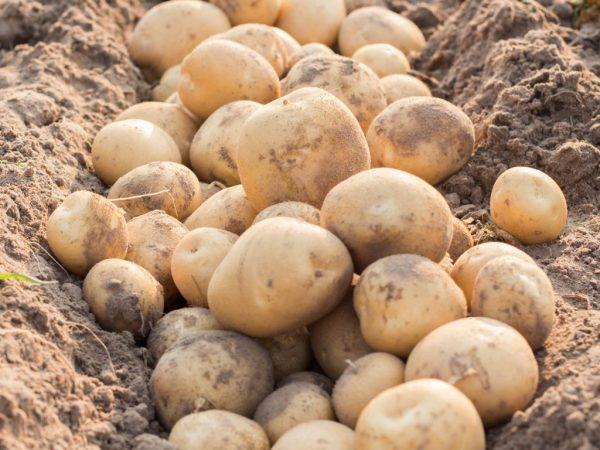 Important! Before planting in open ground, seedlings should be treated with a manganese solution or special antibacterial solutions.
Site selection and preparation
The precursors that grew in the same soil play a crucial role in Kolobok's growth and fruiting. Potatoes will thrive in soil that previously contained beets, cucumbers, greens, garlic, cabbage, peppers, onions, or legumes. Any plants from the nightshade family are unacceptable precursors for potatoes.
I begin preparing the vegetable beds in the fall. The soil is dug to a depth of 30 cm, thoroughly loosened, and topped with humus. In the spring, the beds are dug again, and the soil is mixed with organic fertilizer.
Timing and technology of planting
Potato planting times depend on the region's climate. In temperate climates, planting begins in early May, in southern regions in April, and in climates with fluctuating temperatures, wait until the soil warms to 8-10 degrees Celsius.
The planting material is placed in pre-prepared holes and covered with soil. The plant is tall and spreading, so the distance between holes should be at least 35-50 cm, and between beds 60 to 80 cm. To promote rapid growth, add humus, ash, or mineral fertilizer to the holes. Large tubers are planted up to 10 cm deep, while medium and small tubers are planted 5-7 cm deep.
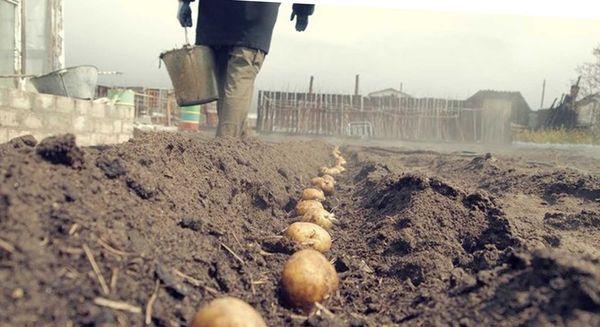 Important! Unsprouted planting material will enter the flowering and ripening phase 2-3 weeks later.
We organize potato care
The Kolobok potato variety requires no special care and is completely unfazed by weather conditions. However, to ensure the crop's yield exceeds all expectations, it's important to follow certain rules and recommendations for growing this crop.
How often to water and what to feed
Although the variety is quite drought- and heat-resistant, regular watering is required. A prolonged dry period will negatively impact the quality and quantity of the harvest.
Once the plants reach 20-25 cm in height, watering is done once every 7-9 days. However, once the plant enters the flowering phase, water supply to the soil is limited. It is during this time that excess moisture makes the vegetable crop vulnerable to certain diseases and pests.
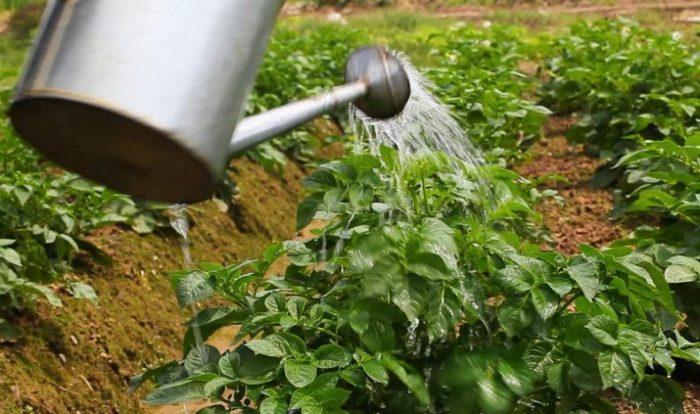
The Kolobok variety appreciates additional nutrition, so the plants are fertilized two or three times per season. Organic and mineral fertilizers are used for this purpose.
Important! Excessive use of fertilizers negatively impacts crop quality, and harmful substances accumulate in ripe tubers.
Loosening and hilling the beds
Loosening the soil helps control weeds, enriches it with oxygen, and helps retain moisture. Hilling is done 2-3 times throughout the growing and ripening season. Potatoes are first hilled when the young plants reach 20-25 cm. Subsequent hilling is carried out as needed.
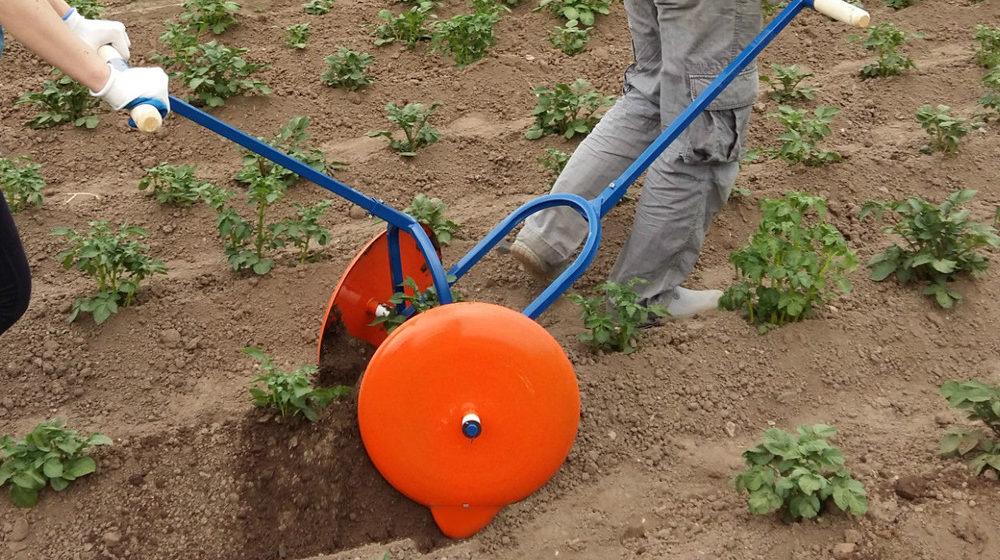
Hilling not only enriches the soil with oxygen and moisture, but also promotes plant growth. After all, tall bushes tend to break and lean without additional support. Hilled beds, however, provide reliable support for plants.
Treatment and protection from diseases and pests
The Kolobok variety has natural immunity to most fungal and viral diseases. However, sometimes the bushes are affected by late blight or nematodes. In these cases, the plants require treatment with special preparations.
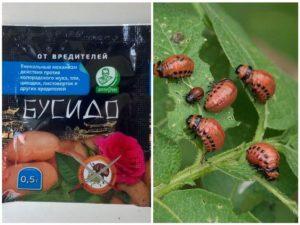
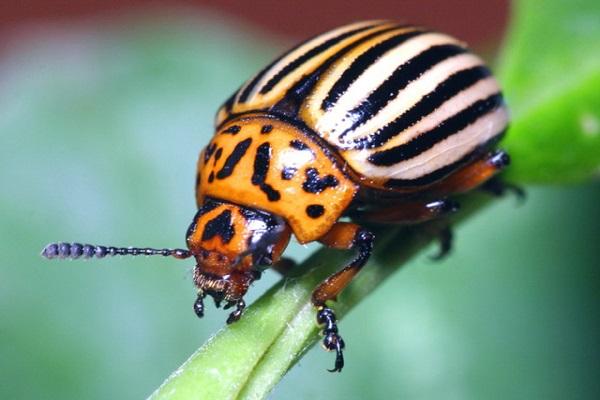
The variety is also frequently attacked by the Colorado potato beetle. If the infestation is small, the insects are collected by hand and destroyed. In other cases, chemical treatments are used.
How to harvest and store root vegetables
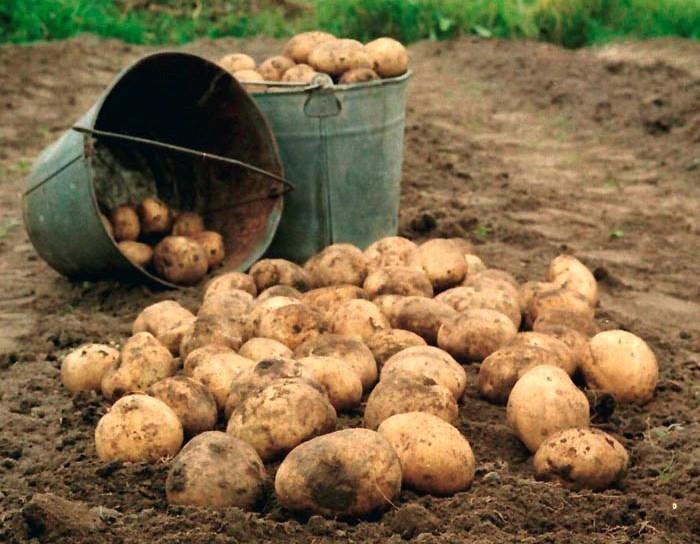
The first ripe roots appear as early as late July. However, the main potato harvest occurs in mid-September. A sunny day is chosen for harvesting. To avoid damaging the crop, most of the work is done with a pitchfork. The dug-up roots are cleared of soil and laid out to dry for 3-4 hours.
The harvest is then placed in bags, nets, or boxes and stored in a dark, cool, well-ventilated place. The vegetable's thick, dense skin protects it and allows the harvest to be preserved until spring.
Reviews from producers and gardeners
Ivan Petrovich. Kursk
I'm a farmer, so I grow potatoes for sale. I always choose my varieties very carefully and meticulously. It's important to me that the vegetables have a long shelf life. I discovered exactly this potato variety when I first planted Kolobok potatoes in my fields. Now I try to plant this potato variety every year.
Alexey Vladimirovich. Samara
Kolobok is my favorite potato variety. The smooth tubers are practically blemish-free and have a unique flavor and aroma. They require no care at all; I fertilize the soil in the fall and spring, and then water them. They're an excellent potato, and I recommend them to everyone.
Elizaveta Lvovna. Ryazan
Kolobok has long been a family favorite. Once we tried this potato, we couldn't eat anything else. So, we have to plant it to last through the winter and spring. The only downside is that the Colorado potato beetle is very fond of this variety, but we manage.
Related posts:
 Description and characteristics of the Kolobok gooseberry variety, planting and care
 Description of the best potato varieties of domestic and foreign selection
 Description and characteristics of the Rodrigo potato variety, cultivation and care
 Description and characteristics of the Gulliver potato variety, planting and care
 Description of the best potato varieties for 2025, selection for regions
 Why potatoes aren't growing well in the garden, and what to do to ensure a bountiful harvest
 Description and characteristics of the Krasavchik potato variety, planting and care
 Description and characteristics of the Arosa potato variety, planting and care
I've been growing potatoes commercially for several years now. I plant different varieties. I liked the Kolobok potato for its high yield and excellent presentation. It stores well without significant loss. The cultivation techniques are simple, not complicated. This variety is very popular among consumers due to its taste and versatility.