
Potato blackleg is a dangerous disease affecting garden crops. How can it be controlled without losing a large portion of the harvest? Gardeners have been searching for an answer for some time. The disease is caused by three types of bacteria, which can multiply and damage plants in both hot and cool, damp weather. Blackleg is found everywhere potatoes are grown.
What is blackleg?
Blackleg was previously thought to be caused by three species of bacteria. Scientists have now grouped them into a single group. The bacteria are short rods with rounded edges and can form short chains. They do not form spores or capsules and are anaerobic.
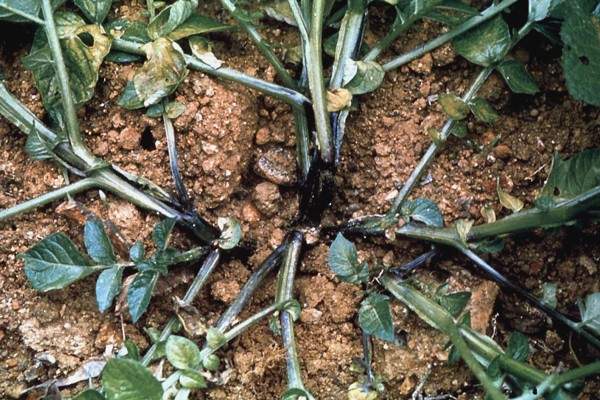
A sign that potatoes are infected with black leg is darkening of the bases of the stems. If even one diseased tuber ends up in storage, it will infect many more potatoes by spring.The pathogen cannot overwinter in open ground because it requires a nutrient medium, which includes not only the tubers themselves but also plant debris and tops.
Causes of the disease
Blackleg is caused by rod-shaped bacteria that multiply rapidly in a favorable environment and form colonies. This disease affects many crops, so there is no nutritional deficiency for the virus.
 The development of the disease is provoked by the presence of pathogens in the area, which can successfully overwinter in plant debris. Gardeners also often purchase infected potatoes for planting, which by harvest time are already infected. Improper transportation and storage practices, insect vectors, and nutrient deficiencies in the soil also contribute to the development of blackleg.
Symptoms of the disease
Signs that potatoes are affected by black leg are:
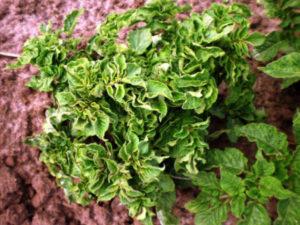
- yellowing and falling of leaves;
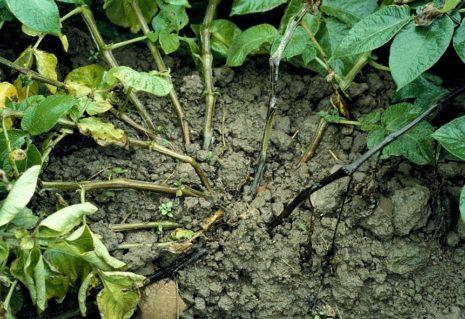
- the stem and root turn black and are easily torn off at the site of infection;
- developmental delays of diseased bushes;
- in case of severe damage, the disease moves from the stem to the root and tubers;
- the place where it connects to the root crop is rotting and has a strong, unpleasant odor;
- During the rainy season, after flowering, the potato stem turns dark green, and when pressed, it feels hollow;
- Initially, the fruit becomes covered with brown spots, after which its tissues darken and rot.
Diagnosis of infection
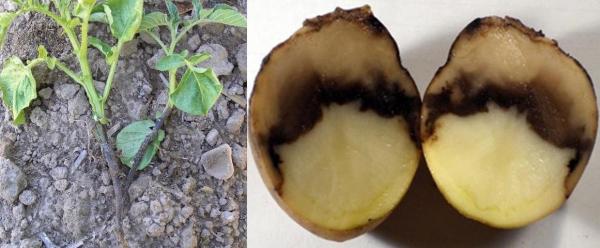
The bacteria that cause blackleg spread from the stem into the tubers, turning them into a rotting mass that emits an unpleasant odor. The color of affected potatoes changes from light to dark.
A characteristic viscous liquid with a strong unpleasant odor flows out of the cracks in the affected tubers, and a void forms inside them.
Externally, diseased potatoes are distinguished by the presence of cracks and dark skin. As a rule, it is possible to diagnose black leg only after the emergence of seedlings. The foliage immediately turns yellow and falls off, and the stem also turns yellow and eventually dries out. The stem can break under its own weight, and signs of rot are clearly visible at the break. The potato itself is easily pulled out of the ground.
Treatment methods
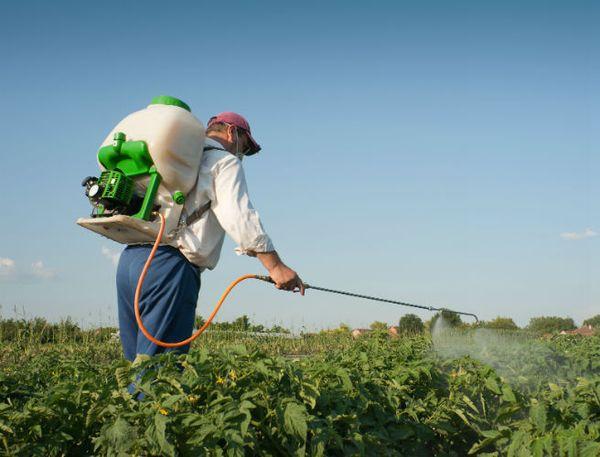
Over the years, gardeners have developed not only preventative measures, but also effective methods for treating blackleg:
- You cannot plant potatoes in the same place for several years in a row.
- If potato bushes infected with black leg are found in plantings, it is necessary to immediately loosen the soil, dry it, and add wood ash or dust from charcoal.
- In cases where other methods are ineffective, resort to the use of chemical preparations (for example, "Energen", 5 ml of which is diluted in 10 liters of water and the resulting solution is poured over the potatoes).
- The drug "Hom" has proven itself effective in the fight against black leg; 4 g of it should be diluted in 1 liter of clean water and sprayed on the bushes.
- Diseased potato bushes are removed from the area along with their tops and tubers, and the soil in the area where they grow is treated with a solution of wood ash and copper sulfate.
- Before the first hilling, the plants are sprayed with a solution of “Energen” in a proportion of 10 ml per 10 liters of water.
- The tops of infected bushes are burned, and the tubers are sorted and tried not to be stored together with healthy material.
- Before planting, potatoes should be disinfected by spraying with a 1% solution of Bordeaux mixture.
- When growing seed potatoes, the bushes are cleaned three times: after emergence, during flowering, and before harvesting.
Preventive measures of protection
If blackleg disease has not been detected in the area, but there is a risk of its occurrence due to favorable conditions for the proliferation of bacteria, then it is recommended to immediately begin preventive measures.
Biological agents
Biological methods of protecting potatoes from blackleg are considered the safest and do not harm the human body or the environment. These include:
- Compliance with recommended crop storage rules, carrying out processing in storage, maintaining temperature and humidity at the proper level.
- Growing potato varieties with high resistance to black leg (for example, Vilia, Karnea, Ulyanovsky, Skorospelka 1).
- Drying of the soil on the site, timely removal and burning of vegetation residues.
- Diseased tops or other vegetation should not be used as compost; they must be burned and the ashes buried to a depth of at least 15 cm.
- Apply dolomite flour to the area to reduce acidity and prevent bacterial growth.
- The harvested potato crop should be carefully sorted and dried.
- Tubers with mechanical damage are subject to rejection and are not allowed for planting, since this type of material is most susceptible to diseases.

Chemicals
If the risk of potato blackleg is very high, or signs of the disease have been noticed in the area, chemical treatments will have to be used. Gardeners' reviews indicate that the following are the most effective:
- Spraying potato tubers before planting with TMTD or Fitosporin-M.
- The area where potatoes are planned to be planted is watered not only with a weak solution of potassium permanganate, but also with preparations intended to combat fusarium (for example, Previkur, Fundazol, Topsin-M, and others).
- A preventative measure is watering with the addition of "Effekton," diluted at a ratio of 3 tablespoons per 10 liters of water. Add 0.5 liters of the solution to each potato plant.
- Before being sent to storage, potato tubers are treated with the "Maxim" product.
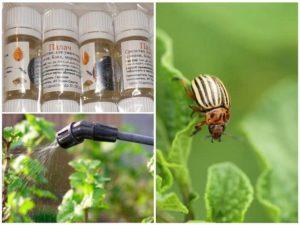
Timely preventative measures will help protect and preserve the potato harvest and prevent the appearance of such a dangerous disease as blackleg in the garden.
Related posts:
 Description of the best potato varieties of domestic and foreign selection
 Description and treatment of potato diseases, methods of control using folk and chemical means
 Why potatoes aren't growing well in the garden, and what to do to ensure a bountiful harvest
 Description of the best potato varieties for 2025, selection for regions
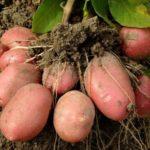 Description and characteristics of the Rodrigo potato variety, cultivation and care
 Description and treatment of potato pests, control measures
 What to do with black leg on peppers, how to combat it with medications and folk remedies
 How to combat blackleg on cabbage and what to do for treatment