
- The main causes of blackleg infestation
- Contributing factors
- Signs of the disease
- On young seedlings
- On mature bushes
- Why is this disease dangerous for cabbage?
- Methods of combating the disease
- Agrotechnical measures
- Use of biological agents and chemical preparations
- Folk remedies against infectious diseases
- How to prevent plantings from becoming infected
- Soil preparation and disinfection
- Disinfection of seeds before sowing
- Preventive treatments
When growing cruciferous vegetables, gardeners often encounter various diseases that not only threaten future harvests but also lead to widespread infestation of crops within a short period of time. One such cabbage affliction is blackleg. Not every gardener knows how to combat it and what preventative measures to take, significantly reducing the chances of achieving the desired results.
The main causes of blackleg infestation
The dangerous disease blackleg is caused by fungal spores that survive below-freezing temperatures and overwinter in the soil. When favorable conditions arise, the pathogens become active and rapidly infect both young and mature cabbage plants.
The development of black leg is caused by:
- excessive soil moisture;
- dense plantings;
- too hot or cold weather;
- increased soil acidity;
- lack of fresh air (when growing seedlings indoors);
- Excessive application of fertilizers with high nitrogen concentrations.
To prevent blackleg from appearing on your plot, you need to purchase varieties with a high level of resistance to adverse environmental factors.
Contributing factors
The prerequisites for cabbage infection with black leg are:
- insufficient lighting;
- the presence of various types of damage on seedlings;
- oxygen starvation of plant roots due to a dry crust forming on the soil surface;
- poor air circulation between plantings.
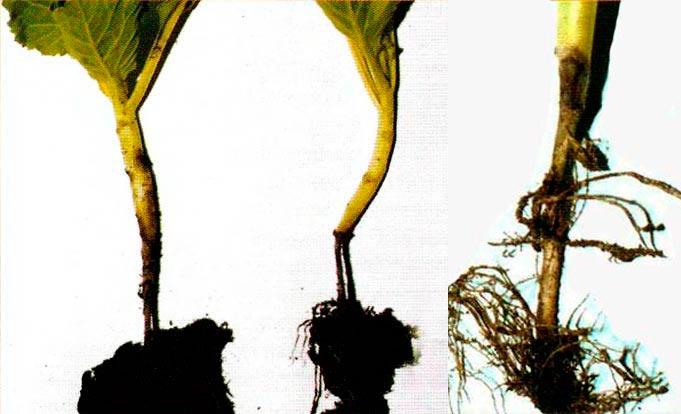
When such favorable conditions for the proliferation of pathogenic microorganisms occur, the cabbage stem suffers first at the point of contact with the soil.
Signs of the disease
Blackleg is a difficult-to-treat disease that almost instantly destroys weak sprouts. Symptoms vary slightly depending on the age of the cabbage.
On young seedlings
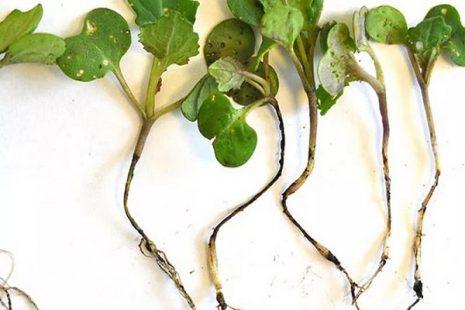
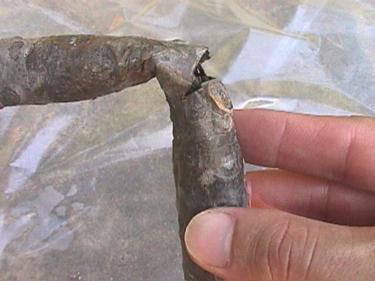
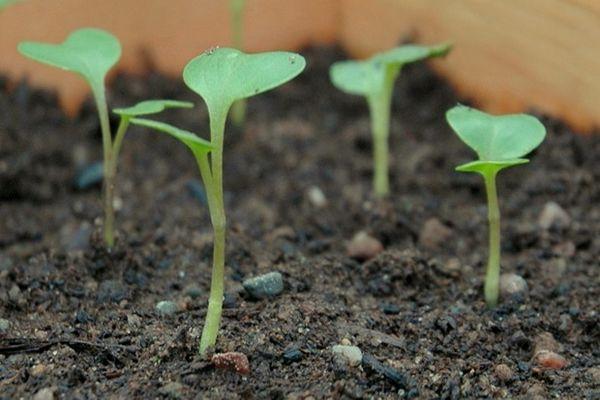
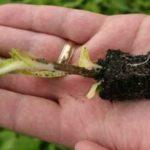
Young plants, which are not fully resistant to fungal diseases, are the first to fall at risk. The pathogen can penetrate seeds even during germination. Sprouts that have just emerged from the soil surface also lack immunity. Blackleg can be identified by a watery stem that gradually darkens in color.
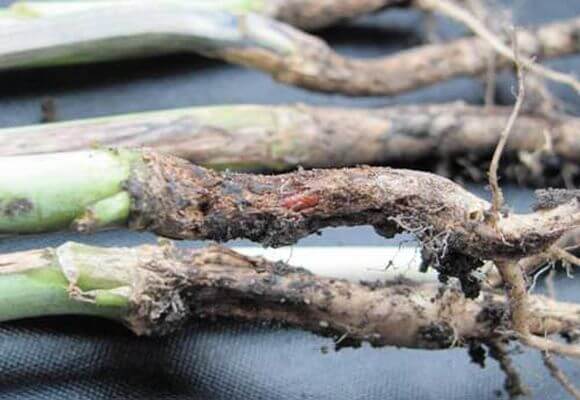
Infection of other plants occurs from already rotted sprouts. Blackleg can be identified on mature plants by the presence of a black band on the cabbage stem. After some time, this band becomes noticeably thinner, dries out, and breaks off. If such plants are treated with appropriate products, they may survive, but the recovery process will be very slow and time-consuming.
On mature bushes
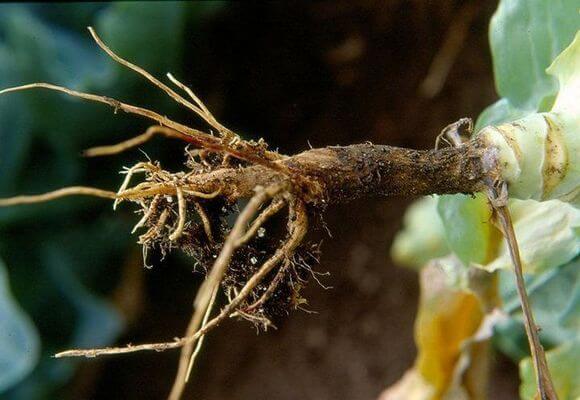
If blackleg infects already planted cabbage, blackening of the root collar may be observed. This type of cabbage rarely dies; after treatment, it will still form heads, but at a slightly slower rate.
Why is this disease dangerous for cabbage?
The insidious nature of fungal infection lies in its rapid spread, widespread damage, and the death of seedlings. If no action is taken, the root collar begins to rot, leading to the loss of the plant.
Methods of combating the disease
At the first sign of blackleg on cabbage, treatment is essential, but often novice gardeners don't know what to do and make a number of mistakes. The result is wasted time and lost harvest.
Agrotechnical measures
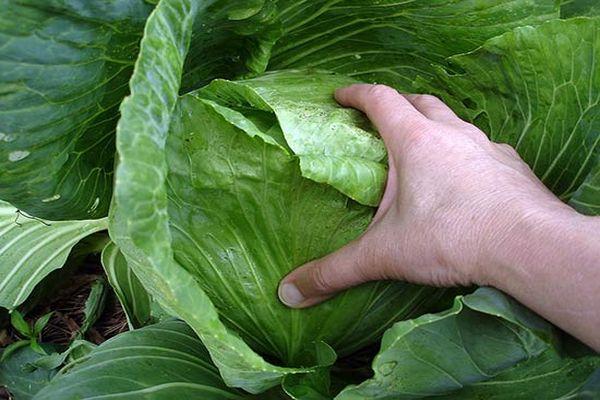
Cabbage plants infected with blackleg should be removed from the soil. The planting holes should then be disinfected with a working solution based on potassium permanganate (1.5 grams per 10 liters of water). Subsequently, the cabbage should be regularly hilled and river sand and wood ash added to the roots.
To avoid black leg, it is recommended to grow cabbage seedlings in peat pots or plastic containers.
The sooner measures are taken against fungal diseases, the greater the chance of preserving healthy plants and getting a bountiful harvest.
Use of biological agents and chemical preparations
Among the most effective biological and chemical agents against black leg, experienced gardeners note:
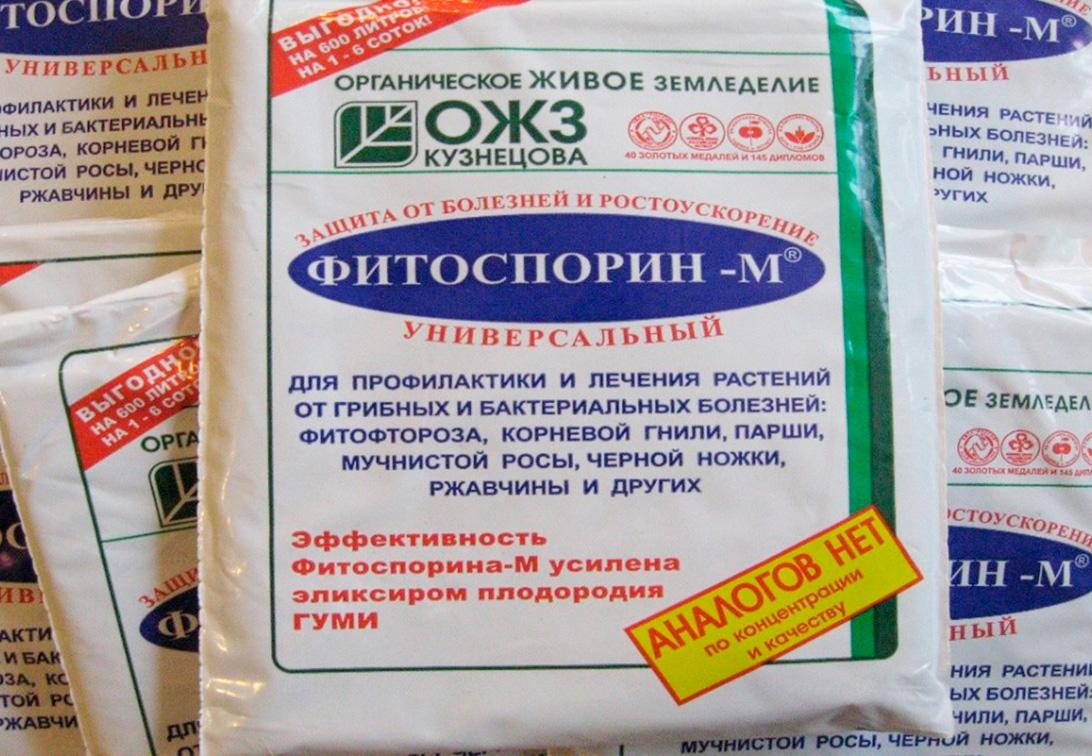
- Fitosporin powder is used to prepare a working solution at a rate of 6 grams per 10 liters of water. The product is diluted in water 1-2 hours before application.
- Bordeaux mixture used at a concentration of 1%.
- A solution based on baking soda or soda ash.
- Potassium permanganate, the concentration of the working fluid is 0.5%.
- Previcur Energy is diluted at a rate of 20-25 milliliters per 10 liters of water. Three treatments are recommended.
- Trichodermin, used at a rate of 100 milliliters of the product per 10 liters of water.
Take a look Also
Folk remedies against infectious diseases
Before sowing, it is recommended to disinfect the soil with a potassium permanganate solution or heat-treat it. Place the soil in a suitable container, pour boiling water over it, cover with a lid, and bake in the oven for 30 minutes at a temperature of at least 100 degrees Celsius.
Dusting the soil with crushed charcoal and spraying plants with a decoction of onion peels also works well against blackleg. Crushed eggshells and a baking soda solution (1 teaspoon per 100 milliliters of warm water) are also effective against fungal infections. A decoction of marigolds also works well against blackleg on cabbage.
How to prevent plantings from becoming infected
To prevent the development of black leg on cabbage, it is necessary to follow certain recommendations regarding pre-planting activities.
Soil preparation and disinfection
Garden soil used for sowing seeds should be pre-baked in an oven or microwave. Another method for disinfecting the soil is treating it with a solution of potassium permanganate or formalin.
If sowing is to be carried out in a greenhouse or outdoors, it is necessary to use ash powder at a rate of 100 grams per 1 square meter to normalize the soil acidity level, and the addition of colloidal sulfur (5-8 grams per 1 square meter) will help disinfect it.
Disinfection of seeds before sowing
A working solution based on such effective preparations as:
- Planriz with a concentration of 1%, which is applied one day before sowing;
- Fitosporin-M, used at a rate of 4 drops per 1 glass of water (procedure time – 2 hours);
- Barrier, Pseudobacterin;
- Phytoflavin-300;
- Baktofit;
- potassium permanganate.
After treatment, the seeds should be soaked in a container of warm water (50 degrees Celsius) for 20 minutes. This preparatory process helps protect both seedlings and future sprouts from blackleg. It is recommended to sow the seeds in late March or early April.
If you discover sprouts infected with blackleg, remove them from the soil without hesitation. Only those plants that are not intended for long-term storage can be kept.
Preventive treatments
To prevent cabbage from becoming infected with blackleg, it is recommended to grow it only in soil with sufficient moisture and air permeability. Before planting seedlings, it is essential to disinfect the soil using colloidal sulfur at a rate of 40 grams per 10 liters of water, using 2 liters of the working solution per 10 square meters.
Bordeaux mixture (1%) and copper sulfate are effective against blackleg. After all sprayings, the soil should be covered with sand (1 cm thick) or a mixture of wood ash. Blackleg on cabbage is one of the most common diseases of cruciferous plants. Crop rotation and preventative measures reduce the risk of fungal infection. When choosing a variety, it is recommended to choose only those with enhanced immunity and resistance to temperature fluctuations.
Related posts:
 Why do cabbage leaves turn purple and what can be done to treat them?
 Description of cauliflower diseases and pests, methods of treatment and control
 Why cabbage leaves wilt in the garden and what to do
 Description of the best cabbage varieties for 2025 for different regions
 What to do with black leg on peppers, how to combat it with medications and folk remedies
 Why does cabbage grow tall in the garden and what can be done about it?
 Planting, growing, and caring for cauliflower in open ground and greenhouses
 Using calcium nitrate for cabbage, how to feed it and the application rate