
- Description of calcium nitrate
- Advantages and disadvantages of the drug
- Types of the drug and its beneficial properties for cabbage
- Calcium nitrate
- Ammonium nitrate
- In what cases is complementary feeding necessary?
- When to fertilize cabbage beds
- Methods of application
- Feeding seedlings
- Fertilize when planting in open ground
- Stimulating active growth
- To form the head
- Features of use on the site
- The need for fertilizers for different crops
- Colored
- Pekingese
- Broccoli
- White cabbage
- Soil types
- Dosage and preparation of working solution
- Can it be combined with other medications?
- Safety precautions
- Gardeners' reviews of saltpeter
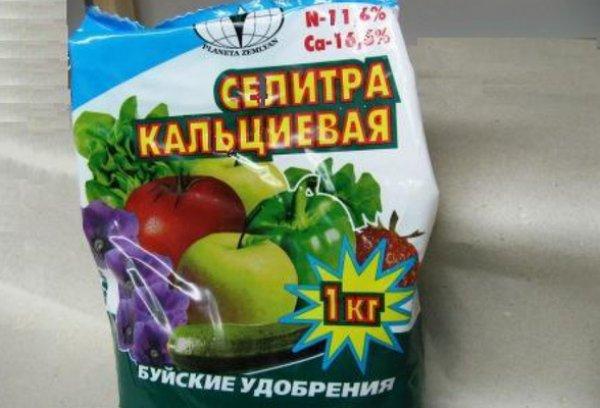
Calcium nitrate is used in agriculture to improve the quality of acidic soils. A nitrogen fertilizer, it is essential for plants to develop green mass. Applying calcium nitrate to cabbage promotes rapid growth. The combination of nitrogen and calcium in the fertilizer helps the plant easily absorb nutrients.
Description of calcium nitrate
Calcium nitrate Ca(NO3)2 is available as a crystalline powder or granules. Its color can range from white to light gray. One kilogram of the fertilizer contains 155 g of nitrogen and 130 g of calcium. To reduce hygroscopicity, ammonium nitrate is added to the main components at a concentration of up to 7%.
Advantages and disadvantages of the drug
By using calcium nitrate, cabbage yields can be increased several times.
- The fertilizer is made from natural substances contained in the soil.
- Calcium nitrate does not accumulate in cabbage heads.
- Calcium helps nitrogen to be absorbed and evenly distributed throughout the plant from roots to leaves.
- Increases cabbage resistance to drought.
- Accelerates growth and formation of the root system.
- Increases crop resistance to diseases.
- Improves the taste and appearance of cabbage heads.
The high hygroscopicity of calcium nitrate can be considered a drawback. When exposed to moisture during storage, the fertilizer cakes and loses its value. Overdosing or delaying calcium nitrate application can slow plant growth.

Types of the drug and its beneficial properties for cabbage
Several types of nitrogen fertilizers are used in agriculture.
Calcium nitrate
Unlike other nitrogen-containing mineral fertilizers, calcium nitrate does not acidify the soil. This property is essential for the normal development of cabbage. Calcium prevents the accumulation of nitrates in plant cells. This accelerates head formation, speeds up the ripening process, and improves the marketability of cabbage. The vegetable has a longer shelf life after harvest.
Ammonium nitrate
Ammonium nitrate contains up to 35% nitrogen in the form of ammonium nitrate. In fertilizer production, minerals are added to standard ammonium nitrate.
- Potassium contains over 40% potassium and is used for vegetables that require this component.
- Azotosulfate contains sulfur, which, although it participates in metabolic processes, inhibits the development of vegetables when used.
- Sodium fertilizer is not used on solonetz soils. It is used for growing root crops.
- Nitrogen-magnesium fertilizer is used on waterlogged and acidic soils. Contains magnesium.
- Calcium ammonium hydroxide is used as a complex fertilizer. It corrects magnesium, potassium, and calcium deficiencies. It is the least hygroscopic and stores better in humid conditions.
Take a look Also


During plant cultivation, all types of fertilizers are used according to the soil and crop requirements. Calcium-based fertilizers are especially suitable for fertilizing cabbage.
Experts recommend using saltpeter on soils where magnesium and sodium-containing fertilizers were previously applied.
Calcium nitrate helps remove excess minerals that are harmful to cabbage.
In what cases is complementary feeding necessary?
Timely nitrogen fertilization will help cabbage form a strong head. The condition of the leaves can help determine when fertilization is needed.
Signs of nitrogen deficiency:
- underdevelopment of leaves;
- the appearance of spots and light veins;
- curling of upper leaves;
- growth retardation.
When there is a calcium deficiency, the leaves turn blue.
When to fertilize cabbage beds
Calcium nitrate easily decomposes when exposed to moisture and is washed out of the soil. Therefore, applying calcium fertilizer in the fall is useless. Furthermore, calcium is poorly soluble, remaining in the soil and poorly absorbed by plants. Without nitrogen, the mineral negatively impacts cabbage growth.
It is recommended to apply saltpeter at planting. To ensure efficient use, add the fertilizer directly to the planting holes. On sandy soils, apply the fertilizer in small doses several times. This method will help reduce fertilizer seepage into the lower soil layers. On clay and loam soils, a single application at planting is possible.

During cabbage growth, repeated fertilization with an aqueous solution of calcium nitrate is necessary. The condition and appearance of the plants will help determine the timing of additional nitrogen and calcium applications.
Methods of application
In the spring, when planting seedlings, add dry calcium nitrate to the holes. To protect young roots from burning when exposed to nitrogen, sprinkle the granules with a layer of loosened soil. When watered, the fertilizer dissolves and reaches the roots in an accessible form.
Additionally, fertilizer is applied by watering the roots or spraying the leaves when a nutrient deficiency is detected.
Feeding seedlings
If fertilizer was not applied to the soil beforehand when growing cabbage seedlings, the young sprouts can be fed a week after germination. The powder or granules should be diluted with water at a rate of 1 g per liter. For a planting area of 1 square meter, 5 liters of solution is sufficient.

Fertilize when planting in open ground
When planting in the ground, it is recommended to apply dry calcium nitrate under each plant. Sprinkle half a teaspoon of the powder into the plant hole and cover with at least 3 cm of loose soil. Place the seedling so that the fertilizer does not touch the roots. Water thoroughly after planting.

In large areas, it is possible to apply fertilizer to the soil at a rate of 20 g of saltpeter per 1 sq. m. before plowing.The introduction of liquid nutrient solution is possible after 2 weeks.
Stimulating active growth
Nitrogen fertilizer requirements vary at different stages of cabbage development. The highest rate should be applied at the beginning of head formation. This is the time of intensive leaf growth and increased nitrogen consumption.
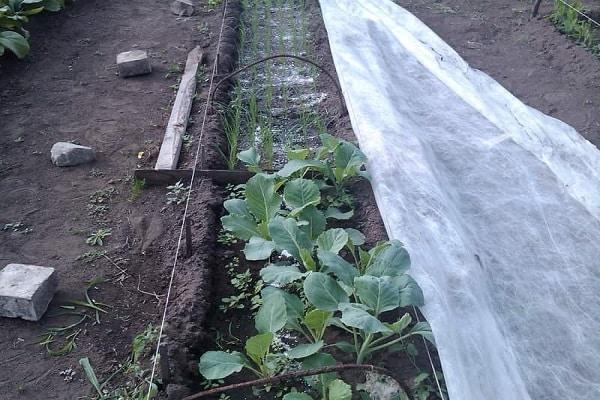
Fertilizing is done by watering under the bush. This is the fastest and most convenient way to deliver nutrients to the roots. Spraying is less effective at promoting growth. Each plant will require up to 2 liters of a standard concentration solution (1 g per 1 liter). Preliminary loosening and mulching after watering will help retain the maximum amount of nutrients under each seedling.
To form the head
Early cabbage varieties do not require additional feeding if the foliage is in good condition. A third feeding is given to late and mid-late varieties to promote head formation and growth. The interval between waterings should be at least two weeks. It is recommended to supplement the calcium nitrate with sodium and potassium fertilizers in equal proportions.

During this period, you can provide nutrition by spraying and by watering at the roots.To avoid excessive growth of cabbage leaves to the detriment of head formation, it is necessary to stop fertilizing in the second half of summer.
Features of use on the site
Calcium nitrate is suitable for all crops. However, it should not be applied excessively. It is not recommended to apply it to areas where nitrogen-containing organic fertilizers have been used. Cucumbers and melons accumulate nitrogen in their fruit. Excessive fertilization of the soil in beds where these crops are planned will lead to deterioration in fruit quality.
The need for fertilizers for different crops
Different types of cabbage consume nitrogen fertilizers in accordance with their development characteristics.

Colored
Fertilize cauliflower seedlings with a saltpeter solution (10 g per bucket of water) 10 days after planting in open ground. Ammonium molybdate and boric acid added in equal proportions to the solution will improve cauliflower growth.
A second application of complex fertilizer with the addition of phosphorus and potassium in equal proportions should be made 3 weeks after the first application of nitrogen fertilizer.
Pekingese
Napa cabbage is characterized by its loose, elongated heads, rich in vitamins and minerals. This variety is considered an early-ripening variety. Therefore, to develop tasty and large heads, it's sufficient to apply nitrogen fertilizer to the soil before planting and apply a phosphorus-potassium supplement 2-3 weeks after planting.


Broccoli
Broccoli's nutrient requirements are similar to those of cauliflower. For these varieties, boron and molybdenum deficiency are more important. Nitrogen fertilization should be performed no more than twice, at intervals of 10-14 days.
White cabbage
At growing late varieties of white cabbage Ammonium nitrate is recommended for use before planting and as the first comprehensive fertilizer applied under the bush. Applying the fertilizer later may delay head formation. For the third fertilizer application, if the plants are underdeveloped, it's best to use a complex fertilizer containing calcium, phosphorus, and potassium.

Soil types
Cabbage is demanding regarding soil composition and quality. A good harvest is obtained in fertile black soil. In loamy soils, the cabbage harvest may not be very high, even with the use of fertilizer. When growing cabbage in sandy soil, increased fertilizing is required.
Dosage and preparation of working solution
To prepare a watering solution, add the required amount of powder or granules to water and stir. Use the solution on the same day as preparation. The fertilizer loses its potency during storage.
Can it be combined with other medications?
Ammonium nitrate is mixed in a solution with any phosphorus, potassium and sulfur fertilizers according to the instructions for the preparations.

Safety precautions
When working with saltpeter, wear standard hand and respiratory protection. When storing the product, it's important to avoid accidentally ingesting the sugar-like substance. If swallowed, seek medical attention immediately.
Gardeners' reviews of saltpeter
Vasily Mikhailovich, Novgorod region
Saltpeter is good for cabbage. Even weak seedlings yield a wonderful harvest if you spray them on time. But I'm always wary of overdoing it. I've heard that nitrates are very harmful to health.
Marina, Kemerovo Oblast
I always fertilize the soil with saltpeter when planting seedlings. I've never run out of cabbage. Unlike manure, which gardeners praise so much, saltpeter costs pennies. And I haven't noticed any change in the taste. This isn't the first year I've been growing it.
Related posts:
 How and what is the best way to feed cabbage in open ground, fertilizers for growth
 Planting, growing, and caring for cauliflower in open ground and greenhouses
 Why do cabbage leaves turn purple and what can be done to treat them?
 Why does cabbage grow tall in the garden and what can be done about it?
 Description of the best cabbage varieties for 2025 for different regions
 How to feed cauliflower in open ground for growth and how to do it correctly
 Why cabbage leaves wilt in the garden and what to do
 Growing and caring for Chinese cabbage in open ground and greenhouses