
When it starts to turn black and potato tops are drying outThis indicates an infectious cause and a physiological process. If the growing season has not yet ended and dark spots have appeared on the tops, this indicates a fungal infection. Fungi are difficult to treat and affect not only the plant but also the harvest. To prevent infection, preventative measures are necessary.
Why do potato leaves turn black?
Blackening of potato tops is caused by physiological or pathological processes. Physiological processes are a natural process that occurs during fruit ripening. Pathological processes occur during the development of an infectious or fungal disease.
Physiological processes
Blackening of potato tops is considered normal at the end of the growing season. Before ripening, the stems slowly begin to blacken, then wilt, releasing all their nutrients to form root vegetables.
Pathological factors
If blackening occurs much earlier, it indicates a crop disease or improper cultivation techniques. The most common diseases causing this symptom are:
- late blight;
- fusarium;
- Alternaria;
- Rhizoctonia;
- blackleg.
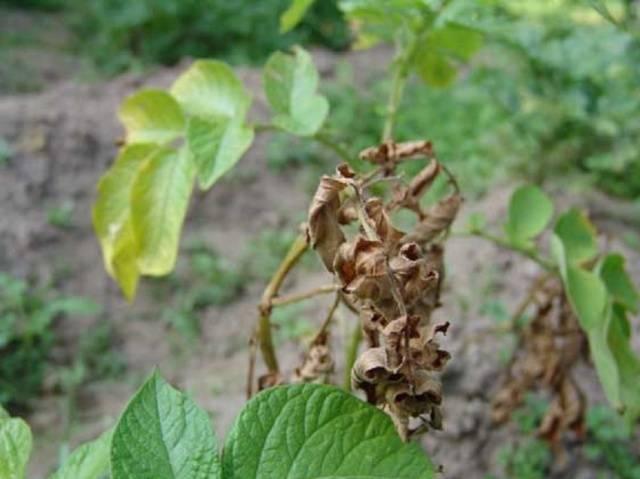
These diseases occur when the soil is too wet, mineral fertilizers are overused, or the potatoes are contaminated with harmful fungi and bacteria. These infections must be eliminated with chemicals to preserve the harvest.
Late blight
This disease develops quickly; if it affects one bush, it infects all plants within 1-2 weeks. The sooner you begin treating late blight, the better your chances of preserving the harvest. Infection occurs for several reasons:
- frequent rains;
- morning dew due to the difference in temperature between night and day;
- reduction of air temperature to 15°C.
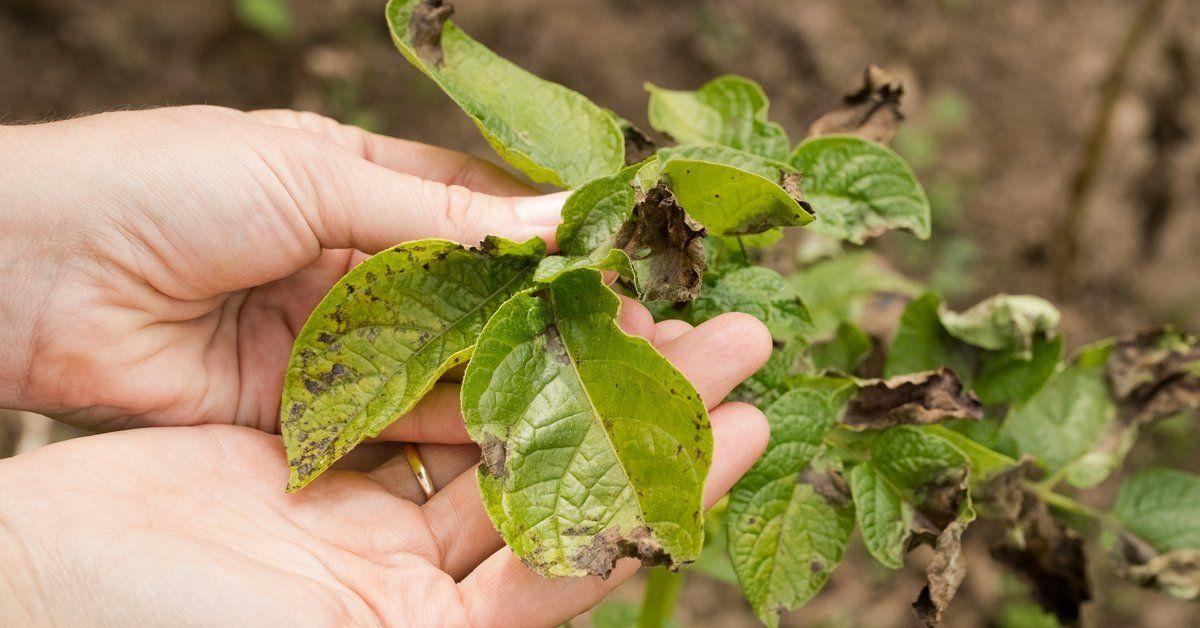
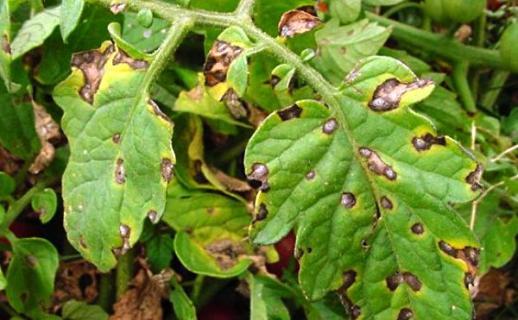
Black spots appear on the leaves, they gradually dry out and fall off.
Important! Late blight appears on the underside of the leaf.
Fusarium
A fungal infection that thrives in high temperatures. It begins on the lower leaves and gradually spreads to the upper ones. It is easily recognized by the leaves turning black, curling, and falling off. The disease begins with black spots on the underside of the leaf.
Fusarium also affects root crops, especially in February. Such root crops cannot be used for seed production.
Alternaria
A microscopic fungus that most often affects mid-season and late-season potato varieties. Symptoms begin 25 days before flower bud formation. Alternaria forms dark, round spots on the leaves. The infection begins on the lower leaves and gradually spreads to the upper ones. It is difficult to prevent the disease from affecting potatoes, as the fungus penetrates the tubers and causes them to rot.
Rhizoctonia
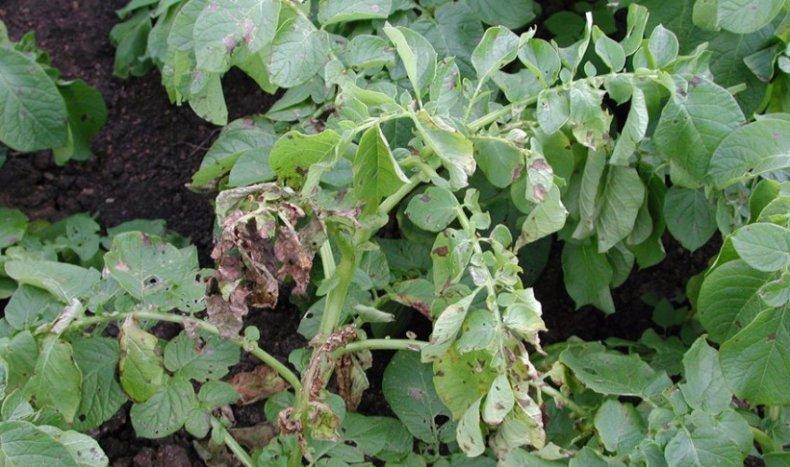
The disease is caused by a microscopic fungus. Its micelles penetrate the stems of the leaves and the tubers themselves. A gray coating appears on the stems, and the leaves become covered with black spots and begin to dry out.
At the initial stage, the roots are suitable for consumption. These potatoes should not be used for planting.
The factors of infection are:
- cool weather for a long period of time;
- frequent rains;
- poor drainage of excess moisture from the soil.
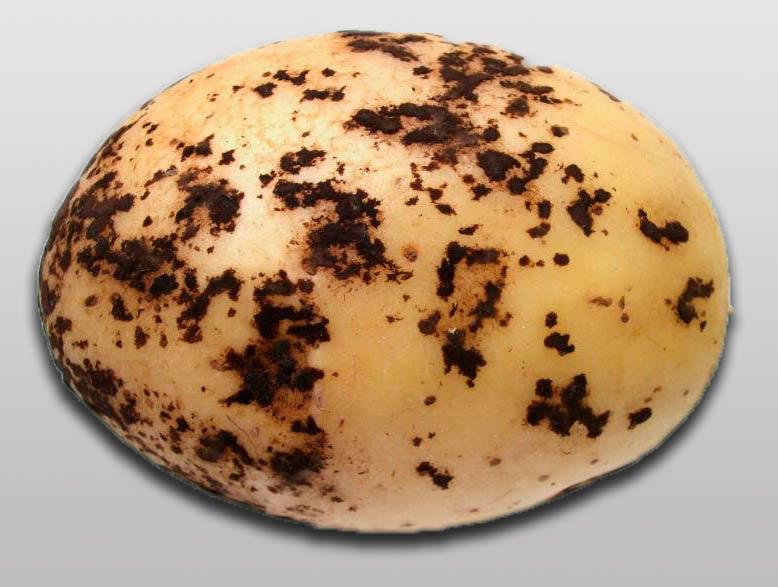
Blackleg
One of the most dangerous diseases, it can cause yield losses of up to 50%. The disease begins with blackening of the lower stem, which becomes black and soft. The leaves turn yellow, dry out, and fall off. The infection spreads to the tubers. When cut, the root crop has black streaks and is unfit for consumption. Seeds from these potatoes are not used.
During storage, black leg affects the tubers and causes them to rot, so it is recommended to get rid of the diseased bush.
What should I do if my potato tops have already turned black?
If the potato tops have already turned black, treatment is necessary to try to save the crop. For some diseases, treatment is quite effective. To do this, follow these steps:
- If the foliage has completely turned black, spray the bushes with fungicides. Copper sulfate, Bordeaux mixture, and other solutions are used.
- If the plant is partially affected, remove the damaged shoots and observe the plant. If the disease continues to spread, spray with fungicides.
- If late blight affects the tubers, cut off the tops and dig up the harvest. If the tubers are undamaged or spotted, the harvest is undamaged. However, it should not be used for planting.
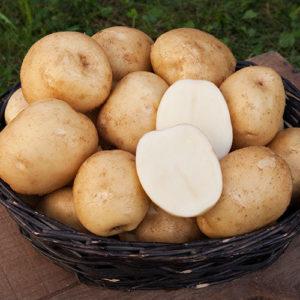
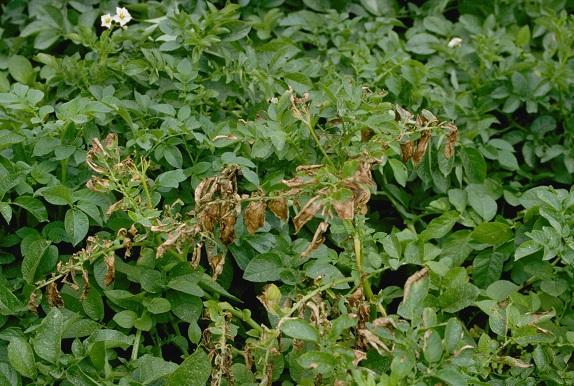 Important! Spraying for treatment is carried out every week until the plant becomes stronger.
How to keep potato tops green?
You can keep potato tops green by taking preventative measures. Preventing infection is easier than treating it. It's important to remember that if the infection develops, part of the crop must be destroyed, and contaminated soil will transmit the pathogenic fungus to future generations of potatoes. To preserve the crop, take the following measures:
- a selection of potato varieties that are typical for growing in the desired region;
- selection of varieties with resistance to infectious diseases;
- preparing the soil for planting, preferentially using loose, light soils with good drainage of excess moisture;
- on acidic soils, dolomite flour should be added;
- fertilizing with suitable mineral or organic fertilizers without excess;
- Mulching potato beds with hay helps retain moisture and prevents the development of infections;
- compliance with the planting pattern and spacing between bushes and beds.
- treatment with fungicides at the beginning of the growing season;
- regular hilling, loosening and weeding of the area;
- using only healthy planting material.
What to do with affected tubers?
After harvesting, the crop is carefully sorted. All damaged roots with dark spots or rot are discarded. They should not be stored with healthy ones. To prevent contamination of healthy crops, they are treated with a weak solution of copper sulfate. Such fruits cannot be used for planting.
Spoiled fruits and tops are destroyed by burning. The following year, the potato planting site is changed and new seeds are purchased from nurseries.
Conclusion
Blackening of potato tops is a physiological process at the end of the growing season. This is a sign that it's time to harvest the crop. If these signs appear during budding and flowering, this indicates a fungal infection. To prevent infection, preventative treatments and proper care are necessary.
Related posts:
 Why potatoes aren't growing well in the garden, and what to do to ensure a bountiful harvest
 Reasons why potato tops turn yellow and dry out, what to do about it, treatment methods, and protection
 Description and treatment of potato diseases, methods of control using folk and chemical means
 Description and treatment of potato pests, control measures
 The best eggplant varieties for growing in a polycarbonate greenhouse: planting and care
 Reasons why potatoes don't bloom, and what to do to ensure a good harvest
 Methods for planting and propagating cherries at home
 How to properly prepare planting material and when to plant potatoes to get a rich harvest