
- Potato Fairytale: description and characteristics
- Origin of the variety
- Bush, root crop and yield
- Scope of application of the Skazka potato
- Diseases and pests of the variety
- Advantages and disadvantages compared to other crops
- Better conditions, higher yields: what the Fairytale potato requires
- Suitable soil composition
- The optimal place
- Lighting, humidity and temperature conditions
- Favorable and unfavorable neighbors and predecessors of the potato Fairy Tale
- Landing
- Deadlines
- Preparing the site and planting material
- Planting pattern and depth
- Watering
- Potato Fertilizer Fairytale
- Loosening and mulching potato beds Skazka
- Hilling
- Preventive treatments
- The nuances of harvesting and preserving root crops
- Gardeners' reviews of potatoes
The description and reviews of the Skazka potato variety attest to its many advantages. This variety is suitable for growing for sale or personal consumption. Its low maintenance makes it easy to grow, even for novice gardeners. To successfully plant potatoes, please read the information below.
Potato Fairytale: description and characteristics
The Skazka variety is mid-early. The fruits ripen 70-90 days after planting, depending on the weather. This allows the potato to be grown in areas prone to spring frosts. Initially, the potato was developed for cultivation in the Middle Volga, Ural, and Far East regions. It is now grown in almost every region of Russia and the CIS.
Origin of the variety
The Skazka potato was developed by Russian breeders N. Gadzhiev, V. Lebedeva, and M. Ivanov from the Leningrad Research Institute of Agriculture "Belogorka" and the LiGa Breeding Forms LLC. Since 2004, the variety has been listed in the state register.
Bush, root crop and yield
The Skazka potato plant grows to 80 cm tall, forming up to six stems. The leaves are small, light green, and porous. The flowers are large, containing five violet-hued inflorescences. This variety is highly productive, with one plant yielding 30 medium-sized potatoes. Commercially, the yield is 400 centners per 100 square meters.
The shelf life of the fruits is 90%, provided storage requirements are met. Skazka is renowned for its 88% marketability of the root vegetable. The potatoes have a creamy flavor, cook gently, do not fall apart, and retain their whitish color when cooked and cut.
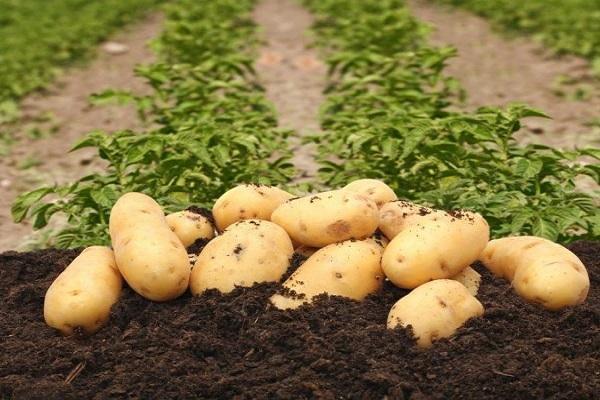
Each specimen contains 13.5-17% starch. The roots are oval in shape, weighing 80-130 grams each. The skin is smooth, beige, and pinkish where the eyes form.
Scope of application of the Skazka potato
The Skazka table potato is versatile. It's best used in deep-frying, salads, entrees, and mashed potatoes. It's also great for casseroles and boiled in its skins.
Diseases and pests of the variety
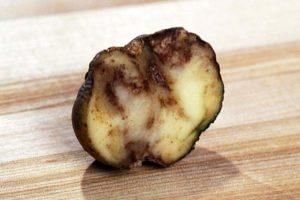
The Skazka potato variety is immune to Alternaria, scab, canker, and Rhizoctonia. Plants are occasionally susceptible to late blight. Thanks to modern sprayers, you can avoid attacks from wireworms, potato moths, mole crickets, and Colorado potato beetles.
Take a look Also

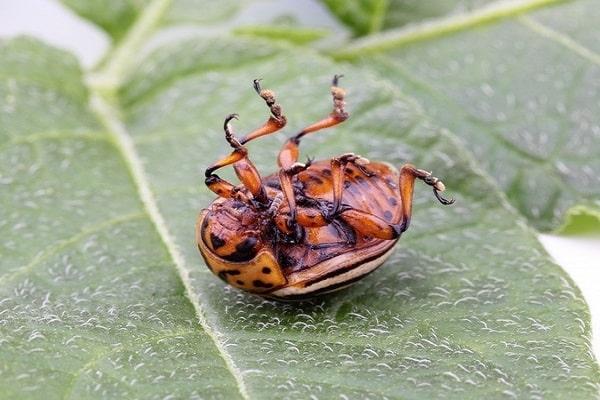 Plowing the soil helps eliminate many bacteria and harmful insects that die from low temperatures.
Advantages and disadvantages compared to other crops
The Skazka potato has many advantages, but there are also some negative aspects.
| Plus | Cons |
| A bountiful harvest | The eyes are a bit deep, making it difficult to clean the fruit. |
| Easy to care for | The tall, spreading bush of tops makes the process of care difficult. |
| Durable protective functions | |
| Long shelf life | |
| Excellent taste | |
| Attractive presentation |
Better conditions, higher yields: what the Fairytale potato requires
The agricultural aspects are standard: you need to plant potatoes in a suitable location. Proper care is also crucial.
Suitable soil composition
Gardeners recommend planting Skazka potatoes in light, sandy, and loamy soils. The crop also thrives in black soil. This variety tolerates drought but does not tolerate excess moisture. In heavy soils, the tubers grow small.
The optimal place
Skazka potatoes should be planted in sunny, well-ventilated areas. Avoid nearby tall trees that shade the plants.
Lighting, humidity and temperature conditions
Potato plants need full sun, but will tolerate partial shade. The variety prefers moist soil; standing water will cause the rhizome to rot. Plant the plants in the open garden when the temperature warms up to 10-15°C.
Favorable and unfavorable neighbors and predecessors of the potato Fairy Tale
According to crop rotation rules, vegetables can be preceded by grains, legumes, cabbage, or cucumbers. Peas can be sown next to potato plants in August. The crop enriches the soil with nitrogen. By October, the peas will have grown to such a length that they can be used as green manure during autumn plowing.
Landing
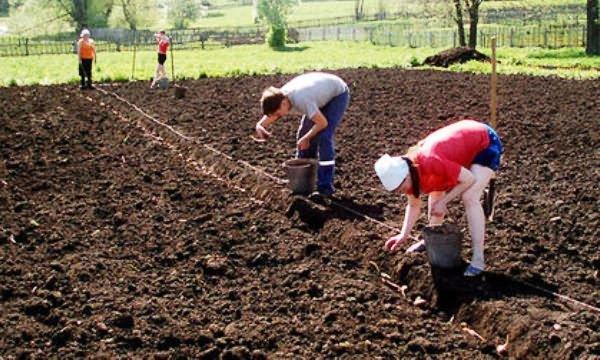
The pattern and depth of potato planting depends on the type of soil.
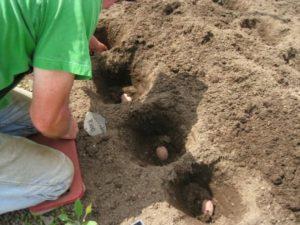
- Light sandy loam soil - dig a hole 10-15 cm deep, with a distance of 25 cm between the beds, maintaining a checkerboard pattern.
- Heavy clay soil: Cut 5 cm deep planting furrows, place seeds in them, and fill the spaces between rows with soil. Space between rows should be 60-70 cm to ensure adequate light and facilitate maintenance.
By following these rules, you will be able to get a bountiful, high-quality harvest.
Deadlines
It's best to plant Skazka potatoes in early May. The soil should warm to 7-8 degrees Celsius. In the north, planting can be done in late May or early June.
Preparing the site and planting material
The soil should be prepared in the fall by adding compost and plowing. Manure should not be added, as it often contains weed seeds and releases toxic gases that inhibit plant growth. Compost should be added to the soil in a 3-4 cm layer throughout the area.
Afterwards, the soil is plowed. In the spring, the soil is loosened again, leveling any clods that form after plowing with a rake or mechanical tiller. The soil will become a homogeneous substance.
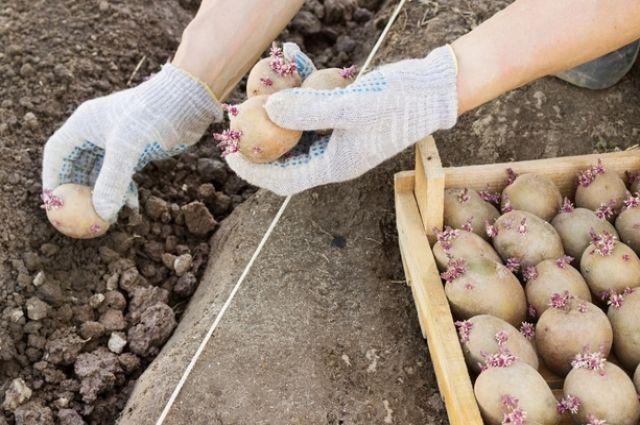
The seedlings are prepared a month before planting. Whole, healthy tubers are selected, with sprouts unbroken before winter. They are placed in a warm, well-lit room. Exposure to light and temperatures of 15-20 degrees Celsius (59-68 degrees Fahrenheit) encourages the tubers to germinate. They can also be placed in a growth-stimulating solution called Epin for half an hour.
Planting pattern and depth
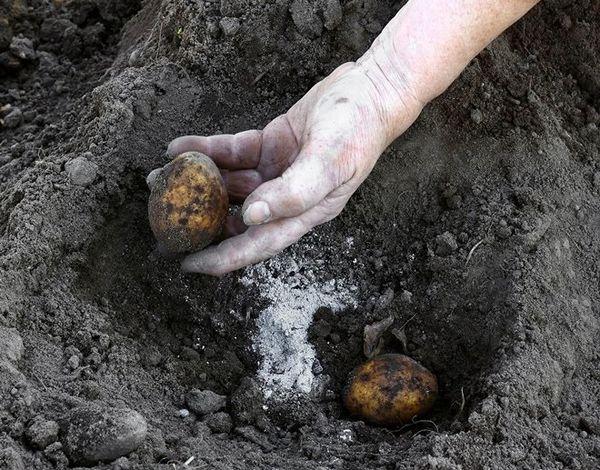
The Skazka potato should be planted according to the standard 35 x 45 cm pattern. Add 1 cup of ash, 1 cup of compost, and 5 g of superphosphate to the holes. After planting the seedlings, level the area with a rake.
Watering
Potatoes should be watered 5-7 times during the growing season. Allow 7 to 10 days between waterings, during which time the soil should be loosened.
It is forbidden to allow the plant to dry out; if there is no rain for a long time, watering should be increased.
Potato Fertilizer Fairytale
Fertilizers can significantly increase potato yields. Apply fertilizer to moist soil once every two weeks, after rain or watering. It's best to add nutrients before hilling.
- At the beginning of the growing season, nitrogen is applied. After seedlings emerge, a mixture is used: 1 tablespoon of urea is dissolved in 10 liters of water. A bucket of the solution is poured among 20 plants.
- Before hilling, add a mixture: dilute 1 liter of chicken manure in 10 liters of water. Let the solution sit for 24 hours. Water only the rhizomes; after fertilizing, rinse the mixture off the leaves.
- After the flowering period, the potatoes are fed with phosphorus. Use 100 liters of water per 1 kg of superphosphate. The combination is sprayed over a 100 square meter plot.
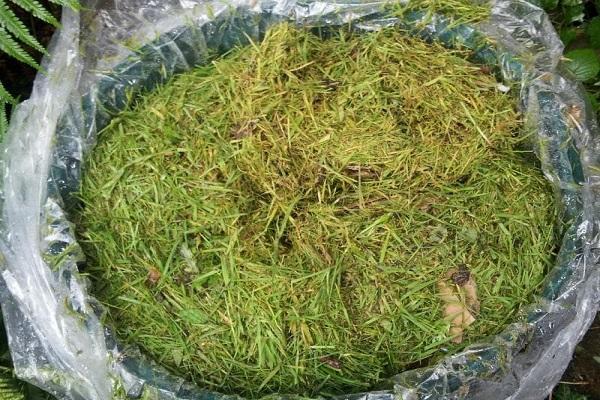
You can also add herbal fertilizer. Take a bucket of chopped weeds and nettles, pour 20 buckets of water over it, add 1 liter of chicken manure and 0.5 liters of ash. Seal the solution and leave it to ferment in the sun. After one week, the infusion is ready.
Loosening and mulching potato beds Skazka
Weed the beds 3-4 times during the growing season. Electric trimmers can be used for the initial loosening. Once the row spacing is hilled, hoes and various cultivators with attachments such as "hedgehogs" and discs are used. Mulch the potatoes with hay, peat, and straw.
Hilling
Hilling involves moving soil from between the rows to the planting areas. This clears the garden of weeds, loosens the soil, and increases yield by 30%. The first hilling is performed 14 days after the sprouts emerge, when the tops reach 20-25 cm. The second procedure is performed three weeks after the first.
Take a look Also


Preventive treatments
Preventative treatment with Prestige or its equivalent should be carried out at planting time. The product's effectiveness lasts for 60 days. If symptoms of any disease appear, use fungicides. Colorado potato beetles, aphids, nematodes, and wireworms can be controlled with insecticides such as Borey, Tanrek, Vofatox, and Confidor.
The nuances of harvesting and preserving root crops
The Skazka potato harvest is in September. One week before harvest, the tops are mown down to protect against disease and allow the roots to ripen. The dug potatoes are air-dried for five hours. Afterward, they are sorted, removing any damaged or infected ones. The harvest is stored in basements or cellars at temperatures up to +2°C.
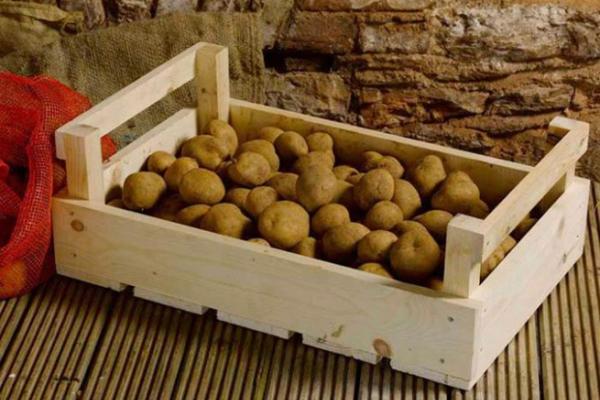 Humidity should be 90%. Ventilate the room about twice a week and remove spoiled potatoes.
Gardeners' reviews of potatoes
Reviews of the Skazka potato will help you choose the right variety.
Olga Averina, 66 years old, Moscow
Hello! I've been growing Skazka potatoes for over two years, and they're now my favorite variety. I harvest 300 centners per hectare. I sell some of the fruit, and I use the rest for personal consumption. The plants were attacked by nematodes once, but I managed to kill them with insecticides.
Maxim Vasiliev, 55 years old, Yekaterinburg
Greetings! The Skazka potato is my pride and joy; it's been growing at my dacha under my careful care since 2016. I make stews, mashed potatoes, and casseroles with the fruit, and everyone I know raves about the dishes. I highly recommend this trouble-free, high-yielding variety.
Ivan Demidov, 49 years old, Kyiv
Hello! I've been growing the Skazka potato since 2017, but I fell in love with it from the very first time I planted it. The harvest was bountiful, the fruits healthy and delicious. I fertilized them with compost and saltpeter, and treated the bushes for beetles. There were no problems with the potatoes.
Related posts:
 Description of the best potato varieties of domestic and foreign selection
 Description and characteristics of the Rodrigo potato variety, cultivation and care
 Description and treatment of potato pests, control measures
 Description of the Sorkodnevka potato variety, planting and care, when to dig
 Description and characteristics of the Krasavchik potato variety, planting and care
 Description and treatment of potato diseases, methods of control using folk and chemical means
 Description and characteristics of the Zhukovsky potato variety, planting and care
 Description and characteristics of the Colombo potato variety, planting rules and care